avg —
Lecho with Eggplants and Peppers for Winter without Sterilization

Instructions
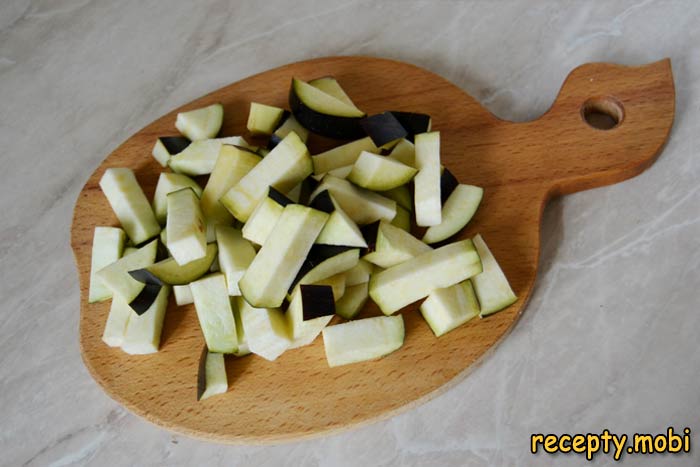
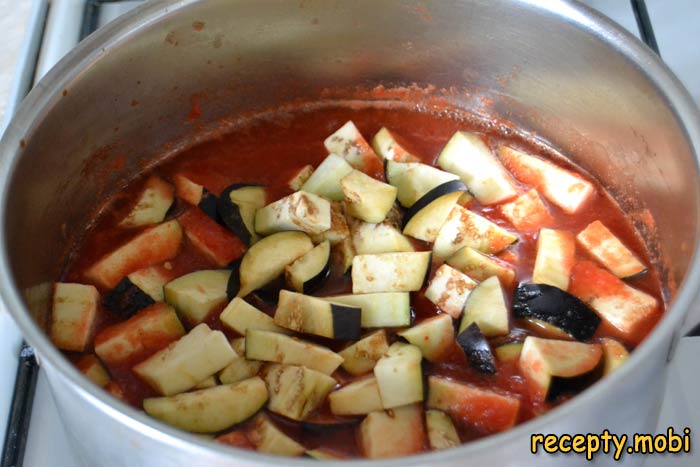
I cut the eggplants into sticks of 2–3 cm without peeling off the skin. The skin matters: it holds its shape during cooking and gives the finished lecho its characteristic purple accent. Without the skin the eggplants fall apart into mush. To reduce bitterness you can salt the cut sticks and leave them for 20 minutes, then rinse, but young eggplants are not bitter.
I pass the tomatoes through a meat grinder with a fine grid. From 1.2 kg of tomatoes you get about 1 litre of tomato mass. I use the meaty "Slivka" or "Bull's Heart" varieties – they give a thick, rich base without excess water. You can peel the tomatoes first by scalding them with boiling water – this makes the lecho more delicate.
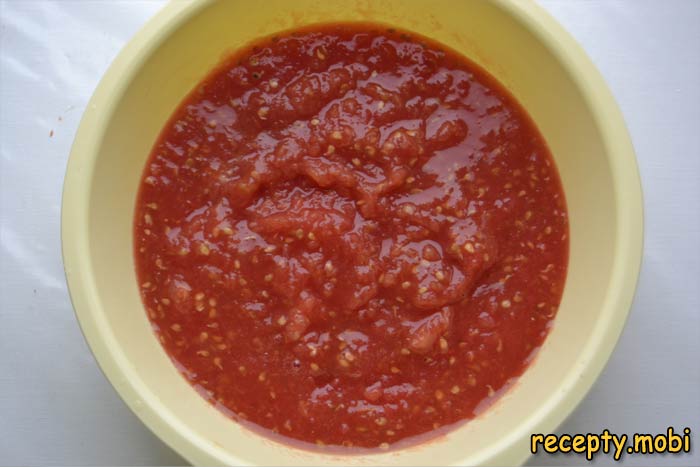
I mix the tomato mass with the sugar, salt, a tablespoon of vegetable oil and the vinegar. Sugar balances the acidity of the tomato; without it the lecho will be sharp. I add the eggplants and cook covered for 10 minutes over low heat. Stir occasionally so it does not burn to the bottom.
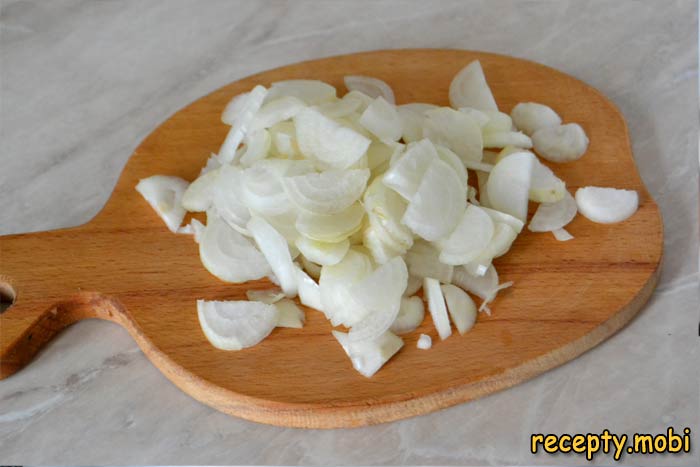
I cut the onion into thin half rings of 3–4 mm. Thin half rings spread out nicely in the finished lecho and cook through quickly. Onion that is too coarse leaves harsh pieces in the finished dish, while finely chopped onion dissolves without a trace.
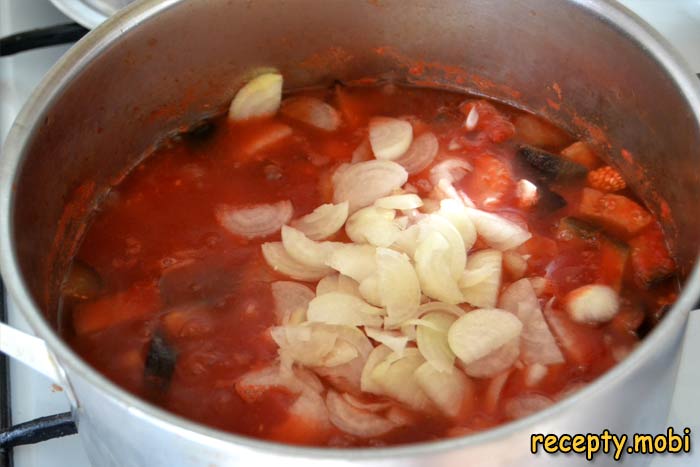
I add the chopped onion to the eggplants in the tomato mass and cook for another 10 minutes over low heat. The onion should soften slightly but keep its structure. Cooking the vegetables in small "batches" in the right order is the secret to all the components keeping their shape and flavour.
I cut the bell pepper into strips of 1 cm and add it to the pot. I take pepper of different colours – red, yellow, orange – so the lecho is bright and festive. I add the pepper after all the other vegetables so it keeps its crispness and bright colour and does not overcook.
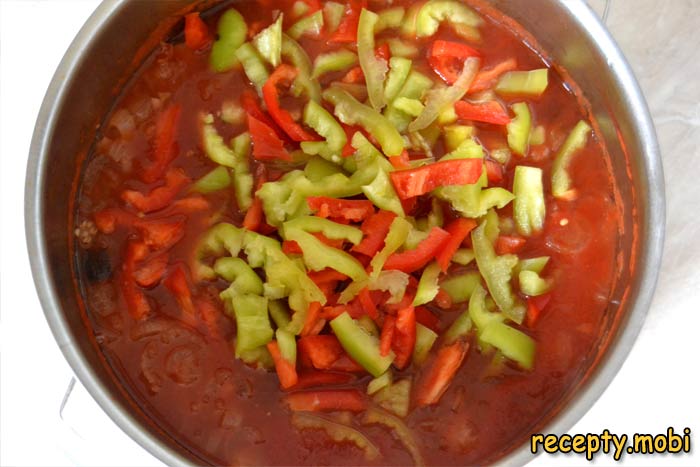
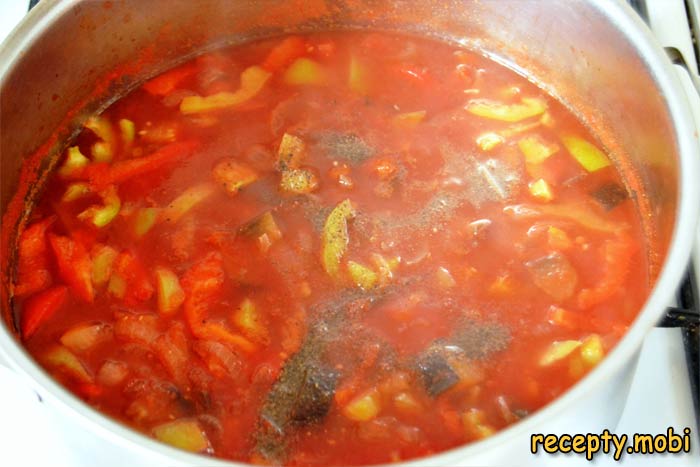
I add the bay leaf, ground black pepper, the chopped bitter pepper and the garlic put through a press. I cook for another 10 minutes over low heat until the pepper is done. Remove the bay leaf right at the end – a long time in the dish makes it bitter.
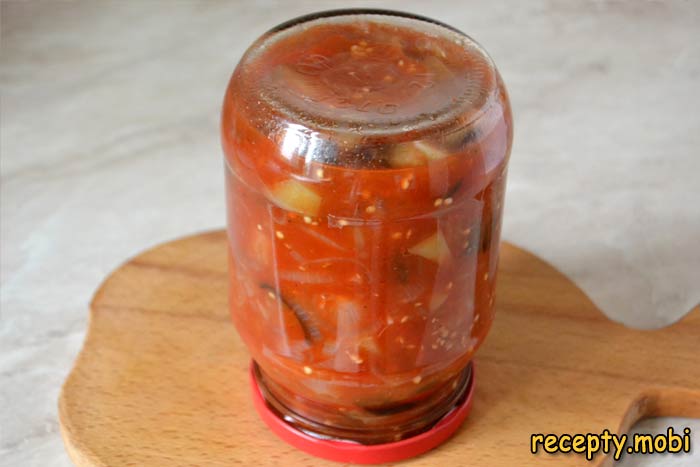
I spoon the hot lecho into sterilised 0.5 l jars (I sterilise them for 15 minutes in the oven at 120 °C) right up to the rim. I seal them with sterile metal lids, turn them upside down to check the seal and wrap them in a blanket overnight. Slow cooling creates an extra vacuum.


Tips
- 1
Pepper of any colour suits lecho – red, yellow, orange or green. Different colours make the most festive lecho for the winter table.
- 2
Meaty tomatoes such as "Slivka", "Bull's Heart" or "Lady Fingers" give the thickest and richest tomato base for lecho.
- 3
Store in a dark, cool place for up to a year – a temperature of 5–15 °C is ideal for long storage. I make classic lecho from peppers on a similar principle.
- 4
Lecho is equally tasty cold as an appetiser and warmed as a sauce or side – a versatile preserve for any occasion.
FAQ
Do eggplants need to be soaked before canning? +
If the variety is not bitter and the eggplants are young with thin skin, it is not essential. During cooking in the tomato mass the bitterness of the eggplants is greatly reduced, and the finished lecho turns out mild in taste. If you happen to get very ripe eggplants with dark seeds and the flesh tastes bitter, soak the sticks in salted water (1 tbsp of salt per litre) for 20–30 minutes, then rinse and pat dry. Young eggplants up to 25 cm long usually do not need soaking.
What can replace vinegar in lecho? +
Lemon juice in the same proportion (2 tablespoons) works – it gives a milder acidity and a pleasant citrus accent. You can also use apple cider vinegar 6% (more aromatic), wine vinegar (for an Italian character) or balsamic vinegar (for a deep flavour). Do not skip the acid altogether – it works as a natural preservative and ensures long storage without sterilisation. Without vinegar the lecho may ferment within 1–2 months.
How long does lecho keep after the jar is opened? +
In the fridge in a tightly closed container, up to a week. I do not advise keeping it longer – the acidity drops and spoilage can begin. If mould appears on the surface, throw out the whole jar; do not try to remove just the top layer. The signs of a good opened jar are bright colour, fresh aroma and a firm texture of the vegetables. Seal lecho in small 0.5 l jars, enough for one serving, so you do not have to store it long after opening.
What to serve lecho with as an appetiser? +
It is ideal on its own as an appetiser with black bread, as a sauce for fried meat (pork, beef, chicken), or as a side with mashed potatoes, boiled rice or buckwheat. You can use it as a sauce for pasta – warm it up, pour over the cooked pasta and sprinkle with cheese. For breakfast it is good with fried eggs or an omelette. Lecho goes well with feta or brynza cheese, giving a "Mediterranean" flavour.
Before sealing, don't forget to sterilize your jars and lids – whether the preserve lasts through winter depends on it.
- Comment
or post as a guest
Be the first to comment.