avg —
Adjika made from tomatoes and garlic for the winter

Instructions
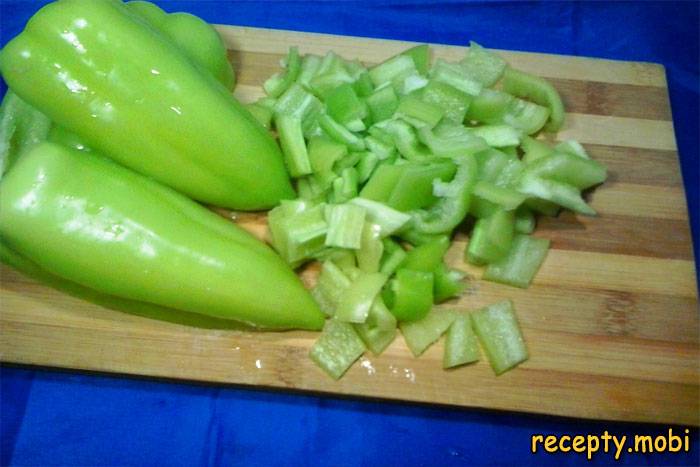
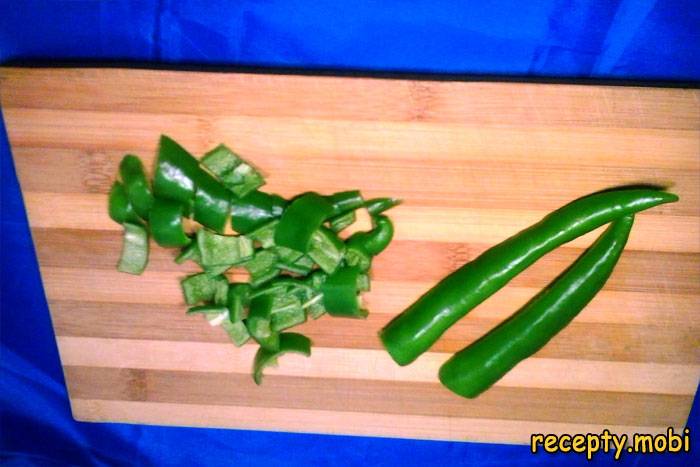
I wash and pat dry all the vegetables and herbs thoroughly. I cut the sweet pepper, cleaned of seeds, into smallish pieces of 2-3 cm – there is no need to cut them smaller, as we will be putting everything through the meat grinder anyway.
From the bitter pepper, cut lengthwise, I take out the seeds and membranes – this is where the maximum heat is concentrated, giving an unwanted harsh burn. I cut it into thin strips. When working with hot pepper I always use rubber gloves – capsaicin sinks into the skin for a whole day.
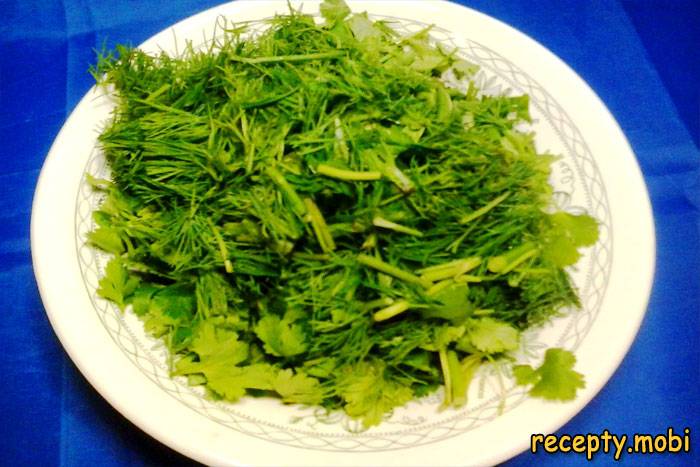
I cut the herb sprigs into pieces about 3-5 cm long – this way they feed conveniently into the grinder without winding around the blade.
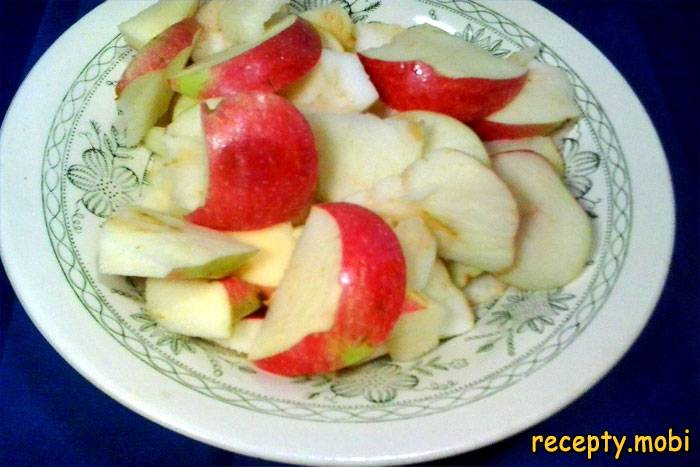
I cut the apples into rough slices with the skin on, or peel them first – with the skin on there will be more pectin and the adjika will turn out thicker. I always remove the core with the seeds – they would add bitterness.
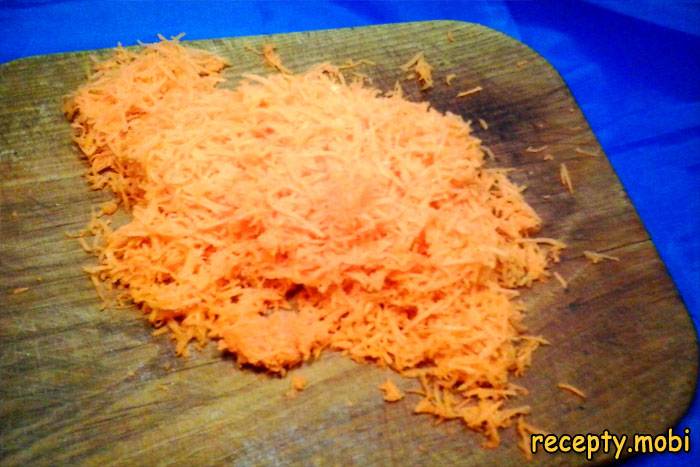
I grate the carrot on a grater with medium holes, or cut it into large pieces for the grinder. The carrot gives sweetness and a lovely orange tint.
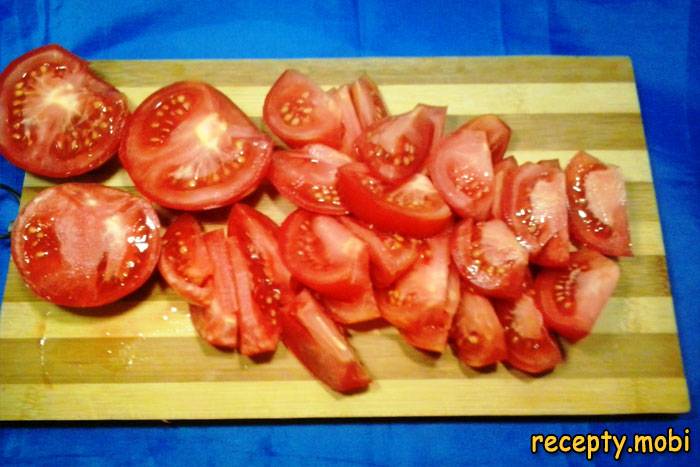
I cut the tomatoes into 6-8 pieces, having removed the place where the stem was attached. I take meaty varieties with a minimum of juice – plum, Rio Grande. Watery varieties will give a runny adjika.
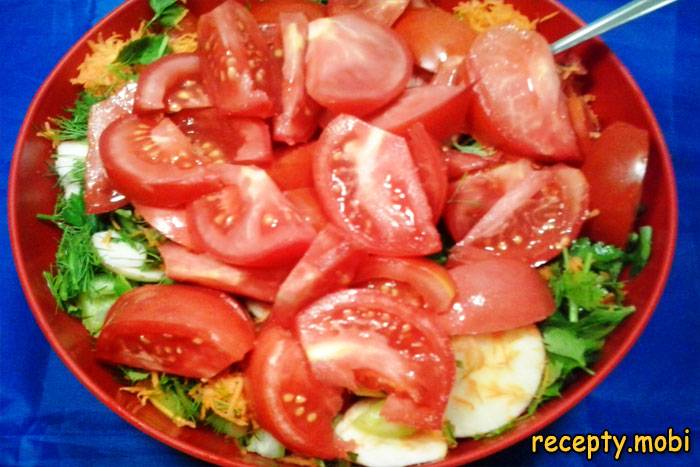
I gather the prepared components in a deep bowl and mix them lightly – this makes it easier to feed the mixture into the grinder.
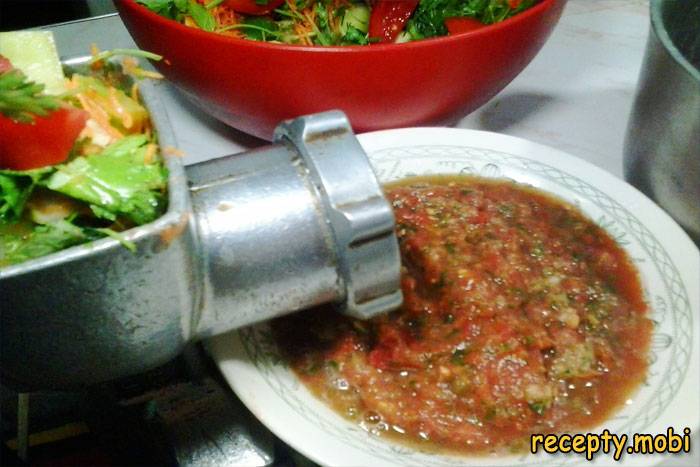
I pass the mixture of vegetables and herbs through the meat grinder – I alternate the different ingredients so they blend evenly. It is best to use a plate with small holes for a tender texture.
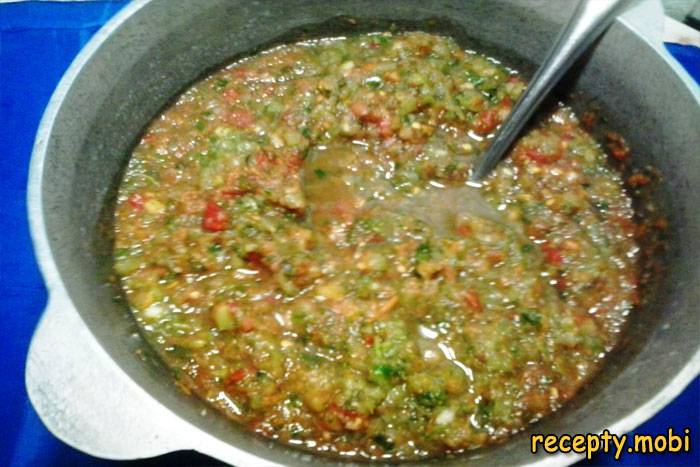
I put the mass into a saucepan (any kind except enamelled – the acid will damage the enamel) and bring it to the boil over moderate heat. I cook the adjika for 40 minutes, stirring occasionally with a wooden spatula so it does not catch on the bottom.
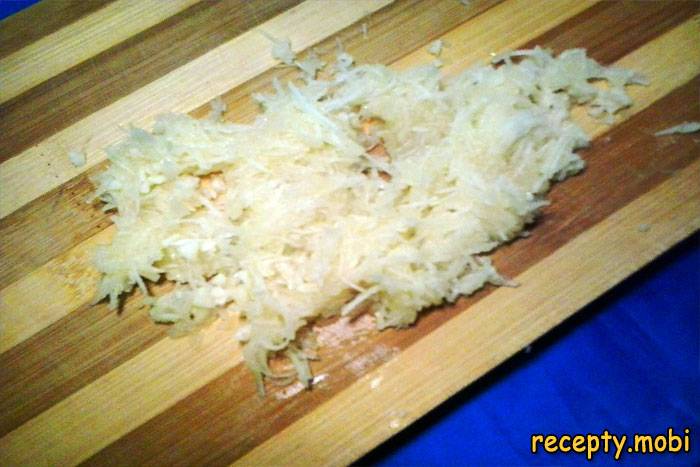
I add the garlic, crushed through a press, and let it boil for another 2 minutes. I add the garlic at the very end – long cooking kills its bright aroma, and we need it to keep its strength.
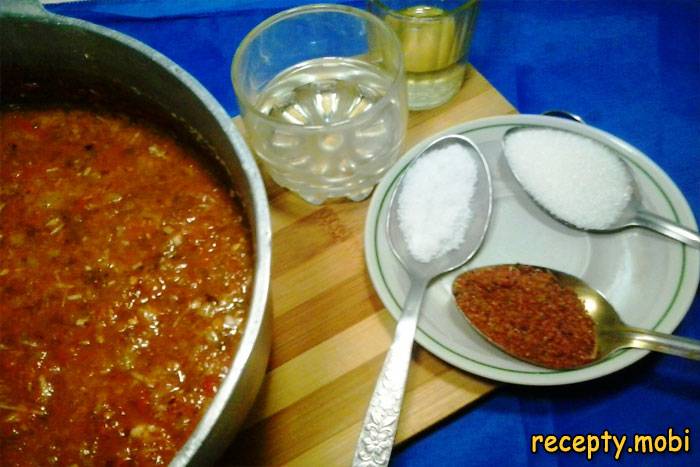
I pour in the vegetable oil 5 minutes before the end of cooking. I add salt, sugar and spices (khmeli-suneli, coriander, fenugreek). After it comes back to the boil, I pour in the vinegar, stir, and immediately turn off the heat – the vinegar must not boil, otherwise it will evaporate.
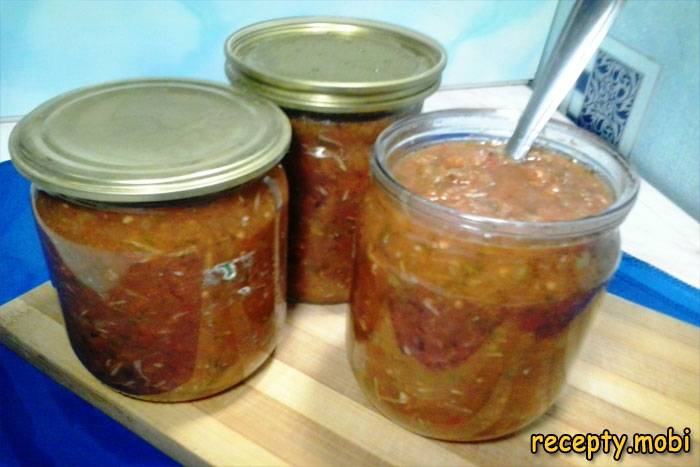
I fill washed and sterilised 0.5 L jars with the hot adjika, leaving 0.5-1 cm from the rim. I cover them with steamed lids.
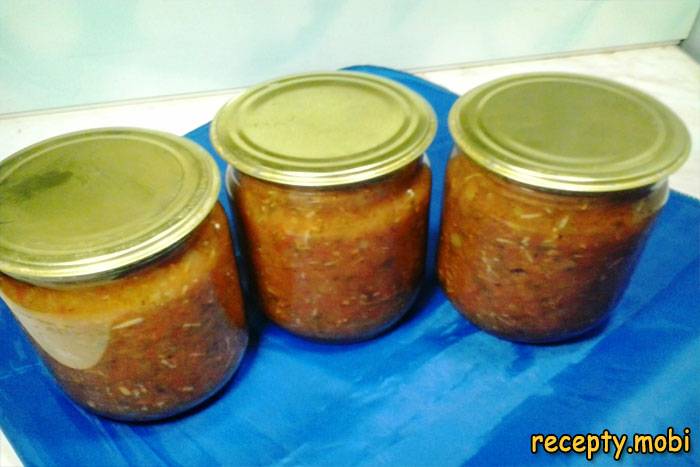
I seal the jars airtight with a canning machine. I turn them upside down onto the lids, cover them with a blanket and let them cool slowly – this creates a vacuum. Once cooled, I put the jars away for storage. Canned adjika keeps perfectly at room temperature for up to 2 years.


Tips
- 1
Work with hot pepper strictly while wearing gloves – capsaicin sinks into the skin and then easily gets into the eyes. Never ignore this rule.
- 2
Always remove the seeds from the hot pepper – they give too strong and unpleasant a heat, unlike the flesh.
- 3
Apples give the adjika a pleasant sourness and thickness – do not leave them out. Tkemali sauce is made on a similar principle.
- 4
Use a pan without enamel – the acid in the vinegar breaks down the enamel coating, and particles of enamel can end up in the finished adjika.
FAQ
Can I make adjika without apples? +
Yes, you can, but the flavour will be less balanced and the texture more runny. Apples give a pleasant, soft sourness and act as a natural thickener thanks to their pectin content – without them the adjika will be runny and too aggressive in flavour. If you really do not want to use apples, add 2-3 tablespoons of starch dissolved in cold water for thickness, and increase the amount of sugar by 1 tablespoon to soften it. Quince also works instead of apples – it is even more aromatic.
Which spices are needed for classic adjika? +
Traditionally you use khmeli-suneli (a Georgian blend), ground coriander, fenugreek (utskho-suneli), dried savory and basil. A ready-made adjika spice mix is sold in shops – convenient and reliable. Ground black pepper and a pinch of ground red pepper are also added. Do not use paprika – it will overpower the characteristic adjika flavour. Fresh cilantro among the herbs is an essential ingredient of authentic adjika; without it you will not get that characteristic Georgian aroma.
How long does homemade adjika keep? +
In sealed jars at room temperature (in a dark place) – up to 2 years, thanks to the vinegar and the long cooking. After opening, in the refrigerator – up to a month with the lid on. If a film of oil appears on the surface, this is normal: the oil acts as a protective layer and extends storage, so just stir it in before use. Signs of spoilage are mould, a sour fermenting smell, a bulging lid or a change of colour. Throw such jars away without using them.
- Comment
or post as a guest
Be the first to comment.