avg —
Abkhazian Adjika

Instructions
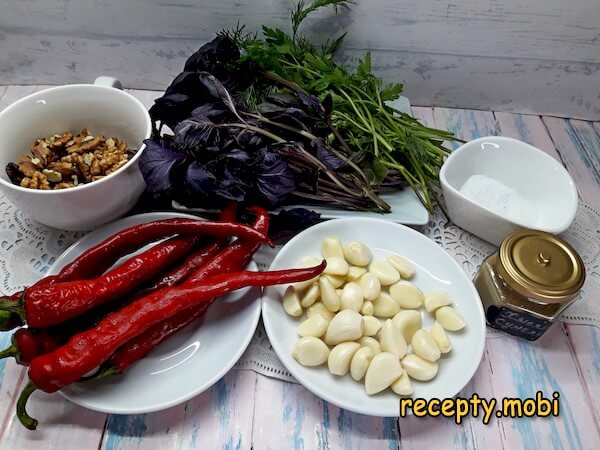
I prepare the ingredients needed for Abkhazian-style adjika.
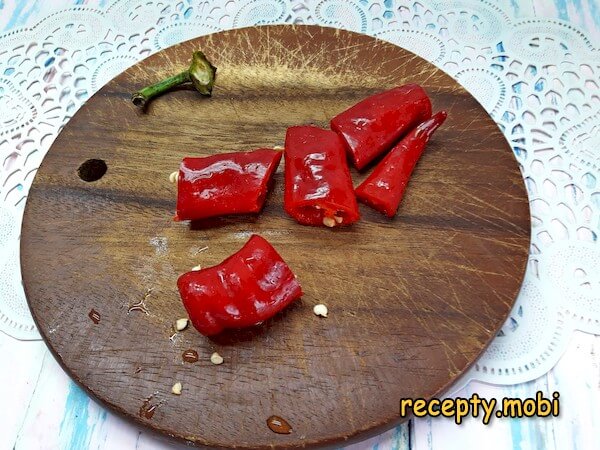
From each pepper I cut off only the stem and leave the seed pod in place, because the small seeds are the hottest part and the main component of the adjika. I cut the pepper itself into several pieces, doing all the work either in gloves or with utensils, so that I never touch the hot ingredient with my bare hands. Open a window in the kitchen, because the pungent smell will catch in your throat and make your eyes water.
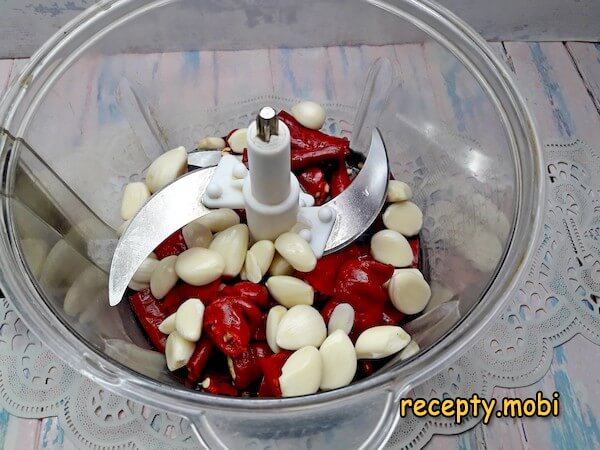
I put the prepared pieces together with the garlic cloves into a food processor.
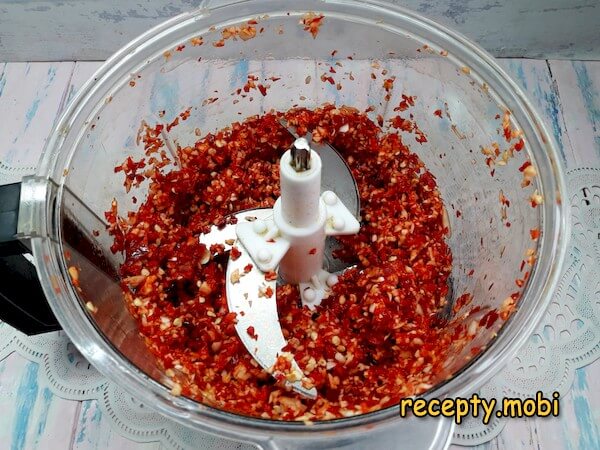
I grind the contents.
I add the khmeli-suneli, salt and walnuts. The salt should be absorbed well into the mixture, so I grind everything once more. If you are making the adjika in an ordinary meat grinder, you will need to pass it through 3–4 times.
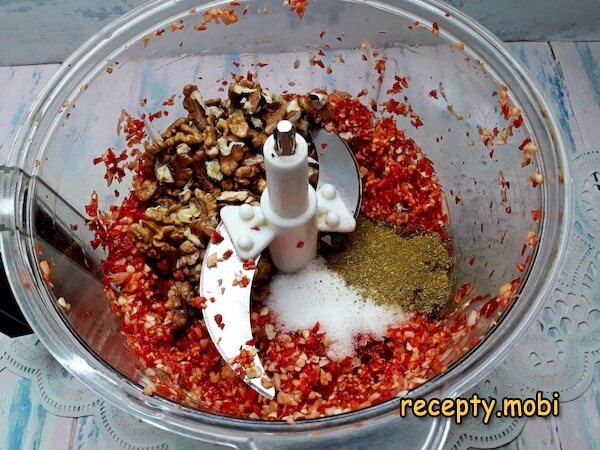
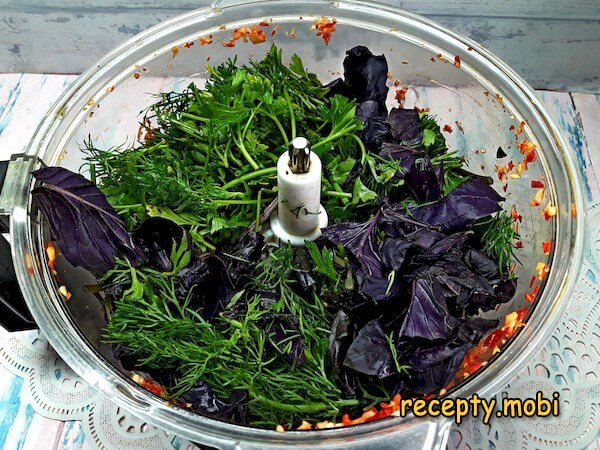
All that is left is to load in the greens and grind everything once again.
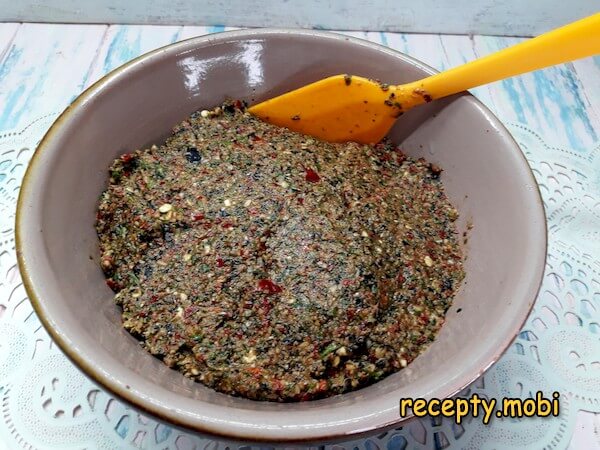
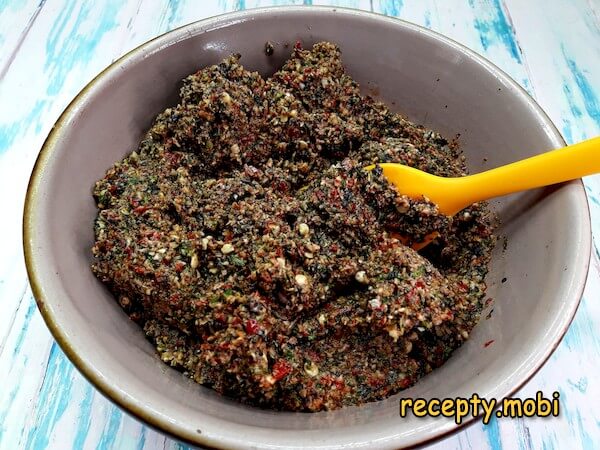
I transfer the finished mixture into a bowl and press it down.
I cover the adjika loosely with a lid and leave it at room temperature (no higher than 30°C).
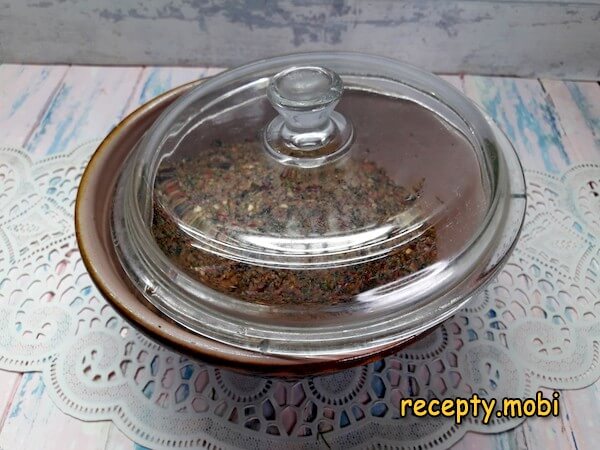
Over the course of two days the mass ferments, meaning that biochemical oxidation reactions, and therefore fermentation, take place within it; afterwards the components of the adjika keep their beneficial properties longer and the flavour becomes more pronounced and vibrant. The mass should be stirred once a day. A change in the smell of the adjika signals that fermentation is finished. I stir the mixture one last time and pack it into clean jars.
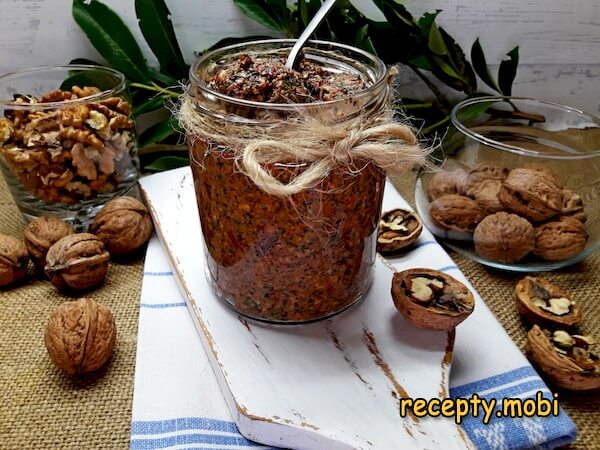
Abkhazian-style adjika must be stored in the refrigerator (this is a living product, with no heat treatment), where it keeps for a whole year, unless it is eaten sooner. In that case you can make the next batch straight away. The taste of this condiment gives a sense of freshness and heat. Walnut oil preserves that freshness, lending a slight astringency. If you add the adjika to hot dishes, a wave of summer herbs will sweep through the whole room. Enjoy!


Tips
- 1
GLOVES ARE A MUST – the safety "secret". Hot pepper leaves oil on your hands that will burn your eyes and skin. Always work in gloves.
- 2
AN OPEN WINDOW – the "secret" against tears. The pungent smell of the pepper irritates your breathing and your eyes, so good ventilation is critical.
- 3
TWO DAYS OF FERMENTATION – the "secret" of the flavour. In this time the adjika "matures", the taste deepens and the aroma opens up fully.
- 4
WALNUTS – the "secret" of astringency. Walnuts add an oily note that preserves the freshness of the greens. The same principle works in other kinds of fiery adjika.
FAQ
Which chili pepper should you choose? +
Ideally, fresh hot pepper (250 g gives a fierce heat). Good alternatives are red hot "Ogonyok" (250 g, a classic), red jalapeño (250 g, milder), cayenne (200 g, hotter) or dried pepper that you grind yourself (100 g, the economical option). Fresh peppers with a green stem are the best choice. Do not use sweet bell pepper or smoked pepper, as they change the flavour. For a milder adjika, reduce the amount to 150 g. Medium-sized pods are ideal, as they are convenient to cut.
What can replace khmeli-suneli? +
You can use a mix of coriander, dried dill, dried mint, basil and savory (1 teaspoon of each), a universal Georgian seasoning (1 tablespoon), a blend of Italian herbs (1 tablespoon, though less authentic) or curry (1 tablespoon, for an Indian note). Freshly made khmeli-suneli is the best option. Do not use salted seasonings or sweet blends. For a Georgian classic, the blend must contain fenugreek; for the best result, use a freshly ground spice mix.
How long does adjika keep? +
In the refrigerator, in a sterile jar, it keeps for up to 12 months (it is a living product with no heat treatment). Kept longer, it loses flavour and aroma quickly. Label the jars with the preparation date. If mould appears, do not use it – throw it away. Do not store it at room temperature, as it will quickly start to ferment. Take it out about 15 minutes before serving. It is best used within the first 6 months, and once opened, eaten within two months. Pack it into small 200–500 ml jars, which are easier to open. Under the lid you can pour a thin layer of vegetable oil to protect it from drying out.
What do you serve adjika with? +
It is a classic with meat: with pork, lamb or beef shashlik, with beef steak, with lamb ribs, with grilled or tabaka chicken, with baked turkey, and with grilled or fried fish. It also goes with pelmeni and khinkali, with boiled potatoes, with sausages, with rice side dishes served with meat, and with suluguni cheese. Add it to a bowl of borscht, or serve it alongside a glass of chacha or brandy. A little in fried eggs or an omelette makes a fiery breakfast. It is a versatile hot seasoning for both Caucasian and Russian cuisine.
- Comment
or post as a guest
Be the first to comment.