avg —
Korean Green Tomatoes for Winter

Instructions
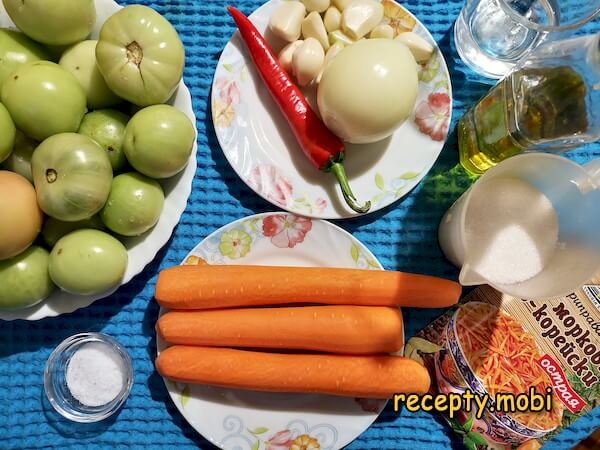
I prepare the ingredients needed for the Korean-style green tomato salad for winter. I peel the garlic and onion, and peel the carrots. I wash and dry the green tomatoes and the chili pepper. The Korean-carrot spice can be either spicy or regular. I sterilize the jars and lids.
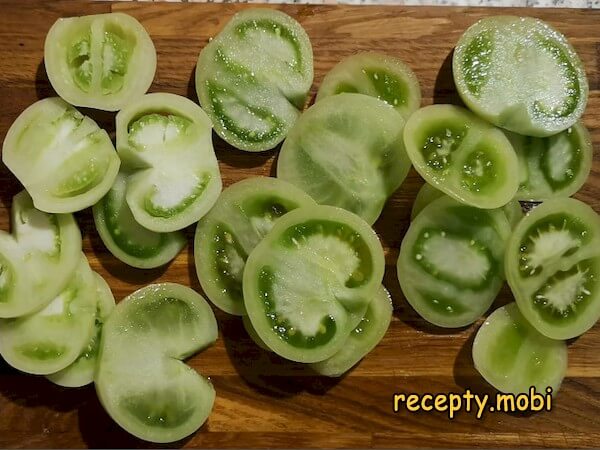
I cut the green tomatoes into slices about 4 mm thick and remove the stalk. I transfer the sliced tomatoes into a deep dish.
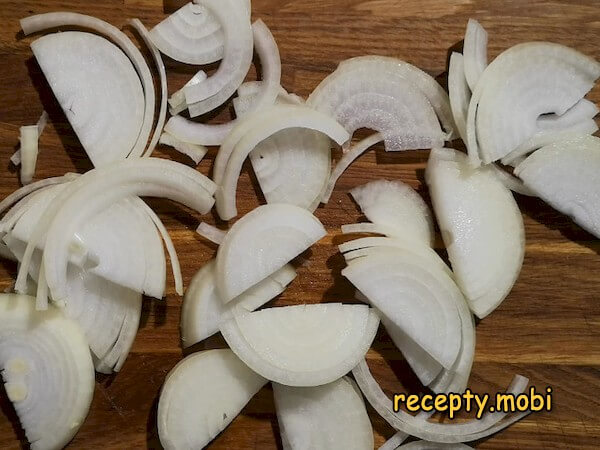
I cut the onion into small half-rings and add it to the tomatoes.
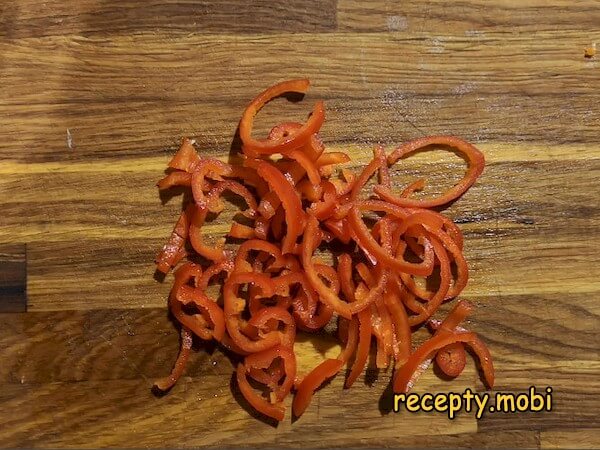
I cut the chili pepper into rings, having first removed the seeds. I add it to the rest of the prepared vegetables.
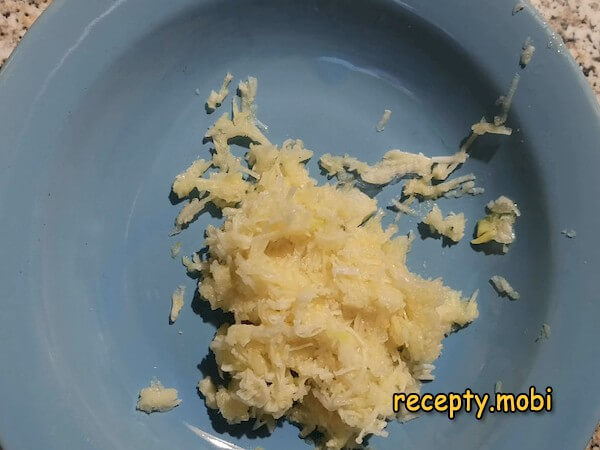
I grate twelve cloves of garlic on a fine grater, or cut them into small cubes, and add them to the tomatoes.
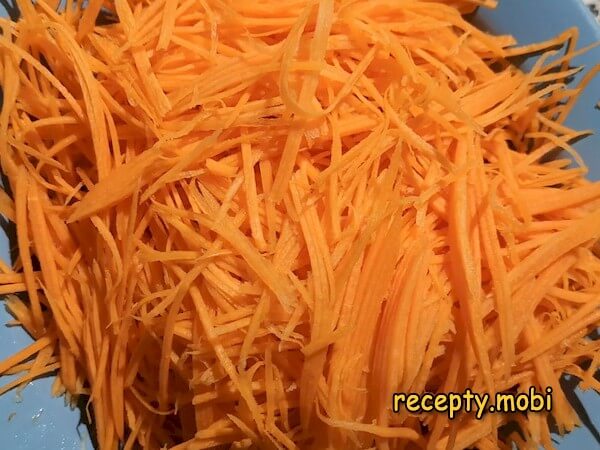
I grate the three carrots on a Korean grater or use a special vegetable peeler. I add the prepared carrot to the tomatoes with the garlic, onion and pepper.
Next I add the sugar, salt, vegetable oil, 9% vinegar and Korean-carrot spice to the dish with the vegetables.
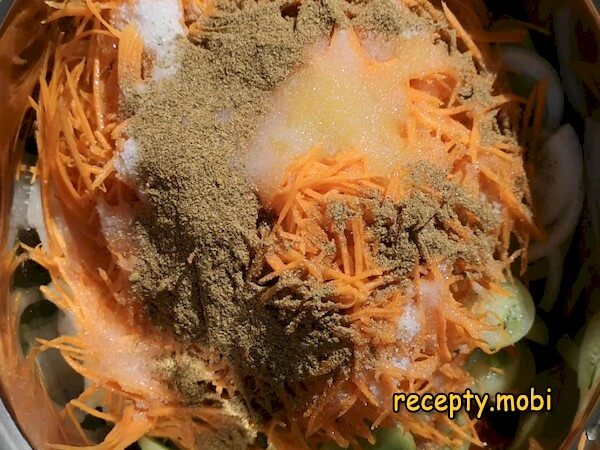
I mix everything gently and leave it to marinate for about 40 minutes. During this time you need to stir the salad gently a few more times, so that it marinates more evenly.
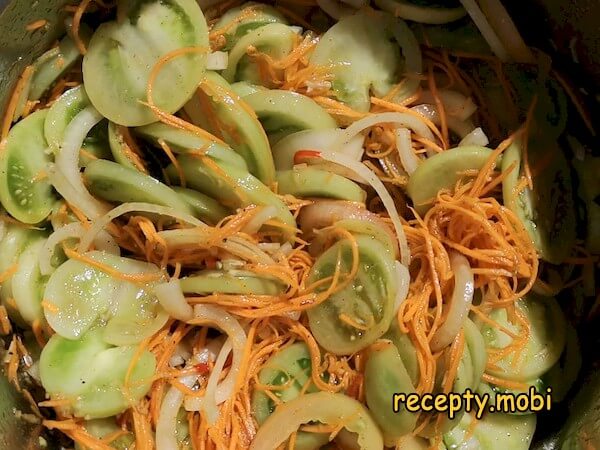
I fill the jars with the salad and cover them with sterilized lids.
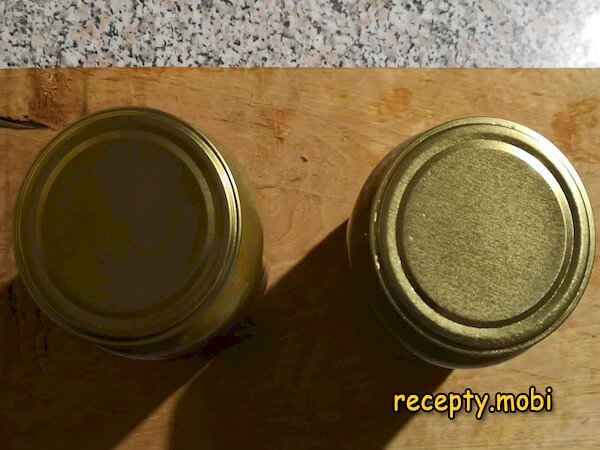
I place a cloth on the bottom of a pot and set the jars on it. I fill the pot with cold water up to the shoulders of the jars. I put the pot on the heat.
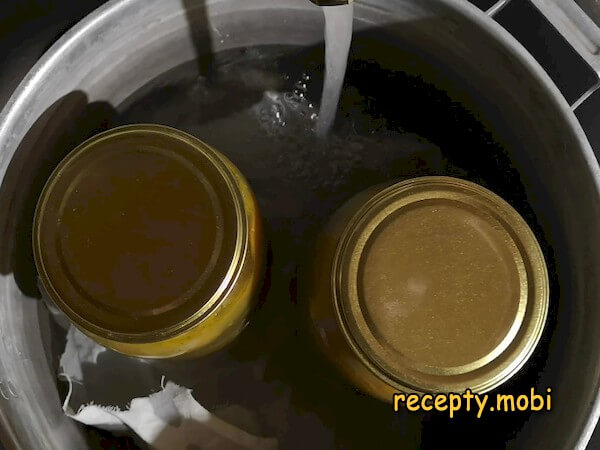
Once the water comes to a boil, I sterilize 1-litre jars for 20 minutes and 0.5-litre jars for 15 minutes.
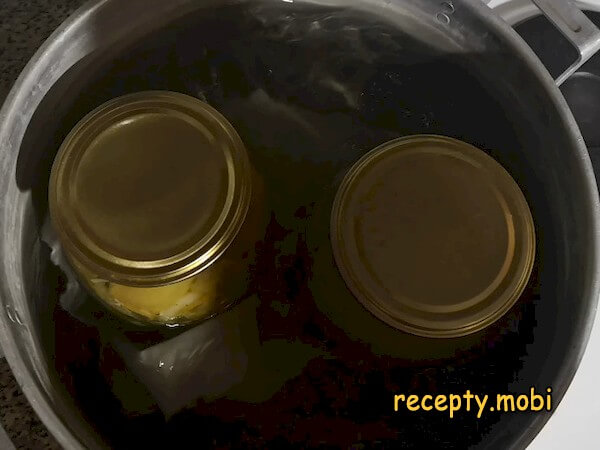
Using special tongs, I lift the jars out of the water and seal them.

I turn the jars upside down onto their lids and leave them like this at room temperature until completely cool.

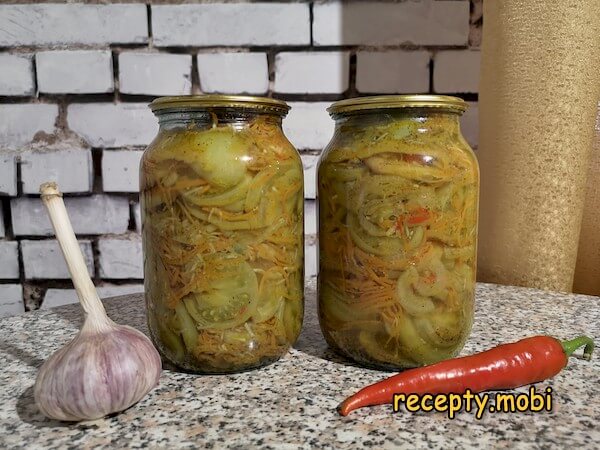
The Korean green tomatoes for winter are ready. Try making them with our recipe – you are sure to like them.


Tips
- 1
The 4 mm slices are the "secret" to good marinating. Thin slices soak through in 40 minutes; thicker ones will not manage it in time.
- 2
The 40 minutes of marinating are the "secret" to the flavour. Without this stage the tomatoes will not release their juice and will not soak up the marinade.
- 3
The Korean seasoning is the "secret" to authenticity. The ready-made mix gives that characteristic "Korean" taste. Without it you just get an ordinary marinade.
- 4
Cold water in the pot is the "secret" against cracking. Jars placed in cold water plus gradual heating make for safe sterilization. The same principle works in other kinds of Korean-style salads for winter.
Video
FAQ
Which tomatoes should I choose? +
Ideally, firm green tomatoes of mid-season varieties. As an alternative you can use brown tomatoes (half-ripe ones are softer and sweeter). Fresh tomatoes should be springy and dense, with no signs of rot. A size of 5–7 cm is best for 4 mm slices. Not suitable: rotten, very soft or sprouted tomatoes. Brown tomatoes give a good compromise – sweetness plus a slight tang.
What can I use instead of the Korean-carrot spice? +
Alternatives: a mix of ground coriander, cayenne and dried garlic (about 3 g of each); khmeli-suneli (10 g) for a Georgian note; curry (10 g) for an Indian one; or a mix of paprika and ground red pepper (about 5 g of each) for a spicy version. Do not use salty blends or sweet seasonings. For a classic Korean profile you definitely need coriander and chili. For a spicier result, add more cayenne; for a milder one, reduce the spice to 5 g.
How long does the salad keep? +
In sterile, sealed jars at room temperature it keeps up to 1 year; in a cool cellar up to 1.5 years; once opened, up to 5–7 days in the fridge. Write the canning date on the jars. If a lid has swollen, do not open it – throw it out. Do not store the jars in the sun, or the colour will fade. It is best used within the first 8–10 months. It is more convenient to seal it in 1-litre jars. Before serving, take it out 15–20 minutes ahead, as cold dulls the flavours. Do not leave an opened jar at room temperature for longer than 2 hours.
What do I serve the salad with? +
It works as a standalone appetizer alongside a hot meat dish, with fried or boiled potatoes, with steak or shashlik, and with pelmeni and vareniki. It also goes with a rice side dish, with pilaf or fried rice, with boiled chicken or turkey, and with fried fish. It makes a versatile spicy preserve for winter meals.
- Comment
or post as a guest
Be the first to comment.