avg —
Fried Eggplants for Winter in Tomato Sauce

Instructions
I slice the eggplants into rounds 1 cm thick, cutting large eggplants in half lengthwise before slicing. Keeping all the pieces the same thickness ensures they cook evenly when fried. Thicker than 1 cm and they will not cook through inside; thinner and they fall apart when arranged in the sauce.
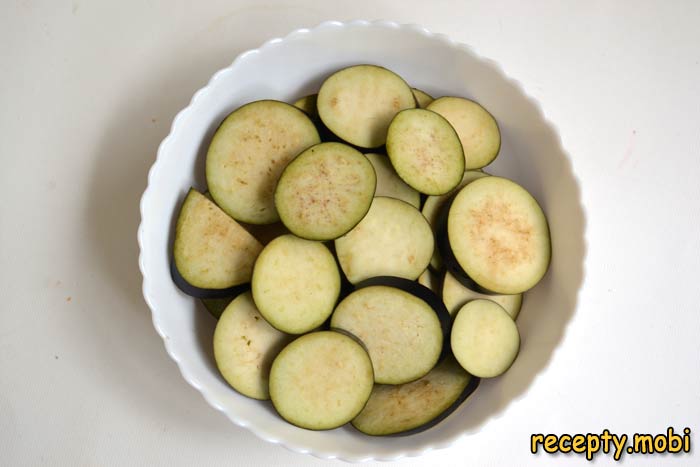
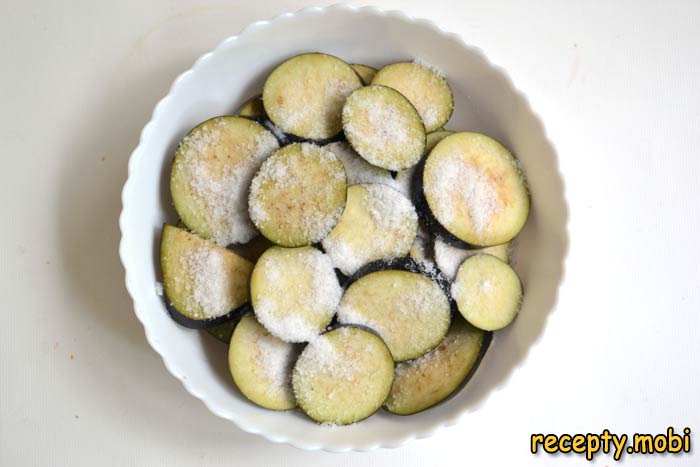
I sprinkle the sliced eggplants with coarse salt and leave them for 30 minutes to remove the bitterness. After this time a dark liquid is released – this is the solanine that causes the bitterness. Rinse the eggplants thoroughly in cold water and squeeze out the excess moisture – without this they will "swim" in the oil during frying.
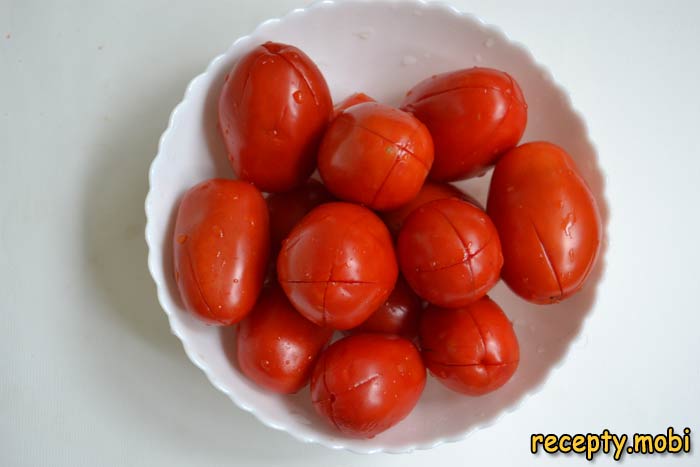
I make cross-shaped cuts on the top of the tomatoes with a sharp knife – they will help the skin come off easily after blanching. The cuts should not be too deep – it is enough to pierce the skin and the top layer of flesh.
I lower the tomatoes into boiling water for 1–2 minutes, then immediately transfer them into cold water with ice. The temperature shock makes the skin separate from the flesh – this is called blanching. The method is used by professionals in every cuisine for quickly peeling tomatoes.
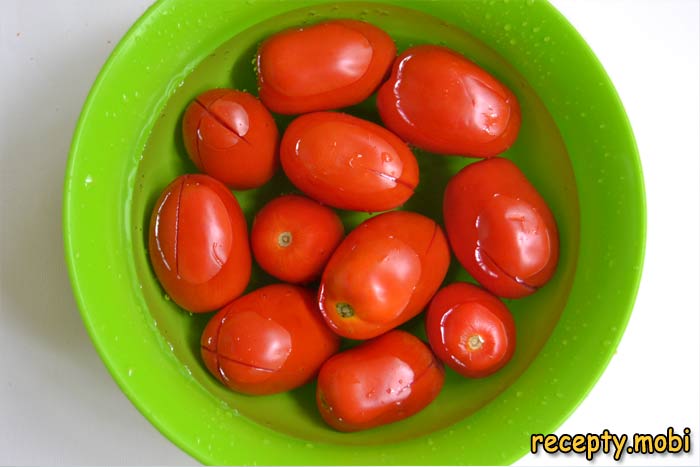
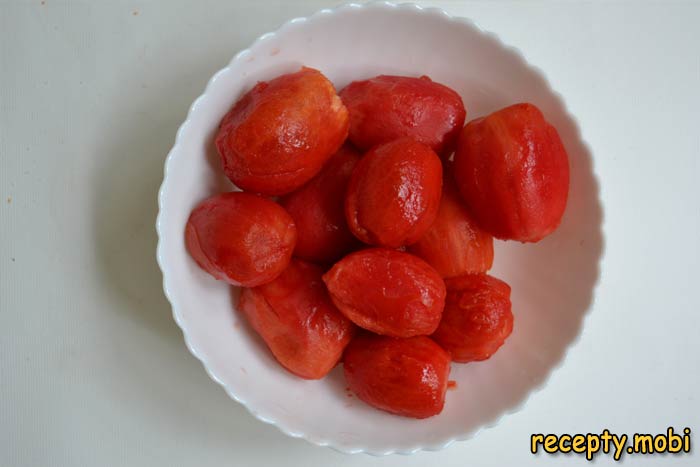
I peel the skin off the tomatoes – after blanching it comes away easily with your hands, literally in seconds. Removing the skin is essential: in the finished preserve it curls into unpleasant films that spoil the texture of the sauce.
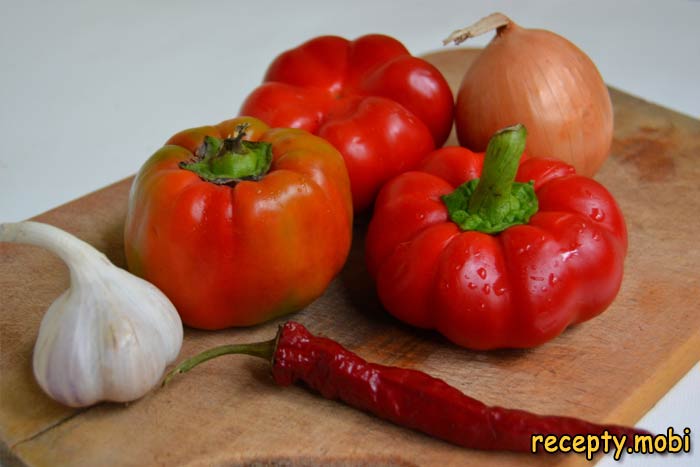
I prepare the vegetables for the sauce: I peel the onion, separate the garlic into cloves and peel them, wash the sweet pepper and hot chilli and remove their seeds. The peeled vegetables are the preparatory stage before the meat grinder.
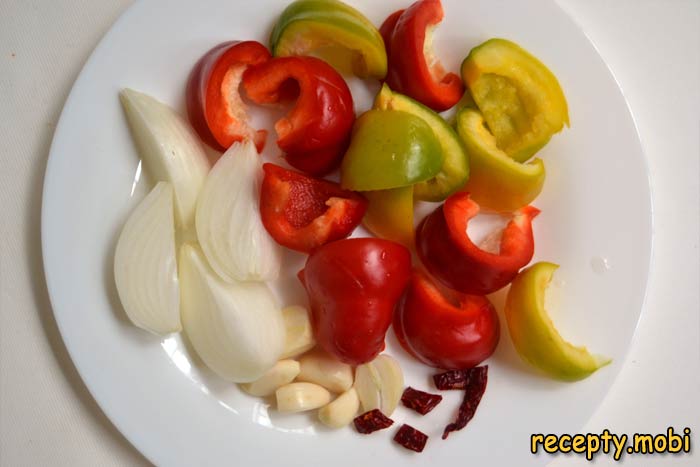
I cut the onion and pepper into large pieces, 3–4 cm, so they are easy to pass through the meat grinder. I leave the garlic in cloves. Cutting them large prevents the meat grinder from clogging and speeds up the work.
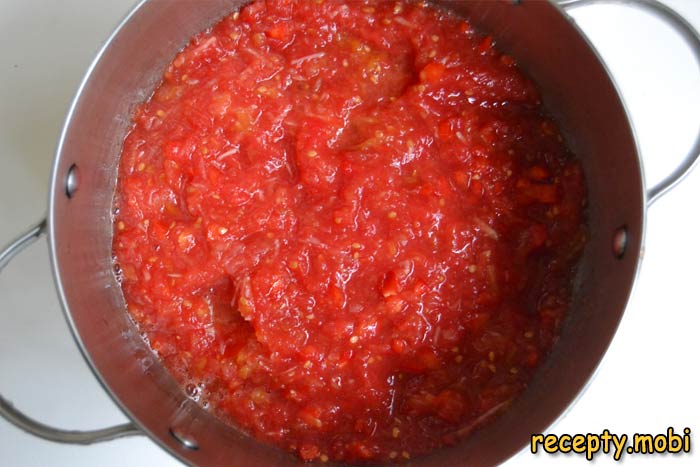
I put all the prepared vegetables through the meat grinder into a large pot. I cook them over low heat for 40 minutes until thick, stirring occasionally with a wooden spatula so nothing burns on the bottom. During this time the mixture concentrates and reduces into a fragrant sauce.
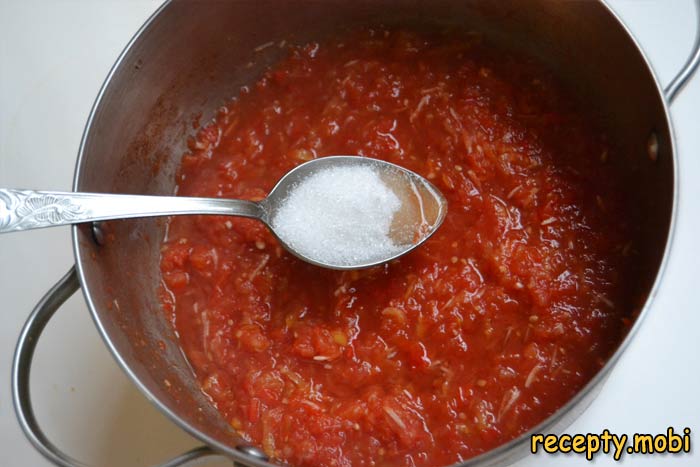
I add salt, sugar and the shurpa spices to the finished thick sauce. The sugar balances the acidity of the tomatoes – without it the sauce turns out too sharp. The shurpa spices (a blend of coriander, cumin and paprika) give a characteristic Eastern accent.
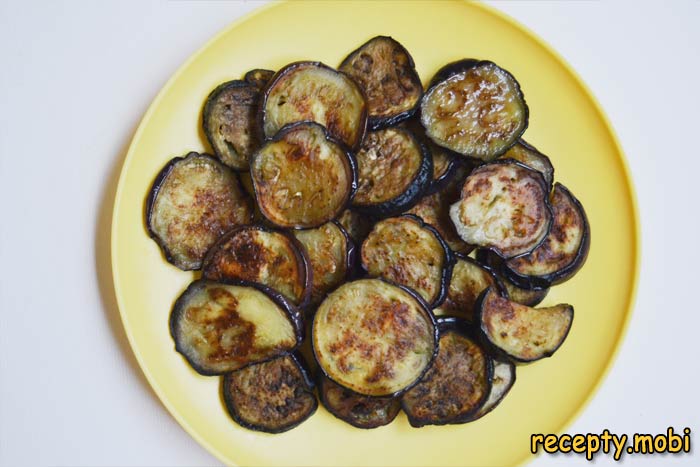
I rinse the salted eggplants free of excess salt under cold water, squeeze them by hand and fry them in well-heated vegetable oil until golden brown on both sides (3–4 minutes per side). Fry in batches without overcrowding the pan – otherwise the eggplants will "stew" in their own juices.
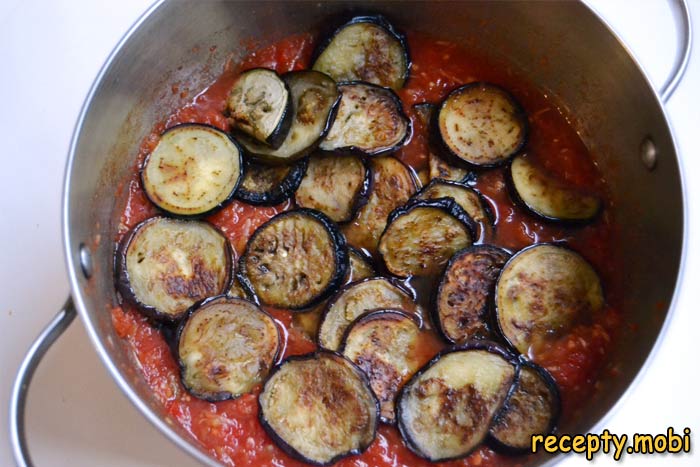
I put all the fried eggplants into the finished sauce, stir gently and simmer for 20 minutes over low heat. Five minutes before the end of cooking I pour in the vinegar – it acts as a preservative. I spoon the hot mixture into sterilised jars and seal them with sterile lids.
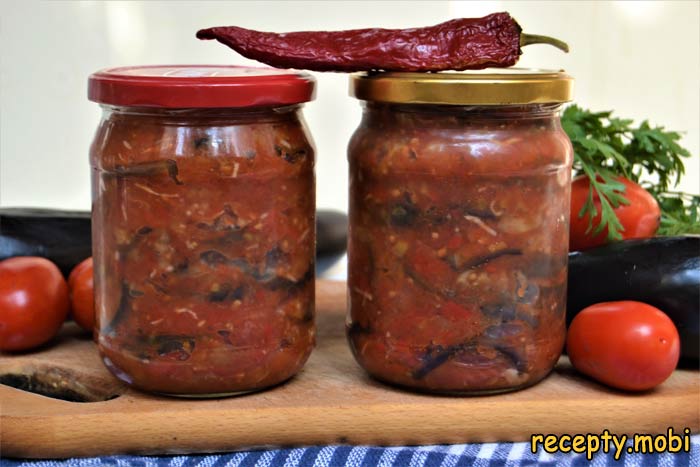
I turn the sealed jars upside down to check the seal and wrap them in a blanket for 12 hours. The fried eggplants in tomato sauce are ready! I store them in a cool, dark place for up to a year.


Tips
- 1
Use firm, sweet, meaty tomatoes (such as "Slivka" or "Bull's Heart") – the sauce will be thick and concentrated in flavour.
- 2
Do not let the eggplants boil hard while they simmer in the sauce – they should stay whole, in nice rounds.
- 3
Always turn the jars over and wrap them in a blanket for 12 hours – this creates a vacuum. I use a similar principle for eggplants like mushrooms.
- 4
For serving straight away (not for winter), you can leave out the vinegar – you will get an ordinary salad-style preparation for immediate eating.
FAQ
Can I make it without the hot pepper? +
Yes, simply leave out the hot pepper – the sauce will be milder and suitable for a children's table. The hot pepper adds a characteristic piquancy but is not essential. You can replace it with half a teaspoon of smoked paprika – it gives a different character (smokier, without the heat). For those who like it hot, on the contrary, you can increase the chilli to a whole pod or add a few drops of Tabasco sauce to the finished sauce. Adjust to taste.
How long do eggplants in tomato sauce keep? +
In sealed, sterilised jars in a cool, dark place (cellar, pantry) at 5–15 °C – up to a year without losing quality. In the second year the flavour holds, but the texture of the eggplants becomes softer. Once a jar is opened, move it to the fridge and use it within a week. The signs of spoilage are standard: mould, fermentation, a bulging lid, a sour smell – throw it out without regret.
What can replace the shurpa spices? +
A mix of ground coriander (1/2 tsp), cumin or caraway (1/4 tsp) and sweet paprika (1/4 tsp) – this gives a similar Eastern profile. Pilaf seasoning, Korean-carrot seasoning, or khmeli-suneli also work. For an Italian accent, use Provence herbs – a completely different character to the dish, but tasty too. Ready-made shop-bought shurpa spice blends contain exactly these components – it is simply more convenient to buy a ready mix.
What to serve this preserve with in winter? +
With fried or roasted meat (pork, beef, chicken), with pasta as a thick tomato sauce, with rice and buckwheat as a sauce and side, with potatoes (boiled, mashed, fried). You can use it as a base for arrabiata – add it to penne with parmesan and basil. It spreads wonderfully on dark bread as a snack. Serve it with feta or brynza cheese for a Mediterranean supper. It also goes well in borscht and kharcho for extra richness.
- Comment
or post as a guest
Be the first to comment.