avg —
Melon Jam with Lemon – A Delicate Dessert with a Bright Flavor

Instructions
Peel the melon, removing the skin and seeds. Cut it into random cubes about 2–3 cm. It is best to choose sweet muscat melons of the kolkhoznitsa or torpeda varieties – they give the jam an interesting muscat flavour note. With watery varieties the jam will be pale in taste and will need longer cooking down.
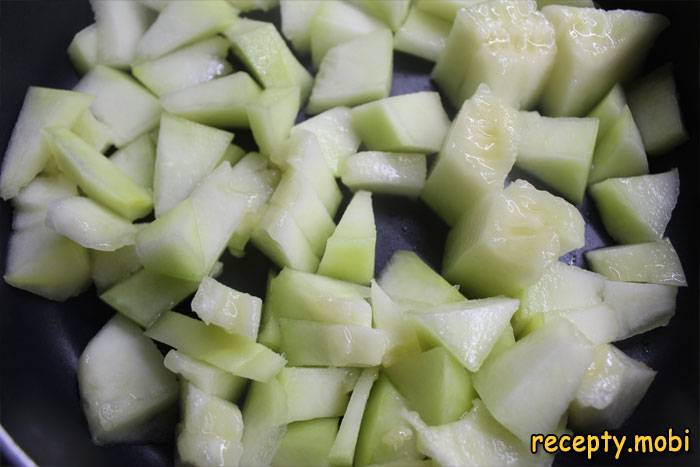
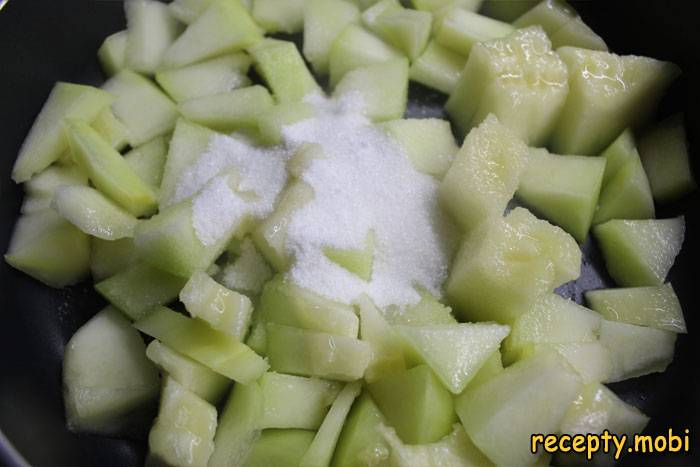
Pour the sugar over the cut melon. Stir the ingredients together and leave for 30 minutes – the sugar will draw the juice out of the flesh, so there is no need to add water. Then place over low heat and bring to the boil.
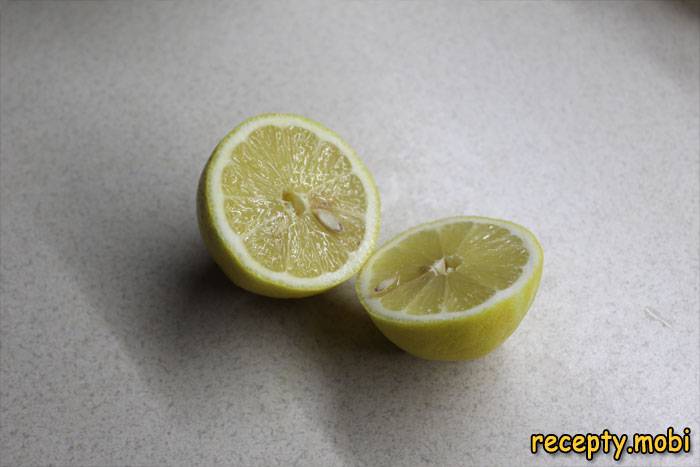
Take half a lemon. Remove the zest from the citrus with a fine grater, taking care not to catch the white pith (it tastes bitter). Squeeze out the fresh juice – it should be free of pips and membranes. The zest gives the main aroma, the juice gives acidity.
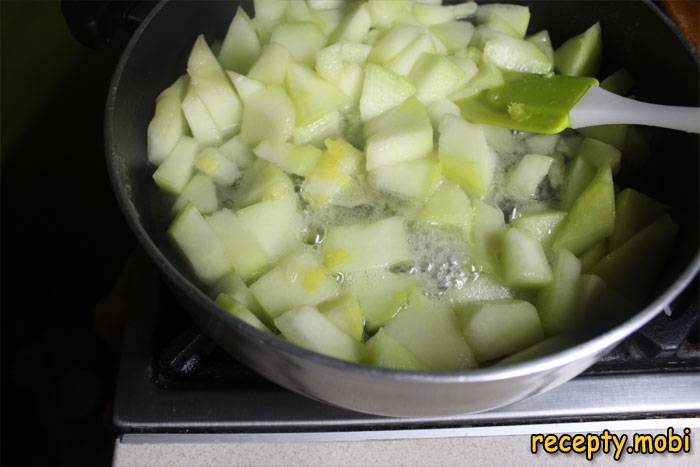
Add the citrus juice and lemon zest to the jam and sprinkle in the vanilla. Cook the jam for 15–20 minutes over low heat until all the melon pieces are completely soft, skimming off the foam from time to time. The foam is protein, and if it is not removed the finished jam will turn cloudy.
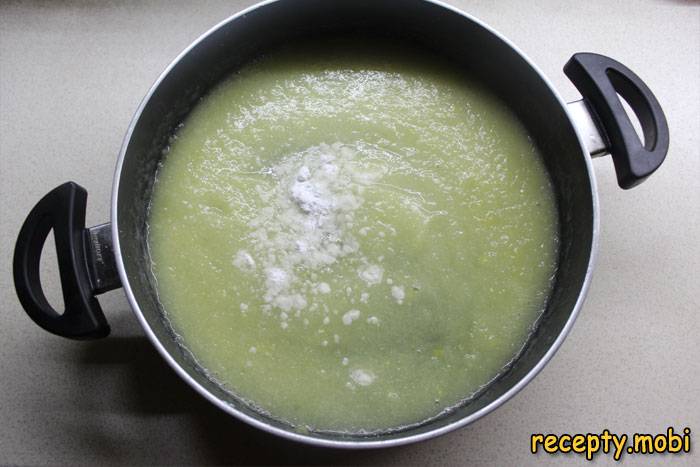
Purée the soft melon into a smooth jam with an immersion blender, right in the pan. Add the starch dissolved in 2 tablespoons of cold water and stir with a silicone spatula. Dry starch will form lumps, so always dissolve it in cold water. Bring back to the boil and cook for 2–3 minutes.
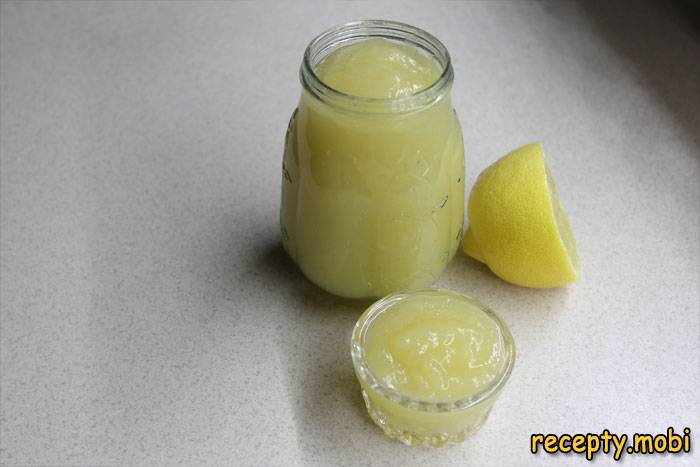
Spoon the hot jam into sterilised jars, filling right to the rim. Sterilise the glass jars and lids in advance in the oven at 120 °C for 15 minutes or over steam. Seal the jars and turn them upside down to check the seal. Store the jam in a cool, dark place.


Tips
- 1
Choose sweet muscat melons (kolkhoznitsa, torpeda) – they give a richer aroma. With watery varieties the jam will turn out pale.
- 2
The starch makes the jam thicker – adjust the amount to taste. For a very thick version use 2 tablespoons.
- 3
Lemon zest adds aroma – do not skip this step, and take off only the yellow part, as the white pith is bitter. Watermelon jam is made on a similar principle.
- 4
Serve with morning toast or use as a filling for pies, strudels and buns.
FAQ
How long does the finished jam keep? +
Under a sealed metal lid in sterile jars – up to a year in a cool, dark place at 5–15 °C (cellar, pantry). Under a nylon lid in the refrigerator – up to 2 months. Once opened, keep any jar in the refrigerator and use it within 2–3 weeks. If mould appears on the surface, throw away the whole jar – do not try to scrape off the top layer. Signs of spoilage: a bulging lid, bubbles, or a change in colour or smell.
Can I leave out the starch? +
Yes, but the jam will be runnier – closer in consistency to a preserve or confiture. Without starch you need to cook the mixture down longer – about 30–40 minutes instead of 15–20, so that the excess moisture evaporates. Alternatives to starch are pectin (3–5 g of powder), agar-agar (1 tsp) or gelatine (10 g, soaked separately). Each thickener gives its own texture: starch a soft one, pectin a jelly-like one, agar-agar a firm one. The choice depends on what the jam is for.
What can I use instead of vanilla? +
Vanilla sugar (1 sachet instead of a pinch of natural vanilla), vanilla extract (1/2 tsp) or a vanilla pod (split in half and added whole) all work. You can leave it out altogether – the flavour will still be excellent, as the vanilla only adds extra aroma. Alternative flavourings: cinnamon, cardamom or nutmeg – a pinch at the end of cooking. For a grown-up version, add a tablespoon of dark rum or white wine for an interesting accent.
- Comment
or post as a guest
Be the first to comment.