avg —
Pear and Plum Compote for Winter

Instructions
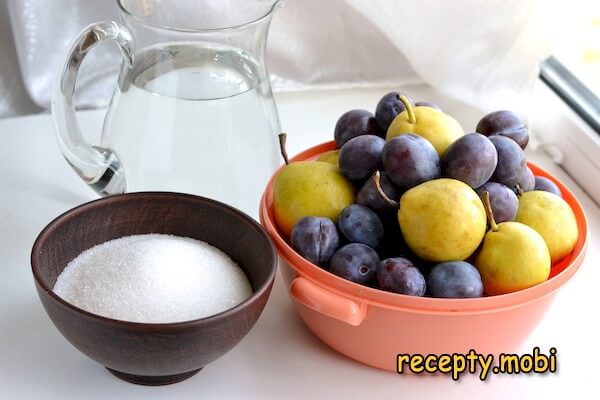
Prepare everything needed for the pear and plum compote for winter.
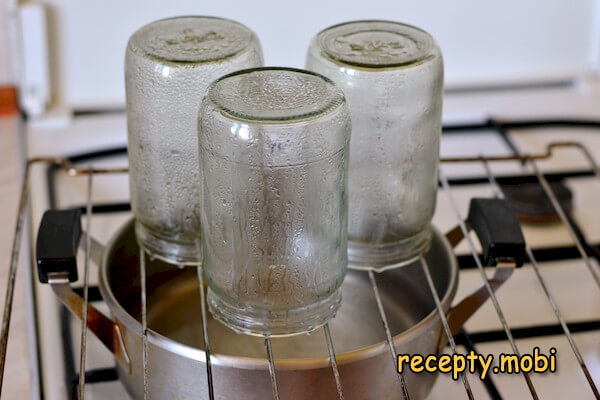
Prepare the jars properly before canning: wash them with food-grade baking soda and rinse thoroughly with clean water. Then be sure to sterilize them. It is convenient to sterilize with steam: put a pot of water on the heat, set a rack inside and place the washed jars on it. Once the water boils, hold the jars over the steam for about 5 minutes. Boil the canning lids in a saucepan for a few minutes.
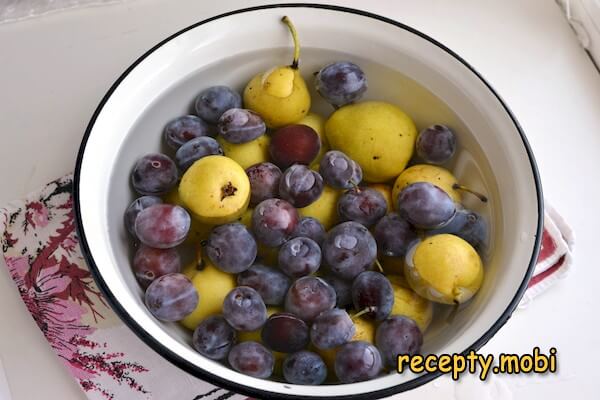
Wash the pears and plums well.
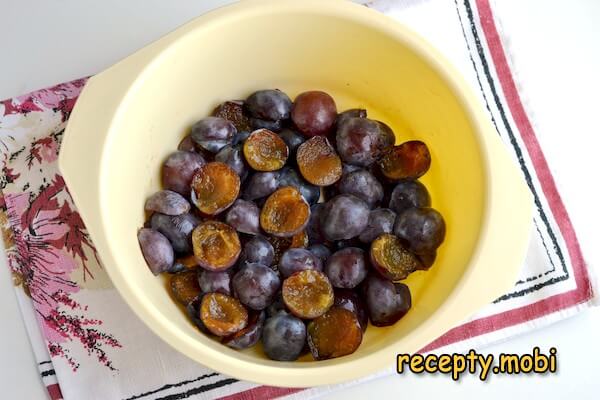
Cut the plums into two halves and discard the pits.
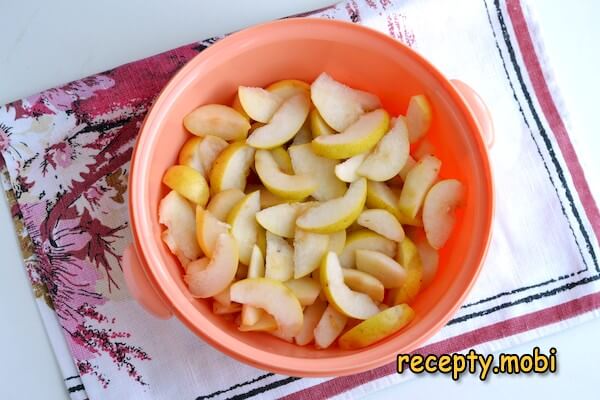
Cut the pears lengthwise into wedges. Carefully cut the core with the seeds out of the pear wedges.
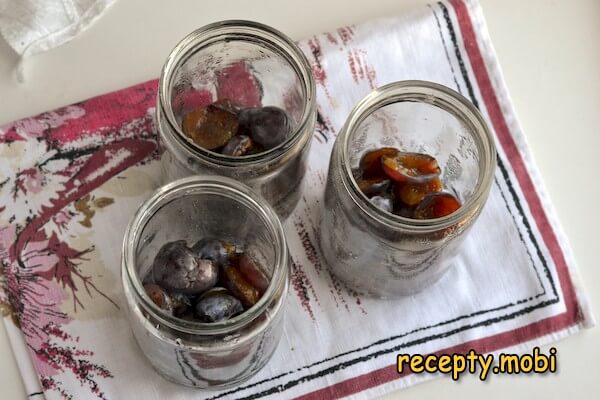
Divide the plum halves evenly among the sterilized jars.
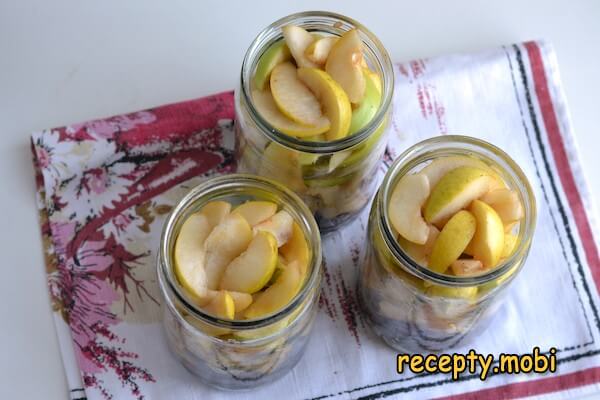
Place the cut pear wedges on top of the plums in the jars.
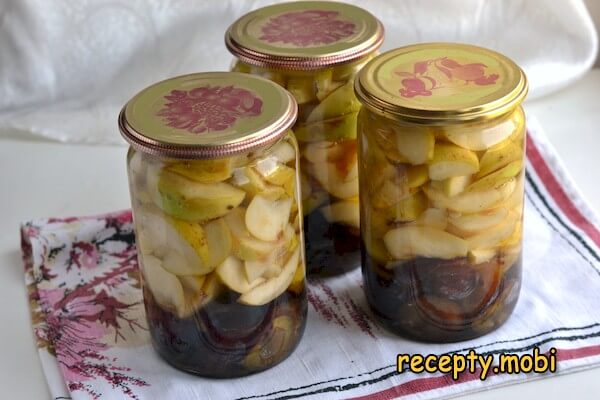
Boil clean water and pour the boiling water over the fruit in the jars. Cover the jars with the lids and leave them on the table for 10 minutes.
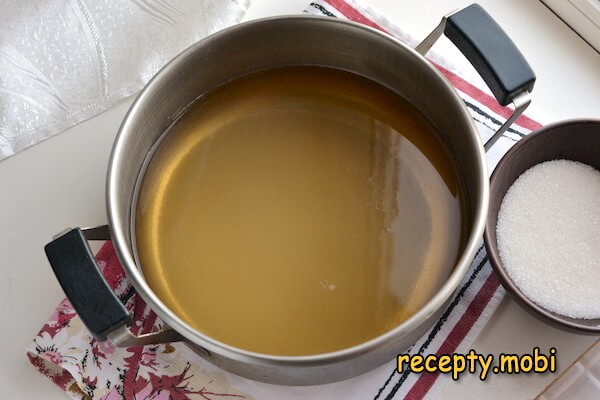
After 10 minutes, pour the water into a small pot and bring it to a boil. Add the sugar to the boiling water, stir, and cook the syrup for 2 minutes.
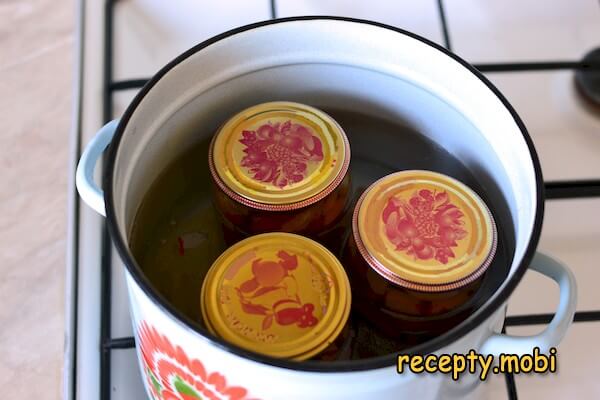
Pour the syrup into the jars filled with fruit. Cover them with the lids but don't seal them – the compote needs to be sterilized. Take a large pot and line the bottom with a thick cloth. Carefully transfer the jars of compote onto the cloth. Pour hot water into the pot carefully, taking care not to splash it onto the jars, until the water reaches the shoulders of the jars. Bring the water to a boil and adjust the heat so the water does not bubble hard. Sterilize the jars of compote for 15 minutes.
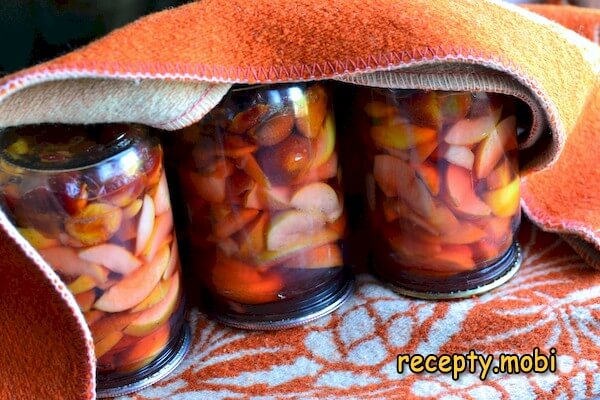
Take the jars out of the pot and seal them tightly. Check that they are well sealed, then carefully turn the jars upside down onto their lids and leave them under a blanket overnight.
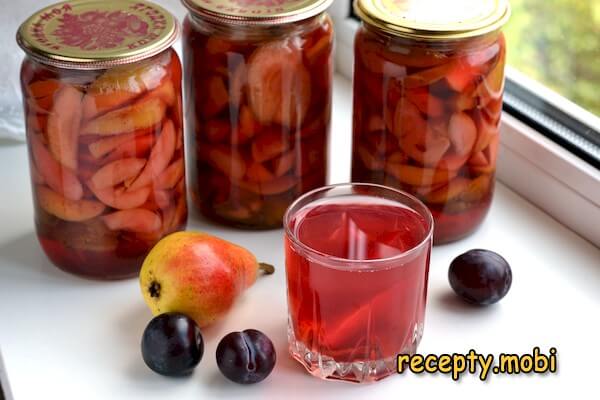
The pear and plum compote for winter is ready. Move the jars to a dark place for storage.Enjoy your meal!


Tips
- 1
No citric acid is the highlight of this recipe. The double pour of boiling water plus sterilizing keep it well preserved without any chemistry.
- 2
A cloth on the bottom of the pot protects the jars from bursting. Without it, the glass can crack from the temperature change.
- 3
Under a blanket after sealing, the compote "comes to" as it cools slowly, an extra pasteurization. This is a grandmother's trick.
- 4
Storage in a dark place: light "bleaches" the compote and destroys the vitamins. The same principle works for other kinds of fruit compotes.
FAQ
Which pears and plums should you choose? +
Ripe, firm pears with dense flesh are ideal – Conference, Clapp's Favourite, Severyanka, Beurre Bosc, Duchesse. Choose medium fruit (180-220 g), with no wormholes or soft spots. Overripe pears will "leak" in the jar. For plums, dark varieties such as Hungarian damson, Stanley, greengage and mirabelle give the compote a beautiful colour. Yellow plums work too – their flavour is more delicate. Choose medium fruit with no damage. Before packing, be sure to wash and pat them dry. Removing the pits makes the compote keep longer (pits can cause fermentation). The season for pears and plums is August to September.
Can it be made without sterilizing? +
Without sterilizing, a double pour of boiling water (24 hours apart) will give a result, but a less stable one. Sterilizing for 15 minutes is "insurance" against mould and fermentation. For "reliable" preserves, the author recommends sterilizing. Alternatives: a triple pour of boiling water (10 minutes each time) also works, but takes longer. A home autoclave is the professional option. For "modern" equipment, there is oven sterilizing (the filled jars are placed in the oven at 120 °C for 15 minutes). Without sterilizing, the compote keeps for 6 months; with sterilizing, up to 2 years.
How long does the compote keep? +
In a dark, cool place (a pantry, cellar or balcony in winter) – up to 2 years. In warmth and in the light – no more than 6 months. After opening the jar – in the fridge for up to 5-7 days. Do not use compote that shows signs of spoilage: cloudiness, mould on the lid, hissing when opened, a sour taste. The ideal storage temperature is 5-15 °C. On a balcony in winter, shield it from direct sunlight with a piece of cardboard. In a cellar, check the humidity level from time to time (no more than 70 %). Label the sealing date on the lid to keep track.
What do you serve the compote with? +
The classic way: with tea or after a meal as an "after-dinner" drink. With pancakes, fritters and cheese pancakes – for breakfast. With pies, cakes and muffins – as a dessert serving. With pelmeni, vareniki and stuffed cabbage rolls – "home style". In winter – chilled from the fridge or warmed with cinnamon. For cocktails – as a base for non-alcoholic punches. For children – dilute it with water 1:1 (the compote is concentrated). Use the fruit and berries from the jar: add them to curd cheese, baking or ice cream. For a "pear mojito" – compote plus mint plus ice. A versatile homemade drink for any occasion.
- Comment
or post as a guest
Be the first to comment.