avg —
Rice with curry and vegetables – a budget side dish in no time

Instructions
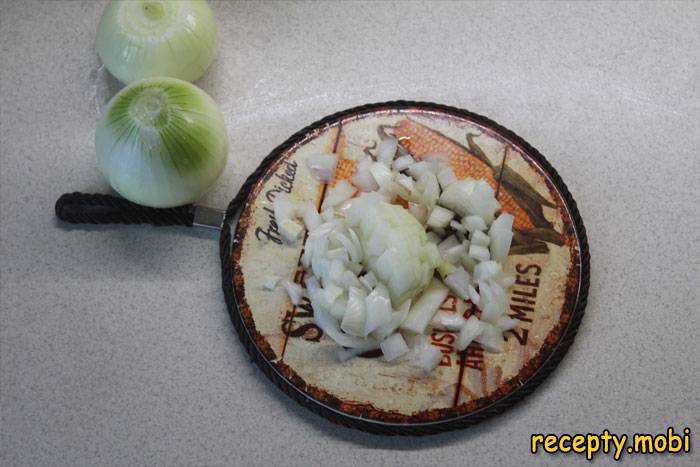
First, I wash all the vegetables thoroughly under cold running water. I pat 1 onion dry with paper towels and cut it into small cubes of 3–4 mm – a fine dice gives an even texture in the finished dish and cooks quickly.
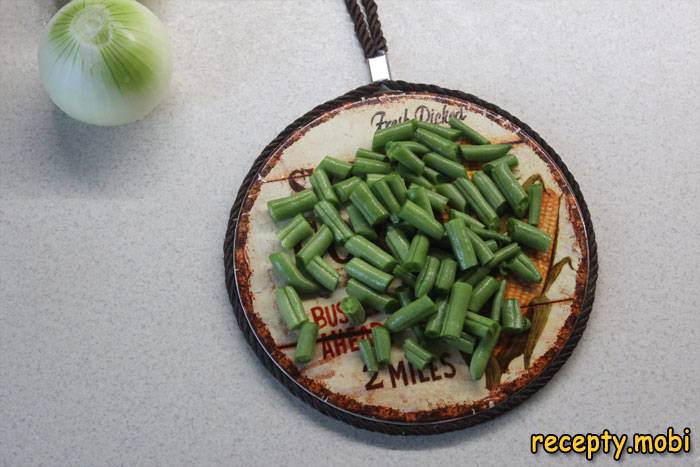
I cut the dried green beans (50 g) into thin strips 3–4 cm long – this shape looks attractive in the finished rice and soaks up the curry aroma evenly. You can also cut the beans crossways into small pieces of 2–3 cm for a denser texture.
I finely chop ⅕ of a fresh green chilli pod with a sharp knife – for less heat, remove the seeds and the inner membranes. The chilli gives the dish its characteristic Asian piquancy. For a milder version suitable for children, the chilli can be replaced with ½ teaspoon of sweet ground paprika.

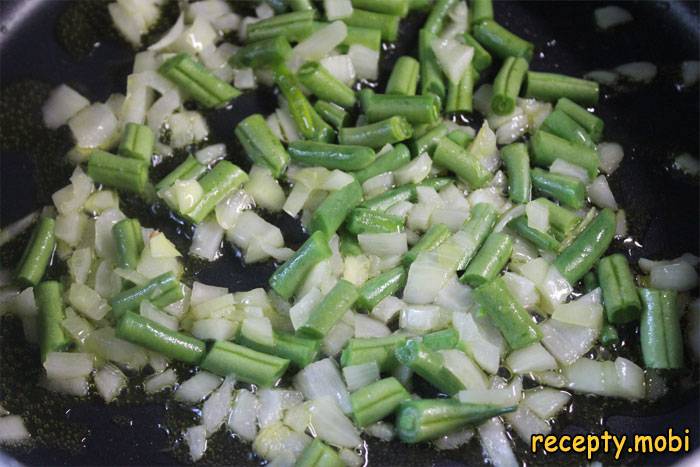
In a heavy-bottomed pan, I heat 1 tablespoon of olive oil over medium heat for 1 minute. I sauté the chopped green beans and onion in the hot oil for 3–4 minutes, until the onion turns translucent – the vegetables should soften but keep their colour. They should not brown fully.
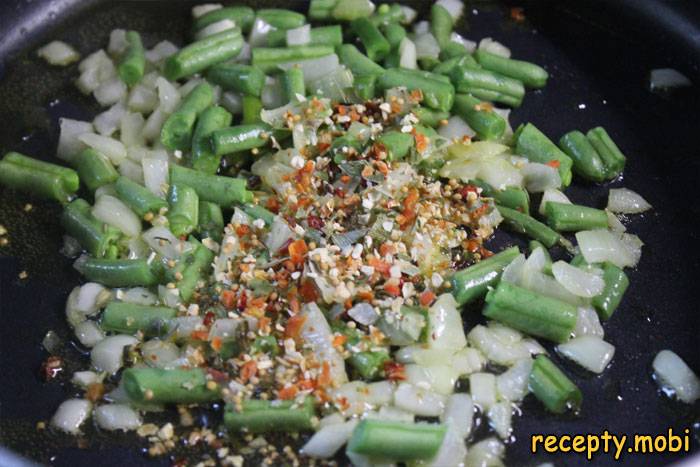
I add 1 teaspoon of a homemade mix of dried vegetables (carrots, garlic, tomatoes), or any ready-made rice seasoning, to the vegetable mixture. I cook it with the vegetables for 1 minute – the dried vegetables quickly release their aroma into the hot oil and enrich the flavour of the dish to come.
I add ½ cup (about 100 g) of long-grain rice, rinsed beforehand. Rinsing is needed to remove excess starch – wash the rice in cold water several times until the water runs clear. I lightly toast the rinsed rice grains together with the vegetables for 1 minute, stirring constantly – the grains should turn slightly translucent and become coated in oil. This home technique gives the finished rice a characteristic nutty flavour and a fluffy texture.
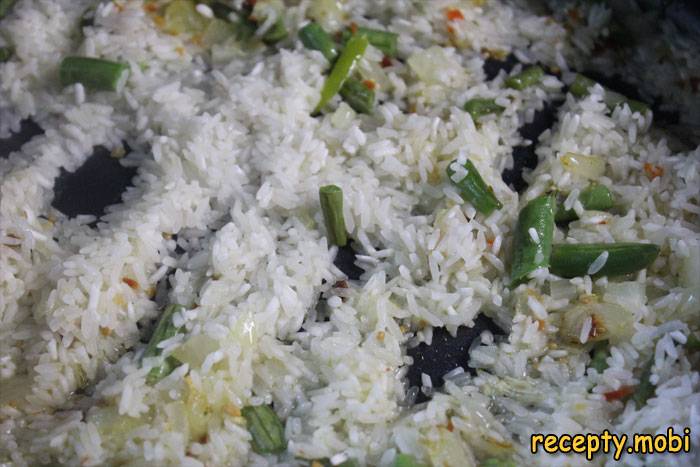
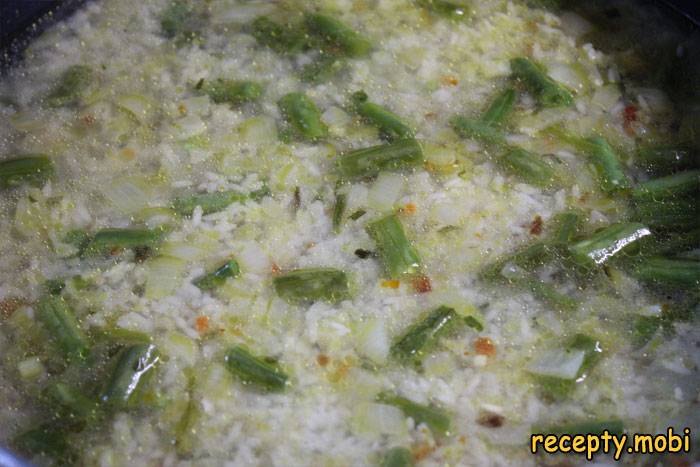
I pour 1 cup (200 ml) of hot water into the pan, or chicken stock for a richer flavour – the ratio of 1:2 (rice to liquid) is the classic proportion. I add salt to taste, bring it to the boil, reduce the heat to its lowest setting and simmer the rice under a tightly closed lid until the grains are completely soft – about 15–18 minutes. Do not lift the lid during cooking, or the steam will escape and the rice will not cook evenly.
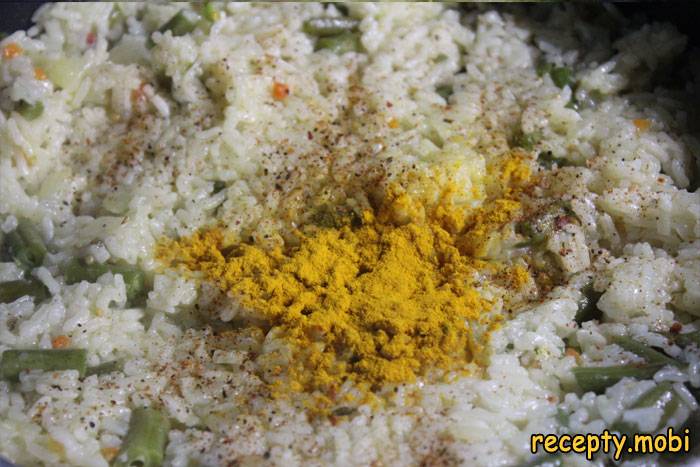
When the rice is ready, I add curry to taste (usually 1 heaped teaspoon per serving – for a moderate aroma). I lightly toast the finished curry rice for 1 more minute over medium heat, stirring constantly, so that the seasoning is distributed evenly and releases its aroma. I adjust the dish to taste – adding more salt if needed.
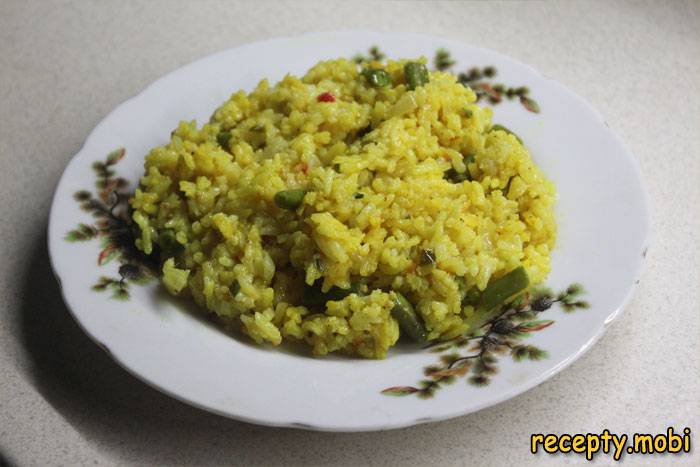
The homemade rice with curry and vegetables is ready! I turn it out onto an attractive serving plate – you can shape it into a small mound for an impressive presentation. I serve it hot as a dish in its own right or as a piquant side for meat dishes. I garnish the dish with fresh herbs (coriander, parsley) and a slice of lemon for a juicy accent.


Tips
- 1
Use long-grain rice (basmati, jasmine or ordinary long-grain) – it turns out fluffy and does not clump into mush. Short-grain rice gives a sticky texture, which is not suitable for this dish.
- 2
Lightly toast the rice in hot oil before adding water – this is the secret technique for a characteristic nutty flavour and a fluffy structure in the finished dish. A professional touch done at home.
- 3
Add the curry right at the end of cooking (once the rice is already done) – this way the aroma is preserved better and is more intense. With prolonged cooking, curry loses some of its essential oils.
- 4
Serve the piquant rice with chicken, pork, beef or lamb – this step-by-step recipe is a great complement to any meat dish. For a vegetarian dinner, serve it as a dish in its own right with a vegetable salad.
FAQ
Can I use short-grain rice instead of long-grain? +
You can, but the dish will turn out noticeably stickier and more like risotto than classic Asian rice. Long-grain rice (basmati, jasmine, ordinary long-grain) gives that characteristic fluffy texture, with each grain staying separate. Short-grain rice (Krasnodar, arborio) contains more starch and clumps into a single mass. If you use only short-grain rice, increase the amount of oil to 2 tablespoons and rinse the rice thoroughly in 5–6 changes of water – this helps remove excess starch. The best option for a homemade pilaf is a mix of long-grain and basmati in a 3:1 ratio.
What can replace the green beans in the rice? +
Excellent substitutes: green peas (50 g fresh or frozen – the classic option), broccoli (50 g in florets – adds vitamins), bell pepper (½ diced – bright colour), sweetcorn (50 g fresh or tinned – a sweet note), carrot (½ in small cubes). Any vegetables you like will work – this step-by-step recipe adapts to whatever is in the fridge. You can add 2–3 kinds of vegetables at once for a more complex flavour. For Asian authenticity, use sliced shiitake or oyster mushrooms (50 g). The homemade version changes every time.
How much water do I need to cook the curry rice? +
The standard ratio for long-grain rice is 1:2 (one part rice to two parts water or stock). For ½ cup of rice you need 1 cup of water. But it is better to go by the doneness of the grains rather than by exact proportions alone – different varieties of rice absorb different amounts of liquid. Basmati needs slightly less water (1:1.5), while jasmine takes the standard 1:2. Check the doneness by tasting a grain after 15 minutes – it should be soft on the outside and slightly firm inside. If the liquid has evaporated but the rice is still hard, add ¼ cup of water and carry on simmering. For a stock-based version, use chicken or vegetable stock instead of water.
Which meat is best to serve with curry rice? +
Classic pairings: fried chicken breast or thighs (an Asian accent), pork chops or kebab (a homemade Russian option), beef braised with vegetables (a rich flavour), lamb with pomegranate seeds (an Eastern direction), roast turkey (a dietary choice). For fish – baked salmon or mackerel. For vegetarians – fried tofu, chickpeas or baked mushrooms. The spiced rice goes well with any meat thanks to the versatile flavour of curry. For an impressive presentation, shape the rice into a mound on the plate, top it with pieces of meat, and garnish with herbs and a wedge of lemon. The homemade version – restaurant-level presentation.
- Comment
or post as a guest
Be the first to comment.