avg —
Spicy Sauce

Instructions
I prepare the ingredients. The chili sauce can be replaced with half a teaspoon of finely chopped hot pepper (fresh or dried). If you use fresh roe instead of salted capelin roe (or another fish with small, firm eggs), it should be lightly salted and left for 20 minutes, then used in the recipe.
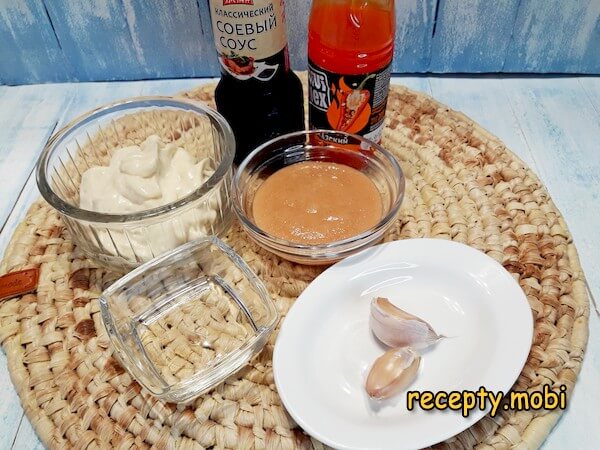
In a small bowl I combine the mayonnaise and soy sauce – this is the "base" of the sauce, with a balance of creaminess and saltiness.
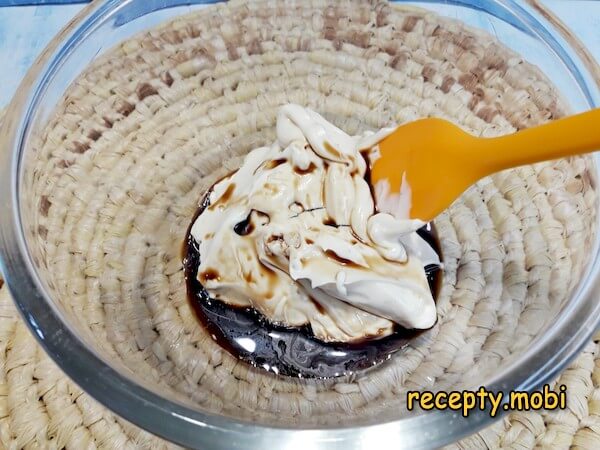
I stir the mixture until smooth. It is best to do this with a silicone spatula – it gathers every bit of the ingredients from the sides of the bowl and mashes them thoroughly. To soften the heat of the next ingredients, I pour in the sesame oil – it is what gives the "Japanese" aroma.
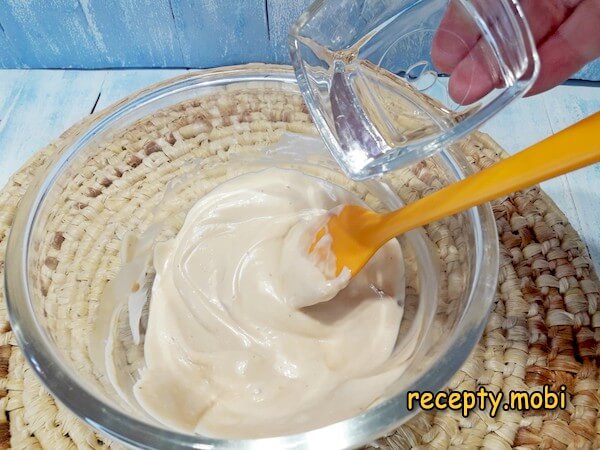
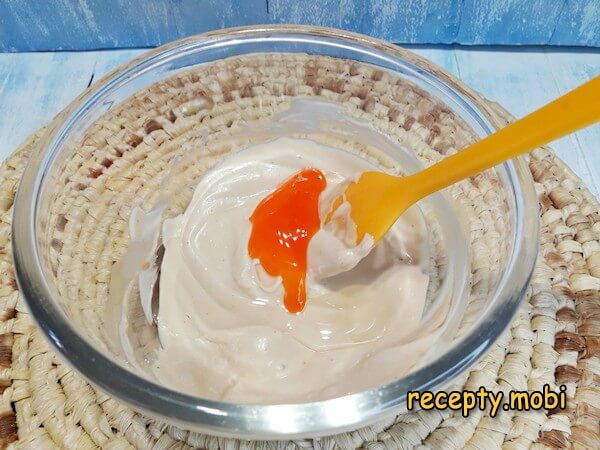
I add the chili sauce or hot pepper. Again I grind everything together – the heat should be distributed evenly through the sauce.
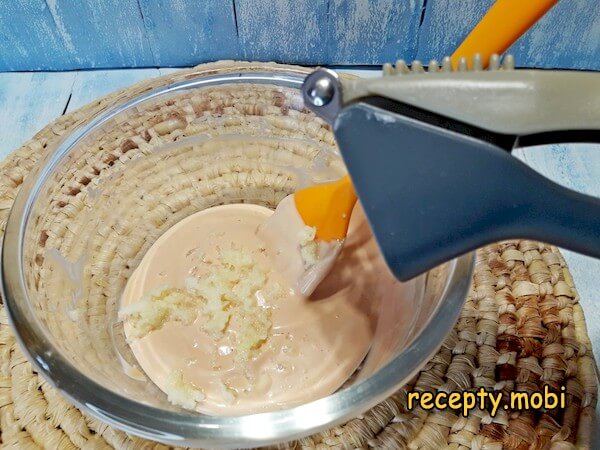
I press the garlic through a press, or grate it on the finest grater, into the mixture. I stir it in so that the mass becomes smooth and the garlic paste does not stick together in a lump in one place – the "secret" against garlic "clumps".
Now the last ingredient remains – the fish roe. It will not only affect the flavour and colour of the sauce, but also change its structure – giving it that characteristic "grainy" texture.
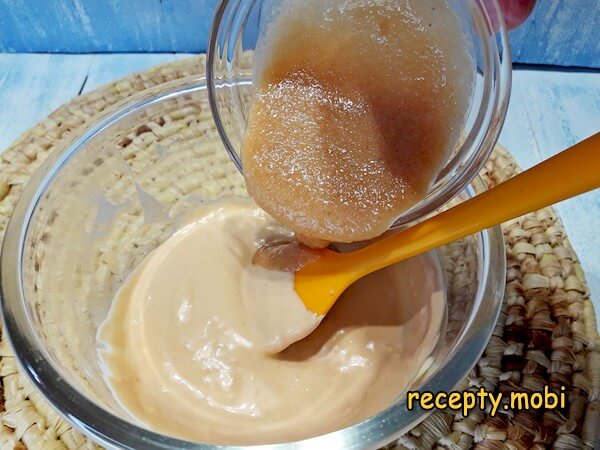
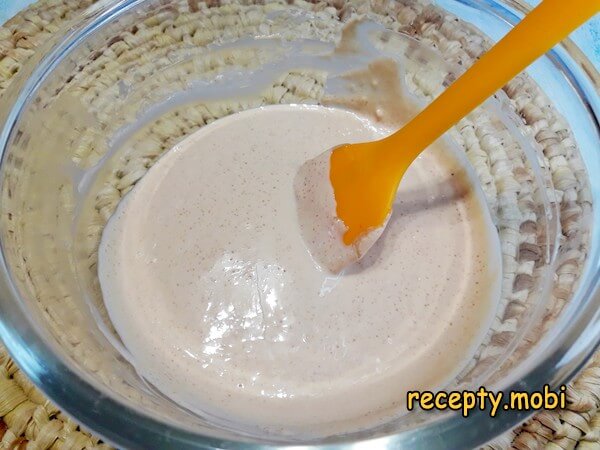
Once more I mix everything well. The roe eggs should separate from one another, and the base itself should become silky-smooth and thick. In the mouth the eggs pleasantly crunch and pop, while the additions used create an interesting combination of Asian aroma and heat.The finished spicy sauce can be spooned on top of rolls and baked in the oven, or used for ordinary sushi. This sauce is often served with rice and even with baked potatoes. A flexible, all-purpose "Japanese" sauce that fits into dozens of dishes.


Tips
- 1
JAPANESE MAYONNAISE vs ORDINARY – the "secret" of authentic flavour. Japanese "Kewpie" mayonnaise (the number-one brand in Japan) is thick and creamy, with a slight tang and aroma, made on egg yolks with rice vinegar. In Russia it is available in Asian shops (200–400 rub. per bottle). An alternative is ordinary "Calve" or "Maheev" at 67% fat (the classic choice). Not suitable: "light" 30–40% versions (the sauce will be watery), olive-oil mayonnaise (a different flavour profile), or homemade mayonnaise without spices (it won't give that "depth"). For a strict Japanese version, look for "Kewpie".
- 2
CAPELIN ROE vs FLYING FISH ROE – the "secret" of the texture. The authentic Japanese roe is "tobiko" (flying fish roe), tiny orange spheres 1–2 mm across, firm and popping on the teeth. It costs 1500–3000 rub. per 100 g and is hard to find. Capelin roe is the affordable replacement: roughly the same size, softer and cheaper (200–400 rub. per 100 g). Alternatives: pollock roe (but softer), salmon roe (larger, not suitable), masago (salted roe, similar to capelin). For a strict Japanese recipe use tobiko; for a "homemade" one, capelin.
- 3
SESAME OIL – the "secret" of the Japanese aroma. Without sesame oil, spicy sauce will not be "spicy". It is a small amount (1 tsp), but it is exactly what gives that "nutty Asian" aroma, without which spicy is just "hot mayonnaise". The best types: "toasted" sesame oil (black or brown in colour, more aromatic) and "cold-pressed" (golden, milder). An alternative is aromatic sesame oil (sold in Asian sections). Ordinary vegetable oil won't do – it has no aroma. A similar "sesame oil as an accent" principle works in homemade teriyaki sauce.
- 4
A 30-MINUTE REST – the "secret" of developing the flavour. Right after it is made, the sauce has not yet "come together" – the garlic has only just begun to release its aroma, the roe has not yet "absorbed" the seasonings, and the chili is only starting to open up. Thirty minutes in the fridge in a sealed container lets all the components "mature" into one balanced composition. Stir before serving. It keeps in the fridge for up to 3 days. The ideal serving is with homemade Philadelphia rolls.
FAQ
What can I use instead of capelin or flying fish roe? +
The roe is not a "mandatory" component – you can leave it out or replace it. The best alternatives: pollock roe (softer, cheaper), salmon roe (larger, gives a "premium" character), pike roe (small, golden, an analogue of tobiko), masago (salted roe, identical to capelin in texture). For a completely "roe-free" version: 1 tbsp of grated Parmesan (gives a "salty-umami" effect), 1 tsp of crumbled nori (for a "sea" aroma), or finely chopped shrimp (1–2 pieces). The sauce without roe will be "smooth", without the "grainy" texture, but still tasty.
How long does spicy sauce keep? +
In a sealed glass jar in the fridge – 3–4 days without loss of quality. After day 4 the roe begins to "separate" from the mayonnaise and an unpleasant "fishy" smell appears. For longer storage, freeze it in small containers (30–50 g per portion); it keeps for up to 1 month. Defrost in the fridge for 4–6 hours and stir before serving. Do not keep it at room temperature – egg-based mayonnaise spoils quickly in the heat. Make it "as needed" – the sauce takes only 7 minutes.
What else can I serve spicy sauce with besides rolls? +
It is a versatile sauce for Japanese and Asian cuisine. The classics: hot baked rolls (with shrimp, salmon, eel, tuna), California and Philadelphia sushi, tempura (battered seafood). Alternative uses: with fried chicken or turkey as a "rich" sauce, with baked fish (salmon, cod), with French fries as a "Japanese ketchup", with grilled vegetables, or as a dip for crackers and crisps at a buffet. For a "burger" version, spicy sauce replaces the "special sauce" in Asian curry-chicken burgers.
Why did the sauce turn out too spicy? +
The heat depends on 3 factors. First – the chili sauce; it is better to take a "mild" one (such as "Sweet Chili Sauce" with a sweet-and-sour balance, not "Habanero" or "Sriracha"). Second – the garlic: 2 cloves is normal, but if they are large the heat is intensified. Third – the roe, which also gives a "mild" heat from the salt. If you have already made it too spicy, you can "fix" it: add another 50 g of mayonnaise (reduces the concentration of heat), 1 tsp of honey (the sweetness balances the heat), or avocado purée (1/4 avocado – gives an "oiliness" against the heat).
- Comment
or post as a guest
Be the first to comment.