avg —
Sauce "Béchamel" – cooking options

Instructions
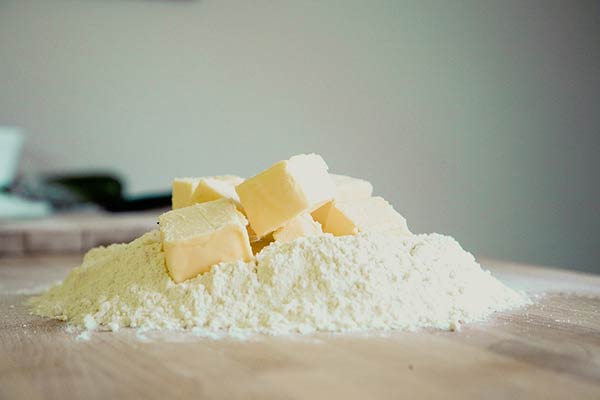
Melt the butter (50 g) in a thick-bottomed saucepan over low heat until fully melted, but without frying it. A thick bottom spreads the heat evenly – a thin one will burn the butter. The butter should melt but not brown, otherwise it turns bitter and the sauce loses its white colour. Take the saucepan off the heat as soon as the butter is liquid.
Straight away, tip in the sifted flour (50 g) into the hot butter and quickly whisk it in for 30–60 seconds until you have a smooth "roux" paste with no lumps. Sifting the flour is essential – without it, lumps are guaranteed. This is the "white roux", a cornerstone of French cuisine. Do not keep it on the heat too long – the roux should not brown, or the colour of the sauce will change.

Take the saucepan off the heat (or set it to the lowest setting) and add cold milk in small portions (50–100 ml at a time), whisking constantly and vigorously until smooth after each addition. Cold milk into a hot roux is the "golden rule": the temperature difference prevents the flour from forming lumps.
First add the initial 100 ml of milk and stir thoroughly until smooth – at this stage the mixture looks like a thick batter. Once you are sure there are no lumps, gradually pour in the remaining 400 ml of milk, keeping the whisk moving. Adding the milk gradually is the key to a smooth sauce.
Return the saucepan to medium heat and bring the sauce to the boil, stirring constantly with the whisk. Once it boils, cook for 5–7 minutes over low heat until thickened, continuing to stir. The sauce should coat the spoon and run off slowly in a "ribbon" – that is the perfect thickness.
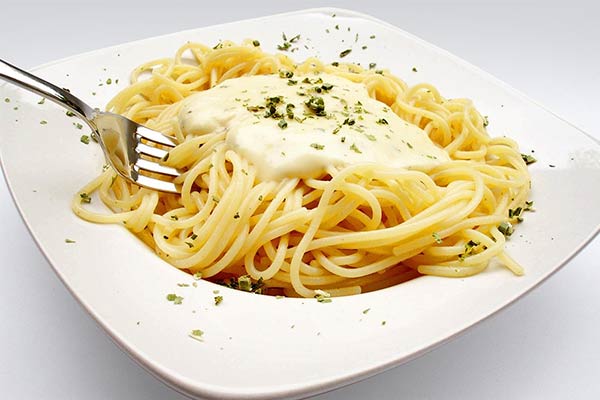
Add salt, ground black pepper and a pinch of ground nutmeg to the finished sauce – this is the "soul" of béchamel, the classic spice for a French milk sauce. Without nutmeg the sauce will be "bland" and "characterless". Stir thoroughly and check for salt – add more to taste. The classic Béchamel sauce is ready!


Tips
- 1
The main secret of a smooth sauce is temperature contrast: hot roux + cold milk (or the other way round), but not both hot or both cold at the same time.
- 2
Do not over-fry the flour when making the roux – the "white roux" should stay light, otherwise the sauce will taste bitter and lose its white colour.
- 3
Serve the sauce hot only – once it cools, it forms a thick skin on top. On a similar principle I make Mornay sauce (béchamel with cheese).
- 4
To stop a skin forming on the cooled sauce, place small pieces of butter on top or press cling film directly onto the surface.
FAQ
What dishes does béchamel sauce go with? +
Béchamel is a universal "mother" sauce of French cuisine and the base for many dishes. It is ideal for lasagne bolognese (the classic Italian way of serving it), bakes (potato, vegetable, meat), moussaka (the Greek aubergine bake), macaroni cheese (mac and cheese), and cauliflower or broccoli under cheese (gratin). It also suits baked fish, seafood (prawns, squid) and eggs Benedict. Béchamel is the base for Mornay sauce (with cheese) and Soubise (with onion).
Can I make it with tomato or cheese? +
Yes, béchamel is the base for many derivative sauces. With tomato: add 1 tablespoon of tomato paste to the finished béchamel for a pink "tomato béchamel", ideal with pasta. With cheese: add 100 g of grated parmesan, gruyère, cheddar or gouda for "Mornay sauce", ideal with vegetables and pasta. With onion: add 1 tablespoon of caramelised onion for "Soubise sauce". With mushrooms: 50 g of fried mushrooms for a "mushroom béchamel". With herbs: a bunch of dill or parsley for a "green béchamel".
How long does Béchamel sauce keep? +
The finished sauce keeps in the fridge in a glass container with a tight lid for up to 3 days. Before storing, cover the surface with cling film or pieces of butter – this prevents a thick skin from forming. Before using, reheat gently over low heat or in a water bath, stirring constantly. If the sauce has thickened during storage, thin it with a little milk. Do not freeze it – on thawing the sauce will "split" into milky whey and a buttery part, and the structure cannot be restored.
What should I do if lumps form in the sauce? +
If lumps of flour have formed in the finished sauce after all – do not panic, the sauce can be saved. Method 1: strain the sauce through a fine sieve – this removes the larger lumps and makes the texture smooth. Method 2: blitz the sauce with an immersion blender for 30 seconds – this instantly breaks down all the lumps until smooth. Method 3: to prevent lumps, always keep the temperature contrast and sift the flour. Better to prevent than to fix – that is the rule of French cuisine.
- Comment
or post as a guest
Be the first to comment.