avg —
Salsa Sauce – Classic Recipe

Instructions
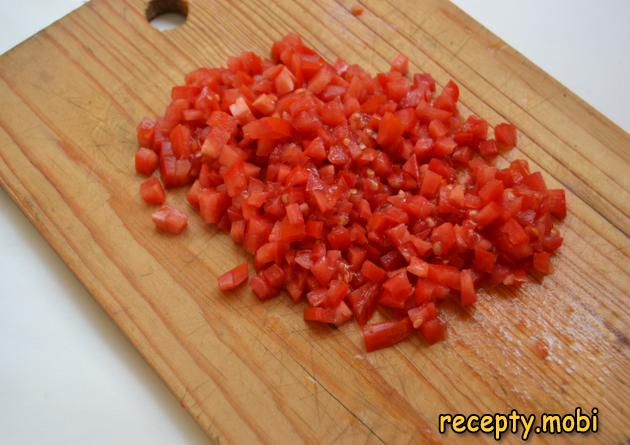
Prepare the ingredients for the classic Mexican sauce. Choose ripe, juicy tomatoes (3 pcs) – summer garden-grown ones or farmers' tomatoes with bright red flesh. Winter "greenhouse" supermarket tomatoes with a pale white core are not suitable – they make a "tasteless" salsa. Tomatoes of the "Beef Heart" or "Pink Giant" varieties are ideal.
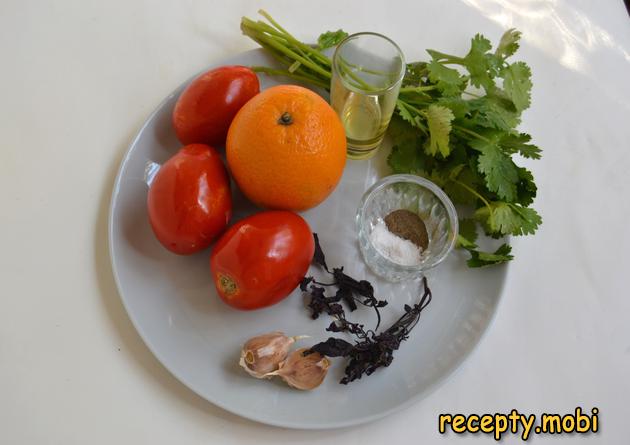
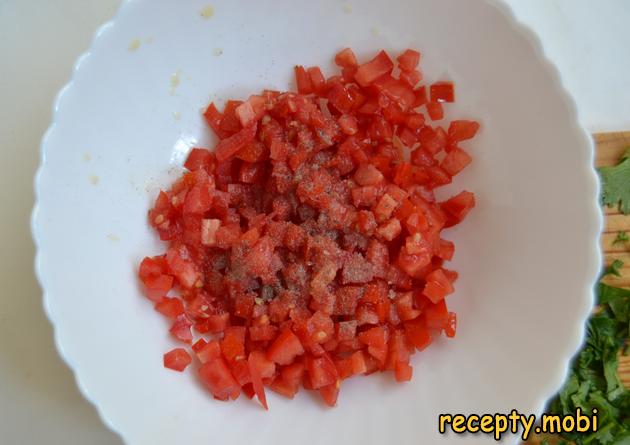
Wash the tomatoes thoroughly under running water and pat them dry with paper towel. With a sharp knife, cut the tomatoes into the SMALLEST POSSIBLE dice, about 5 mm – the "secret" to a proper salsa. Large pieces make the sauce "coarse", while pieces that are too small turn it "uniform" like a purée. About 5 mm is the "golden mean", with a distinctive texture.
Transfer the chopped tomatoes to a deep bowl. Season straight away with salt to taste (½ tsp) and ground black pepper – the salt will "draw out" the juice from the tomatoes and create the base for the sauce. Mix gently with a silicone spatula.
Wash the cilantro (30 g, 1 bunch) thoroughly under running water and dry it on paper towel – wet herbs will "water down" the sauce. IMPORTANT: pick the cilantro leaves off the stems and THROW THE STEMS AWAY – they give a "bitter", grassy taste. Use only the "tender" leaves. Finely chop the cilantro leaves with a sharp knife.
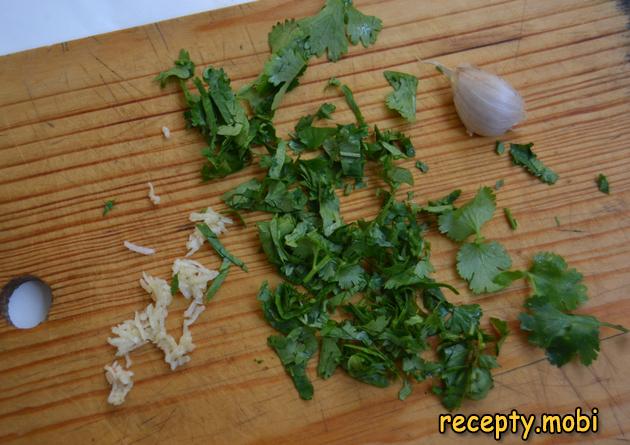
Peel the garlic cloves (2 pcs). Pass them through a press or grate them on a fine grater for maximum aroma. Alternatively, finely chop them with a sharp knife to a "paste". The garlic should be "fresh", with firm, plump cloves and no signs of sprouting.
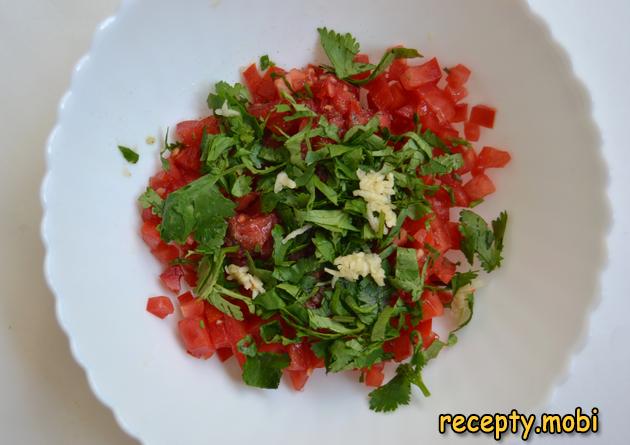
Add the chopped cilantro leaves and the crushed garlic to the bowl with the diced tomatoes. Mix gently – the herbs should be evenly distributed through the tomato mixture.
THE CRITICAL STEP: prepare the orange. Peel the fruit "to the flesh" with a sharp knife – first cut off the top and bottom, then cut away the peel together with the white pith (albedo) from top to bottom. The albedo is bitter and will spoil the salsa. You are left with "bare" amber flesh.
Cut the peeled orange into segments. From each segment, completely remove the white membranes between the sections – this is the orange "fillet", without membranes or seeds. Pick out any stray seeds by hand. The finished orange "fillet" is pure, sweet flesh.
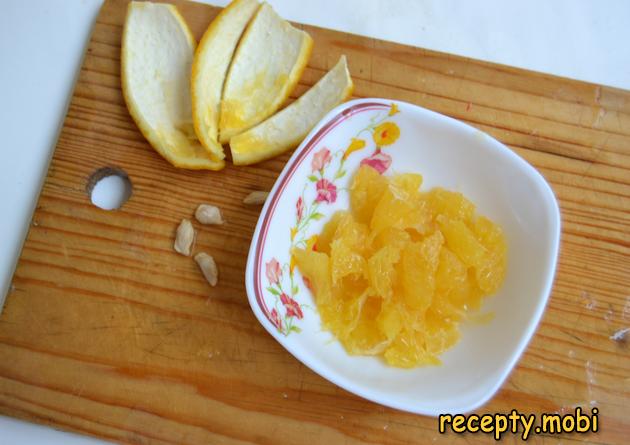
Cut the orange "fillet" into small 5 mm pieces – the same size as the tomatoes for a neat-looking sauce. You will get around 80–100 g of prepared orange flesh. Be sure to collect any juice released while cutting and add it to the sauce – it gives a "citrus" note.
Optionally, for a "spicy" Mexican version, add finely chopped hot chilli pepper (½ jalapeño or 1 pinch of ground chilli). The pepper seeds give the most heat – remove them for "medium" heat or leave them in for a "fiery" salsa.
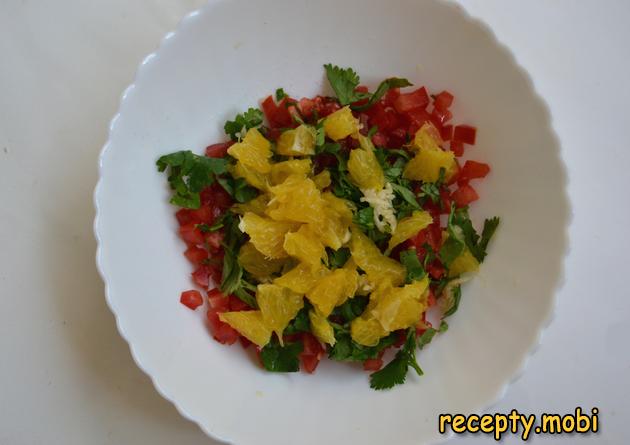
Add the chopped orange segments (with the collected juice) to the bowl with the tomato and garlic mixture. Mix gently with a silicone spatula – the citrus flesh should be evenly distributed.
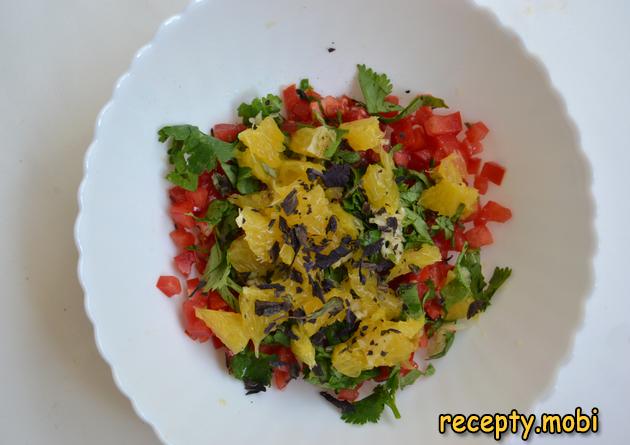
Add the fresh basil (30 g) or dried basil (2 tsp) to the sauce. Chop fresh basil finely with a knife and add it whole; "crumble" dried basil between your palms and add it – it gives a more intense aroma, but without the freshness. Fresh tastes better, dried is more convenient in winter.
Add the olive oil (1 tsp) – the "binding" ingredient for the sauce, which helps the spices "open up". If you like, add fresh lime or lemon juice (1 tbsp) to boost the citrus note. Mix everything thoroughly in the deep bowl until well combined.
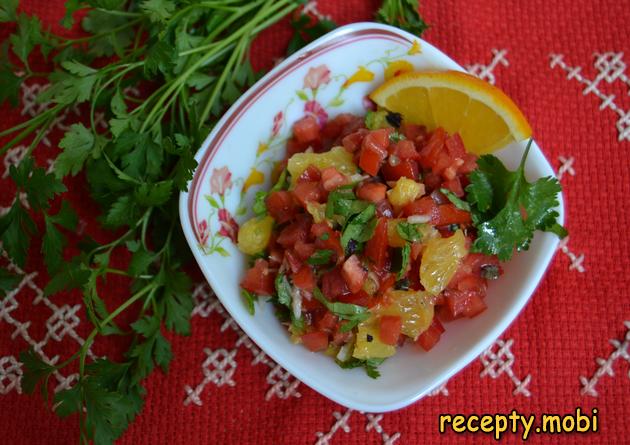
The classic salsa sauce with orange and tomatoes is ready! Serve it chilled in a nice ceramic or glass dish as an accompaniment to grilled meat, tacos and nachos. Before serving, let it rest for 15–30 minutes in the fridge – the flavours will "come together" and the sauce will become more aromatic.


Tips
- 1
Be sure to add fresh orange – the "secret" to an authentic Mexican salsa instead of an ordinary tomato sauce.
- 2
Peel the orange "to the flesh", removing the white pith – the albedo is bitter and will spoil the sauce.
- 3
Use only the cilantro leaves and throw the stems away – they give a bitter, grassy taste. I make classic guacamole on the same principle.
- 4
Let the sauce rest for 15–30 minutes in the fridge – the flavours will "come together" and the salsa will become more aromatic.
FAQ
What can I use instead of orange in salsa? +
Good options include: mandarin (a more "delicate", sweet citrus), grapefruit (a more "bitter" citrus for gourmets), lemon (a sharper aroma; add 1 tsp of sugar for balance), lime (a Mexican-cuisine classic), peach or nectarine (for a "summer" salsa without citrus), mango (for a "tropical" salsa), or fresh diced pineapple (for a "Hawaiian" salsa). There are also classic versions of salsa with no citrus at all – "pico de gallo" (tomatoes + onion + cilantro + jalapeño + lime juice). Each substitute gives its own character. Orange is the "original" option, with a balance of sweetness and acidity, ideal with grilled meat.
What types of salsa are there? +
The main types of Mexican salsa. Salsa roja (red) – tomato-based with chilli and onion, like our recipe. Salsa verde (green) – made from green tomatillos with cilantro and green chilli. Pico de gallo – a fresh "chunky" salsa made from larger pieces of tomato, onion, cilantro and lime. Salsa oscura – a "charred" salsa made from blackened tomatoes and chilli (more difficult to make). Mango salsa – a tropical fruity version with mango. Salsa with avocado – a mix with guacamole. Each has its own character. Our recipe with orange is an unusual hybrid version with a citrus note.
How long does the finished salsa keep? +
The finished salsa keeps in the fridge for up to 3 days in an airtight glass jar or container. On the second day the flavour is even richer – the aromas come together. Do not leave it at room temperature for more than 1 hour in hot weather – the fresh vegetables and herbs spoil quickly. Do not freeze it – the tomatoes and orange will "fall apart" on thawing and lose their distinctive "texture". Make fresh salsa just before serving, or at most 1–2 hours ahead. To keep it for longer than 3 days, simmer the salsa for 5 minutes (you will get a preserved version), but you will lose the "freshness".
What do you serve salsa sauce with? +
It is a universal Mexican sauce for many dishes. With grilled meat: pork or beef barbecue, chicken wings, steak, beef burgers. With grilled fish: salmon, trout, tilapia, prawns. With Mexican dishes: chicken or beef tacos, fajitas, burritos, quesadillas, nachos with cheese, tacos al pastor. With chips: corn nachos or potato crisps as a "dip" (a classic). With eggs: a "Mexican-style" omelette, fried eggs with salsa. On sandwiches: with avocado and feta. For drinks – a margarita (the classic Mexican choice), Corona beer with lime, or tequila with salt.
- Comment
or post as a guest
Be the first to comment.