avg —
Red currant sauce for meat

Instructions
I prepare the listed ingredients.
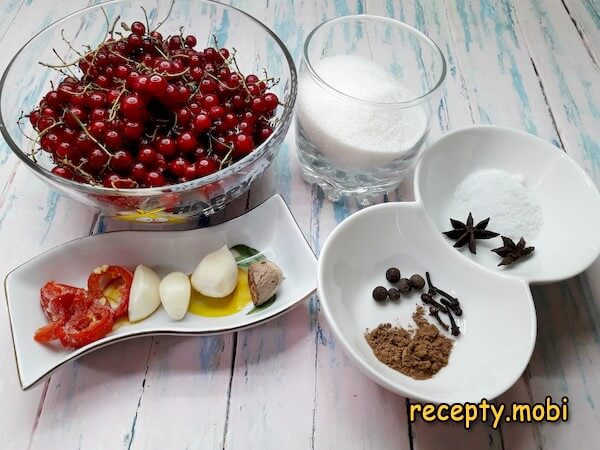
I strip the berries off the stems of the washed currants.
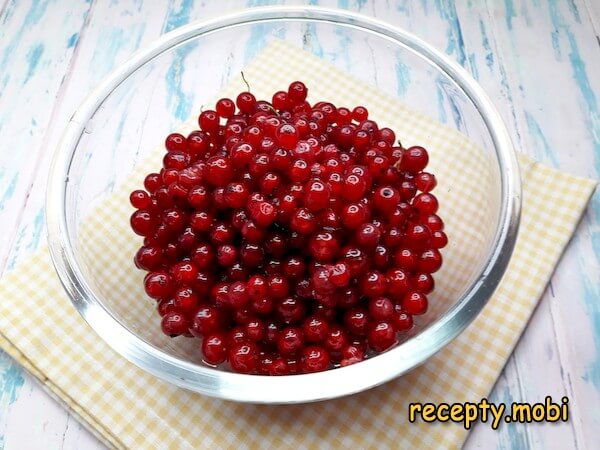
I sprinkle them with the sugar.

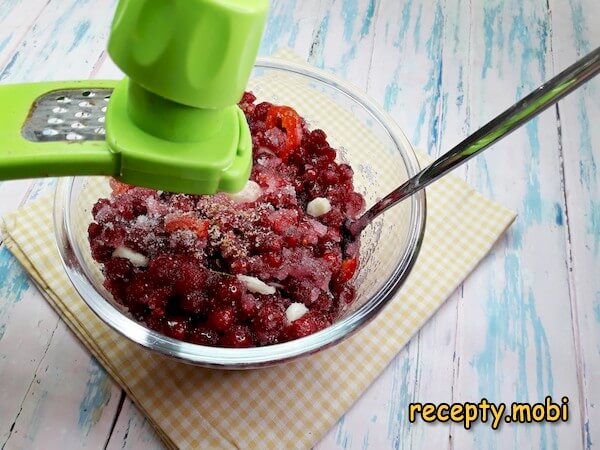
I add the chopped garlic cloves and the hot pepper. The combination of sweet, sour and spicy forms the flavour base, which the other spices will then build on for a brighter taste.

I season the mixture with grated nutmeg.
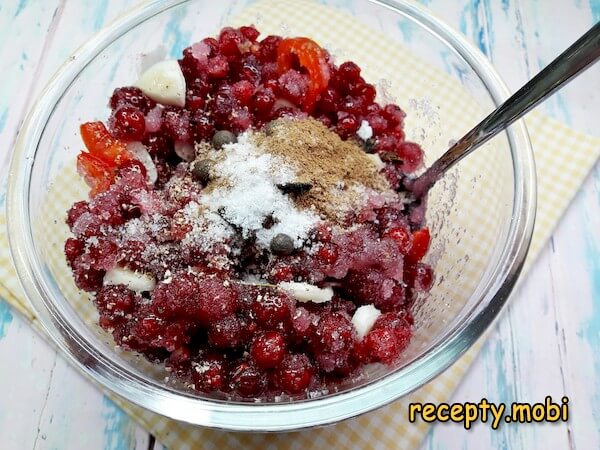
I add the remaining seasonings, crushing the star anise with my fingers.
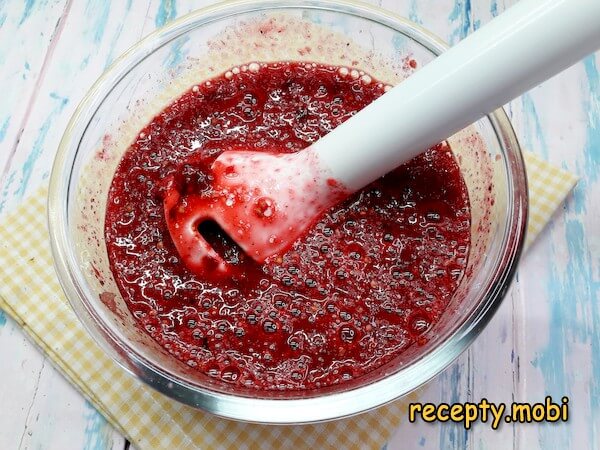
I blitz the prepared mixture with a blender.
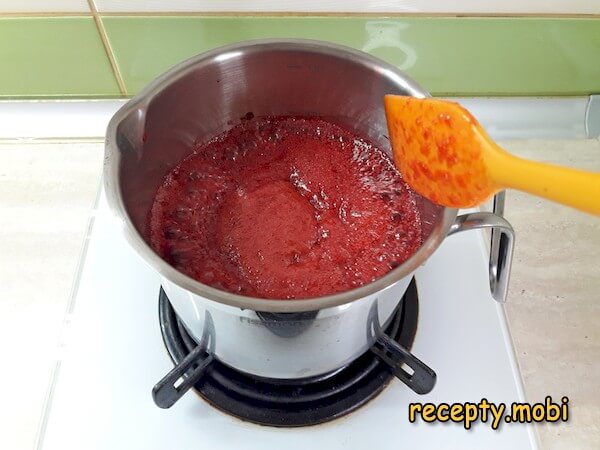
I transfer the resulting purée into a thick-bottomed saucepan and put it over high heat. The boiling foam will rise actively, so the mass needs to be stirred constantly for 10 minutes. By the end of this time the sauce will visibly thicken.
I tip the hot mass into a sieve to press it through. The pieces of spice and the currant pips stay behind in the pulp.
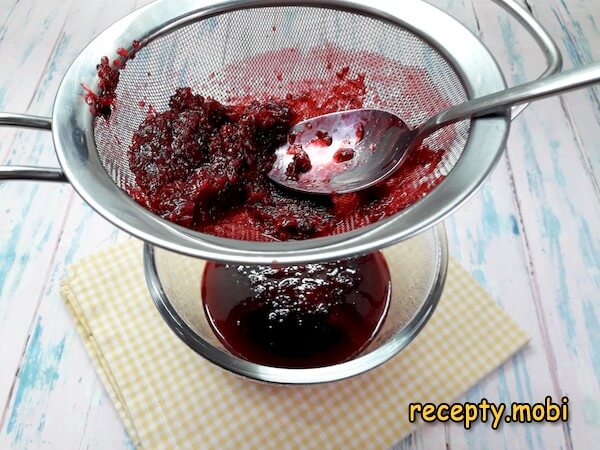
While it is hot, the resulting sauce is still rather runny. At this stage I taste it and perhaps add a little more salt. Once it cools, the mass becomes firmer.
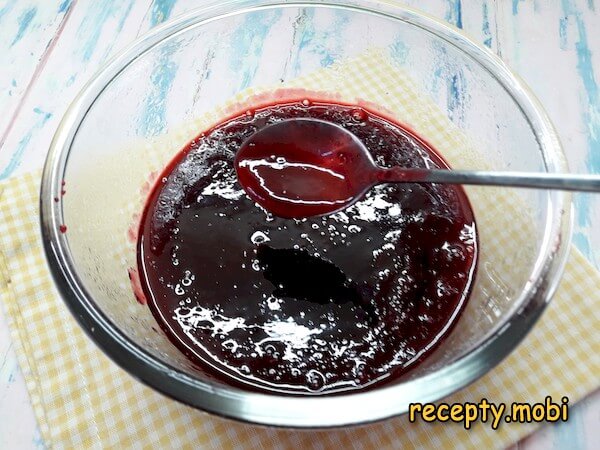
I pour the finished product into jars.
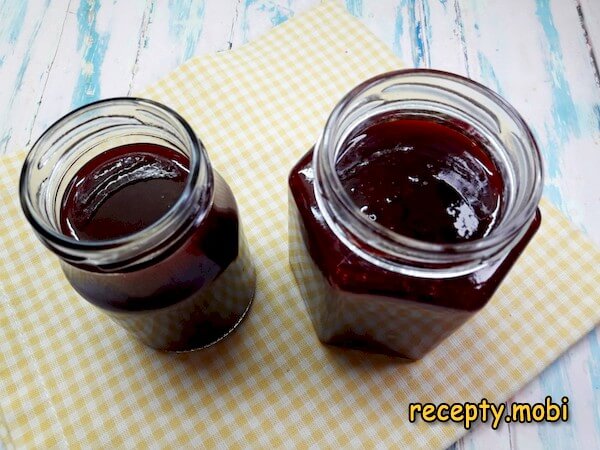
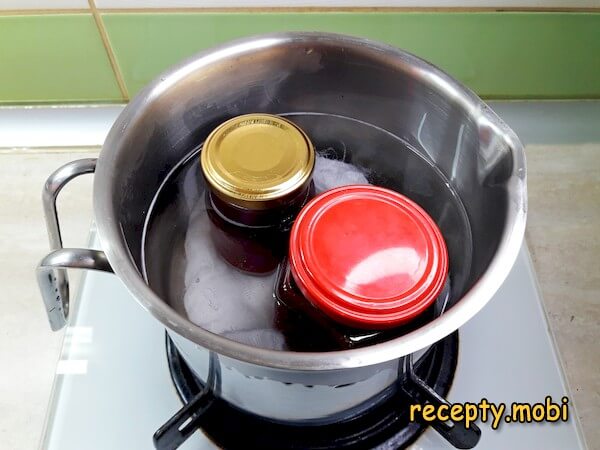
I stand them in a pot of suitable size (I line the bottom with a cotton cloth) and, since the sauce is hot, I pour in hot water too. I sterilise the preserve for 7 minutes. Then I seal the jars.The jars keep in a cool place (the fridge is best for this) until the following summer. But they are unlikely to last that long, because red currant sauce for meat, with its smooth, sweet-and-spicy texture, is wonderfully tasty and so gets eaten quickly.Bon appétit!


Tips
- 1
Currant pectin – the "secret" to thickness without a thickener. Ripe berries contain plenty of pectin, which gives a natural firmness as they cook.
- 2
Pressing through a sieve – the "secret" to smoothness. The pips and pieces of spice go into the pulp, leaving a clean, velvety sauce.
- 3
Crushing the star anise with your fingers – the "secret" to aroma. Whole stars release their flavour slowly; broken ones do so instantly and intensely.
- 4
Tasting before sealing – the "secret" to flavour. Hot sauce seems under-salted; once it cools, it tastes right. Adjust it when you taste. The same principle applies to other kinds of berry sauces for meat.
FAQ
What meat does the sauce go with? +
Ideally with roasted or fried meat that has a rich flavour: beef, duck, pork, lamb. Especially with ribeye steak, medallions and lamb ribs. With game (venison, elk, wild boar) it is a "premium" match. With roasted duck breast and apples it is a classic. With roasted or grilled chicken it works, but gently. With turkey at Thanksgiving. With patés and terrine, on sandwiches. With cheese (camembert, brie) it makes a "French" serving. With pork neck or gammon it adds extra tartness. It is not really suited to fish and seafood – the sauce will overpower their flavour.
Can the currants be substituted? +
Alternatives that keep the tartness: black currants (a more astringent taste), lingonberries (more "wild"), cranberries (for an "autumn" serving). For a "premium" version, a 50/50 mix of currants and lingonberries. Berries that are low in acid (cherries, raspberries, strawberries) are not suitable, as the sauce will turn out sweet. Among brands of frozen berries, "Hortex" and "4 Seasons" are good quality. Frozen currants should be thawed beforehand. For 400 g of berries, 150 g of sugar (a ratio of 8:3) is optimal for a sweet-and-sour balance. For a "spicy" sauce, use more chilli. For a "children's" version, leave out the hot pepper; the nutmeg and cinnamon can still be added.
How long does the sauce keep? +
In sterilised sealed jars in the fridge, until the following summer (as the author advises). In a cool cellar, up to 1 year. Once opened, in the fridge, 1 month. Do not keep it in the sun – the colour will fade. If a lid bulges, do not open it; throw it away. Write the sealing date on the jars. Seal it in small jars of 200–250 g – they are easier to open. It is best used within the first 6 months, when the aroma is brighter. Freezing is not necessary (it keeps well in jars). Once opened, you can pour it into a glass bottle with a cap for ease of use.
What else can the sauce be used with? +
On sandwiches with cheese or paté. With roasted chicken or turkey. With a cheese board (parmesan, brie, blue cheese) for a "French" serving. With game and smoked sausages. With rice side dishes and meat. For glazing meat in the oven (the last 10 minutes of roasting). With burgers as a "gourmet" sauce. With foie gras (a premium option). With baked bread and cheese, as a snack. With a glass of dry red (Cabernet, Merlot) for a "wine" serving. The sauce is ideal for winter meat dishes and the festive table.
- Comment
or post as a guest
Be the first to comment.