avg —
Homemade Tomato Sauce for Meat

Instructions
Pour the tomato juice (1.5 l) into a large pot with a thick base – this kind of pan prevents scorching during the long reduction. Bring to the boil over medium heat for 10–15 minutes. Add the onion (2–3 pcs), cut into medium wedges, to the boiling juice – this shape lets the onion release its juices and then pass easily through a sieve. Use tomato juice with as little salt as possible – during reduction the concentration increases threefold.
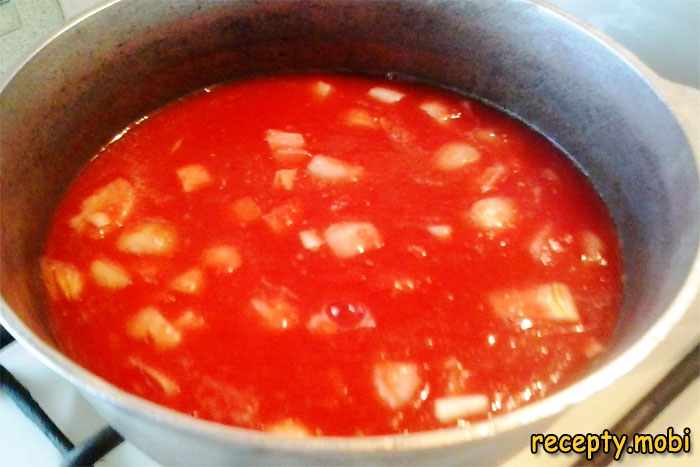
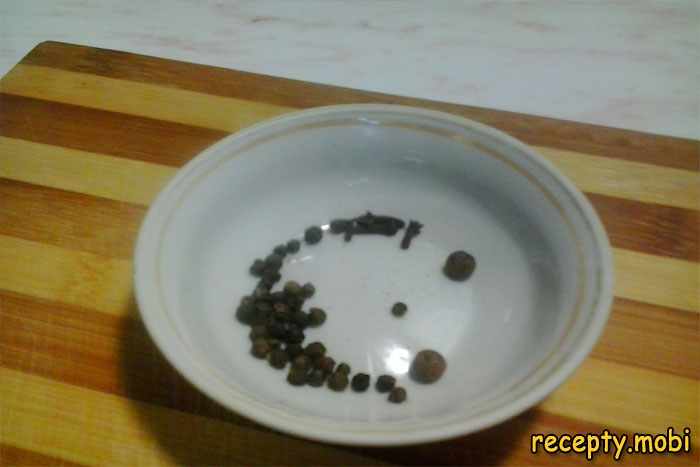
Add all the peppercorns (10–15 black and 2–3 allspice), the cloves (3–5 stars) and the cinnamon (on the tip of a knife) to the pot. Reduce the heat to low and continue reducing with the lid open for 1–1.5 hours – the mixture should shrink to half its volume. Stir occasionally with a wooden spatula so the sauce does not burn on the bottom. Whole spices work better than ground ones here – they release their aroma gradually.
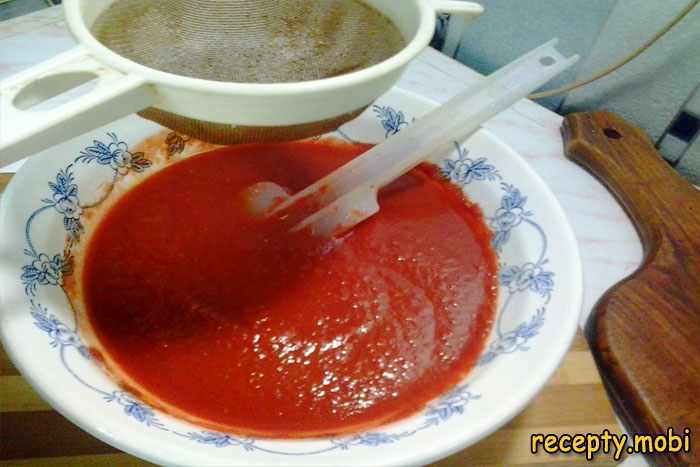
Let the reduced mixture cool slightly for 15 minutes – a hot mass would damage a fine sieve. Pass it through a fine-mesh metal sieve – this removes the onion, spices and coarse fibres, leaving a smooth tomato paste. The pulp left in the sieve can be used to flavour a soup or simply discarded.
Pour the strained sauce back into the pot and add 1–2 tablespoons of sugar, salt to taste and the ground spices (turmeric, paprika, black and red pepper, ½ teaspoon of each), then pour in 50 ml of 9% vinegar. Mix thoroughly and reduce with the lid open for another 1–1.5 hours over low heat – the sauce should reduce by a further third. Just before the end of cooking, taste and adjust the salt and spices – at this stage it is important not to over-salt.
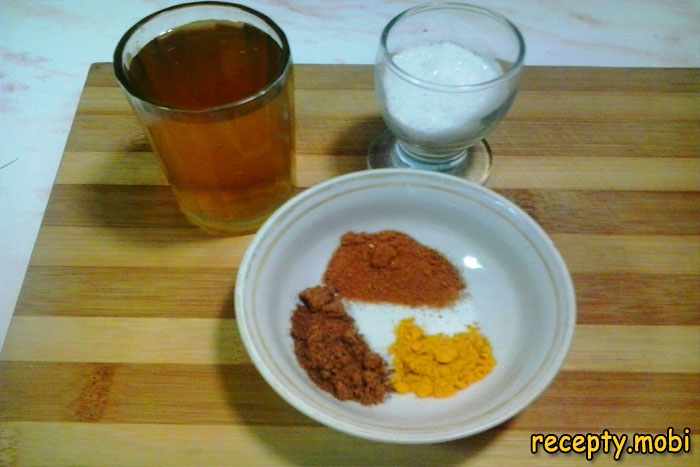
Take the pot off the heat as soon as the sauce reaches the right consistency – thick and coating the spoon, but still pourable. Do not overheat it, or the sauce will turn into ketchup. Cool to room temperature for 30 minutes, then pour into a glass jar and close with a plastic lid. You can stir a spoonful of olive oil into the homemade sauce to keep it fresh.
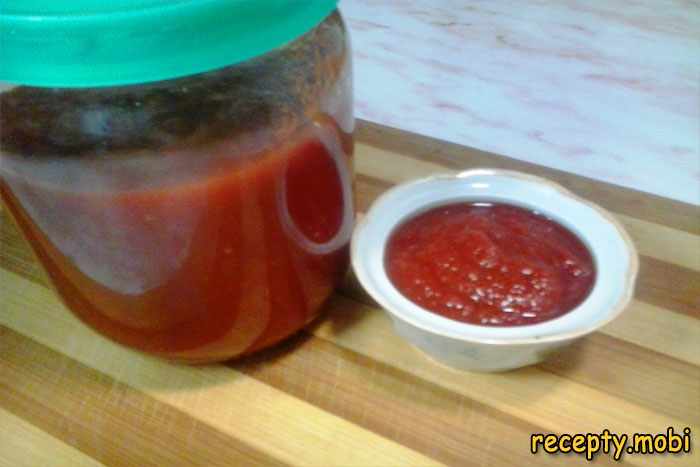
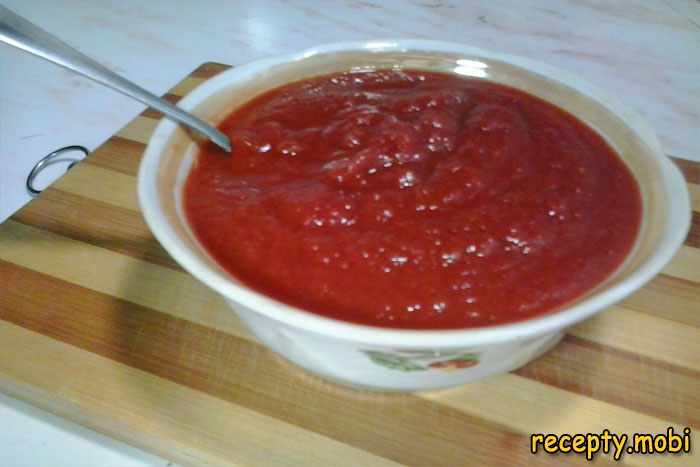
Once cooled, the homemade tomato sauce for meat is ready to serve – I serve it straight away with any meat dishes, with grain or pasta side dishes, or with shashlik. You can also marinate meat in the sauce before baking it in the oven – the acidity of the tomato softens the fibres and adds juiciness. It keeps in the fridge for up to 1 month.


Tips
- 1
Choose tomato juice with as little salt as possible – during reduction the salt concentration increases threefold, and the sauce may end up too salty. Unsalted juice gives you the best control over the taste.
- 2
Use a pot with a thick base or a non-stick coating – over a 3-hour reduction an ordinary thin-walled pot will give a burnt taste. A heat diffuser also helps to spread the heat evenly.
- 3
The 9% table vinegar (50 ml) can be replaced with 6% apple or wine vinegar, increasing the amount to 75 ml – these give a milder taste and interesting fruity notes, especially good with chicken and pork.
- 4
Five minutes before the end of cooking, add some chopped spring onion and young garlic (2 cloves) to the finished sauce – they give a fresh aroma. For heat, add a teaspoon of red chilli.
FAQ
Can I make the homemade sauce from fresh tomatoes? +
Yes – instead of 1.5 litres of tomato juice, take 2 kg of ripe, meaty tomatoes of varieties such as Slivka, Bull's Heart or Mikado. Scald them with boiling water, peel off the skin, blend them and pass through a sieve to remove the seeds. You will get about 1.5 litres of natural tomato juice. This version gives a noticeably richer flavour and a thicker texture than shop-bought juice. Homemade sauce from fresh tomatoes turns out bright red, with a natural tartness and no preservatives. In summer this is the best way to make sauce from your harvest to keep for later.
How long does the homemade tomato sauce keep? +
In a glass jar with a plastic or screw-top lid, the sauce keeps in the fridge for up to 1 month without losing quality. For longer storage, pour the hot sauce into sterilised jars and seal with metal lids – this kind of preserve will keep for up to 1 year in a cool, dark place. You can also pour it into plastic containers and freeze it – in the freezer it keeps for up to 6 months, and after defrosting in the fridge the texture stays excellent. Once a jar is open, it is best used within 2 weeks.
How do I make the tomato sauce spicier? +
Add 1 teaspoon or more of ground red pepper per 500 ml of sauce, fresh chilli (1 pod, cut into small rings with the seeds removed), 2–3 cloves of garlic put through a press, or 1 tablespoon of hot adjika. For a smoky note, add a pinch of smoked paprika. A spicy sauce goes very well with fried meat, shashlik, pork ribs and grilled chicken. Build up the heat gradually – it is easier to overdo it than to fix it. For mild heat use only paprika; for strong heat add chilli or Tabasco.
What can I use instead of vinegar in the homemade tomato sauce? +
You can use lemon juice (2–3 tablespoons instead of 50 ml of vinegar) for a fresher, citrusy taste. Apple vinegar 6% (75 ml) gives a soft, fruity note. Wine vinegar (60 ml) adds a refined European accent. For a sweet version, replace the vinegar with Narsharab pomegranate sauce (3 tablespoons) – the result is an Eastern-style sauce with spicy notes. Acidity in the sauce is essential – it preserves the product and balances the sweetness of the tomatoes. Without acid the sauce would spoil quickly and taste bland. Choose the substitute to suit how you plan to use it.
- Comment
or post as a guest
Be the first to comment.