avg —
Bolognese Sauce with Minced Meat at Home for Lasagna, Pasta, Side Dish

Instructions
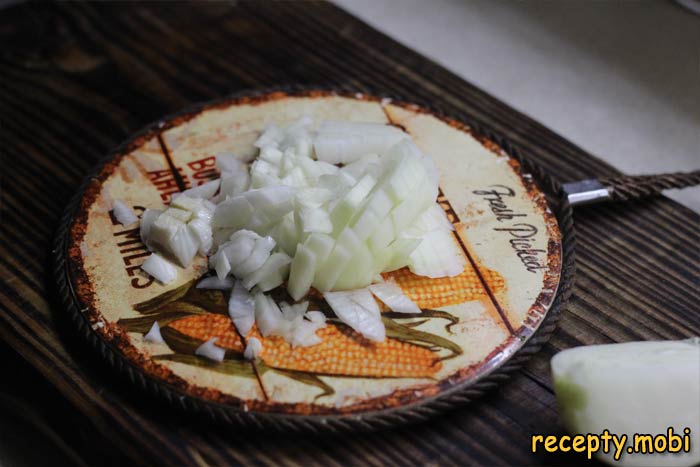
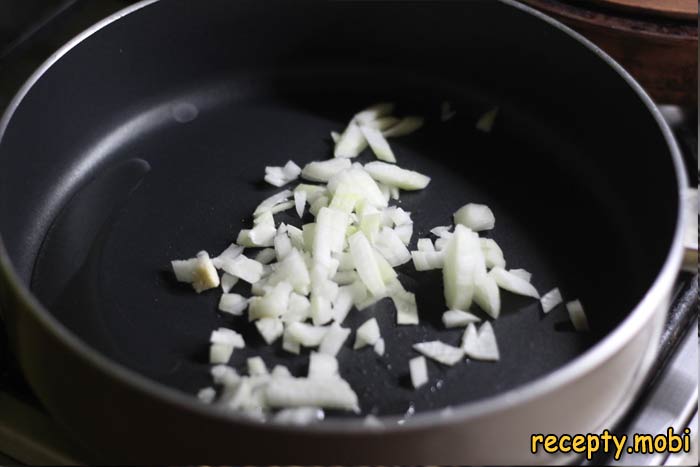
I finely chop the onion into 3–4 mm cubes. A fine dice matters: the onion should dissolve into the finished sauce, giving sweetness rather than separate pieces. In a classic Bolognese the onion should be invisible in texture but noticeable in taste. Use a sharp knife for a clean cut without tears.
I mince the garlic into thin slices or a small dice. Garlic is the foundation of the Bolognese aroma: it opens up during slow frying in olive oil and lays down the base Italian flavour profile. Do not crush it in a press – pressed garlic burns faster and gives the finished sauce a bitter note.
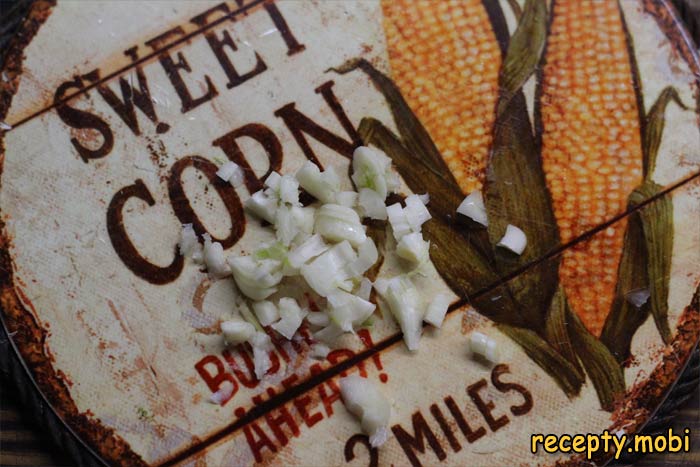
I fry the onion and garlic in extra virgin olive oil for 5–7 minutes over medium heat until fully translucent and lightly golden. Olive oil is an essential Italian ingredient. With sunflower oil the flavour will be flat and not authentic. Keep the heat moderate – the garlic must not scorch.
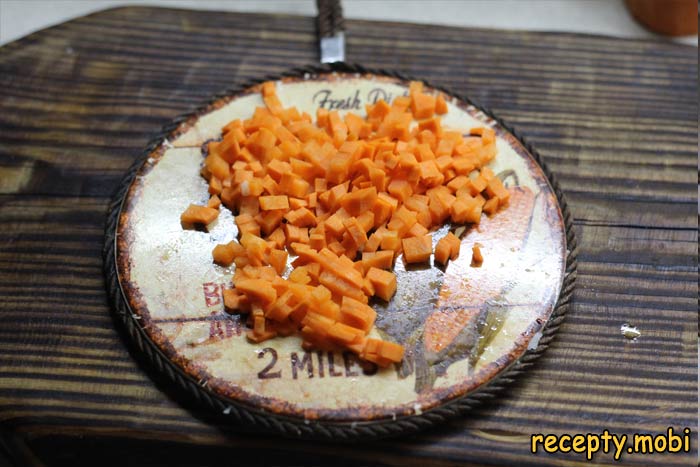
I cut the carrot into a small 3–4 mm dice. I add it to the onion and fry for 5 minutes until lightly golden. The carrot gives the classic Bolognese its characteristic sweetness and the sauce its base colour. Do not grate it – it is the fine cubed cut that gives the right Italian texture.
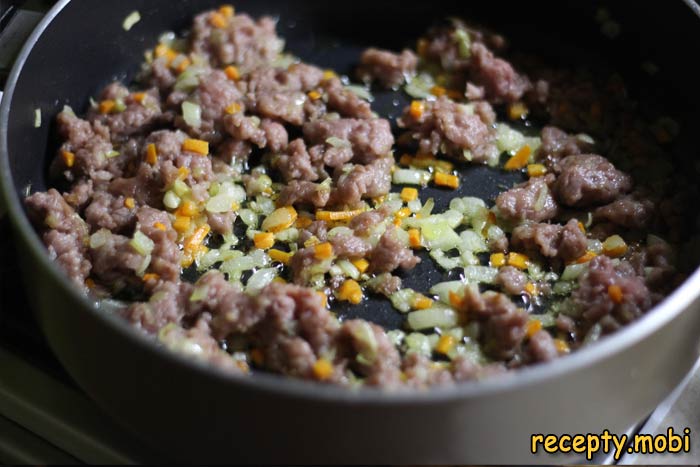
I add the minced meat and fry it over high heat for 7–10 minutes until browned with a characteristic "fried" crust. High heat creates the Maillard reaction, which is what gives the deep meaty flavour. Keep breaking up the lumps of mince with a spatula so it fries evenly rather than stewing in its own juices.
I pour in the dry red wine and let it cook down for 3–5 minutes until the alcohol has fully evaporated (the smell of alcohol should disappear completely). The wine removes the heavy smell of raw meat and adds the characteristic "winey" Italian accent. Without wine the Bolognese will not be authentic – do not skip this step.
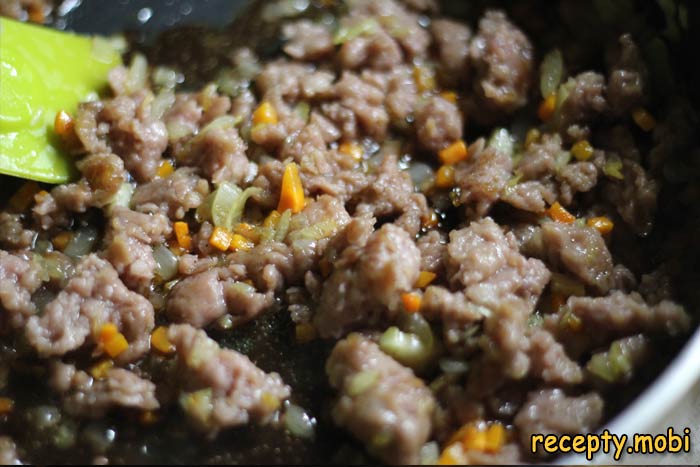
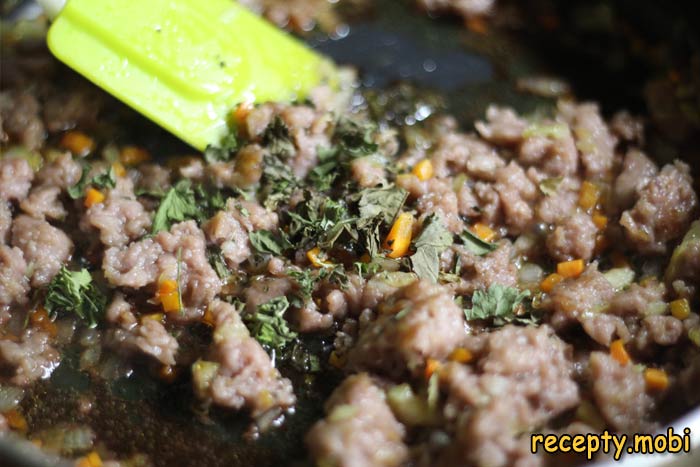
I add the dried basil and celery and fry for a minute to release the aromas. Dried herbs open up more deeply during simmering than when added at the end. You can use a mix of Italian herbs, herbes de Provence or oregano – they give the dish a similar character.
I pour in the tomato puree and tomato paste and stir thoroughly. I simmer it under a lid over the lowest heat for exactly 40 minutes, stirring occasionally. The long simmer is the key to restaurant-quality Bolognese. Over 40 minutes the sharp acidity of the tomatoes fades, leaving a velvety, deep flavour with a rich aroma.
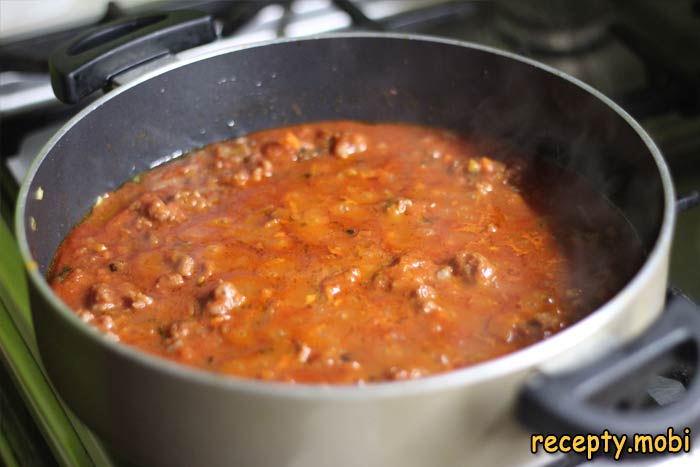
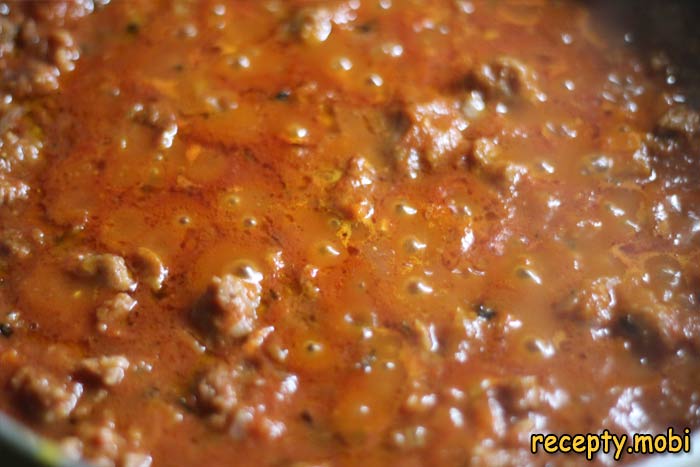
The Bolognese sauce is ready! I serve it hot with freshly cooked spaghetti or tagliatelle, home-made lasagne, or as a sauce accompaniment to any dish. Before serving, sprinkle with grated Parmesan and garnish with a fresh basil leaf.


Tips
- 1
Use a mix of beef and pork mince in a 70/30 ratio for the richest Italian flavour – this is how it is done in Bologna, the sauce's home town.
- 2
The sauce freezes well in individual portions – it is handy to make a large batch and use it on weekdays without lengthy cooking.
- 3
Add fresh herbs (basil, oregano) right at the end of cooking – they quickly lose their aroma during a long simmer. I use a similar principle for my marinara sauce.
- 4
For a thicker texture, simmer the sauce for the last 10 minutes without the lid – the excess moisture will evaporate and the Bolognese will turn "velvety".
FAQ
Can I make the sauce without wine? +
Yes, replace the red wine with meat or beef stock plus a teaspoon of apple cider vinegar in the same proportion. It will be less authentic but perfectly acceptable for an alcohol-free home version. Unsweetened grape juice or cranberry drink with lemon juice will also work – they give a similar acidity and depth. Without a liquid flavouring the Bolognese will taste "flat". Do not skip this ingredient entirely; replace it with something for depth.
Which minced meat is best for Bolognese? +
Classically a 70/30 beef-and-pork mix is used – it gives the richest flavour and the right fat content. Beef alone will be a little dry (add a tablespoon of olive oil), pork alone too fatty and lacking the characteristic "meaty" flavour. You can use a beef-and-veal mix (a more tender option), turkey (a diet version) or lamb (an Eastern accent). I do not recommend minced chicken – it is too bland and delicate for a classic Bolognese.
How long does the finished Bolognese sauce keep? +
In the refrigerator, in a tightly closed glass or ceramic container, up to 5 days without loss of quality. On the second and third day the flavour becomes even richer – the components soak through perfectly. In the freezer, in portion-sized containers, up to 3 months without loss of flavour. Defrost at room temperature or in the microwave. It is convenient to make a large batch at once and freeze it – a quick supper with pasta is ready in 15 minutes of reheating and boiling spaghetti.
Which pasta is best to serve with Bolognese? +
Ideally with tagliatelle (the classic Italian tradition of Bologna), fettuccine, pappardelle or spaghetti. These long pastas "catch" the sauce across their whole surface. Short pasta (penne, rigatoni, farfalle) works too – the sauce fills the cavities. Do not use small stars or shells meant for broths – they will drown in the thick sauce. Be sure to serve grated Parmesan and fresh basil with the pasta. Spaghetti Bolognese with meatballs is the American version, which Italians do not recognise.
- Comment
or post as a guest
Be the first to comment.