avg —
Butter at Home

Instructions
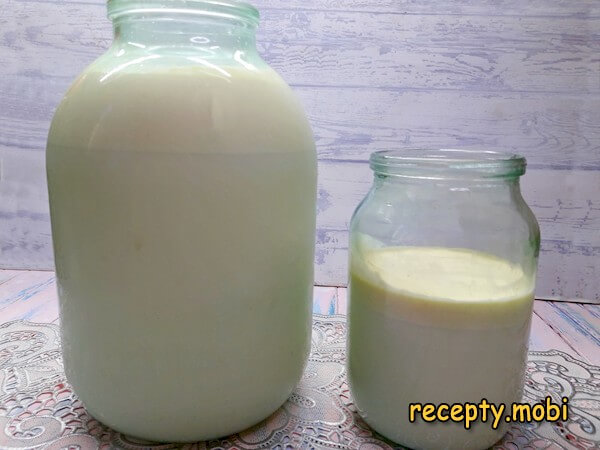
I prepare the only ingredient. To do this I put the fresh home milk in the refrigerator for a day so it can settle. During this time the milk fat (cream) gathers at the top of the bottle, and a clear creamy boundary becomes visible, showing how much cream there is. Then, before starting, I leave the milk on the table so it warms up a little. The ideal temperature for whipping butter is 17 degrees.
Now you need to carefully gather the cream and put it into another jar, one whose volume is 2–2.5 times larger than the volume of the cream. An ice cream scoop is very handy for this. A little milk will probably be scooped up along with the cream – there's nothing wrong with that, but try to let as little of it as possible get into the new jar.
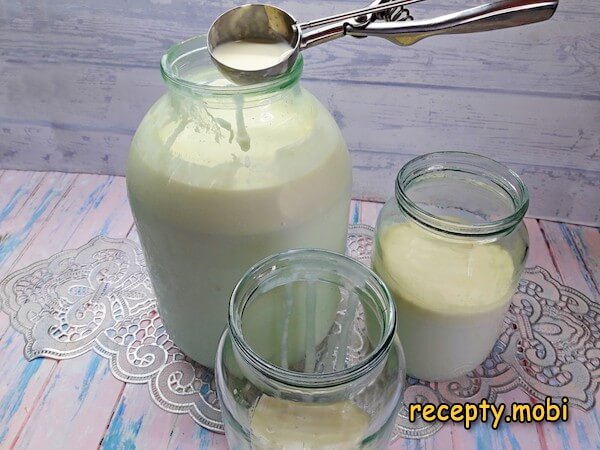
In total, 0.5 litres of cream were collected from 3.5 litres of milk, but this amount isn't fixed and depends on the fat content of the original product.
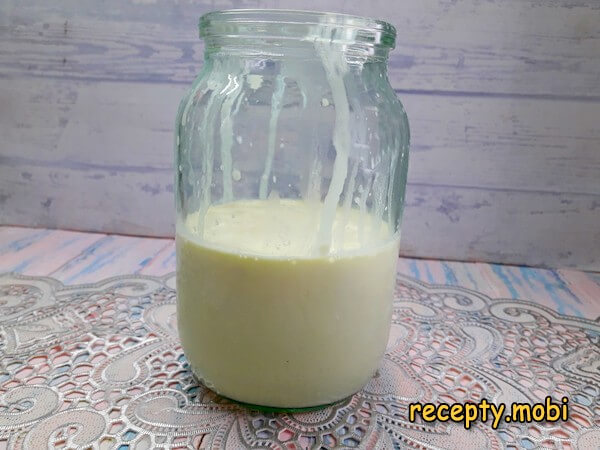
Now I close the jar with a lid and start shaking it in every possible direction.
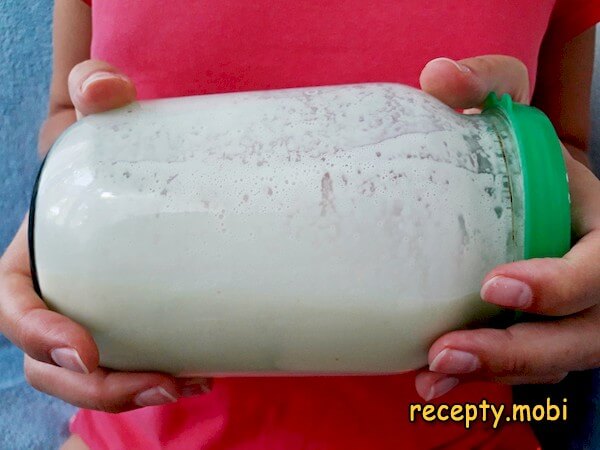
After about 20–30 minutes a dense lump becomes clearly visible – this is the butter.
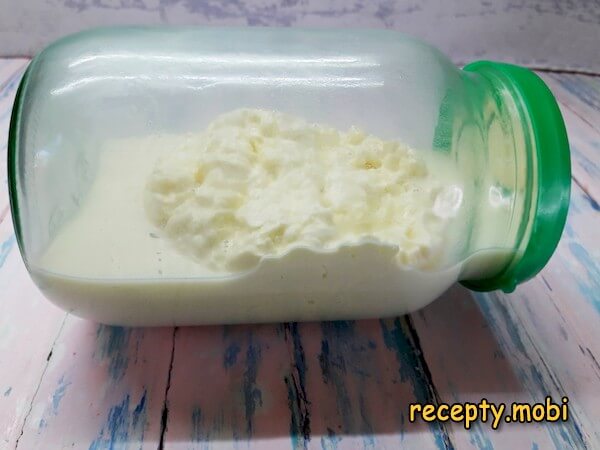
Now you need to separate it from the buttermilk (the skimmed milk left after the cream is gone). I carefully pour the liquid into a separate container, but so that small pieces of butter that haven't stuck to the main clump don't get in (it's better to leave some buttermilk in the first jar). I add very cold water to the butter, shake the contents of the jar a little, and pour off the liquid again, which can later be used for making pancakes or fritters.
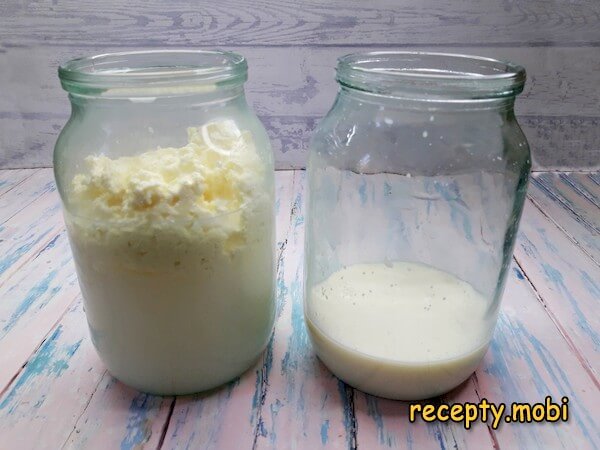
Now all that's left is to rinse the butter well, changing the cold water 3–4 times and shaking the jar until the water in it runs clear.
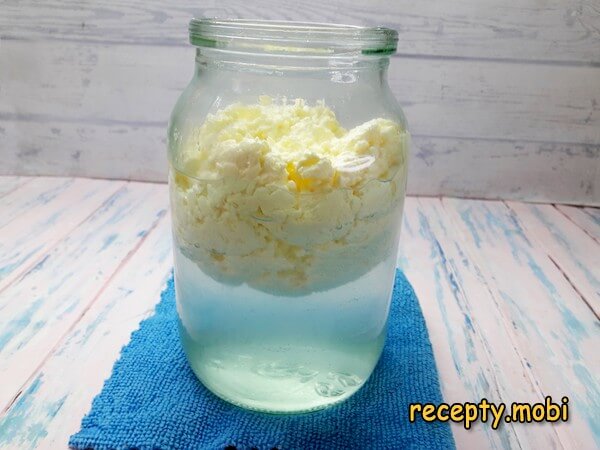
I transfer the butter into a small bowl and try to pack it down as tightly as possible so that the moisture remaining in its pores comes out – it needs to be drained off.
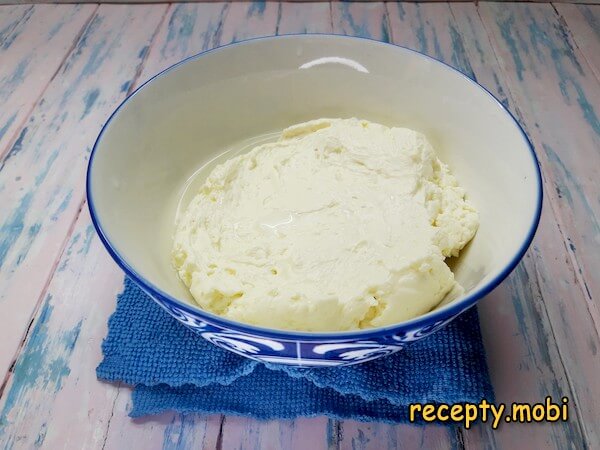
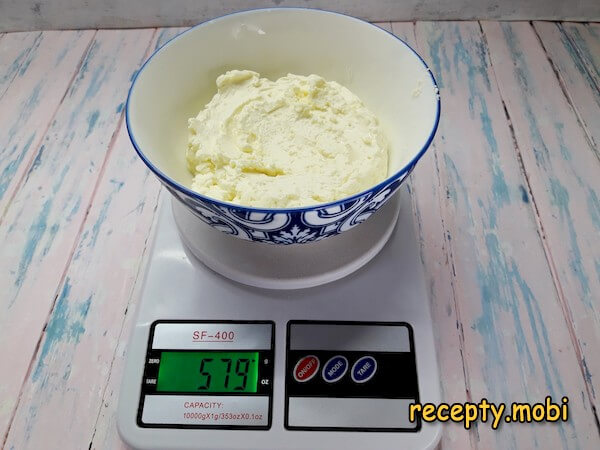
When weighed, the weight together with the container came to 579 g. If you subtract it, the net weight is 579 − 360 = 219 g.
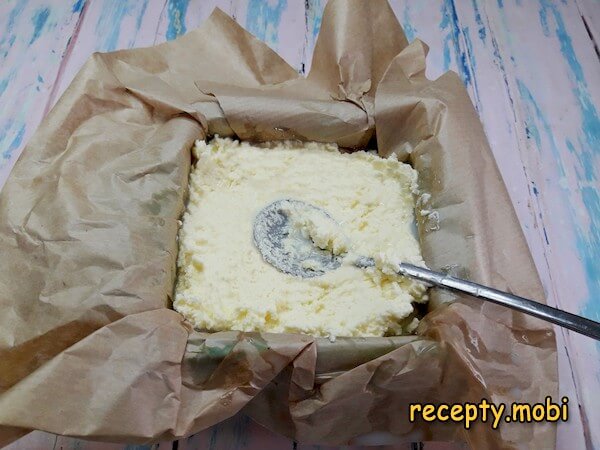
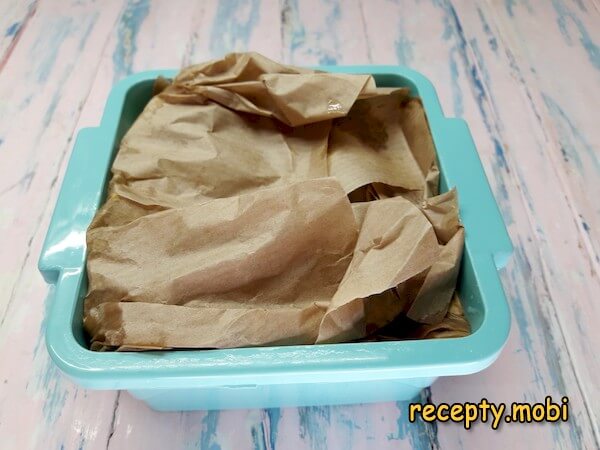
I give the butter the shape I want by transferring it into a container lined with baking paper. If a little moisture comes out again during packing, I drain it off.
I wrap the bar and put it in the freezer.
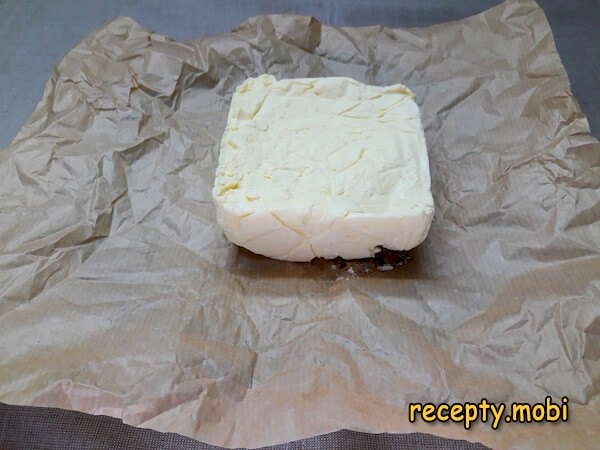
After an hour the real butter can be moved to the refrigerator.The taste of ordinary bread with a piece of this butter can't be compared to the most expensive equivalent from the supermarket. The delicate creamy aroma is simply amazing.You can keep homemade butter for a week in the refrigerator. To extend how long it lasts, I divide the bar into parts. I keep one of them in the refrigerator to use up soonest, and wrap the rest in parchment and tuck them into the freezer – there homemade butter will keep for 6 months.


Tips
- 1
LET IT SETTLE FOR A DAY – the "secret" of separating the cream. Milk in the cold – the cream rises on its own. The fattier it is, the more cream there will be.
- 2
TEMPERATURE 17°C – the "secret" of whipping. Cream that's too warm won't come together. Too cold, and it takes longer to whip.
- 3
RINSE WITH COLD WATER 3–4 TIMES – the "secret" of storage. Leftover buttermilk spoils the butter quickly. Rinsed, it keeps for a week.
- 4
BUTTERMILK INTO PANCAKES – zero waste. The skimmed milk left after whipping the butter is perfect for pancakes and fritters. The same principle works with other kinds of homemade dairy products.
FAQ
Which milk should I choose? +
Ideal is whole farm cow's milk (4.5–6% fat) – more cream, brighter flavour. Alternatives: shop "select" whole milk at 3.2% (gives less butter), pasteurised milk (but not ultra-pasteurised!). Fresh, just-milked milk is the "premium" option (keeps 2 days in the refrigerator). Don't use: ultra-pasteurised milk (the cream doesn't separate), skimmed 0.5% milk, or milk reconstituted from powder. For the "premium" result, milk from a single cow (brighter flavour). For the "budget" version, shop whole milk at 4.5%.
Can I replace the milk with shop-bought cream? +
Yes, you can – it's even quicker. Take shop-bought cream at 30–33% fat (500 ml). Pour it into a jar with twice the volume and shake for 15–20 minutes. Alternatives: 35% cream (whips faster), 20% cream (needs more time, up to 30 minutes). Don't use: "plant-based cream", whipped cream from a can, or UHT cream (ultra-pasteurisation prevents butter from forming). Butter made from cream is tastier than shop-bought, but without the aroma of fresh milk.
How long does the butter keep? +
In the refrigerator wrapped in parchment – 1 week. In the freezer in tight packaging – 6 months. Longer than that and it loses its aroma and may go rancid. Write the preparation date on the packaging. Thaw it in the refrigerator for 8–12 hours. Don't thaw and refreeze it – it will lose its texture. It's best used within the first 3 months after freezing. Kept unwrapped – no more than 2 days (it dries out at the surface). Wrap it in parchment or foil. Don't store it next to strong-smelling foods – it absorbs odours.
What do you serve butter with? +
A classic with tea: on fresh bread with jam or honey. With pies and pancakes. With hot toast and cheese. With hot boiled potatoes – the "Russian" way. With porridge – oat, semolina, or buckwheat. With a hot dinner and a side dish. With pasta and cheese – an "Italian" sauce. With fried fish. With ham and cheese on sandwiches. With morning rolls or croissants. With fried eggs or an omelette. With a cup of cocoa before bed – the "children's" option. With steamed fish – a natural sauce. A universal homemade product for every day.
- Comment
or post as a guest
Be the first to comment.