avg —
Pasta with Soy Meat and Mushrooms (in a Multicooker)

Instructions
For this dish I choose good-quality vermicelli or noodles made from hard wheat – they hold their shape and do not turn into mush. Thin spider-web pasta will not do; you need denser products.
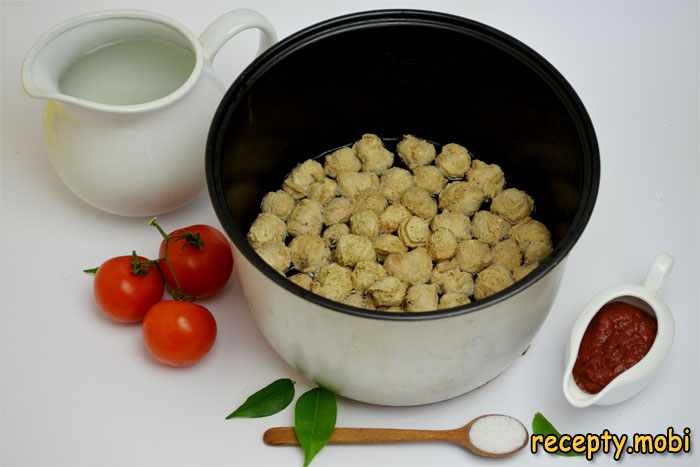
I put the dry soy meat (150 g) into the multicooker bowl. I use it dry, without soaking it beforehand – this way it is more convenient to control the process right in the multicooker.
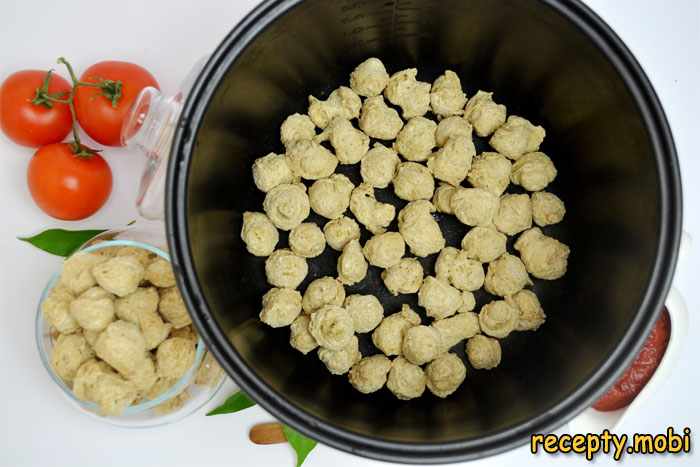
I pour boiling water over the soy meat – about 1–1.5 litres, the exact amount is not important. I do not salt the meat at this stage. I close the multicooker and set the "Soup" mode for 15 minutes.
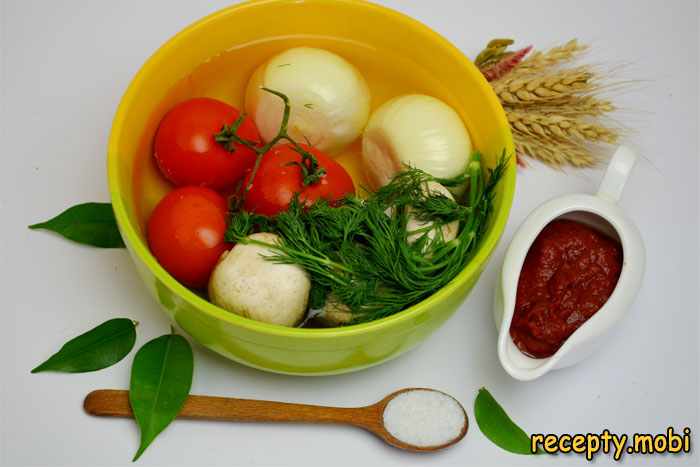
While the soy meat is boiling, I prepare the vegetables: I peel the onion and thoroughly wash the champignons and tomatoes under running water.
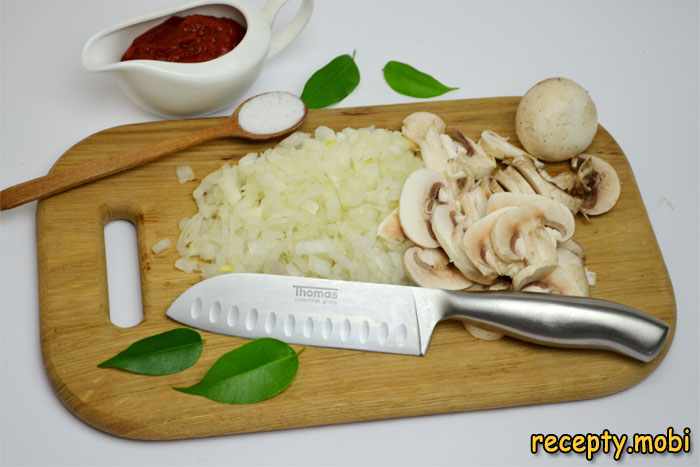
I cut the onion into small cubes for even frying, and slice the champignons into thin lengthwise pieces. Cutting them this way lets the mushrooms release their moisture quickly and brown.
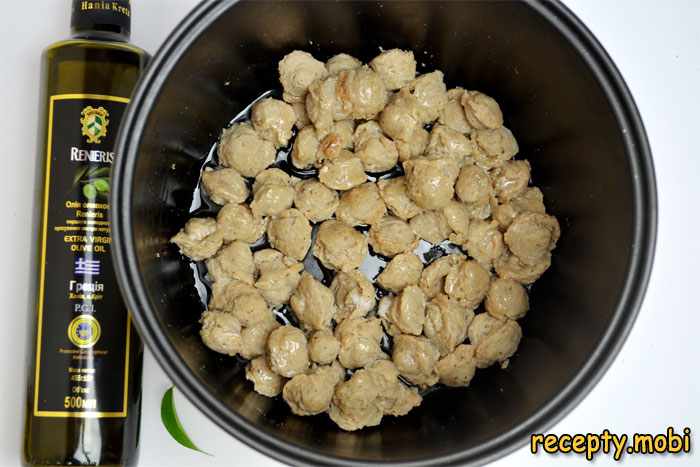
I take out the boiled soy meat and transfer it to a deep bowl. I pour out all the water from the multicooker bowl. I squeeze the soy meat thoroughly to remove all the excess moisture – I use a potato masher for this. I return the squeezed meat to the multicooker and drizzle it with olive oil (50 ml).
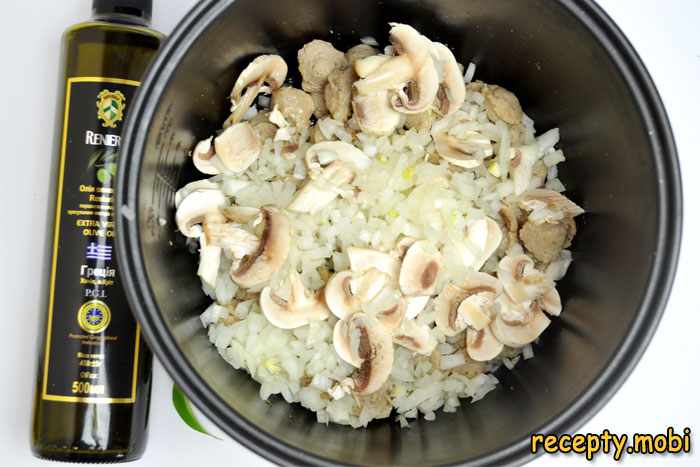
I scatter the chopped onion and champignons over the meat and mix everything together. I set the "Fry" mode for 20 minutes. I leave the lid open and stir the contents from time to time so that everything browns evenly.
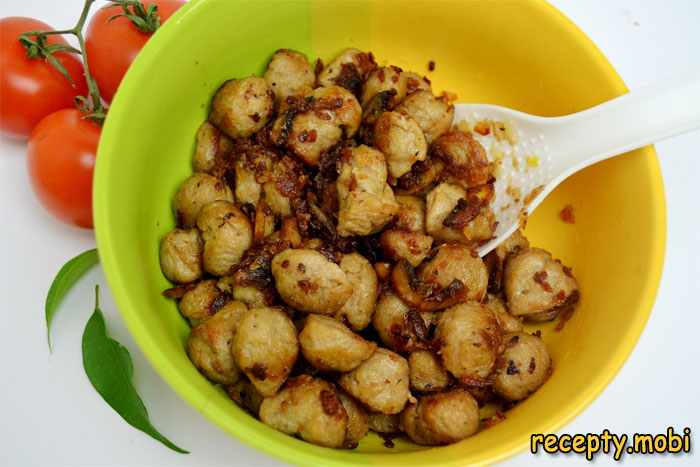
When the soy meat with mushrooms and onion has browned well, I transfer all the contents to a separate bowl. The multicooker bowl is now free for cooking the pasta.
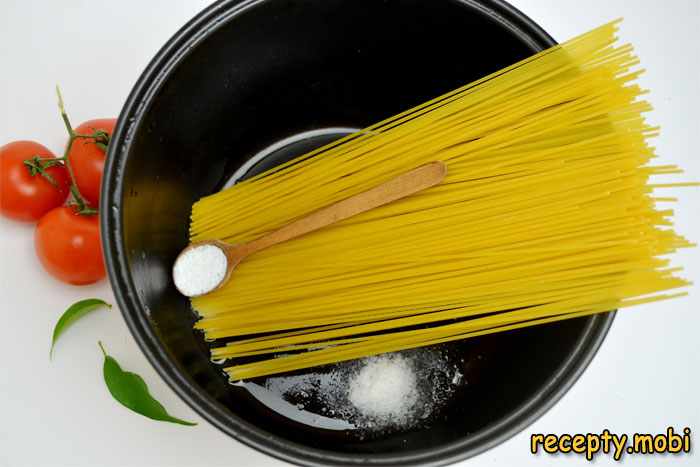
I put the vermicelli (200 g) into the empty multicooker bowl and add the salt (1.5 tsp).
I pour boiling water over the vermicelli so that it covers the bottom by about 3 cm. I do not break the vermicelli – in hot water it softens and settles compactly on the bottom.
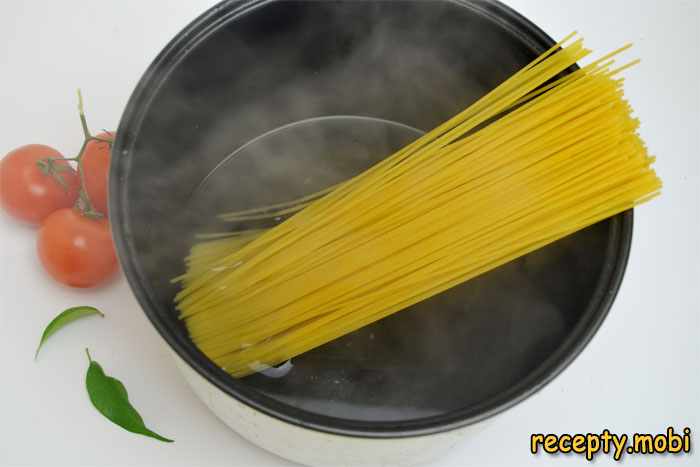
I close the multicooker lid and set the "Soup" mode. I take the cooking time from the vermicelli package and add another 5 minutes – in a multicooker pasta cooks a little longer than on the stove.
The finished vermicelli has absorbed almost all the water and reached the "al dente" stage – soft on the outside, but with a slight springiness inside.
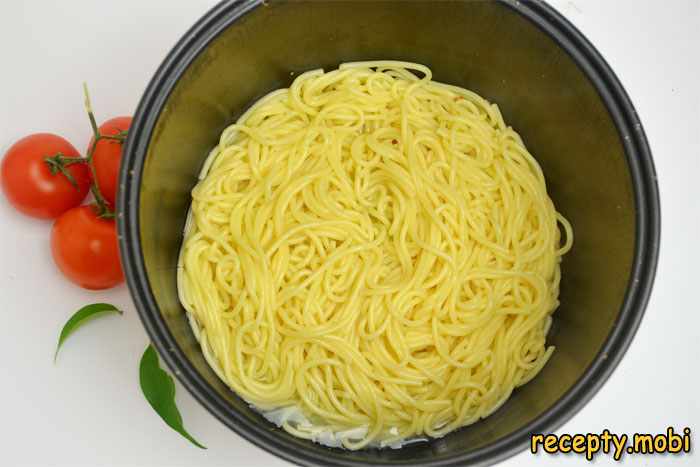
I return the fried soy meat with mushrooms and onion to the multicooker. I gently mix it with the vermicelli.
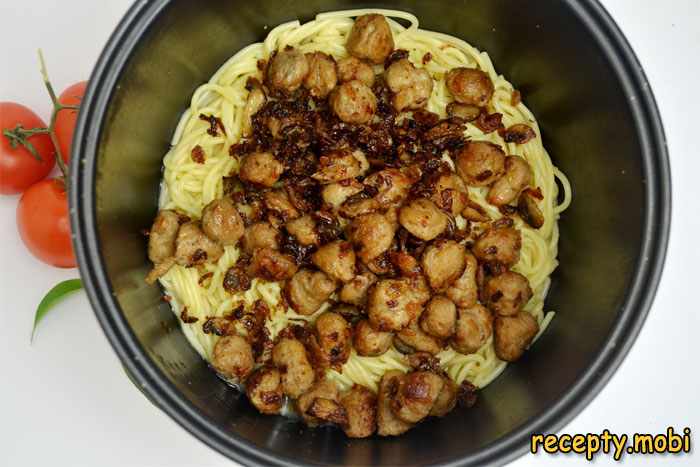
I add the tomato paste (2 tbsp). For a richer flavour I grate 2 fresh tomatoes and add them – the combination of tomato paste with fresh vegetables creates a special taste.
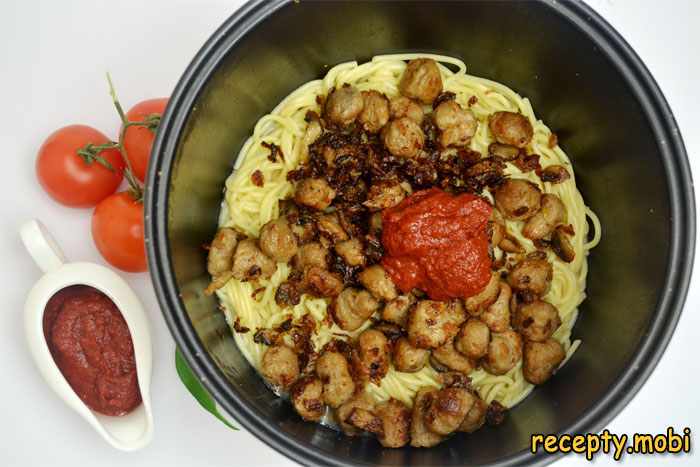
I mix the contents of the multicooker thoroughly and set the "Fry" mode for 3–5 minutes with the lid open. During this time the tomato sauce warms up and soaks into the pasta.
I turn off the multicooker and sprinkle the finished dish with finely chopped fresh dill. I add the herbs at the very end so that they keep their aroma and bright colour.
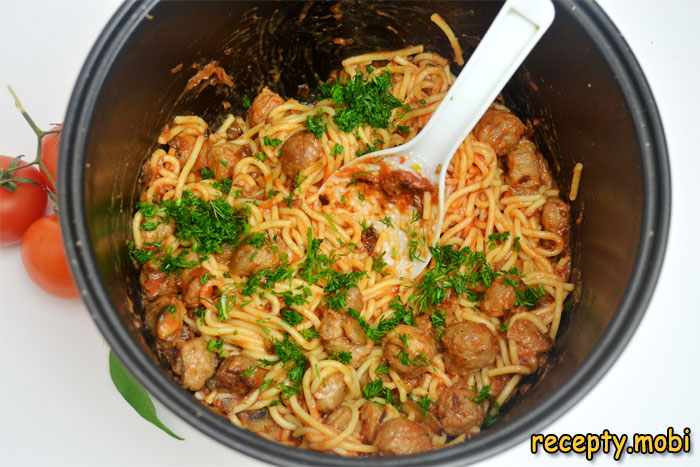
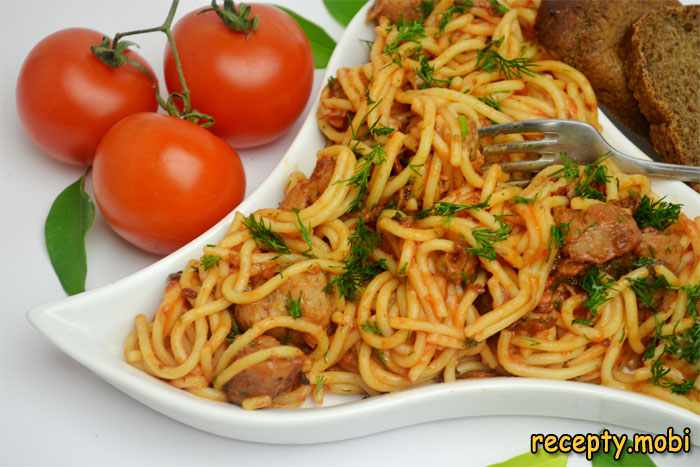
I serve the pasta with soy meat hot, right after cooking. Despite the plant-based origin of the meat, the dish turns out hearty, aromatic and very tasty.


Tips
- 1
Always squeeze the soy meat thoroughly after boiling – if any excess moisture remains, it will not fry but will stew instead. I use a potato masher to squeeze out as much as possible.
- 2
Do not break the vermicelli when adding it – in hot water it softens and settles on the bottom of the multicooker by itself. Broken vermicelli looks less appetising in the finished dish.
- 3
For a richer tomato flavour you can use canned tomatoes in their own juice (200 g) or homemade tomato sauce instead of tomato paste.
- 4
If you do not have a multicooker, you can make the same dish on the stove: boil the soy meat in a pot, fry it with the vegetables in a frying pan, cook the pasta separately and combine everything at the end.
FAQ
Can I use other mushrooms instead of champignons? +
Yes, any mushrooms will do: oyster mushrooms, wild mushrooms, shiitake. I soak dried mushrooms in hot water for 30 minutes beforehand. Wild mushrooms give a richer aroma.
Do I have to use a multicooker? +
No, the dish cooks perfectly well on the stove. I boil the soy meat in a pot, fry it with the vegetables in a deep frying pan or sauté pan, cook the pasta separately and combine everything at the end. The total cooking time is about the same.
Which vermicelli is best to use? +
I choose pasta made from hard wheat – it keeps its shape and texture during cooking. Spaghetti, noodles, fusilli and penne all work well. Thin spider-web pasta or instant noodles are not suitable – they will overcook into mush.
Can I make the dish in advance? +
Yes, the finished pasta can be kept in the refrigerator for up to 2 days. I reheat it in the microwave for 2–3 minutes, adding 1–2 tbsp of water so the pasta does not dry out. The flavour stays the same, but the texture becomes a little softer.
What can replace soy meat? +
Instead of soy meat you can use tofu (cut into cubes and fried), seitan, chickpeas or lentils. For a non-vegan version, minced chicken or beef will work.
- Comment
or post as a guest
Be the first to comment.