avg —
Lithuanian Cold Borscht

Instructions
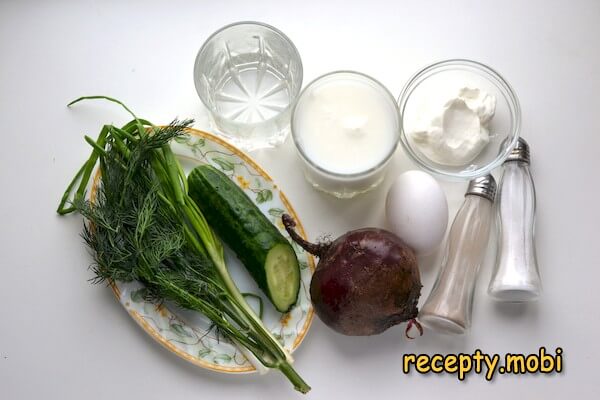
Prepare the ingredients for the Lithuanian cold borscht. Use kefir of any fat content, but a richer one is the key to a hearty, tasty soup. You can substitute whey, ayran or yogurt for the kefir. The beets are more often added pickled or fermented, but here I use boiled ones. Chop the vegetables to your liking – grater or knife, your choice.
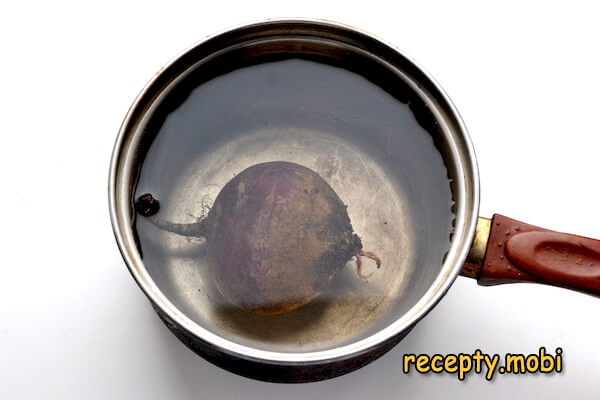
Wash the dust off the beets and place them in a saucepan of cold water. Bring to a boil, cover with a lid, reduce the heat and boil the beets until tender, about 40 minutes. Check with a knife – it should pierce the root easily. Remove the cooked beets and leave them to cool.
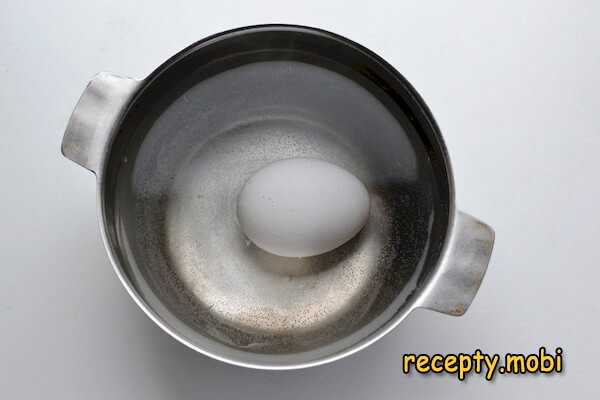
Boil the egg hard for 10 minutes. Cool it in ice water.
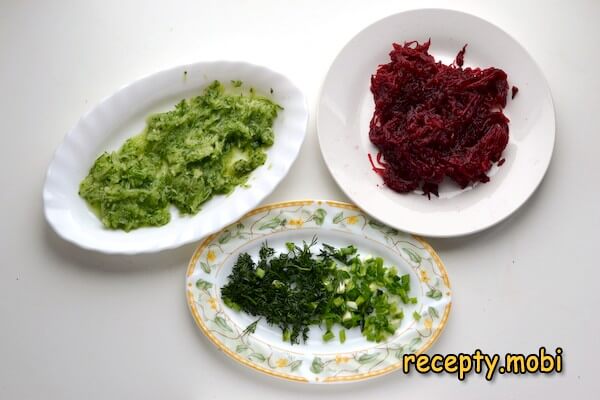
Grate a small fresh cucumber (or half of one) on a fine or medium grater. Peel the cooled beets and grate them on a fine grater. Finely chop the herbs with a knife.
Peel the boiled egg and cut it in half. Finely chop one half and leave the other half for decoration.

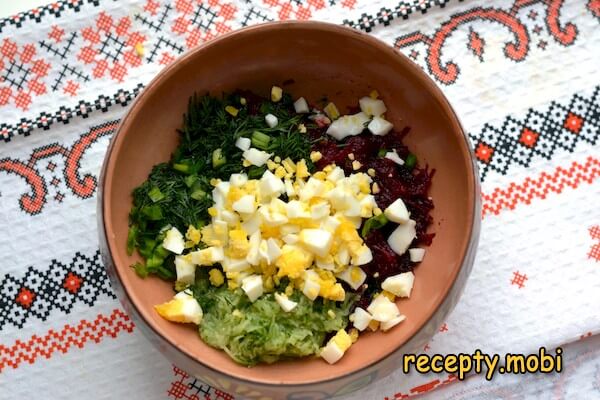
Combine all the prepared cold borscht ingredients in a common bowl.
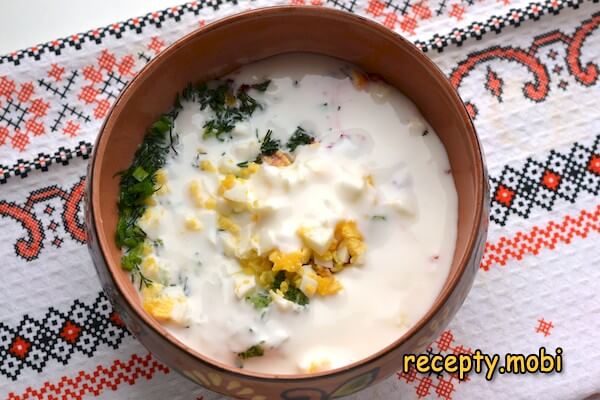
Pour in chilled kefir mixed with cold boiled water. Adjust the amount of liquid to taste.
Add salt and pepper. The Lithuanian cold borscht is ready.
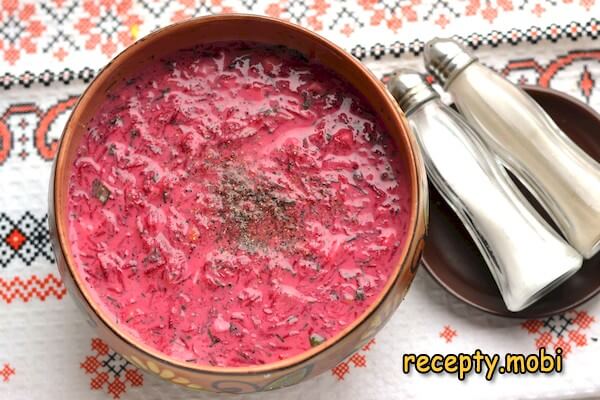
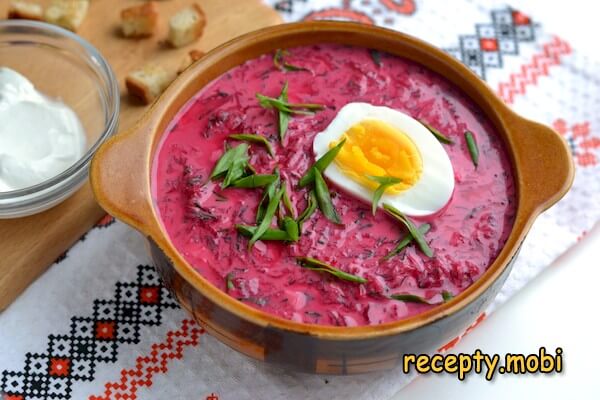
Before serving, garnish with the half egg and herbs.Enjoy your meal!


Tips
- 1
A BRIGHT PINK COLOUR is the highlight of this borscht. The beetroot should be a deep burgundy variety (such as "Bordo" or "Cylindra").
- 2
KEFIR AND WATER 4:1 is the ideal ratio. Kefir alone is too thick, water alone too bland.
- 3
ALL INGREDIENTS CHILLED is a must. Lithuanian borscht is a cold soup; warm, it loses all its appeal.
- 4
BOILED POTATOES SERVED SEPARATELY is the Lithuanian tradition. The same principle works for other kinds of cold borscht.
FAQ
Which beetroot should I choose? +
Varieties with bright, deep-burgundy flesh are ideal: "Bordo", "Cylindra", "Detroit" or "Egyptian Flat". Go for medium-sized roots (200–300 g) that are firm and undamaged. Colour is especially important for this borscht – it determines how rich the soup looks. Paler "sugar" varieties give a faded colour. Young beetroot (August to October) is more tender than older roots. Frozen beetroot works too; thaw it in the fridge for 4–6 hours. Pickled or fermented beetroot is the "Lithuanian" classic and gives a more sour accent.
What can I use instead of kefir? +
Alternatives include ayran (a salty fermented-milk drink, authentic for Lithuania), whey (a natural starter), buttermilk (left after churning butter), thick soured milk, and unsweetened yogurt at 1.5–2.5 % (gentler in flavour). For a lighter version, use 1 % kefir with mineral water; for a richer one, 15 % sour cream with whey. The authentic Lithuanian version uses beet kvass (beetroot fermented in salted water for 5–7 days). Without a fermented-milk base you get not a Lithuanian borscht but simply a cold vegetable soup.
How long does it keep? +
In the fridge in a covered dish, 2 days. On the second day the flavour is brighter, but the colour may fade. Do not freeze it – the beetroot and kefir separate after thawing. Make it for 1–2 meals. It is best served about 30 minutes after cooking, once chilled. For a picnic, carry it in a thermos or a container with ice. Do not leave it at room temperature for more than 1 hour, as fermented-milk products spoil quickly in the heat.
What should I serve it with? +
The Lithuanian classic: boiled potatoes in their skins (in a separate bowl), with dark or rye bread, such as Borodinsky. Add sour cream (1 tbsp) on the side, and a half of a boiled egg for garnish. Pickled onion adds a piquant accent. For a hearty lunch, serve with cold sliced meats; for a lighter version, leave out the sour cream and potatoes. Garnish with fresh dill and green onion before serving.
- Comment
or post as a guest
Be the first to comment.