avg —
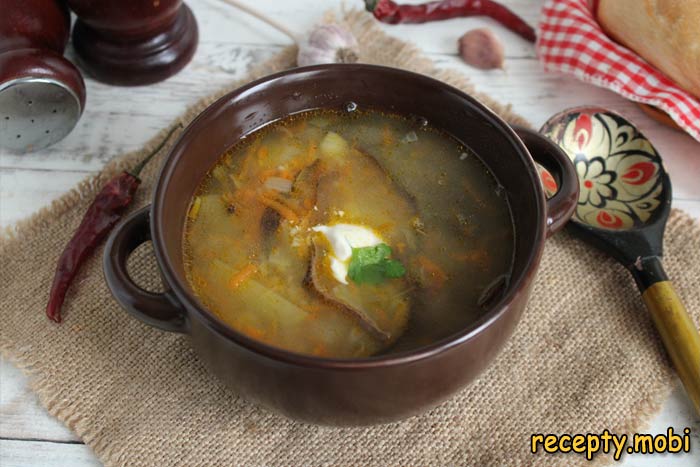
Mushroom soup made from dried forest mushrooms

Instructions
Rinse the dried mushrooms (70 g) thoroughly under running water to remove dust and grit. Pour over boiling water (about 500 ml) and leave for 2 hours to fully reconstitute. After soaking, drain the water through a fine sieve or cheesecloth – it is aromatic, so keep it for the broth. Rinse the mushrooms once more and squeeze them lightly.
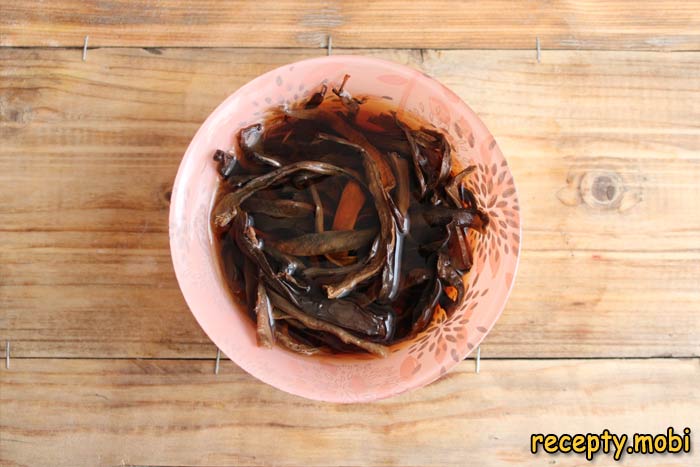
Put the soaked mushrooms in a pot and pour in clean water plus the strained soaking water – about 1.5 litres in total. Once it comes to the boil, simmer for 25 minutes over low heat, carefully skimming off the foam with a slotted spoon. Long cooking of dried mushrooms is essential – they only "give up" their flavour after a long, gentle simmer in water.
Peel the potatoes (300 g) and cut them into thin sticks 5–7 mm wide or medium cubes about 1×1 cm. Sticks are the "Russian" classic for gribovnitsa, while cubes are easier to eat. For a clear broth, rinse the cut potatoes in cold water – this removes excess starch, which would otherwise make the soup cloudy.
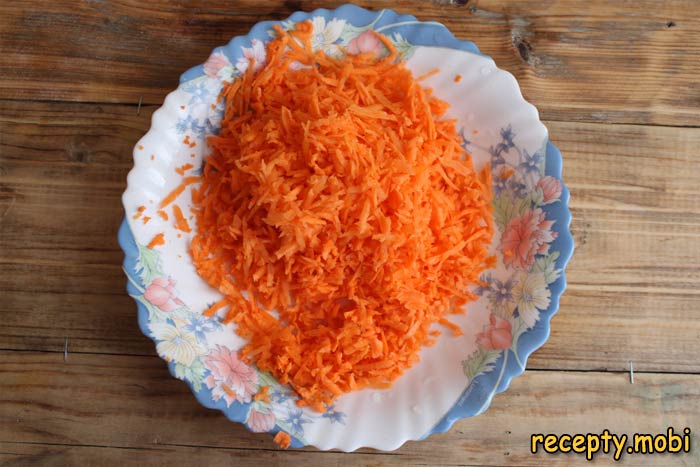
Grate the carrot (1 piece) on a coarse grater for an airy texture in the fried base. A coarse grater is better than a fine one – the carrot keeps its shape and doesn't turn to mush while frying. The sweetness of the carrot balances the earthy "mushroom" notes of the soup and gives the broth a lovely orange tint.
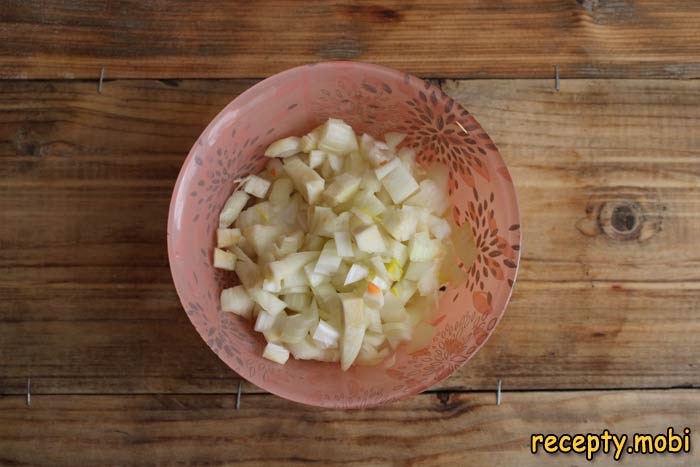
Cut the onion (1 piece) into small cubes 3–4 mm – chopped this way the onion "dissolves" into the fried base and doesn't stand out in the finished soup. Onion cut too large would remain as separate "islands" in the broth. Small cubes give an even flavour throughout the soup.
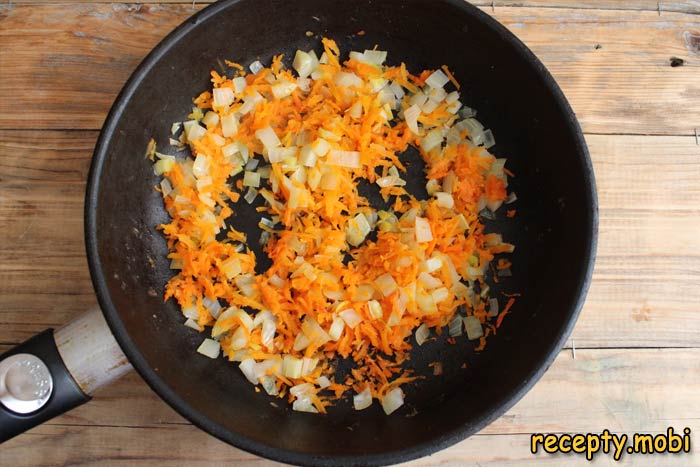
Sauté the onion and carrot in heated sunflower oil (2 tbsp) for 7–10 minutes until soft and lightly golden. The fried base makes the broth "thicker" and more aromatic – without it the soup would taste "pale". Unrefined sunflower oil gives the gribovnitsa its characteristic "Russian" aroma.
Rinse the wheat groats (50 g) in cold water until it runs clear and add them to the cooked mushrooms in the broth. Simmer for 10 minutes over low heat, then add the chopped potatoes. The groats take longer to cook than the potatoes, which is why they go in first. You can use rice, buckwheat or pearl barley instead.
After the potatoes have cooked for 10 minutes, add the fried onion and carrot to the soup, along with the bay leaf (1 piece) and peppercorns (5). Season with salt to taste and cook for another 7–10 minutes until the potatoes are fully done. Remove the bay leaf at the end so it doesn't turn the soup bitter if it stands for a long time.
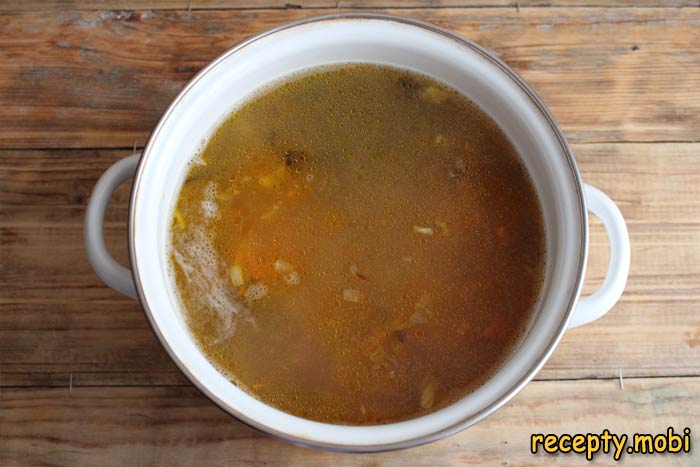
Take the pot off the heat and let the gribovnitsa rest under the lid for 20 minutes – this is a crucial step for the aroma to develop. Without resting, the soup tastes "underdone" – the ingredients haven't had time to come together. Serve hot with sour cream (1–2 tbsp per bowl) and fresh dark bread. The mushroom soup from dried forest mushrooms is ready!


Tips
- 1
The best mushrooms for drying and for gribovnitsa are porcini, aspen mushrooms and birch boletes. They give the broth the richest, most concentrated aroma.
- 2
Rinse the potatoes after cutting – this removes excess starch, and the broth turns out clearer, without a "cloudy" film.
- 3
Don't add too many spices – they would drown out the delicate mushroom aroma. A bay leaf and peppercorns are the minimum sufficient set. I cook mushroom soup with button mushrooms on a similar principle.
- 4
You can skip the fried base for a lighter version – just add the raw vegetables to the soup, and the aroma will be more "delicate" and "clean".
FAQ
Which grain is best for gribovnitsa? +
Almost any grain works: wheat groats (the classic for gribovnitsa – they add body and substance), round rice (more tender, makes the soup more "velvety"), whole buckwheat (gives a characteristic "buckwheat" aroma), pearl barley (needs longer cooking – 40 minutes, and makes the soup hearty). For a Lenten version – lentils or peas. For a gluten-free version – rice, buckwheat or quinoa. The main thing is not to overdo it: 1–2 tablespoons per litre of soup is enough. Too much grain will turn the soup into porridge and the mushroom aroma will be lost.
How long should dried mushrooms be soaked? +
At least 2 hours in boiling water, or ideally overnight (8–10 hours) in cold water. In that time the mushrooms fully regain the shape and texture of fresh ones and release all their aroma into the water. Don't use a "quick soak" in hot water for 30 minutes – the mushrooms won't open up fully and the broth will be "weak". Always keep the soaking water and use it for the broth – it holds 80% of the mushroom aroma. Strain it through cheesecloth or a fine sieve to remove grit before using.
How long does the finished gribovnitsa keep? +
Gribovnitsa keeps in the fridge for up to 3 days in a tightly covered pot. On the second day the soup is even tastier – the mushroom aroma fully develops and the flavours come together. Before serving, reheat it gently over low heat until heated through. Don't bring it to the boil repeatedly – this spoils the flavour and the vitamin content. You can freeze it in portions for 2 months in airtight containers – before eating, thaw in the fridge and bring to the boil. It's perfect for winter.
What to serve with gribovnitsa? +
Classically with sour cream (1–2 tbsp per bowl – this is the "Russian" way to serve it), fresh dark Borodinsky bread, and homemade pies with mushroom or cabbage filling. For herbs – fresh dill or spring onion for freshness and colour. For a Lenten table – without sour cream, with Lenten bread and sauerkraut as a side. For drinks – kvass, cranberry or lingonberry fruit drink, or dried-fruit compote. It's perfect for a family lunch in winter – a warming, aromatic, nourishing "mushroom" soup made from summer stores.
- Comment
or post as a guest
Be the first to comment.