avg —
Veal Shurpa (with Fried Onions)

Instructions
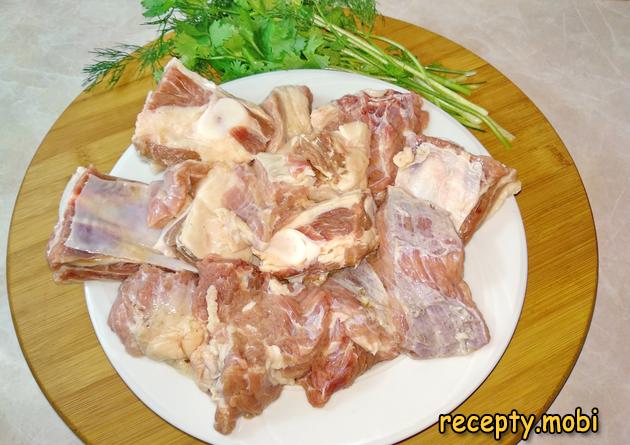
I start with choosing the right meat. Veal is an excellent substitute for the classic lamb if lamb is not favoured in the family. For a good rich broth I take the rib section of the carcass and add a little pulp meat. I wash the meat and pat it dry with a paper towel – dry meat browns better when fried.
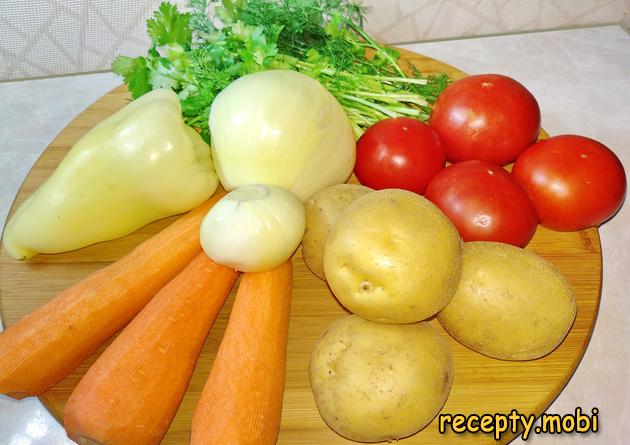
I prepare all the vegetables from the list. The whole set at once – so I do not have to stop and peel things during the process.
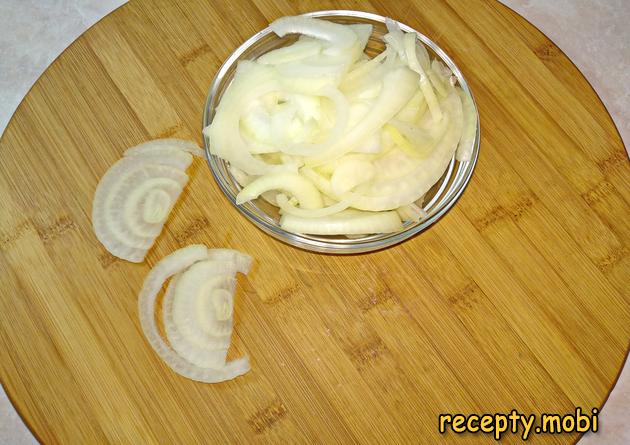
I slice the onion into half-rings. Half-rings are the classic cut for Eastern soups: the onion has time to "melt" and give its sweetness to the broth, while pleasant pieces still remain.
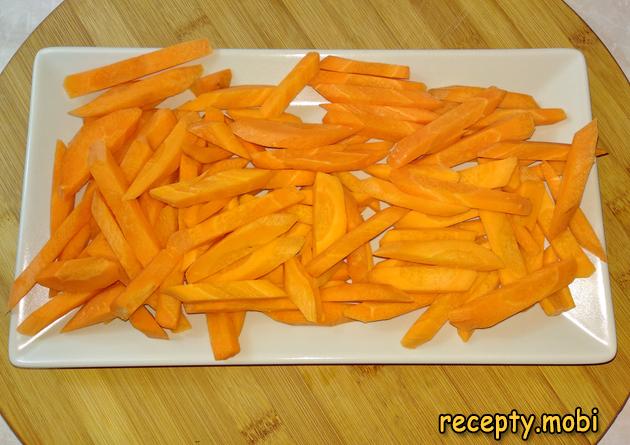
I peel the carrots and cut them coarsely – into batons or round pieces. A coarse cut of carrot is traditional for shurpa: it keeps its shape and gives noticeable pieces in the finished soup.
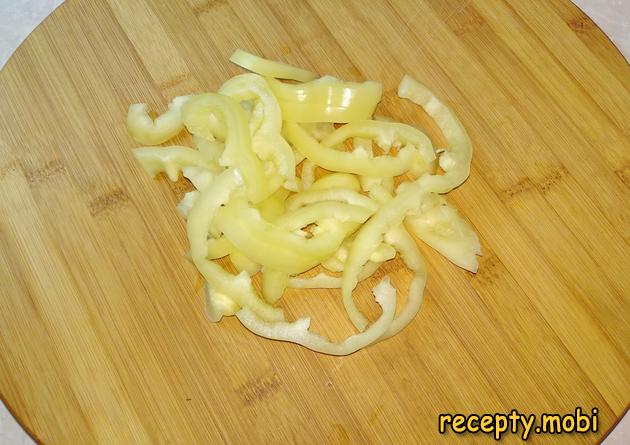
I clean the bell pepper of seeds, rinse it and slice it into half-rings. I do not leave the seeds – they can float in the soup and give a slight bitterness.
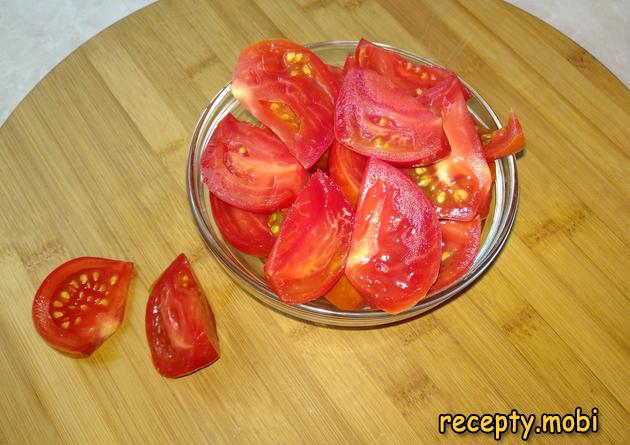
I choose ripe, juicy tomatoes and cut them into four or eight pieces, depending on the size. Ripe tomatoes give the soup a natural red shade without the need for tomato paste.
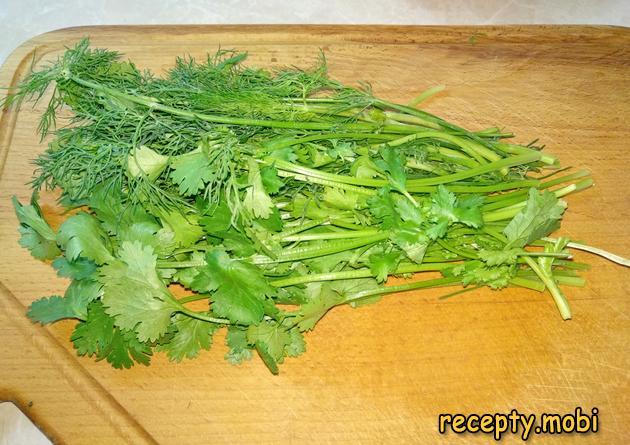
I prepare a large bunch of greens. Shurpa classically includes dill, cilantro and parsley – each adds its own note of aroma. Cilantro is especially important – it creates the characteristic Eastern bouquet.
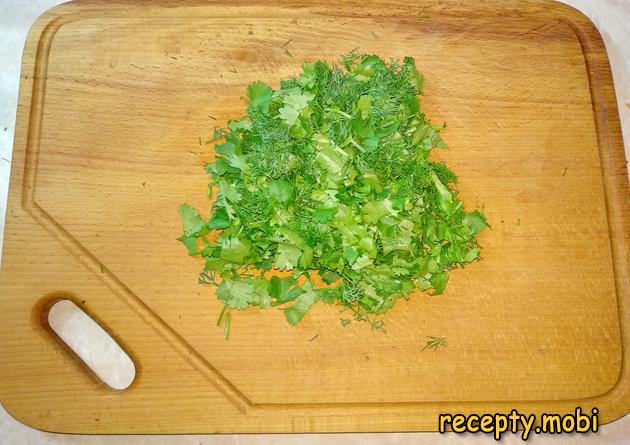
I chop the greens finely. Coarsely chopped greens "float" in the soup, while finely chopped greens spread evenly across the plate.
Now I move on to the cooking itself. I make shurpa with frying – this gives the characteristic "smoky" flavour that you do not get in an ordinary soup cooked in water. I get the vegetable oil and the meat ready.
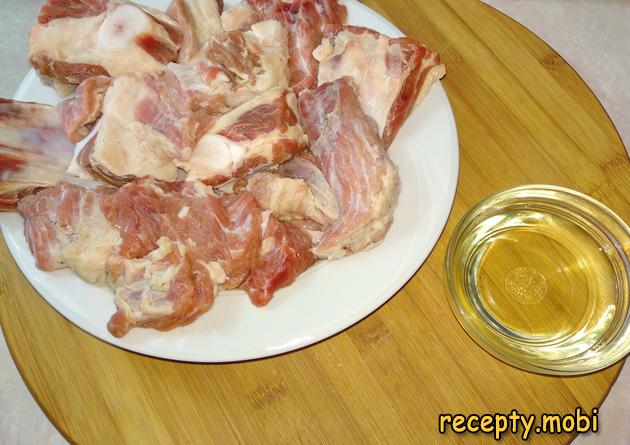
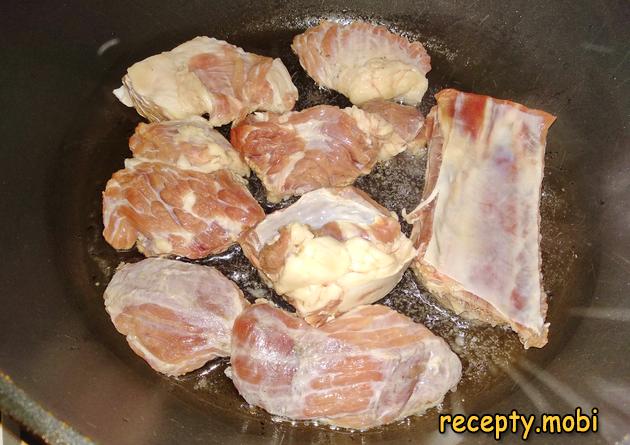
Shurpa is traditionally cooked in a kazan, but I use a deep sauté pan with a thick bottom. I heat the vegetable oil and fry the meat until golden on all sides – this seals the juices inside and gives the dish its characteristic brown colour.
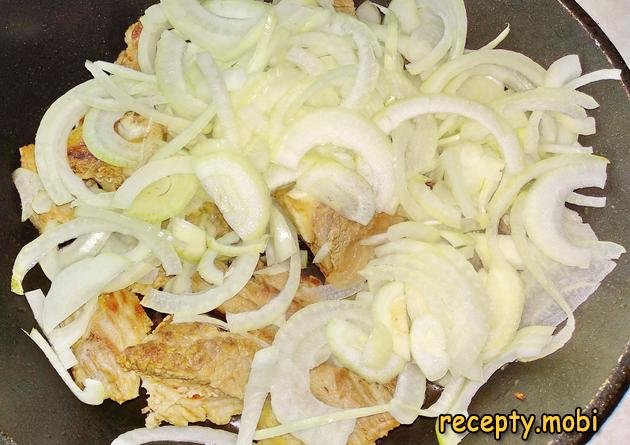
I add the prepared onion to the meat. As it fries with the meat, the onion gives it its sweetness and browns itself at the same time.
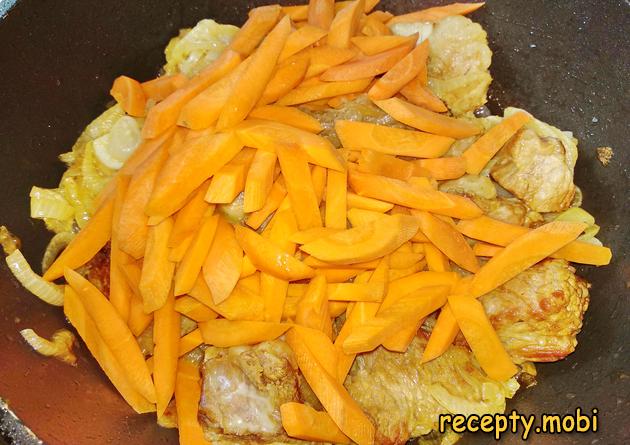
When the onion has turned translucent, I add the carrot to the pan. I simmer for about 15 minutes – in that time the carrot releases its juice and "makes friends" with the onion and the meat.
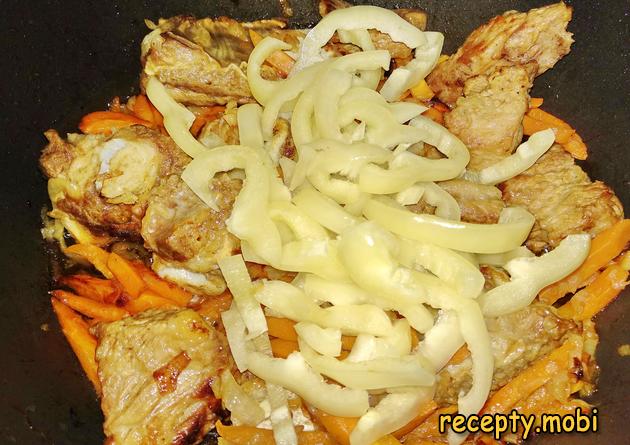
I add the bell pepper to the pan and simmer for another 10 minutes. The pepper gives the soup a pleasant sweetness and colour.
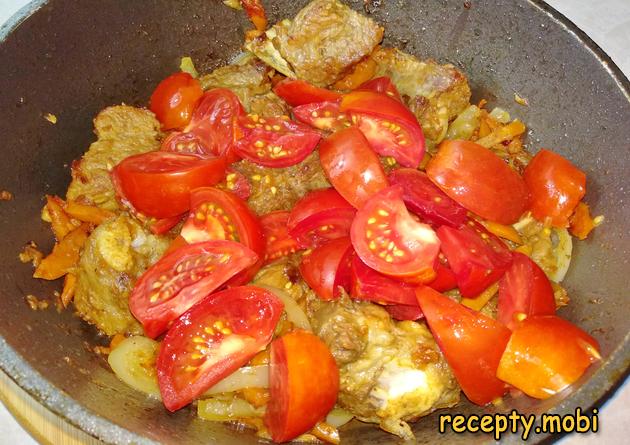
I add the tomatoes to the rest of the ingredients and simmer for 10–15 minutes – they give the dish a beautiful colour and a natural acidity. After 15 minutes I add 1.5 litres of HOT water. Cold water is strictly forbidden – it would lower the cooking temperature in the pan and the meat could turn tough.
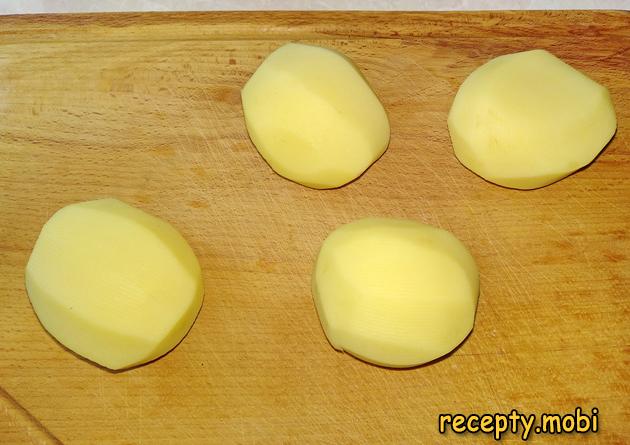
The last vegetable for the shurpa is the potato. I peel it and cut it into four pieces. A coarse cut is traditional for shurpa, so that the potato does not boil down to mush.
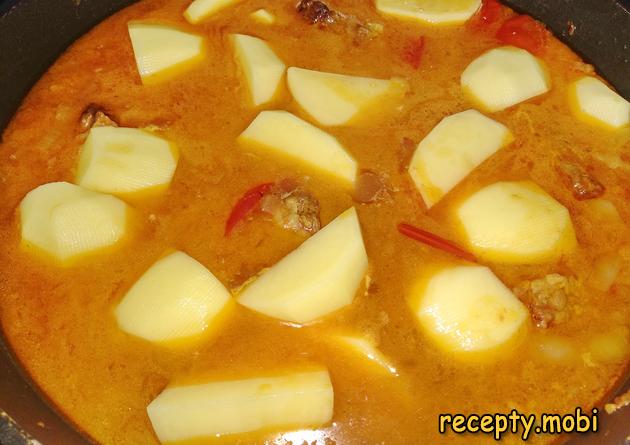
At this point I taste the meat to check it is done – it should be almost ready. Fifteen minutes before the end of cooking, I add the potato.
I get the spices ready from the list. It is precisely the Eastern spices that make shurpa shurpa – without them it would be an ordinary meat soup.
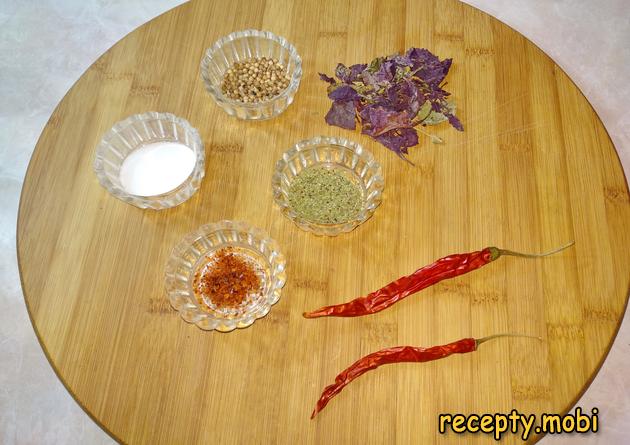
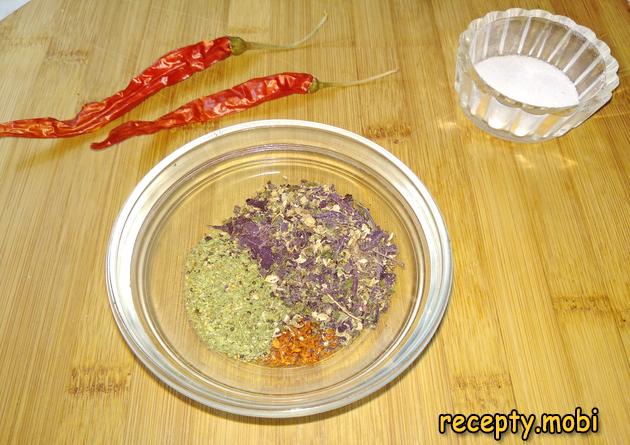
If needed, I grind the spices in a mortar, mix them and add them to the shurpa. I salt it and add the prepared greens. Fresh herbs give a bright aroma, while dried herbs give a deep, "well-steeped" one.
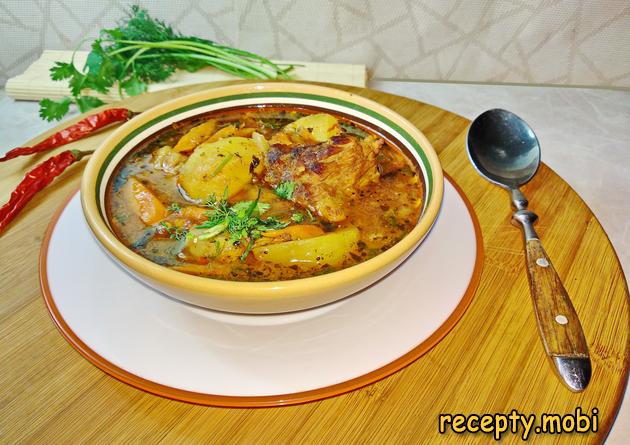
I cook for another 5–7 minutes and take it off the heat. Veal shurpa is served hot in a piala bowl – this matters for the Eastern presentation. Into the bowl I put one or two pieces of meat, the same amount of potato, and ladle the vegetable broth over the top. Greens on top for freshness.


Tips
- 1
Add ONLY hot water to the fried meat and vegetables. Cold water will "stop" the process, the meat will stay tough and the vegetables will lose their texture.
- 2
Bay leaf does not go into shurpa – it is "not its" spice. The classic herbs – thyme, basil and coriander – give the characteristic Central Asian bouquet.
- 3
Add the potato ONLY in the last 15 minutes. Any earlier and it will boil down to "mush". I use a similar principle in other Eastern soups.
- 4
Browning the meat until golden is the "secret" of shurpa's rich flavour. Without it you get an ordinary "boiled" soup, without that characteristic "complex" note.
Video
FAQ
Can veal be replaced with beef? +
Yes, but the cooking time will increase by 30–45 minutes. Beef is more fibrous and dense than veal, so it needs longer to soften. Take the same amount (800 g), preferably shoulder or ribs for a rich broth. Chicken will also work for a lighter version, and the cooking time will drop to 50–60 minutes – but the flavour will be less rich. Classic shurpa is traditionally made from lamb, which gives the most aroma, though not everyone likes the specific "lamb" smell.
Which spices are essential for an authentic shurpa? +
The classic set: coriander seeds (give the Eastern aroma), thyme (gives a light "mountain" note), dried basil (a sweet note), red hot pepper (heat). Optional: zira (cumin), turmeric (golden colour), barberry (tartness). NO bay leaf – this is a matter of principle, bay leaf in shurpa is considered a mistake. Fresh greens and onion are added at the end for aroma. The spices are best pounded in a mortar right before adding – that way the aroma is at its maximum.
Why did the soup turn out cloudy? +
Cloudy shurpa is the result of several mistakes: (1) the meat was boiled too vigorously (it should only simmer gently), (2) the foam was not skimmed off the surface at the start of cooking, (3) cold water was added instead of hot. For a clear broth: cook over the lowest heat, skim off the foam with a slotted spoon for the first 15 minutes, and use only hot water. A slightly cloudy shurpa is normal – it is a sign of a "home-made" soup (unlike a perfectly clear restaurant consommé).
How long does shurpa keep in the refrigerator? +
Shurpa keeps for 3–4 days in the refrigerator in a covered pot. The next day it becomes even tastier – the vegetables and meat are fully soaked in the broth and spices. It is best reheated on the stove to a boil for 3–5 minutes (in a microwave it heats unevenly). It can be frozen for 2–3 months in portions in containers. After thawing it is better to add fresh greens – the "old" ones lose their aroma and colour. This is one of the few dishes that only improves with time.
- Comment
or post as a guest
Be the first to comment.