avg —
Hungarian goulash soup

Instructions
I get the ingredients ready for the Hungarian goulash soup. You can use bone-in meat, but then you need to increase its weight by 30%; otherwise cook it just as you would boneless meat. There should be plenty of onion in goulash – when fried it gives sweetness, which is needed to improve the flavour, so reducing the stated amount is not recommended.
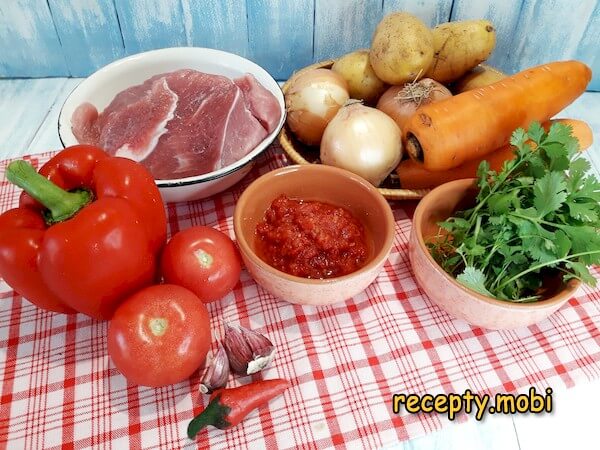
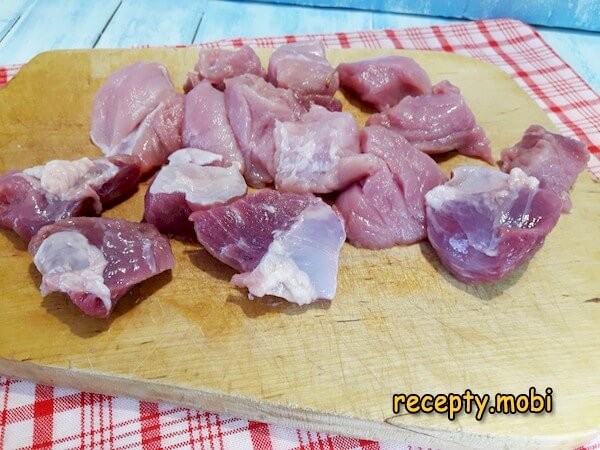
I cut the meat into small pieces, no larger than 2.5 centimetres.
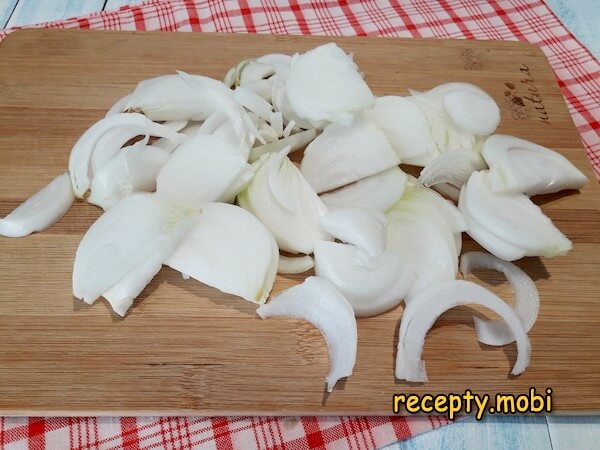
I cut the onion into not-too-thin half-rings.
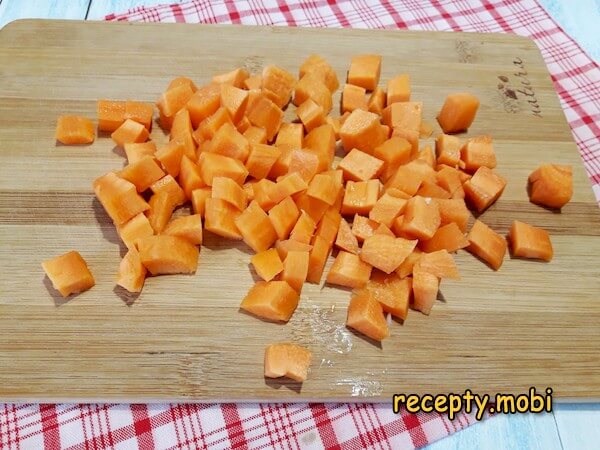
I chop the carrot into 1-centimetre cubes.
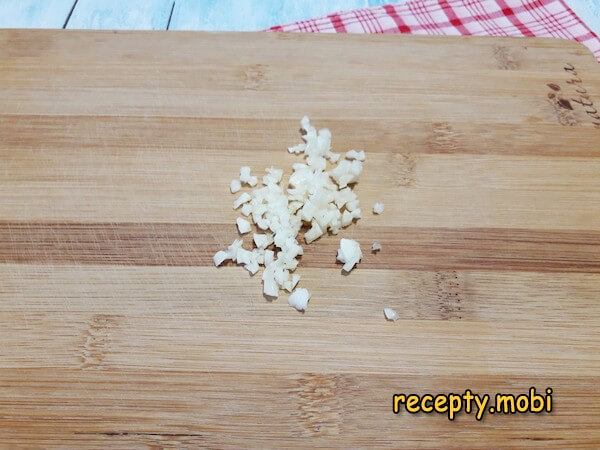
I mince the garlic with a knife.
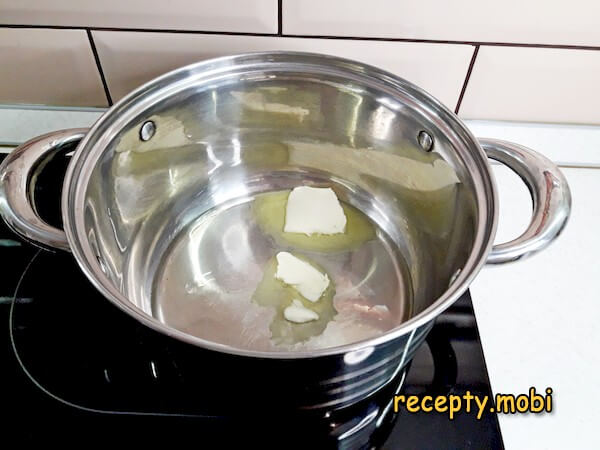
In a pot, I melt the butter, having first poured in the sunflower oil.
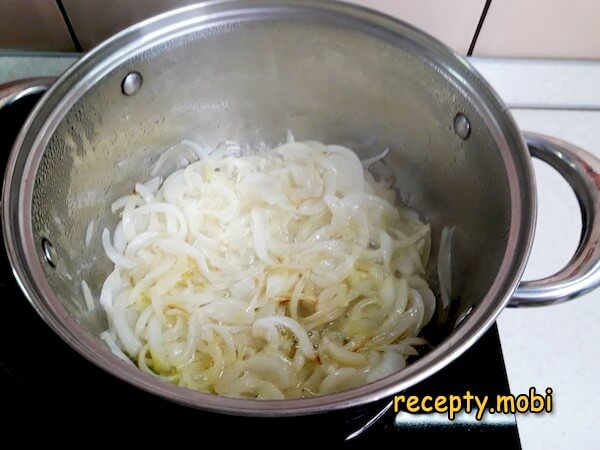
First I fry the onion – its light caramelisation gives the dish a fitting sweetness. There is no need to overdo it – the onion strips should simply soften and only brown slightly in a few places.
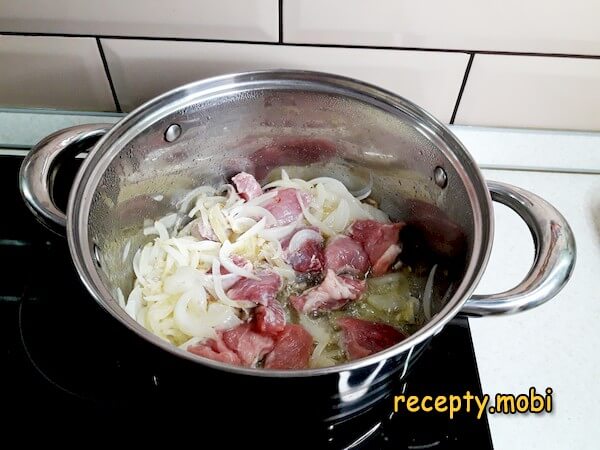
Next I add half of the chopped meat – let it fry properly until golden brown.
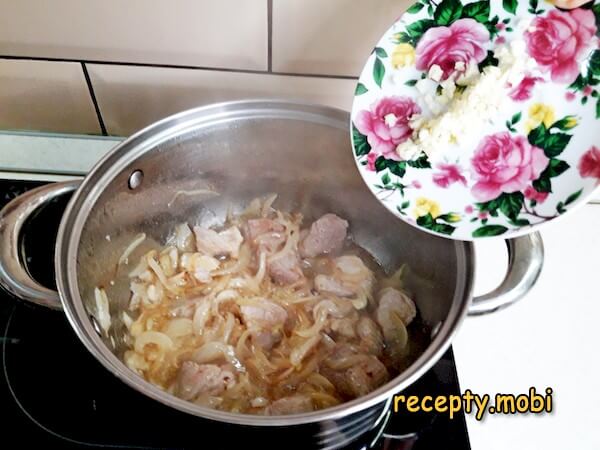
While this is happening, I add the garlic – its characteristic aroma spreads at once.
Now I add the carrot to the pot.
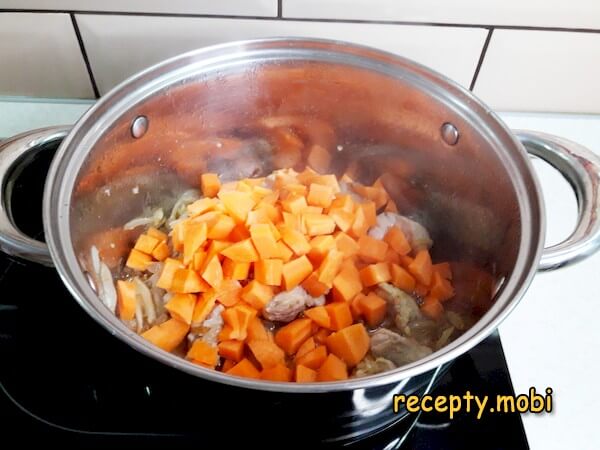
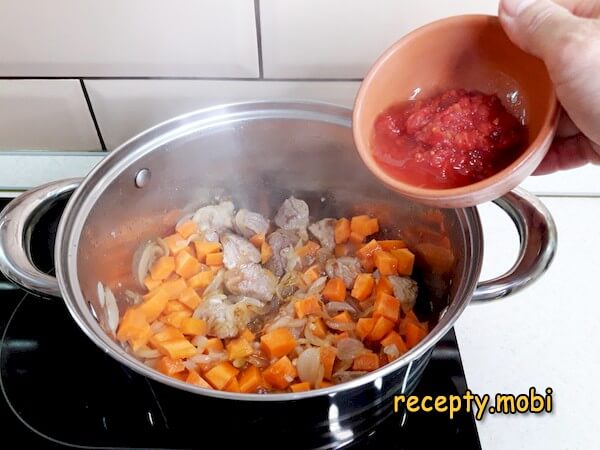
I add the canned tomatoes and the hot pepper. I mix everything, turn the heat to minimum, but so that the mixture gently bubbles away.
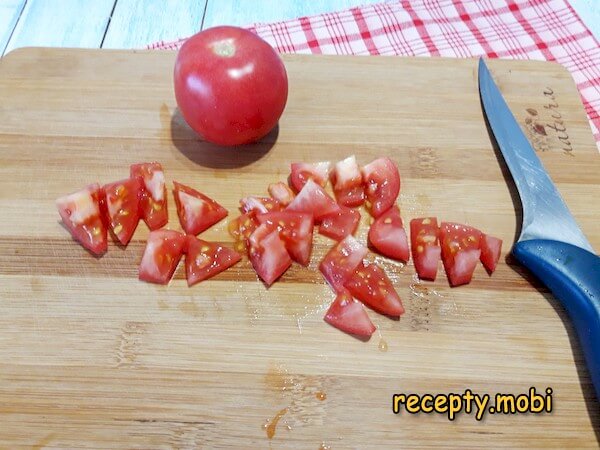
I cut the fresh tomatoes.
I add them to the mixture straight away.
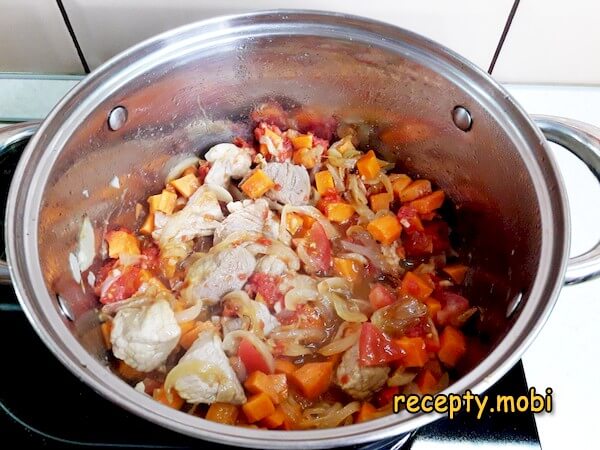
I carry out all the steps one after another, without timing any particular stage. Next I add the remaining pieces of meat.
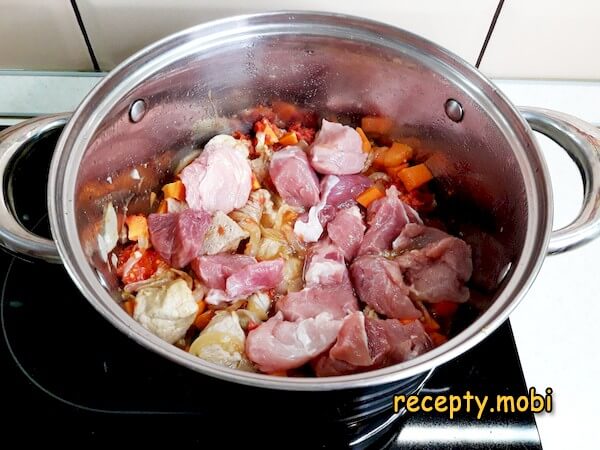
I pour hot water over everything.
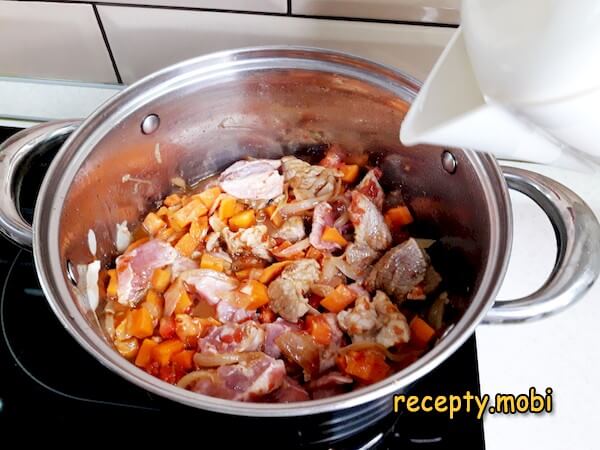
I judge the amount of water by eye – the liquid should reach the top of all the ingredients.
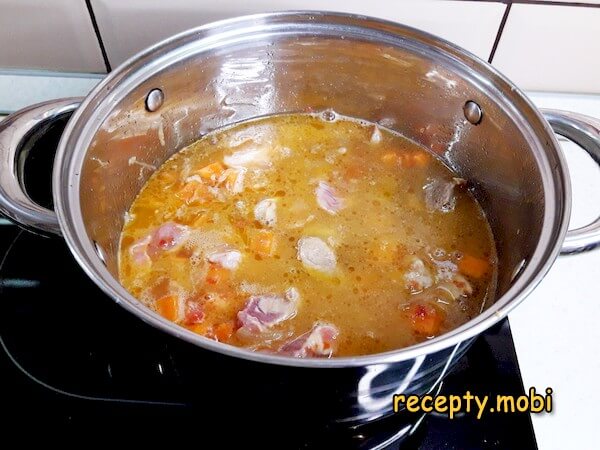
I add the sweet paprika to the soup (if you taste it, it should be sweet – this indicates good quality, whereas bitterness in the flavour points to an old, rancid powder, which is best not used at all).
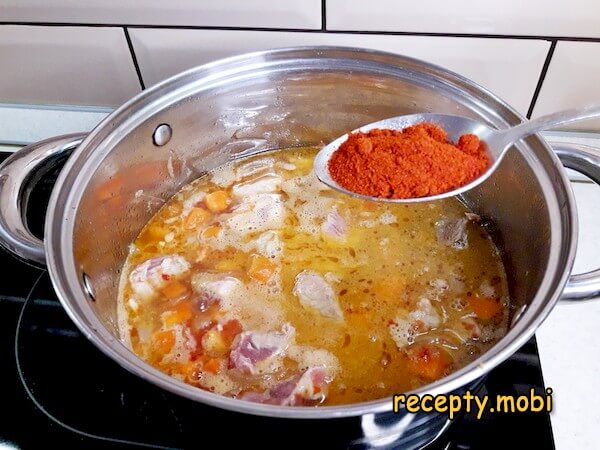
I mix everything, add the bay leaves and a little salt (I don't salt it fully – better to do that later).
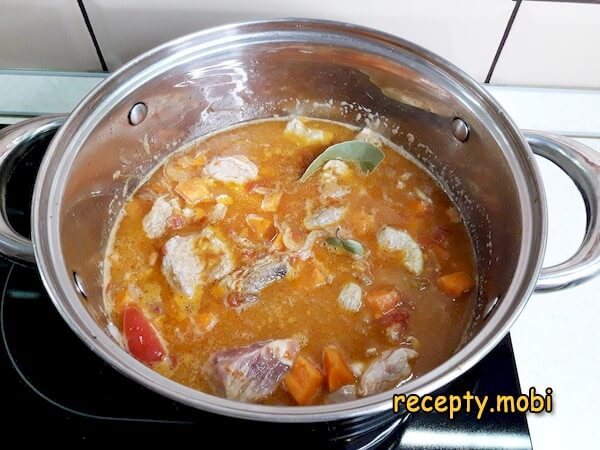
I cover the pot with a lid and simmer the goulash soup over low heat for 40 minutes.
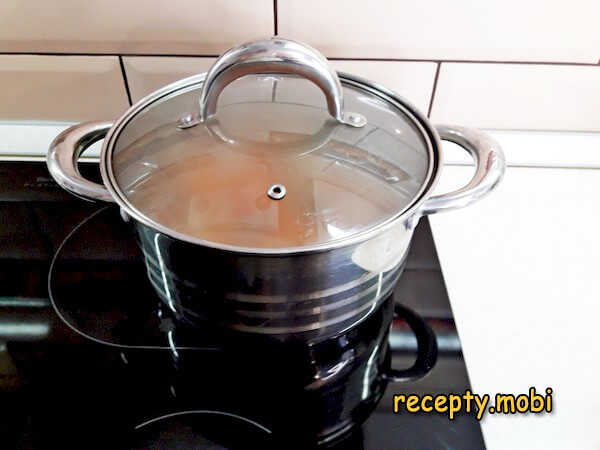
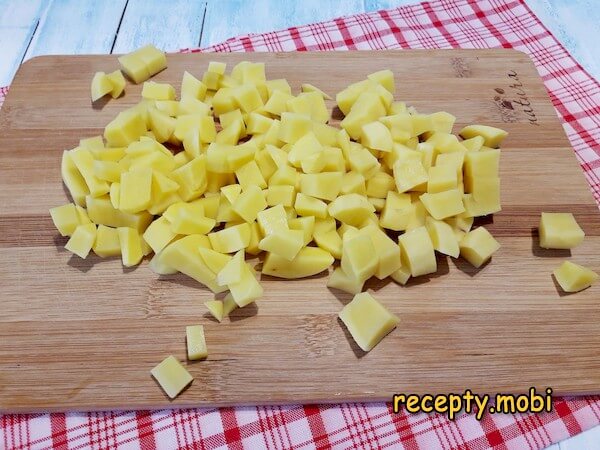
Before that time is up, I cut the potatoes into small cubes.
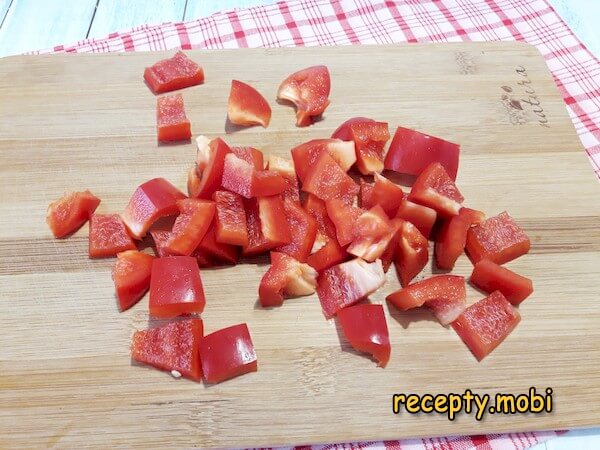
I cut the bell pepper into larger pieces.
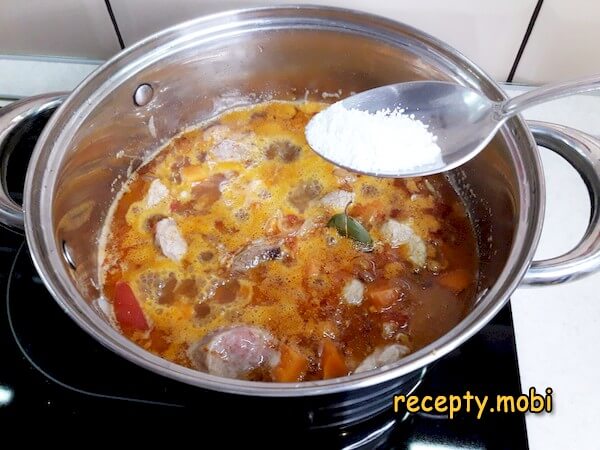
When 40 minutes have passed, I check the broth for salt and add more to my taste.
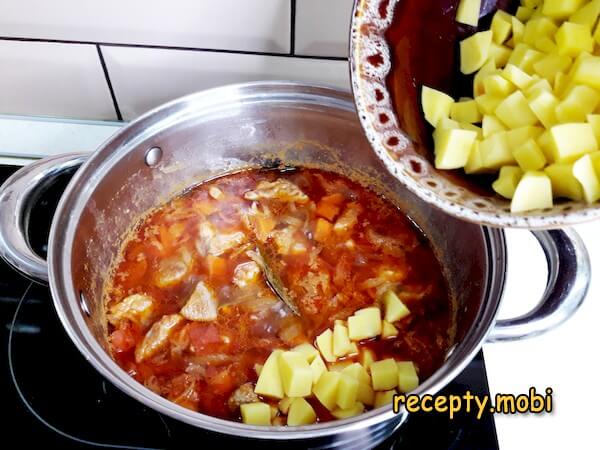
I add the potatoes to the mixture.
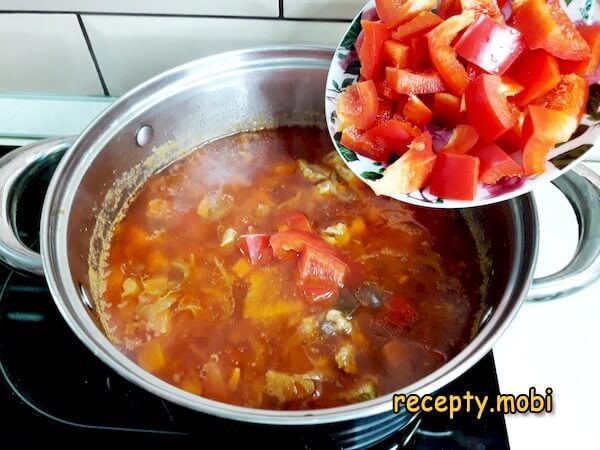
Right after that I add the bell pepper. You can add a little more water, but the soup should still stay fairly thick.
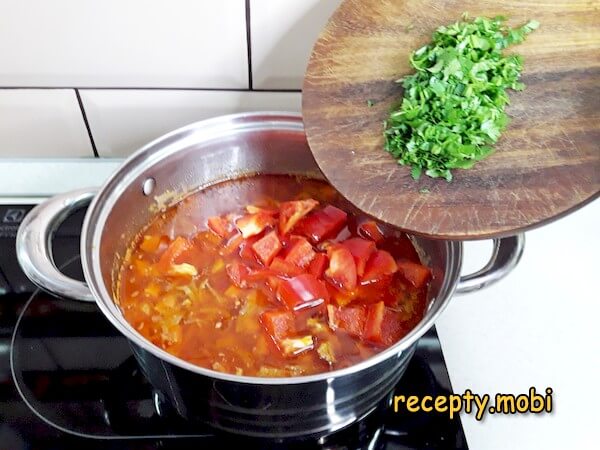
I season everything with finely chopped parsley. I cover the pot with the lid again and simmer for another 15 minutes. The Hungarian goulash soup is ready.While the pot is still hot, I ladle the Hungarian goulash soup into individual bowls. It is usually sprinkled with green onion on top. And since this is, after all, originally a peasant dish, dunking a piece of bread or lavash into the broth is not forbidden.Give it a try – enjoy your meal!


Tips
- 1
Plenty of onion is the "secret" to sweetness. With too little onion the soup is bland and lacks that characteristic Hungarian note. As it caramelises, 300 g gives goulash its signature sweetness.
- 2
Quality paprika is the "secret" to colour. Old, rancid paprika tastes bitter and won't colour the dish. Fresh sweet paprika gives a deep red-orange colour and a characteristic aroma.
- 3
Potatoes at the end are the "secret" to texture. Potatoes added at the start would boil down to mush over the hour. I add them 15–20 minutes before the end – they hold their shape while the meat has time to finish cooking.
- 4
Little water is the "secret" to richness. Too much water and you get an ordinary soup. Liquid only up to the top of the ingredients gives a truly thick goulash. The same principle works in other kinds of thick meat soups and azu.
FAQ
Which meat should I choose for goulash? +
Ideally beef chuck or shank with streaks of fat (500 g is the classic). Alternatives: boneless veal (500 g – leaner and more tender), pork neck (500 g – budget-friendly and juicy), beef ribs (650 g – richer), a beef-and-pork mix (250 + 250 g – budget), bone-in beef shank (700 g), or boneless lamb (500 g – for an Eastern accent). Avoid lean fillet (it turns dry) and meat with a lot of membrane. For the classic version, use beef with a little fat from the chuck.
What can replace sweet paprika? +
Alternatives: smoked paprika (0.5 tbsp plus 0.5 tbsp sweet – for a smoky accent), a mix of paprika and a pinch of cayenne (1 tbsp – spicier), home-ground sweet pepper made from bell peppers (1.5 tbsp), a mix of paprika and dried tomato (1 tbsp – Mediterranean), mild adjika without heat (1 tbsp), or ready-made goulash seasoning (1 tbsp – convenient). Avoid old, rancid paprika (it tastes bitter) and blends containing glutamate. For the classic version, use freshly milled sweet paprika.
How long does goulash soup keep? +
In the fridge, in a tightly closed container, for 3–4 days. On the second day the flavour becomes richer – the meat and vegetables soak up the paprika and tomato more deeply. Before serving, reheat over low heat for 10 minutes, adding a little water if needed. In the freezer it keeps for up to 2 months; defrost it in the fridge over 8 hours. Don't leave it at room temperature for longer than 4 hours.
What to serve goulash soup with? +
The Hungarian classic is with csipetke (pinched egg-dough dumplings). It is also good with whole boiled potatoes, wheat noodles, mashed potatoes, slices of rustic bread, or toast with garlic butter. Serve it with pickled cucumbers or marinated red cabbage, a little hot pepper, and green onion and parsley on top. A spoonful of sour cream in the bowl and some grated hard cheese suit it well. It is a thick goulash for a cold day, a filling family table, and a winter picnic in a flask.
- Comment
or post as a guest
Be the first to comment.