avg —
Chuchvara Uzbek style - a refined dish with Eastern flavor

Instructions
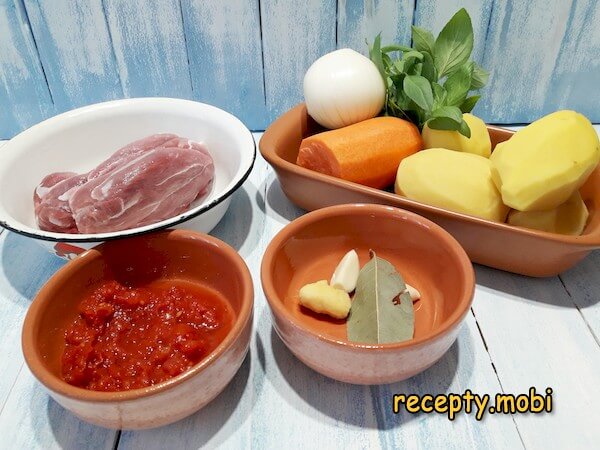
I get the broth ingredients ready. It is better if the meat is not too lean. The soup should turn out thick and rich, so don't take too much water; you can only slightly (by about 50 ml) increase or decrease the amount given in the recipe.
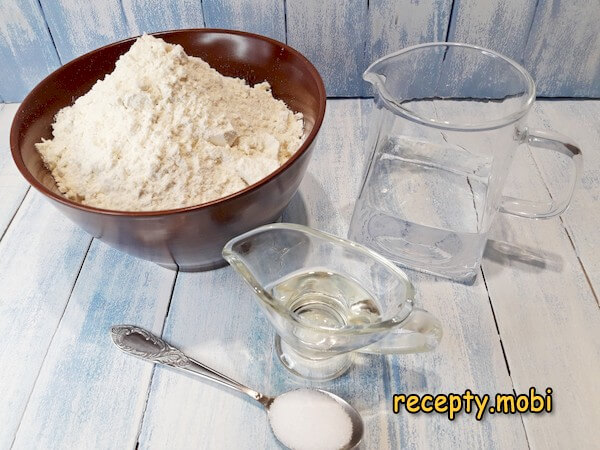
I gather all the components for the dough. The water should be hot (about 50–60 degrees), and the flour should be sifted beforehand.
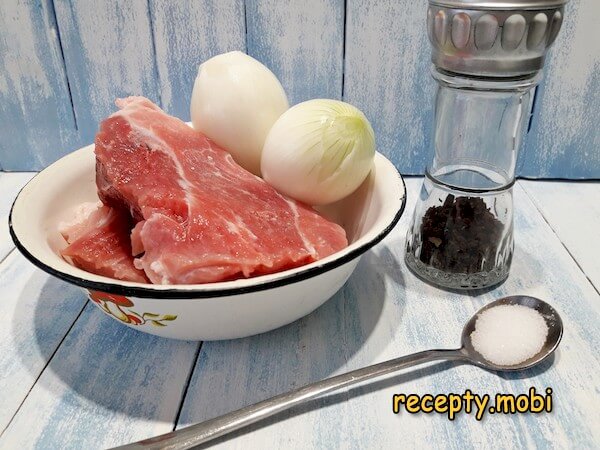
I prepare everything for the filling. If lean meat is used, add a third part of tail fat to it. The water is needed for more juiciness.
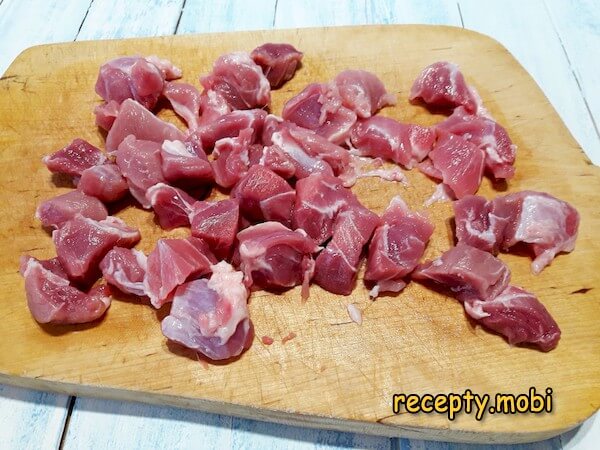
I start with the cutting for the broth. I cut the meat into small pieces (about 1.5–2 centimetres).
I chop the onion and carrot into smallish cubes (1 centimetre). For now I set the prepared pieces aside.
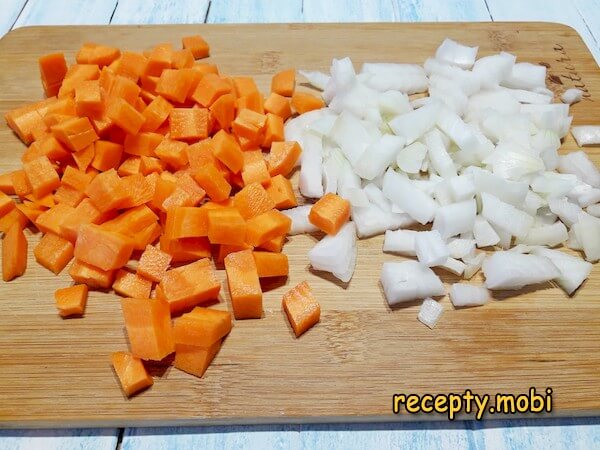
I grind the meat together with the onion into mince.
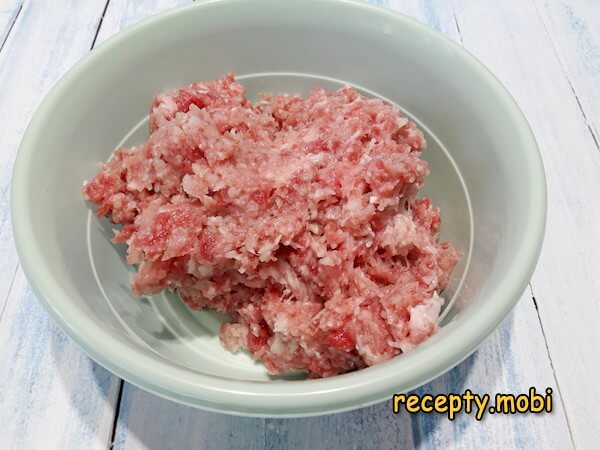
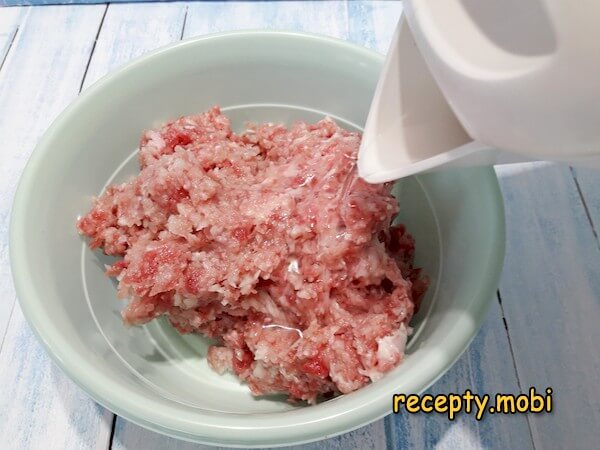
I add water to it so that the chuchvara turn out juicy. I mix the mince a little by hand, after which all the moisture goes into the meat.
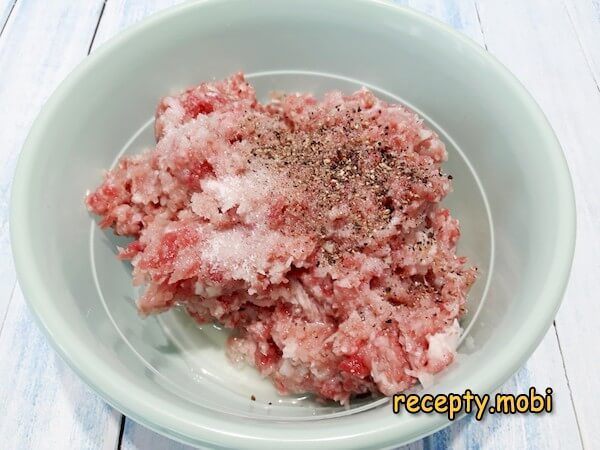
I salt and pepper the filling. I knead the mixture by hand once more. I cover it with film and leave it standing on the table.
I move on to making the dough. I pour the hot water into the bowl with the flour and salt.
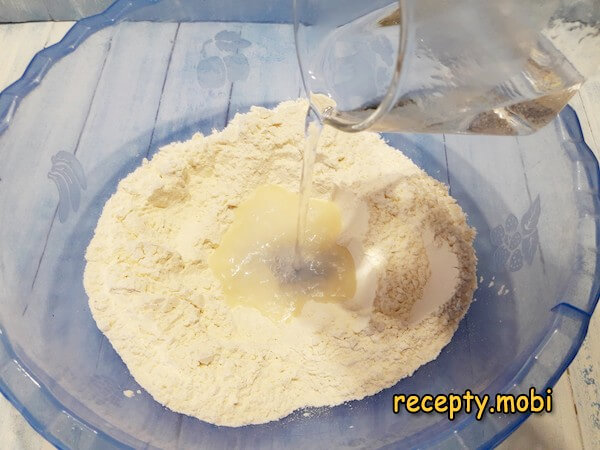
I mix the mixture a little with a spoon and add the vegetable oil.
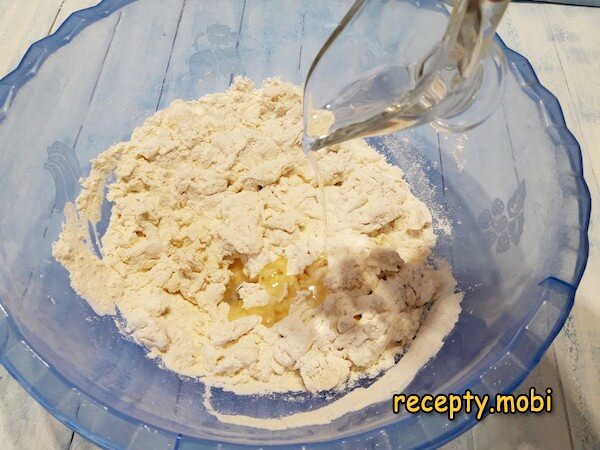
I knead the dough by hand in the same bowl.
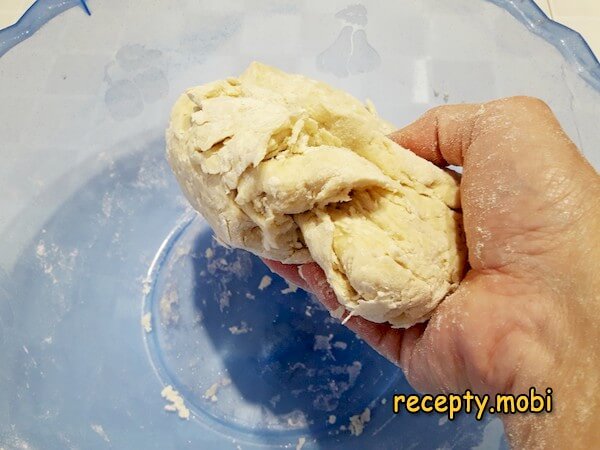
Then I carry on kneading for 5 minutes on the table.
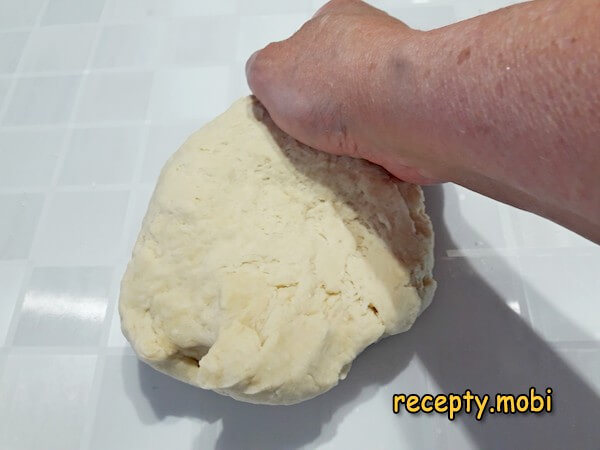
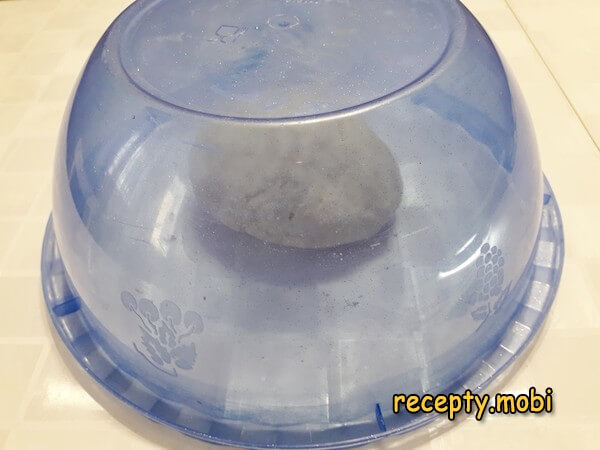
After this the dough becomes soft and even. I set it to rest, covering it with a bowl.
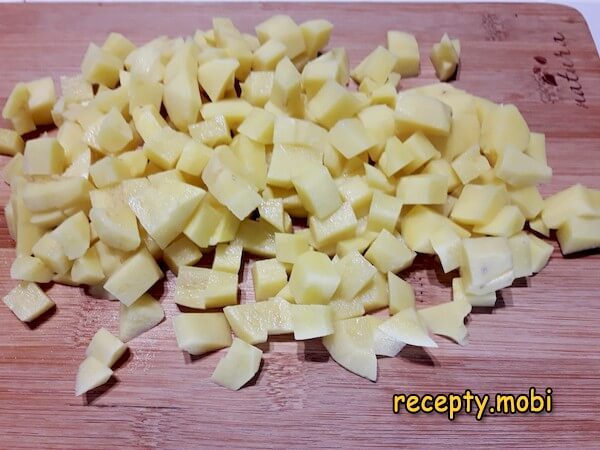
Meanwhile I carry on preparing the vegetables for the broth. I cut the potatoes into small cubes.
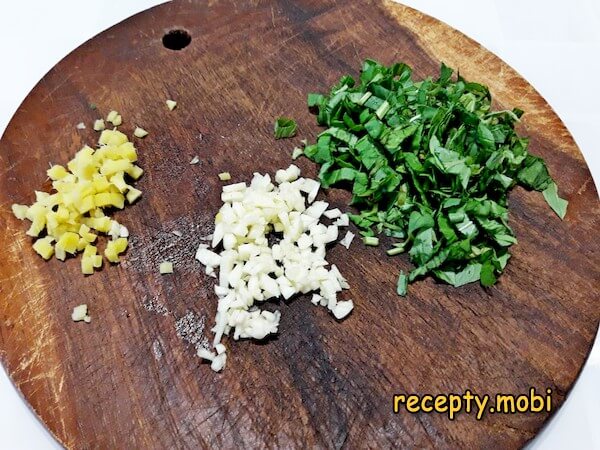
I mince the garlic, ginger, and basil with a knife.
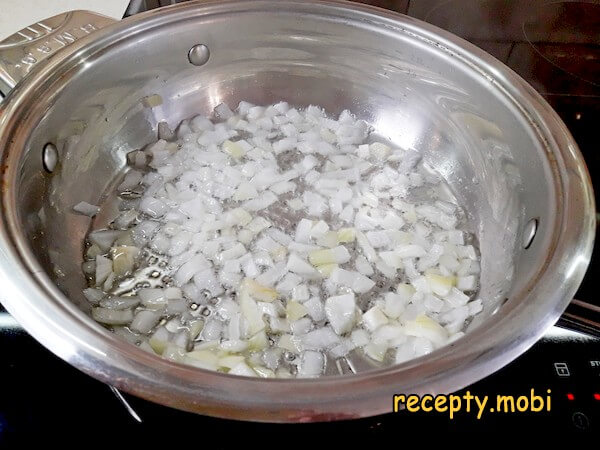
In a deep frying pan I sauté the onion with 20 millilitres of vegetable oil, just until it softens a little.
I rake the onion to one side, and in the free space I lay out the pieces of meat. I sauté them for 2 minutes on the highest heat. I don't forget to stir the onion at this point.
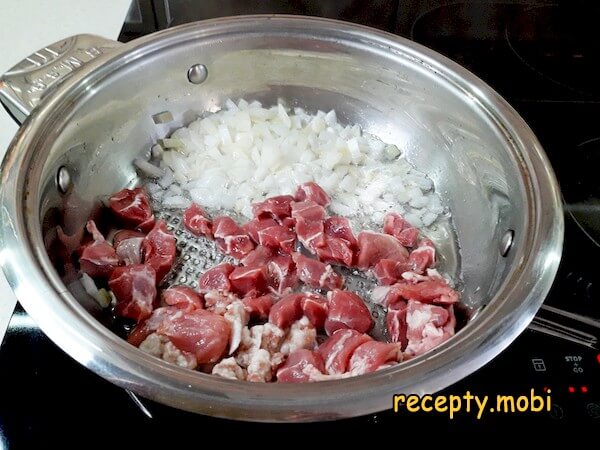
I add the carrot. I mix everything and reduce the heat.
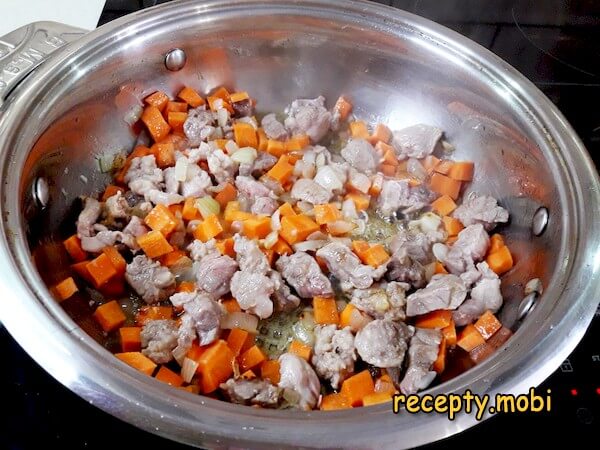
After a minute I load the potatoes into the pan.
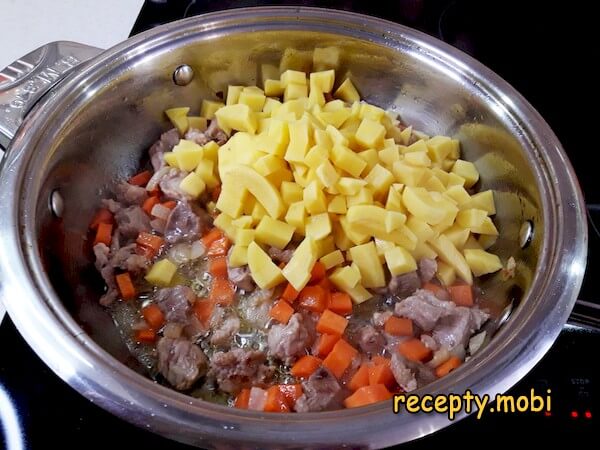
I immediately add the pieces of tomatoes in their own juice or the paste. I turn the heat back up and sauté the mixture for literally 30 seconds.
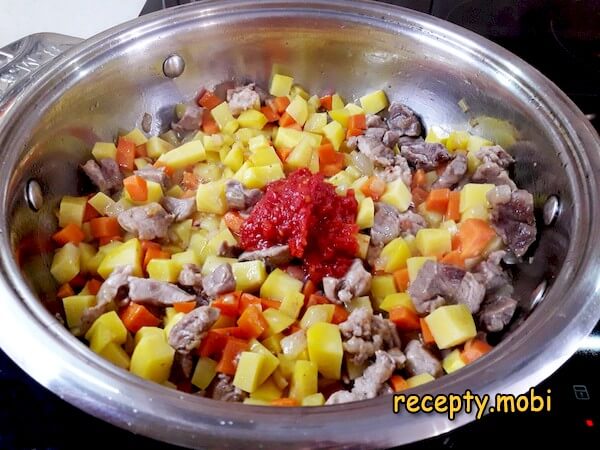
I pour in the hot water.
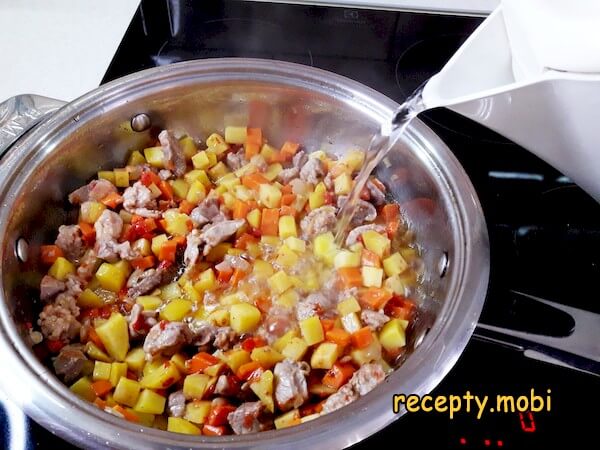
The soup should be thick, but the small dumplings (chuchvara) also need to fit in there.
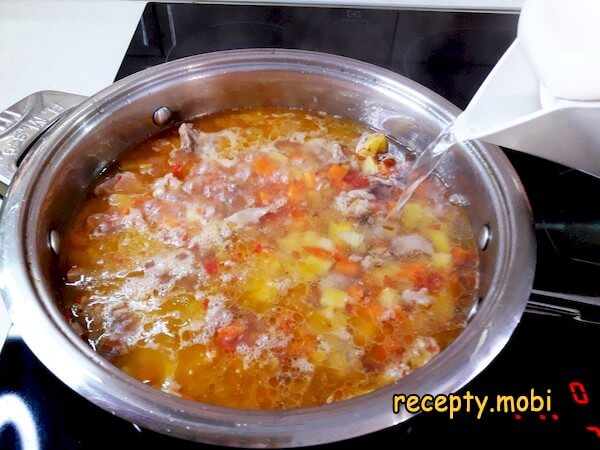
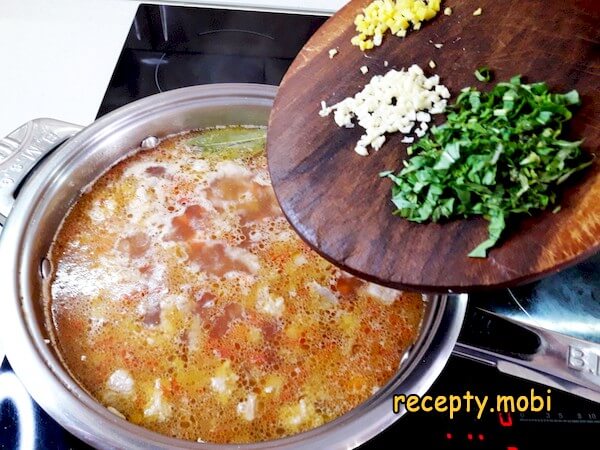
I add the aromatic seasonings and salt to the broth.
After it comes to a boil, I reduce the heat, cover the pan with a lid, and cook the soup for 40 minutes.
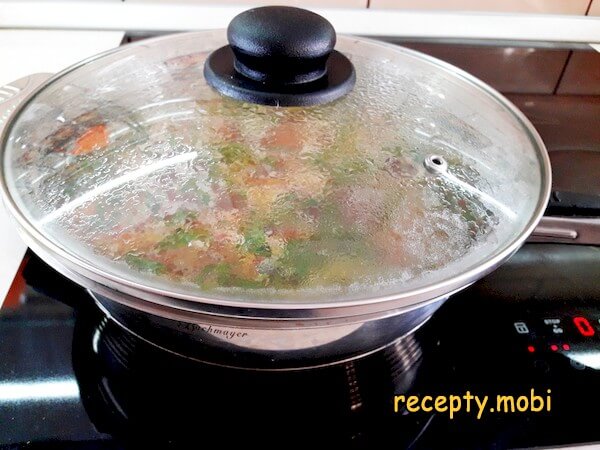
That time is just enough to shape the dumplings. The dough has rested and become very elastic and smooth. I knead it once more.
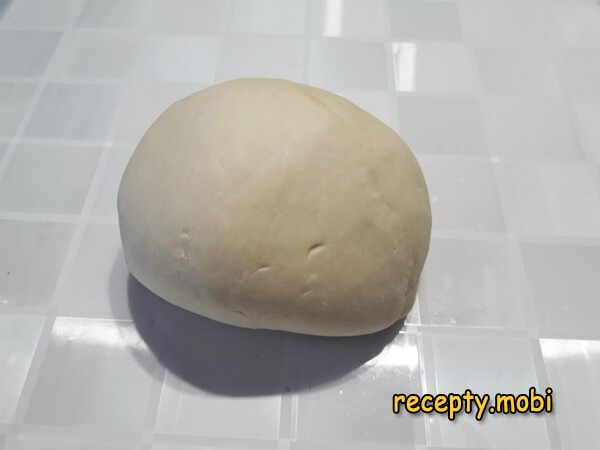
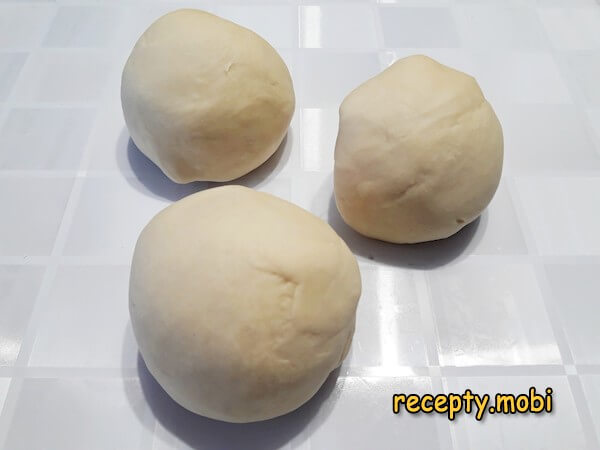
For convenience I divide the ball of dough into 3 parts.
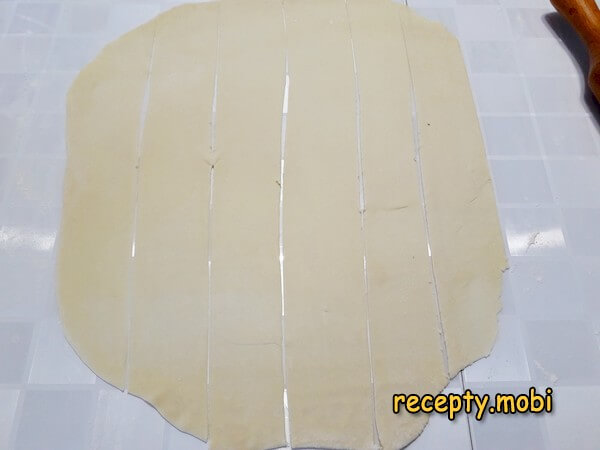
I roll out a thin sheet (about 2–3 millimetres). I cut it into strips 5–6 centimetres wide.
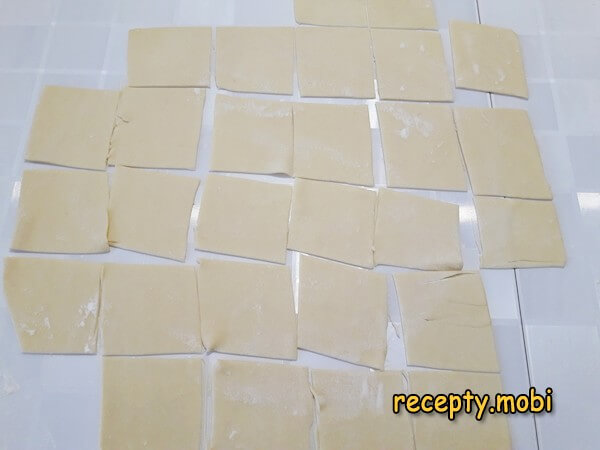
Next I cut the strips into squares.
I place the filling in the centre.
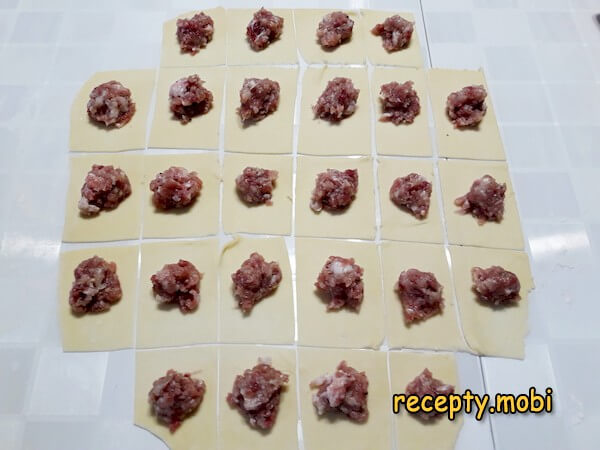
I start shaping the chuchvara – I fold the square diagonally and carefully seal the edges of the resulting triangle.
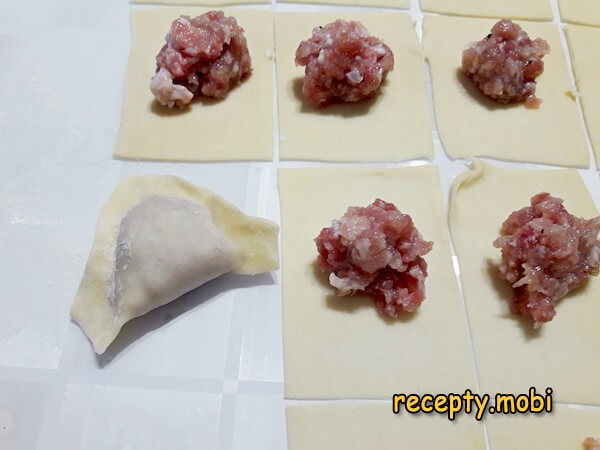
I join the ends of the wide part of the triangle.
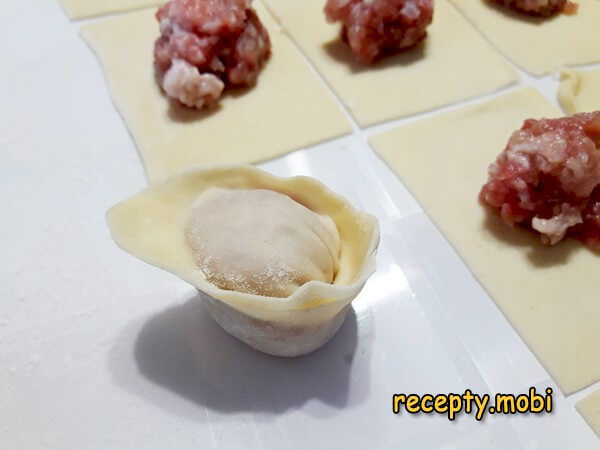
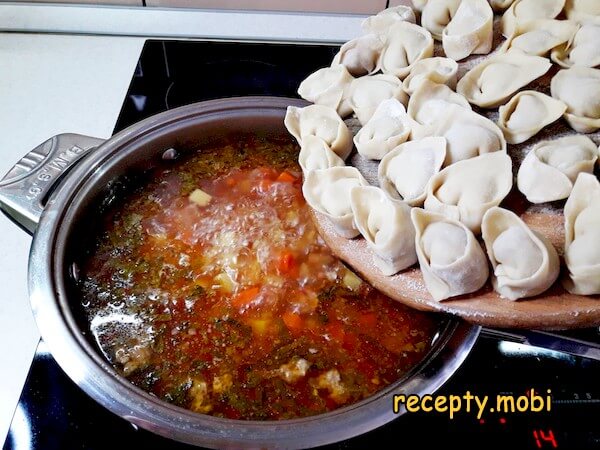
I lay the shaped dumplings out on a flour-dusted board.
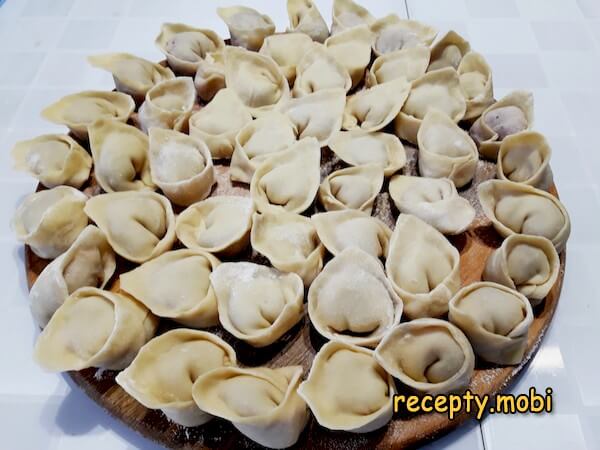
After the set time, I turn the heat up and load all the dumplings into the soup. Since the mixture is very thick, I stir it carefully, lifting the chuchvara from the bottom up with a spatula.
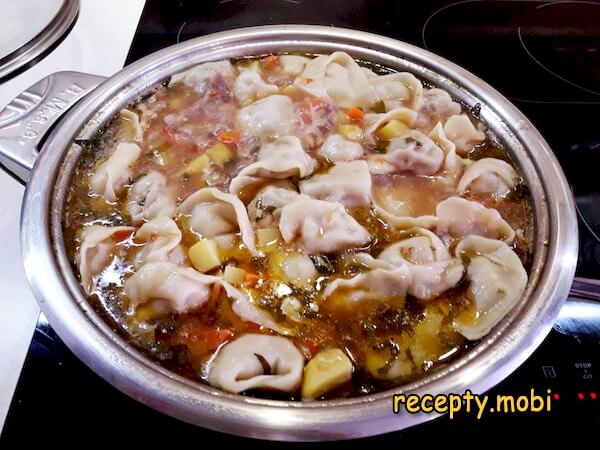
After it comes to a boil, I cook the soup for 2 minutes, then leave it under the lid for another 2 minutes. The chuchvara Uzbek style is ready.Chuchvara is served straight away after cooking. It is ladled into individual bowls and, if desired, sprinkled with fresh herbs. It is a very aromatic, juicy, and hearty dish. Once you have tried it even once, you will want to make it again.


Tips
- 1
HOT WATER IN THE DOUGH – the "secret" of elasticity. Cold water gives a tough dough that tears when shaping the small chuchvara. 50–60 °C makes the dough pliable.
- 2
WATER IN THE FILLING – the "secret" of juiciness. A dry filling means the dumplings fall apart and are dry. 2 tablespoons of water plus kneading by hand make the filling juicy, and the dumplings burst with juice.
- 3
FRYING IN TOMATO – the "secret" of colour. Boiling straight away gives a clear, bland soup. 30 seconds of frying the vegetables with tomato paste give a thick red-orange broth.
- 4
COOKING 2 MINUTES + 2 MINUTES RESTING – the "secret" of texture. Long cooking will boil the chuchvara down to mush. 2 minutes on the heat plus 2 under the lid leave the dough cooked through and the filling juicy. The same principle works in other kinds of soups with dumplings.
FAQ
Which meat should I choose for chuchvara? +
Ideally, lamb with tail fat (200 + 300 g). Alternatives: beef with a little fat (500 g), a mix of beef and pork (250 + 250 g), a mix of lamb and beef (250 + 250 g), veal with fat (500 g), boneless chicken thighs (500 g), turkey thigh (500 g). Don't use: lean fillet without fat (the chuchvara will be dry). For the classic version, use meat with streaks of fat.
What can replace basil and ginger? +
Alternatives: a mix of cumin, coriander, and turmeric (1 tsp), khmeli-suneli (1 tsp), a mix of curry and black pepper (1 tsp), a mix of Italian herbs and garlic (1 tsp), oregano and dried basil (0.5 tsp each), fenugreek and turmeric (0.5 tsp each), a "for pilaf" spice mix (1 tbsp). For the classic version, use cumin and coriander with a pinch of turmeric.
How long does chuchvara keep? +
In the fridge in a tightly sealed container – 2 days. On the second day the flavour becomes richer, as the chuchvara soak up more of the broth. Before serving, reheat over low heat for 5–7 minutes. In the freezer, raw chuchvara keep for up to 2 months, spread out on a board and then put into a bag. I don't recommend freezing the broth with chuchvara, as the dough will overcook when it thaws. It is best to cook chuchvara for one serving and to shape the raw dumplings in advance.
What to serve chuchvara with? +
Uzbek-style classics: with thick 20% sour cream. With fresh cilantro, parsley, and dill. With finely chopped spring onion. With spicy Eastern-style adjika. With salted garlic sauce. With lavash flatbread or Uzbek patyr. With a cup of unsweetened green tea. With "shakarap" salad of tomatoes and onion. With pickled garlic. With suluguni cheese. With katyk or ayran. With rings of hot paprika. With fresh flatbreads. With pomegranate seeds. Chuchvara is a dish for a cold day, a hearty family table, and an Uzbek celebration.
- Comment
or post as a guest
Be the first to comment.