avg —
Cabbage Soup with Veal, Sauerkraut and Fresh Cabbage

Instructions
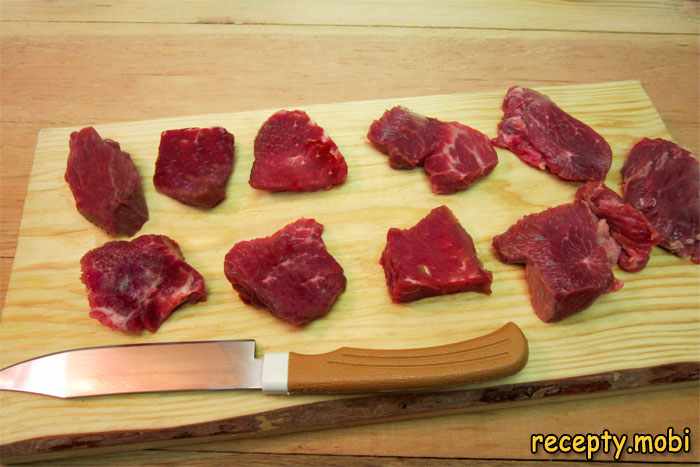
Rinse the veal thoroughly under cold running water and cut it into medium-sized pieces – roughly 4×4 cm. Transfer the meat to a pot of at least 4 litres and pour in 2.5 litres of cold water. Set it over high heat and bring to the boil. Skim off the foam that forms with a slotted spoon – these are protein flakes that would make the broth cloudy. Reduce the heat to low and simmer gently for 1–1.5 hours, depending on how tough the meat is.
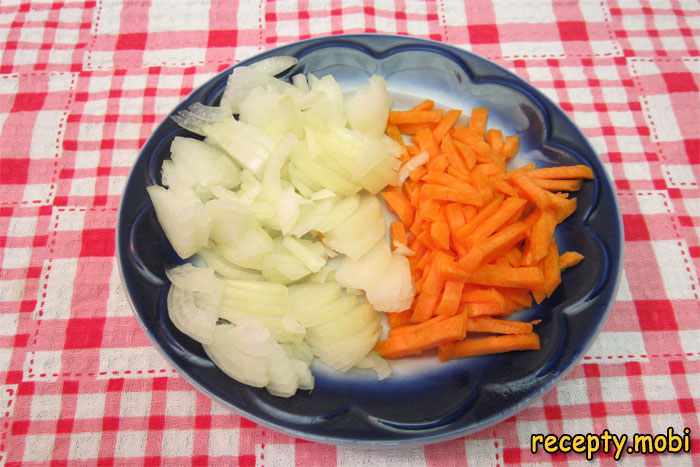
While the broth is cooking, prepare the vegetables for the sauté. Peel the onion and cut it into small cubes of 5–6 mm – this size lets the onion caramelise quickly. Wash the carrot well, peel it with a vegetable peeler and cut it into thin sticks 3–4 cm long and 3–4 mm thick. Sticks look nicer in the soup than grated carrot and hold their texture.
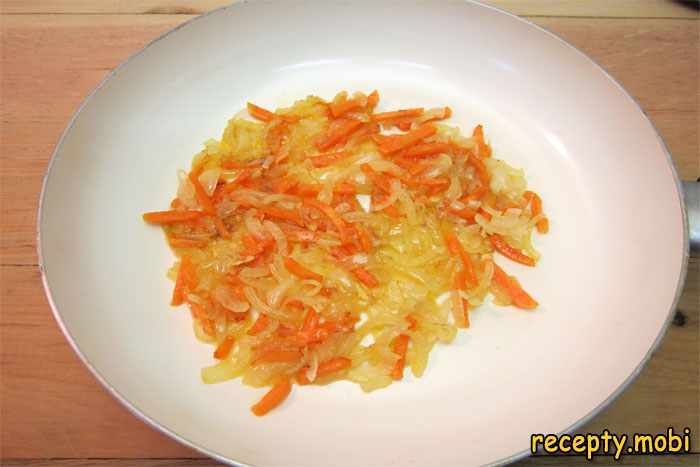
Heat a frying pan with 2 tablespoons of sunflower oil over medium heat. Add the onion and fry for 3–4 minutes until translucent, then add the carrot and continue frying for another 5–6 minutes until golden. Unrefined sunflower oil with its seed aroma goes especially well with cabbage shchi – this is a classic taste of Russian cuisine.
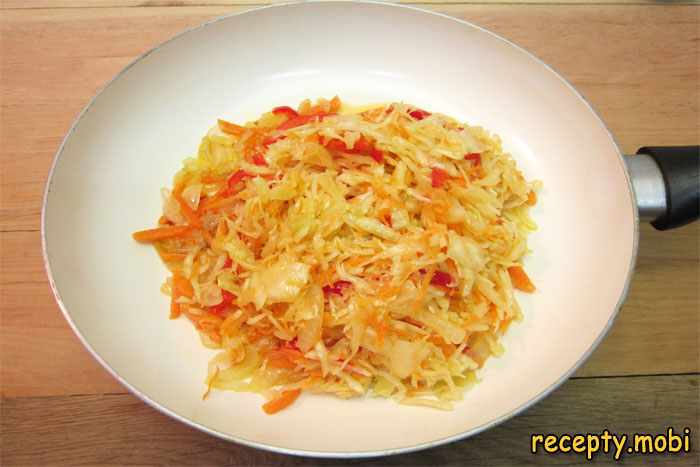
Taste the sauerkraut for acidity – if it is too sharp, squeeze it out of the brine or rinse it under water. Add the cabbage to the sautéed vegetables and stir. Fry for another 5–7 minutes over medium heat – the heat softens the acidity and brings out the flavour of the sauerkraut. It should lightly brown and become softer.
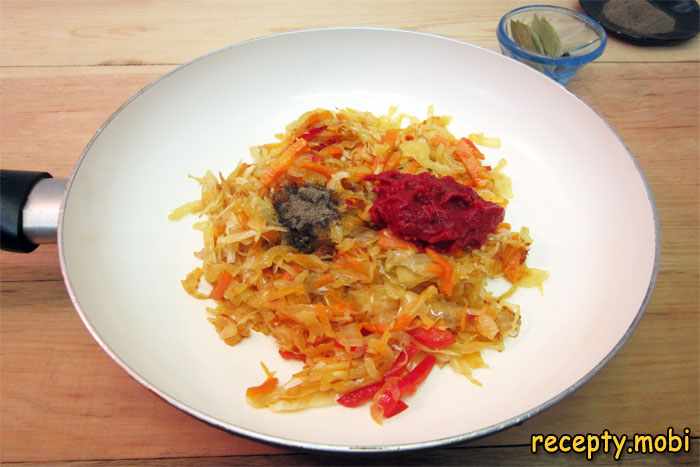
Add a tablespoon of tomato paste and a pinch of ground black pepper to the cabbage and vegetables. Stir thoroughly so the tomato is distributed evenly and colours the cabbage. Tomato paste gives the soup a lovely colour and a light tang that harmonises with the sauerkraut. Fry everything together for another 2–3 minutes.
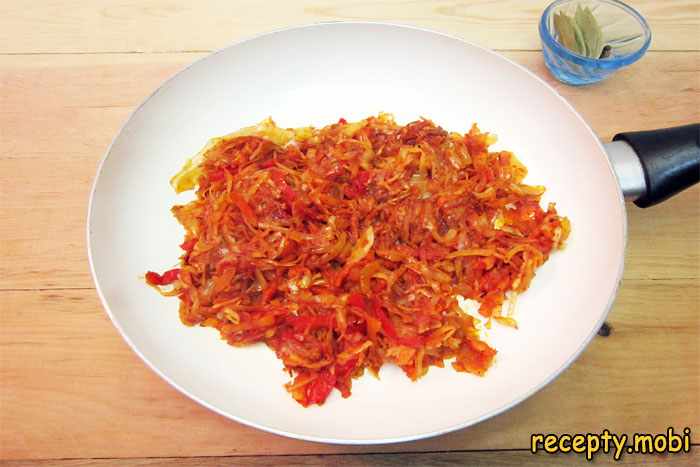
Stir the sauté so the tomato combines with the cabbage and vegetables, then take the pan off the heat. The finished sauté should be soft and aromatic, with a rich orange-red shade from the carrot and tomato. Set it aside – it will be added to the broth a little later.
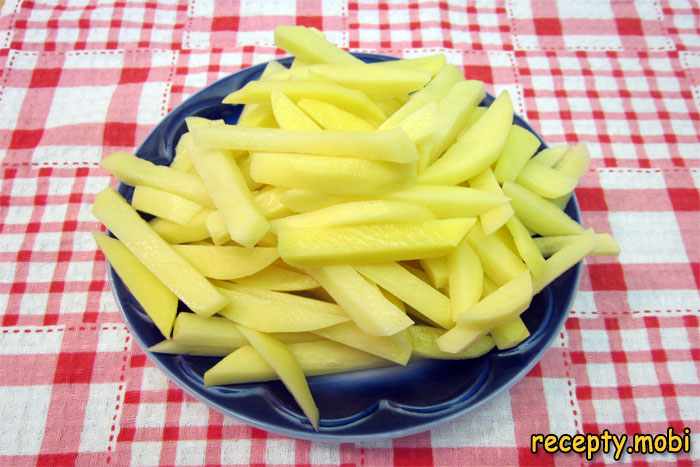
Peel the potatoes and cut them into sticks of about 1×1×4 cm – this shape looks good in the soup and cooks quickly. Do not cut the potatoes too small – they will boil down to a purée and make the broth cloudy. Pieces that are too large take longer to cook and stay firm when the other vegetables are already done.
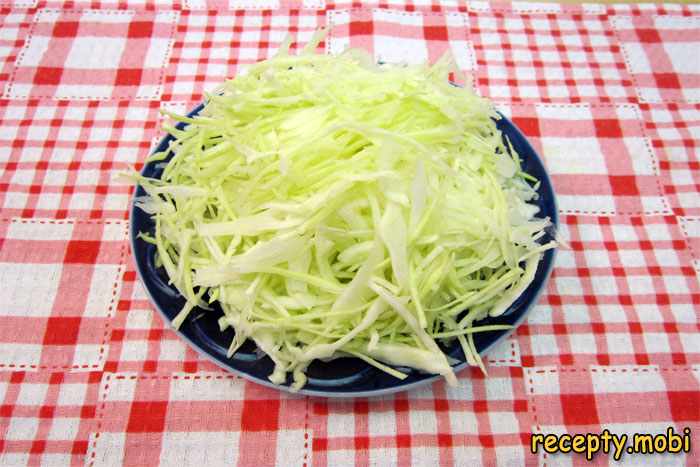
Cut the fresh white cabbage into quarters, remove the stalk and shred it into thin strips 3–5 mm wide. The fresh cabbage is added right at the end to keep a light crunch and fresh taste – it balances the acidity of the sauerkraut and makes the soup milder.
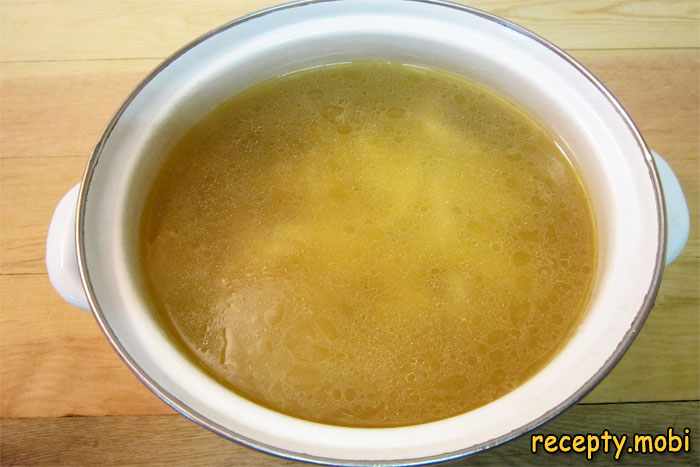
When the meat is cooked (test it with a fork – it should go in easily), add the chopped potatoes to the boiling broth. Cook for 5–7 minutes over medium heat until the potatoes are half-done – they should soften slightly but stay firm inside. The acid from the sauerkraut slows down the cooking of the potatoes, so it is important to let them cook before adding the sauté.
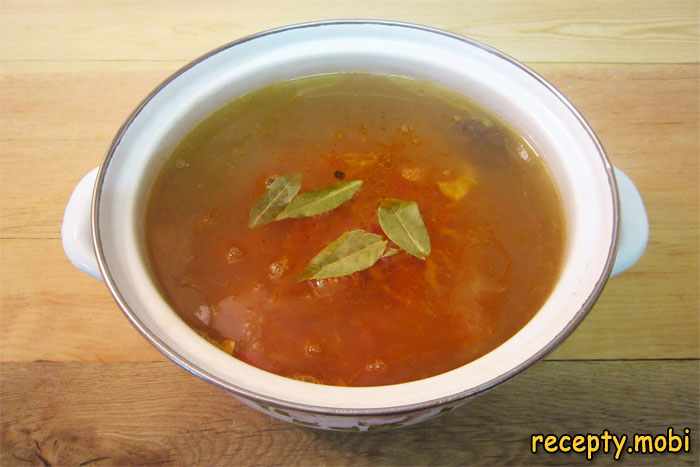
Transfer the sauté with the sauerkraut into the pot, add 2 bay leaves and 5 allspice peppercorns. Taste the broth and add salt if needed – bear in mind that the sauerkraut already contains salt. Stir and cook for another 10 minutes over medium heat so that all the flavours combine and the potatoes are fully cooked.
At the very end, add the shredded fresh cabbage – it cooks faster than all the other ingredients. Cook for another 7–10 minutes over low heat until the fresh cabbage is soft, but it should keep a light crunch. Turn off the heat, remove the bay leaf (it turns bitter if left in the soup too long) and let the soup rest under the lid for 10–15 minutes.
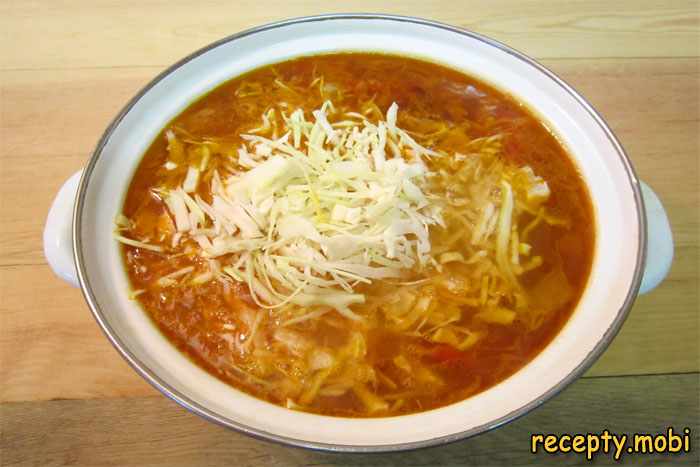
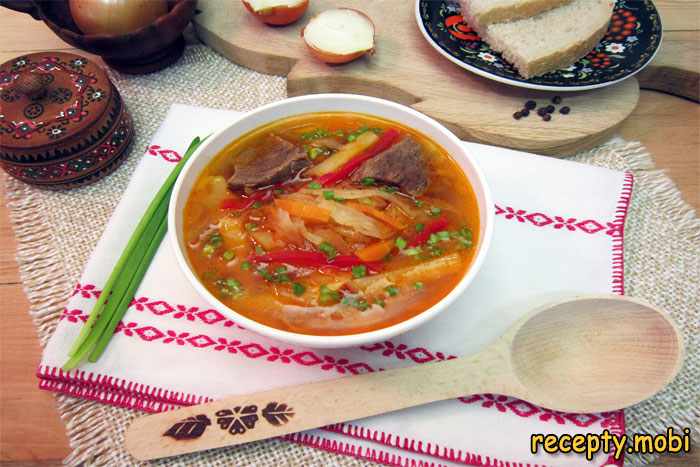
Ladle the hot veal cabbage soup into deep bowls, placing a piece of meat in each. Serve with a tablespoon of medium-fat sour cream (15–20%) and finely chopped green onion or fresh dill. It goes beautifully with a slice of dark rye bread. The veal shchi with two kinds of cabbage is ready!


FAQ
Can I replace the veal with another meat? +
Yes, beef will work (cook for 1.5–2 hours), pork ribs (1–1.5 hours) or chicken (40–50 minutes). With pork the soup will be fattier and richer, with chicken it will be lighter and more dietary.
Why did my soup turn out too sour? +
Most likely you added too much sauerkraut or did not squeeze it out of the brine. Next time reduce the proportion of sauerkraut or rinse it before adding. You can also add a pinch of sugar for balance.
How long does the finished soup keep? +
In the refrigerator in a covered pot – up to 3–4 days. Before serving, reheat it on the stove, add fresh herbs and a spoonful of sour cream. The soup keeps well and even improves in flavour.
Can I make the soup without potatoes? +
Yes, this is a more traditional old-Russian version – the soup will be more sour and less filling. Increase the amount of both kinds of cabbage by 100 g to make up for the volume.
Why did the broth turn out cloudy? +
The main reasons: you did not skim the foam when the meat came to the boil, you cooked it over high heat (it should be a gentle simmer), or the potatoes boiled down. For a clear broth, follow all the steps.
- Comment
or post as a guest
Be the first to comment.