avg —
Navy Fish Soup

Instructions
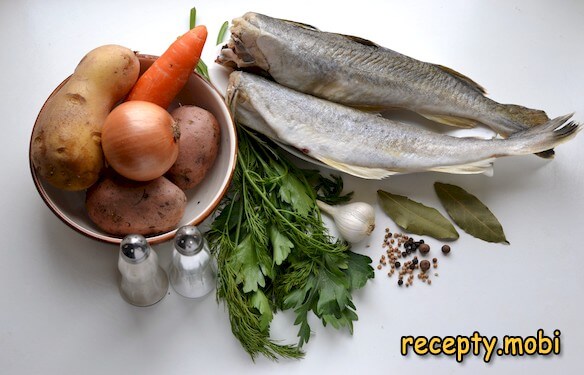
Lay out all the ingredients as shown in the photo.
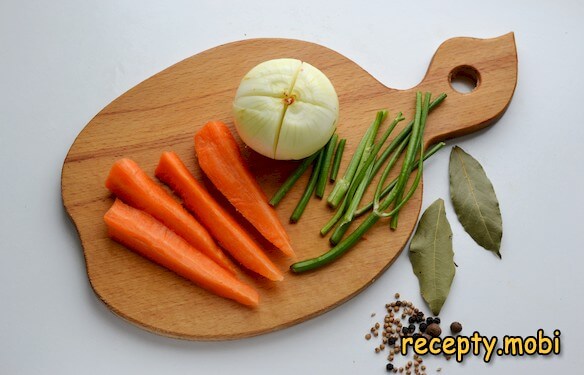
Peel the onion and make crosswise cuts down to the middle. Peel the carrot and cut it lengthwise into slices or large rounds. Trim the thick stalks from the prepared parsley and dill. Do not forget the peppercorns.
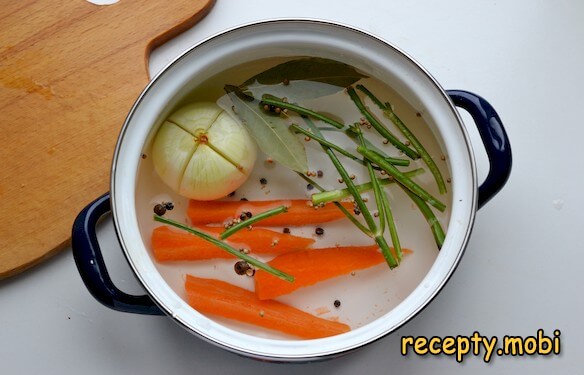
Once the water comes to a boil, add the carrot, the herb stalks, the scored onion, the peppercorns, the bay leaf and the coriander. Boil for 15 minutes.
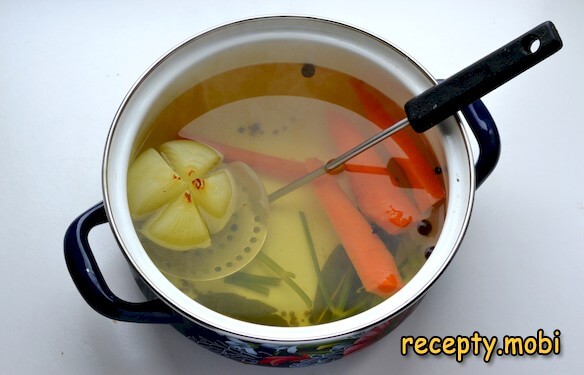
Lift the onion out of the pot and discard it – it has done its job.
Peel the potatoes and cut them into large wedges.
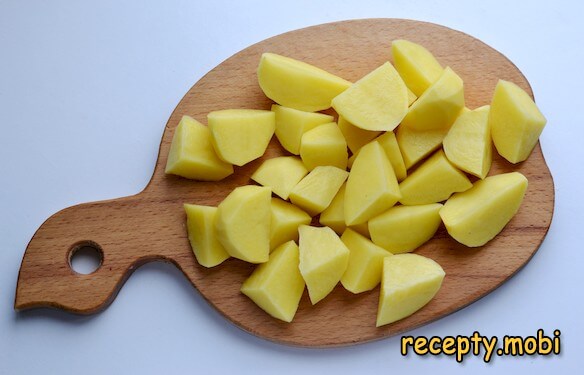
Add the potatoes to the pot and bring back to a boil.
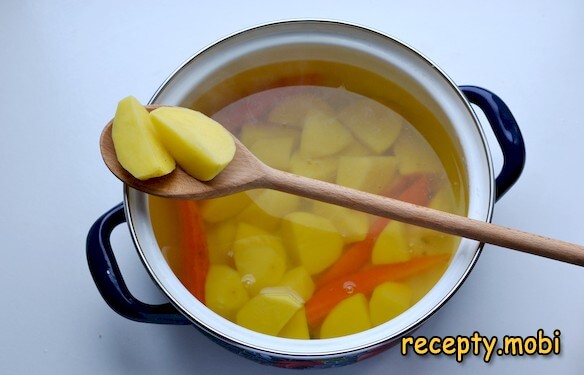
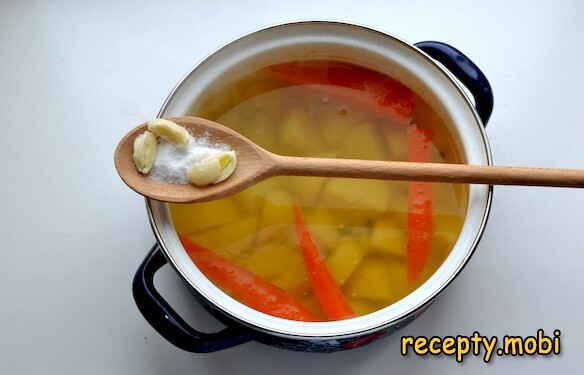
Flatten the garlic cloves with the flat side of a knife blade and remove the skins. Add them to the pot with the potatoes in this state. Season with salt and cook the potatoes with the garlic for 10 minutes.
Thaw the navaga ahead of time on a shelf in the fridge or simply on the counter, in the air (not in water and not in the microwave). Remove the scales and the dark membrane in the belly. Cut the navaga into smallish pieces.
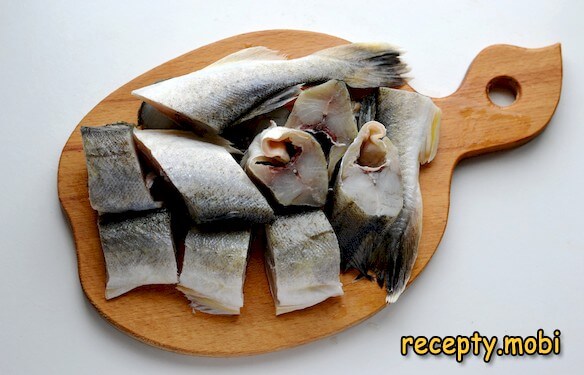
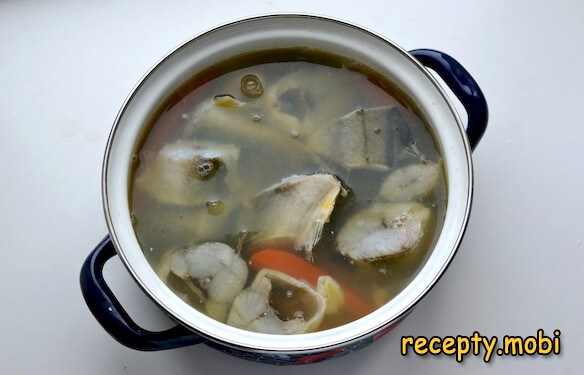
Add the navaga pieces to the soup-to-be and cook for about 10 minutes. As soon as the flesh begins to come away from the bone, the fish is ready. Do not let the liquid bubble too hard. When the time is up you can remove the carrot – it has done its work, giving the broth sweetness and colour. But I like the carrot, so I leave it in the soup.
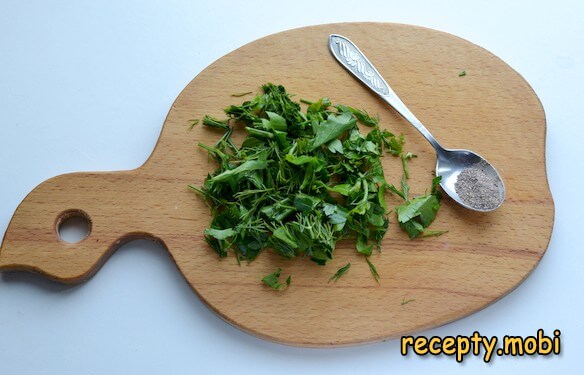
Rinse and chop the parsley leaves and dill sprigs.
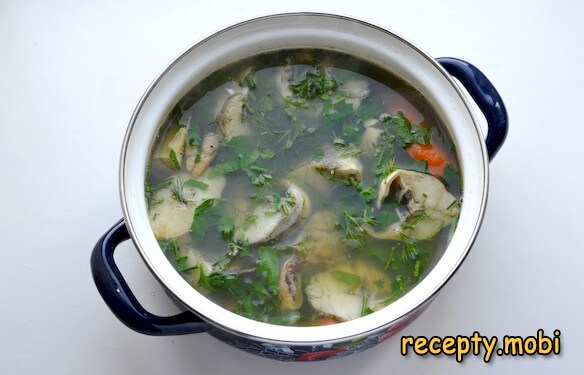
Add the herbs to the pot, turn off the heat and let the soup steep for 10 minutes.
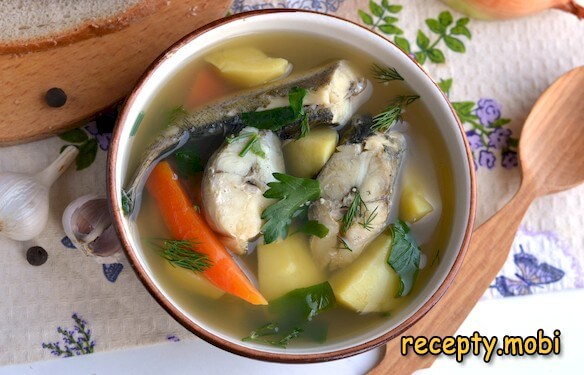
The navaga fish soup is ready. Ladle the hot soup into bowls and enjoy the aromatic homemade ukha.Bon appétit!


Tips
- 1
SCORE THE ONION CROSSWISE – it will release its aroma but stay whole as a single "onion" so you can lift it out. Without the cuts the onion stays "closed" and gives off less aroma.
- 2
CRUSH THE GARLIC with a knife – that way it gives off the most aroma without a press or grater. A "quick" way to get garlic oil.
- 3
THAW IN THE FRIDGE – not in water and not in the microwave. Quick thawing means "cottony" fish after cooking.
- 4
DO NOT LET THE WATER BUBBLE HARD when cooking the fish – a "quiet" simmer preserves the texture. The same principle works for other kinds of fish soup and ukha.
FAQ
What is navaga and what can replace it? +
Navaga is a northern sea fish of the cod family. It has tender white flesh, almost no bones and a light sea flavour. It is caught in the White and Barents Seas and the Arctic Ocean. Alternatives: cod (leaner and firmer), haddock (similar texture), hake (more affordable), pollock (the most budget-friendly), saithe (the "navaga" sold in supermarkets is often actually saithe). For a "premium" version – sea bass or halibut. River fish (pike, pike-perch) are a different concept of ukha. Avoid: mackerel, herring, sardine – too oily. Check the "Latin name" on the packaging – that is your guarantee it is not a substitute.
Why add coriander? +
Coriander (ground cilantro seeds) is the "secret" ingredient that gives northern ukha depth and aroma. It is an ancient spice, popular in northern Russian cuisine. Substitutes: fennel seeds (more "spicy"), caraway seeds (a similar aroma, but sharper), fresh green cilantro (use it plus ½ tsp dry coriander). Without coriander the soup will still be tasty, but without that "special touch". Check freshness: grind a little – there should be a bright aroma. Old coriander (over 2 years) loses its aroma. Store it in airtight jars in a dark place for up to 6 months.
How long does the soup keep? +
In the fridge, in a covered pot – 2 days. The next day the flavour is brighter, but fish soups do not like long storage. Reheat over low heat without bringing it to an active boil. In the freezer – I would not advise it, as fish and potato lose their texture after thawing. The best option is to cook just enough for 1–2 servings. For a "stock-up" – freeze the cut raw navaga in portions and cook a fresh soup each time in 20 minutes. Do not leave it at room temperature for longer than 2 hours. Before serving – add fresh herbs for aroma.
What to serve with the soup? +
The Russian classics: with black or rye bread, rye croutons or garlic toasts. With a shot of vodka – "fisherman style", a northern tradition. With sour cream (1–2 tbsp per bowl) – it softens and enriches the flavour. With a slice of lemon – a refreshing accent. With fish pies, "kulebyaka" or "rasstegai" – a "boyar's feast". With a glass of dry white wine (Riesling, Sauvignon Blanc). For a "winter lunch" – with warmed bread and butter. For a diet or healthy eating – as a main course without bread. Garnish with a slice of lemon, a sprig of dill and spring onion before serving.
- Comment
or post as a guest
Be the first to comment.