avg —
Mackerel Fish Soup from Frozen Fresh Mackerel

Instructions
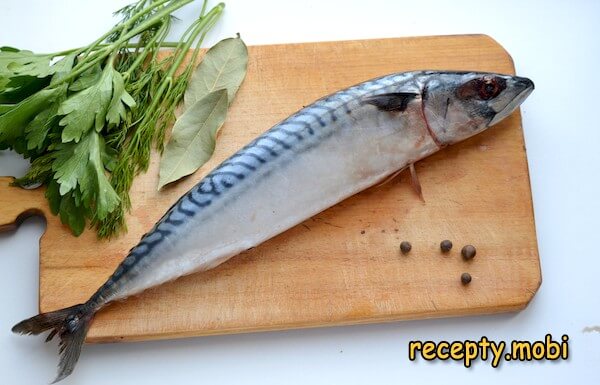
Prepare the ingredients. I choose the mackerel carefully: I check that the fish has no damage, no yellow coating and no extra ice – it should not have been thawed and refrozen.
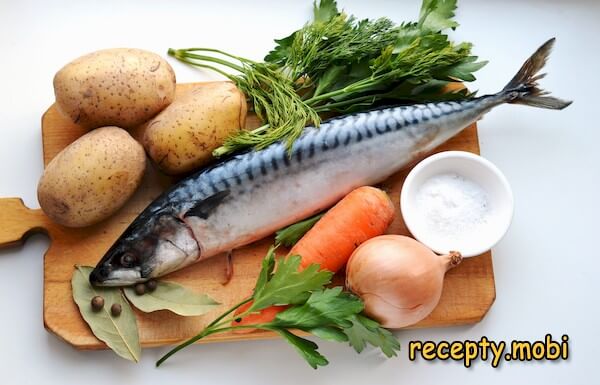
I set the frozen mackerel on the kitchen counter to thaw a little. After 15–20 minutes at room temperature the fish will be almost ready, and there is no need to thaw it completely. That way it is easier to cut into even, attractive pieces. While the vegetables are cooking, the pieces will finish thawing.
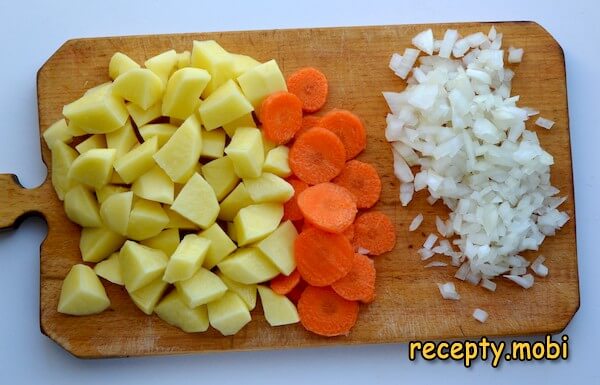
Since mackerel cooks quickly, I start with the vegetables. I peel the potatoes and cut them into small pieces. I slice the peeled carrot into rounds. I take the skin off the onion and chop it finely.
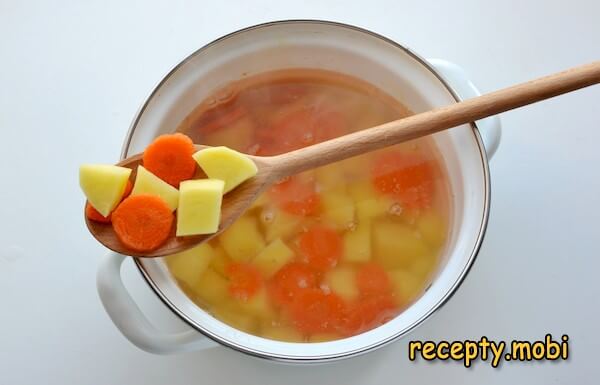
I fill a pot with clean water and put it on to heat. Once it comes to the boil, I drop in the potato pieces. In a real ukha cooked over an open fire, no one makes a fried base – only boiled vegetables. I do the same: I add the onion to the pot after the potatoes. Cook the potatoes and carrot for 10 minutes.
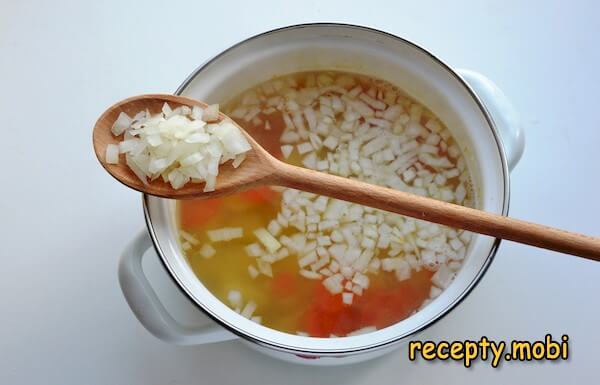
I add the chopped onion to the pot and cook for another 10 minutes.
Once the mackerel has thawed enough to cut into pieces, I prepare the fish. I cut off the head and remove and discard the gills. I throw out the entrails along with the dark membrane and cut off the fins. I rinse the fish under cool water and wash the inside of the belly thoroughly. I pay particular attention to the head and the backbone, so that no blood clots remain to cloud the soup. I cut the mackerel into large pieces so they do not fall apart while cooking. I use a sharp knife: the flesh of this fish is very tender and breaks up easily.
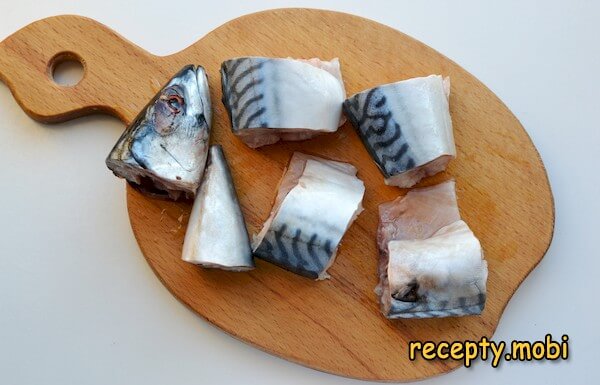
I add the mackerel to the pot. I add salt (to taste), 1 bay leaf and the allspice. As soon as dark foam appears on the surface, I skim it off with a spoon. I cook over a very low heat for 10 minutes.
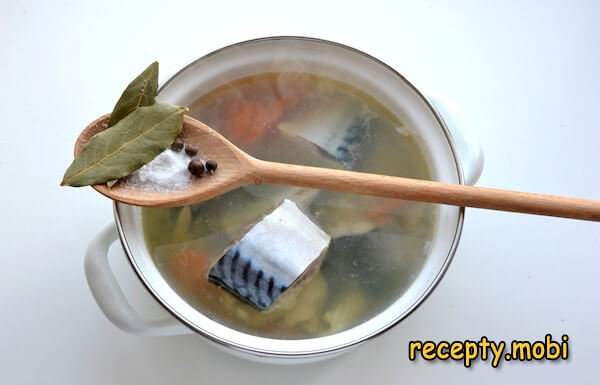
It is time to add the herbs – I chop them finely and add them to the soup. I turn off the heat and let it stand.
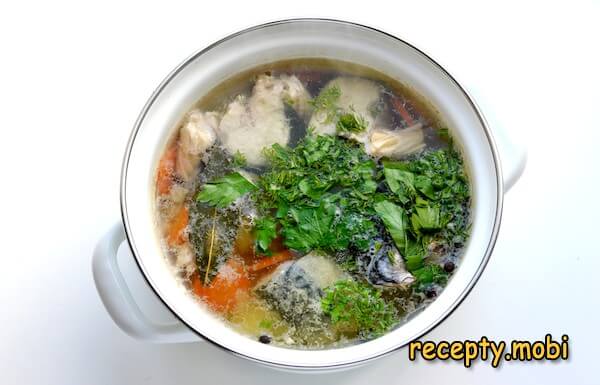
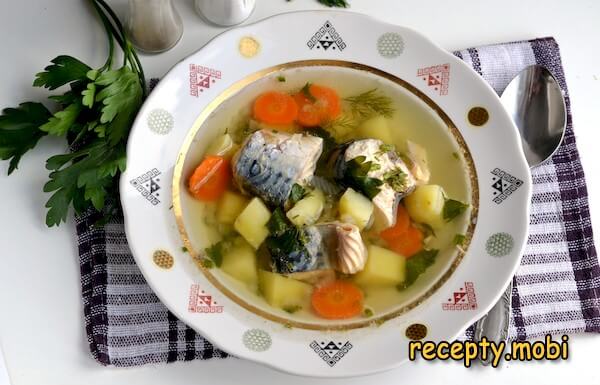
I ladle it into bowls and serve hot. Thanks to the gentle simmering, the soup from frozen mackerel turns out clear.Enjoy your meal!


Tips
- 1
THE MACKEREL SHOULD NOT BE OVER-FROZEN – check at the shop: no ice, no yellow coating, no damage. This is the key to good flavour.
- 2
REMOVE THE DARK MEMBRANE in the belly – it gives bitterness and a "fishy" aftertaste. An important step in the preparation.
- 3
KEEP THE SIMMER GENTLE – on the lowest heat. A vigorous boil will "break up" the fish, the soup will turn cloudy and the pieces will fall apart.
- 4
MINIMAL SEASONING – only salt, bay leaf and allspice. A spicy mix will "smother" the characteristic aroma of the mackerel. The same principle works for other kinds of sea-fish ukha.
FAQ
How do you choose frozen mackerel? +
Good-quality mackerel has an even silvery-blue back with the characteristic dark stripes and a white-silver belly, with no yellow patches. The scales are shiny and undamaged, with no "shrivelled" edges. It is firm when pressed. The smell is lightly of the sea, with no ammonia. An average fish weighs 300–400 g. A frozen whole fish (without the head and gutted) is more convenient for ukha. Avoid: mackerel with a yellow coating, broken skin or visible ice – a sign of refreezing, the fish is already spoiled.
What can you use instead of mackerel? +
Alternatives: saury (a similar sea flavour, fattier), herring (more "salty", but a different concept), sardine (smaller, fattier), sea bass (white flesh, more delicate), cod (leaner and lighter), pollock (a budget option). For a "triple ukha" – a mix of mackerel, cod and salmon. Canned mackerel in its own juices works for a "lazy" version in 10 minutes. Without mackerel, the fish for this ukha can be a fillet of any oily sea fish. Oily fish gives a rich broth, lean fish a clearer one. Choose according to taste and budget.
How long does the soup keep? +
In the fridge in a covered pot – 2 days. The next day the aroma is brighter, but the fish loses its freshness. Fish soups in general do not like long storage. Reheat over a low heat, without bringing it to a rolling boil. In the freezer – I would not recommend it: the potato turns "watery" and the fish separates into layers. The best option: cook for a single meal (2–3 servings) and eat it fresh. If you do need a "stock", freeze the cut mackerel and cook the soup each time in 30 minutes. Do not leave it at room temperature for longer than 2 hours – the fish "ages" quickly.
What do you serve with the soup? +
The classics: with black or rye bread, rye croutons, or garlic toasts. With a shot of vodka – "fisherman's style", a northern tradition. With sour cream – it softens the flavour. With a slice of lemon – a refreshing accent. With fish pies or rasstegai – a "boyar's feast". With a glass of dry white wine (Riesling, Sauvignon Blanc) or chilled beer. For a "winter lunch" – with warmed bread and butter. For a diet or healthy eating – as a light main course. Before serving, garnish with a slice of lemon, a sprig of dill and parsley – for both looks and aroma.
- Comment
or post as a guest
Be the first to comment.