avg —
Pickled Onions for Salads and Snacks

Instructions
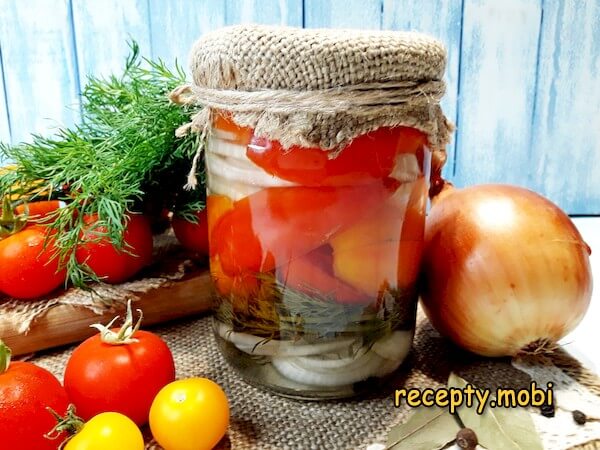
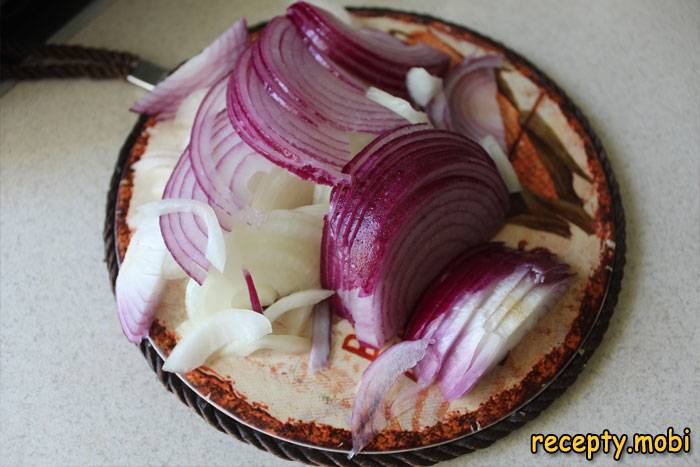
Slice the onion into very thin half-rings, 2–3 mm thick. It is best to take two types — ordinary yellow onion (sharper) and purple Yalta onion (sweet, giving the marinade a lovely pink tint).
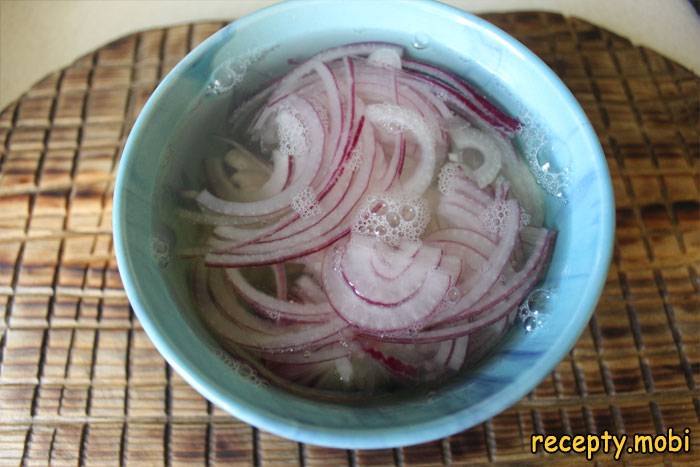
Place the sliced onion in a deep, heatproof container. Pour boiling water over it so the water fully covers the onion. The boiling water is the key moment of the recipe: it removes the bitterness and sharpness and makes the onion tender and crunchy. Leave it for 10–15 minutes until the water has cooled down completely.
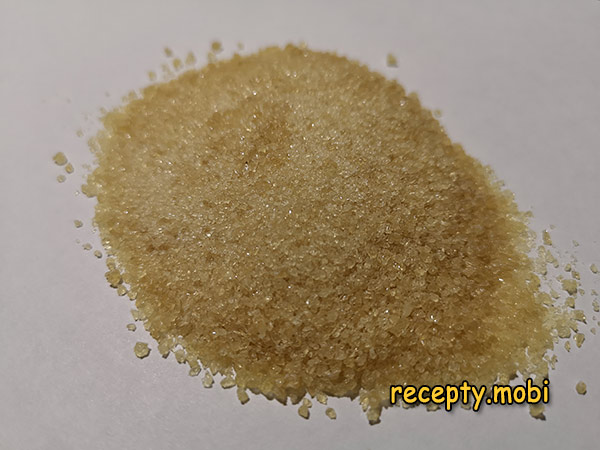
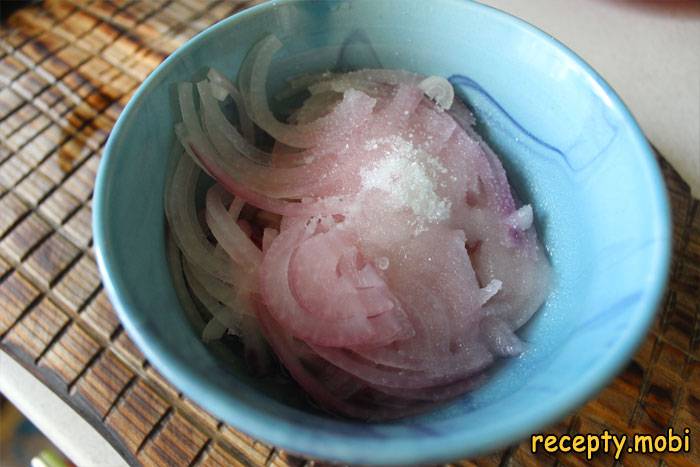
Drain most of the water through a colander, leaving just a little for the marinade. Add the sugar (it balances the acidity) and the fine salt (it enhances the flavour). Mix thoroughly.
Pour in the apple cider vinegar (or wine vinegar for a more delicate flavour). Stir and leave to marinate for another 30 minutes at room temperature — this is exactly how long it takes for the onion to soak up the marinade and take on its characteristic sweet-and-sour taste.
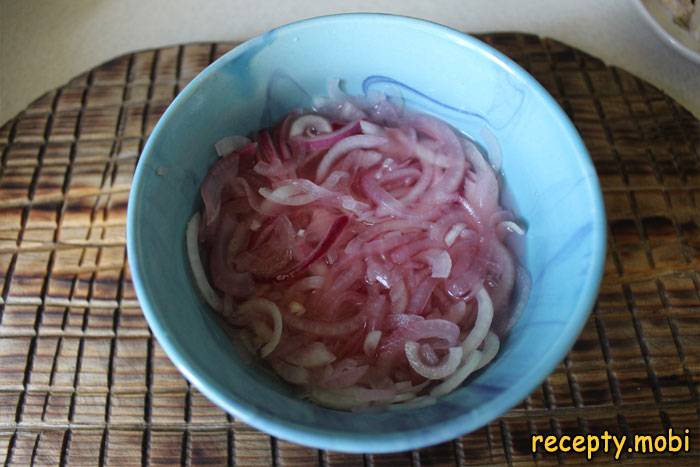
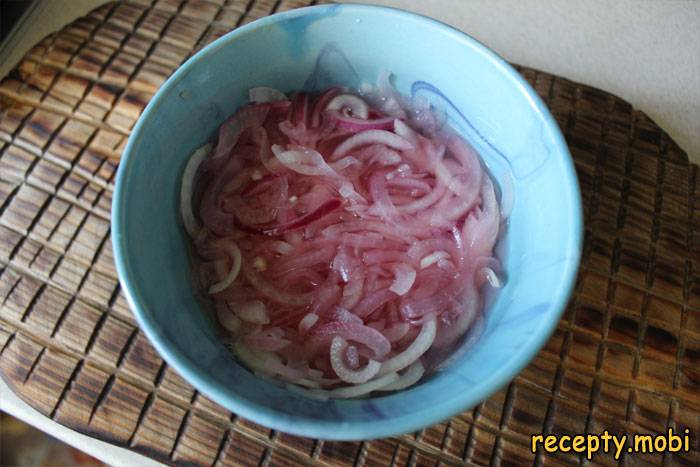
The pickled onions are ready! Before adding them to salads, always drain them in a colander so the excess liquid runs off — otherwise the salad will turn watery. With meat I serve them straight in the marinade, which works like a sauce.


Tips
- 1
Red/purple onion gives the whole marinade a pleasant pink tint — use a mix with white onion for a lovely colour.
- 2
For salads, always drain the onions in a colander — this keeps the structure of the dish intact, without liquid from the marinade.
- 3
Add a bay leaf, mustard seeds, or allspice for extra zest and aroma. I use a similar method to make pickled ginger for sushi.
- 4
Store in the fridge for up to 5 days in an airtight glass container — any longer and they lose their crunch.
Video
FAQ
Which vinegar is best for pickling onions? +
Apple cider or wine vinegar give a mild flavour with fruity notes and are ideal for most dishes. Plain 9% table vinegar is sharper, needs diluting (1 tbsp per glass of water) and suits classic Russian dishes (shashlik, herring under a fur coat). Balsamic gives a deep, slightly sweet flavour — interesting for Italian salads. Rice vinegar is delicate, with an Asian character, and goes well with fish and sushi. Lemon juice is the mildest option, but it needs to be made fresh every day.
Can onions be pickled without sugar? +
Yes, replace it with honey (1 tsp) for a more interesting flavour with floral notes, or leave it out altogether. Without sugar the onion will be more sour and sharp, but that is a matter of taste — some people prefer it that way. Sugar is needed to balance the acidity of the vinegar; without it the flavour is "one-sided". Alternatives to white sugar: brown sugar, maple syrup, stevia (for diabetics), erythritol. For a completely "unsweetened" version, use only salt.
Are pickled onions suitable for hot dishes? +
Yes, add them right at the end of cooking (1–2 minutes before serving) to keep the crunchy texture and sweet-and-sour taste. They are especially good with hot potatoes, in pilaf, and as an addition to shashlik and kebabs. In warm salads with warm ingredients (warm roast beef, baked beetroot) pickled onions are a perfect match. Do not boil or fry pickled onions — they will lose all their freshness and crunch.
- Comment
or post as a guest
Be the first to comment.