avg —
Pickled Green Tomatoes (like barrel ones)

Instructions
You can use fully green tomatoes as well as ones where brown-pink sides have only just begun to show. Only vegetables that have grown to the size standard for the variety are suitable.
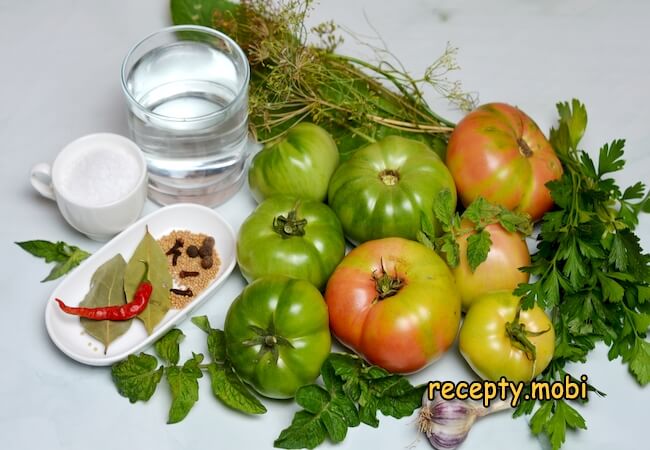
Wash the vegetables and the spicy herbs thoroughly. From a large pod of hot pepper I cut off a third, and if using a tiny pod I put it in whole.
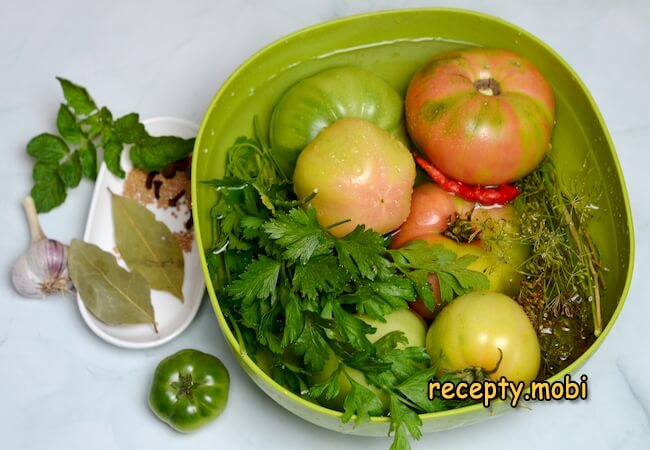
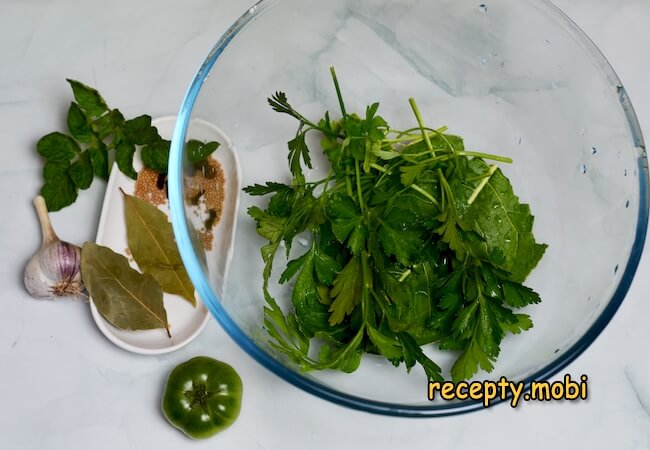
I take a roomy glass container and line the bottom with parsley stems.
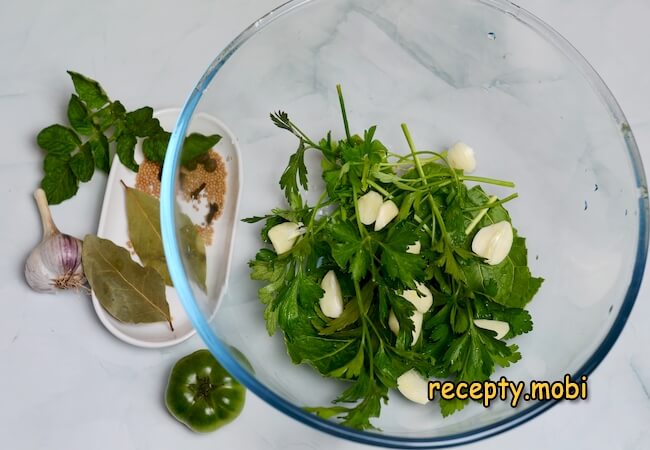
I peel a small head of garlic and cut the cloves into 3–4 pieces. I scatter the cut garlic over the parsley.
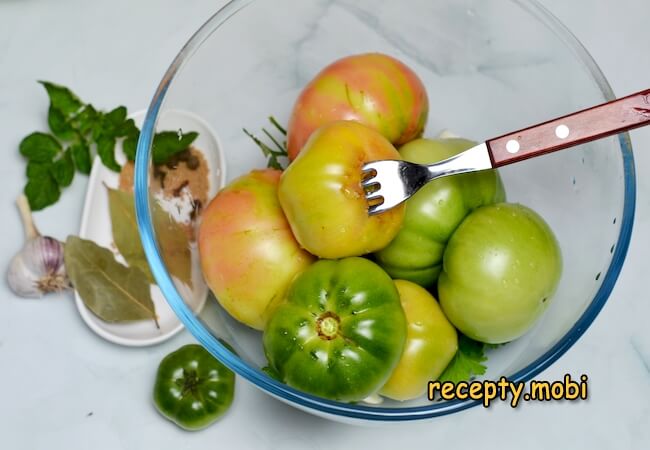
I prick the tomatoes with a fork, moving around the spot where the flower stalk is attached.
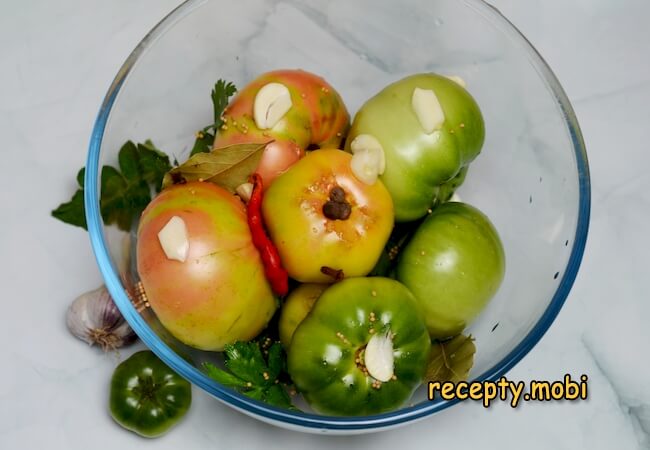
I sprinkle the green tomatoes with the prepared dry spices.
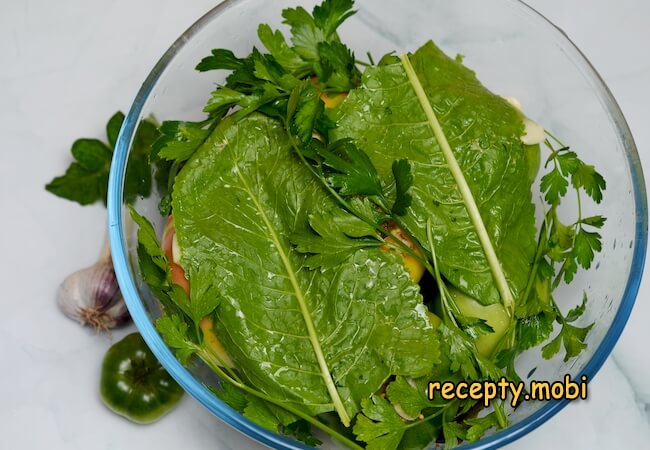
I tear the horseradish leaf in half and cover the tomatoes with it. I throw a few sprigs of parsley on top.
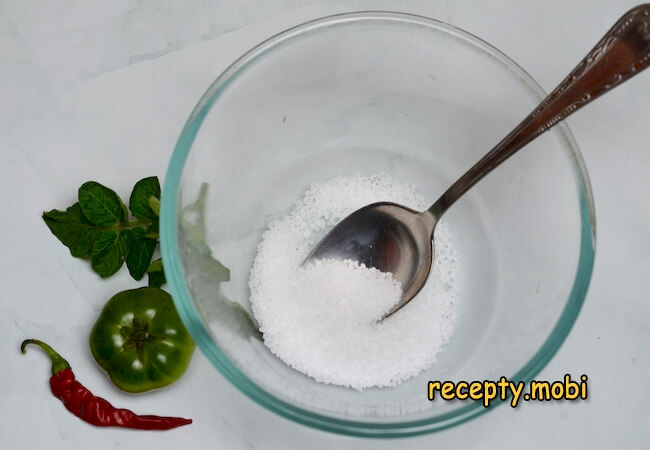
Into a separate bowl I measure out coarse salt.
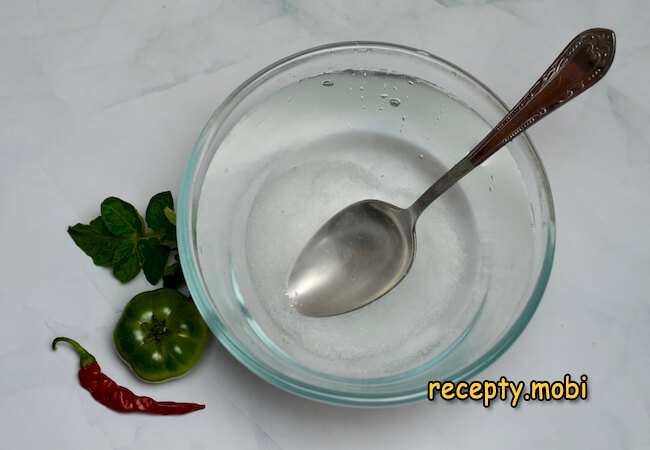
For the brine I take cold unboiled water. Ideally – spring water. But ordinary tap water will also do if it has passed through purifying filters. I stir the water until the salt crystals are completely dissolved.
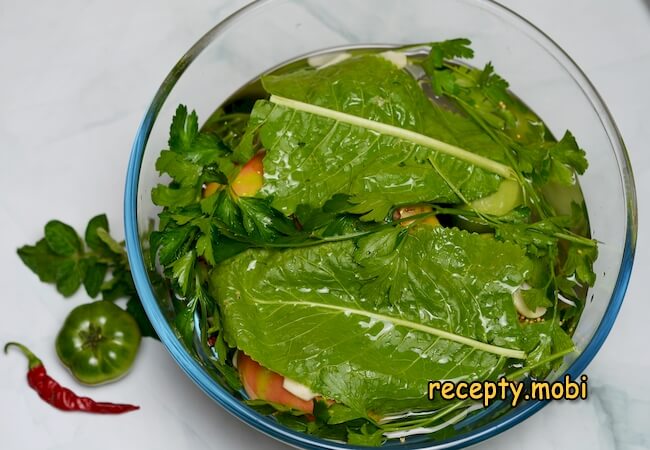
I pour the cold salted water over the tomatoes.
On top I place a flat plate and some kind of weight. Now you need to find a suitable place for the tomatoes – darkened, without direct sunlight. The green tomatoes will ferment at room temperature for three weeks, after which they can be put in the refrigerator with the weight removed – they will absorb the brine, grow heavier and no longer float.
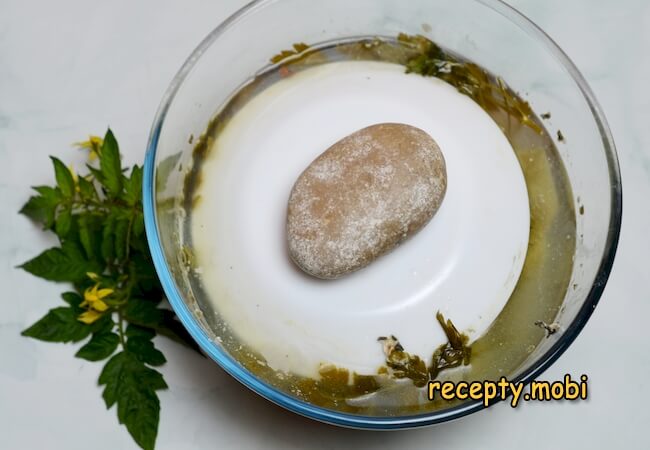
The first week of fermentation is marked by vigorous processes: the brine becomes a little cloudy, a bit of white foam appears on the surface, and a sourish smell hangs over the container. I always skim off the foam with a spoon, and everything else settles down in time. The brine grows clearer, and the sour smell turns into a spicy aroma.
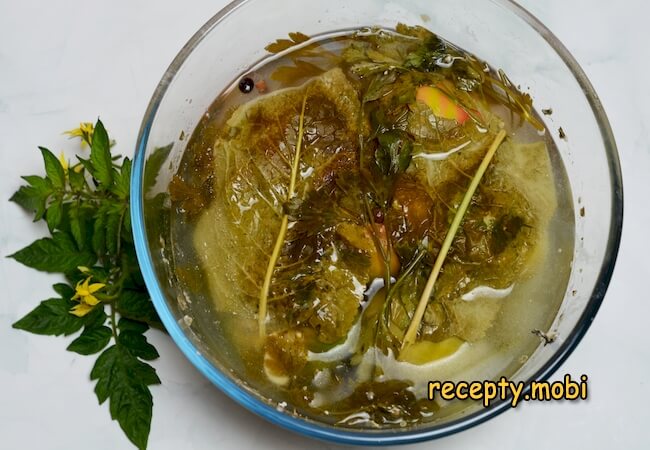
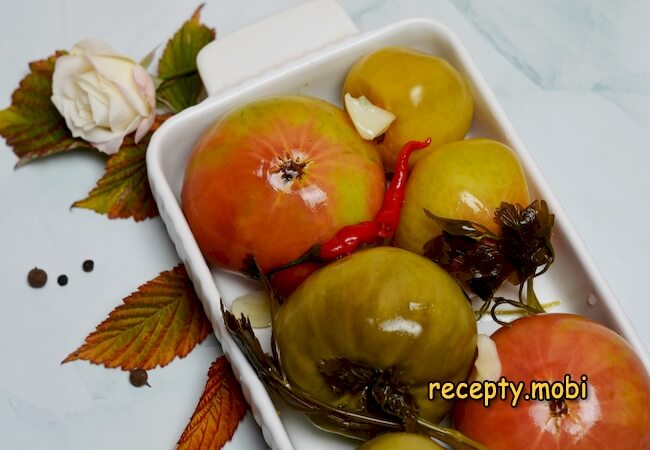
The finished fermented green tomatoes should stay in the brine – then they can be kept in the refrigerator for about a month. If you take the tomatoes out of the brine and put them in a container under cling film, the shelf life is reduced to a week.Bon appetit!


Tips
- 1
COLD UNBOILED WATER is the key to genuine “barrel” tomatoes. Boiled water will “kill” the beneficial bacteria needed for natural fermentation.
- 2
PRICK THE TOMATOES with a fork – through the punctures the brine soaks into the flesh faster, and the tomatoes turn out “juicier”.
- 3
SKIM THE FOAM during the first week without fail – it is a by-product of fermentation, and if not removed it can cause mould.
- 4
THREE WEEKS UNDER A WEIGHT is the minimum. Before that the tomatoes are not ready. The same principle works for other fermented vegetables.
FAQ
Which tomatoes should I choose? +
The ideal choice is green tomatoes at the end of the season (September–October), when they have already grown to a normal size but have not had time to ripen. Medium-sized ones (60–100 g) ferment faster. Large ones (150+) take longer, up to 4 weeks. Slightly brown ones are also suitable – they give a more complex flavour. Avoid: overripe red ones (they fall apart) and very small white-green ones (not grown to size). Dense, fleshy varieties (San Marzano, Roma) are ideal.
Can I do without the horseradish leaf? +
You can, but the result will be different. The horseradish leaf gives the characteristic “barrel” aroma and an antibacterial effect. Alternatives: blackcurrant leaves (3–4 of them), cherry leaves (3–4 of them), grated horseradish root (1 tsp), or bay leaf in a larger amount (5 pieces). Traditional additions for fermenting are oak leaves (they give tannins and firmness) and grape leaves. A combination of leaves (blackcurrant + cherry + horseradish) is the classic of barrel fermenting.
How long do fermented tomatoes keep? +
In the brine in the refrigerator – about a month. If you take them out of the brine and keep them under cling film – up to a week. For long storage, seal them in jars (sterilise the jars and lids): the shelf life is up to 6 months in a cool pantry. At room temperature after they are ready – a maximum of 2–3 days. They cannot be frozen – the texture breaks down. The best way to store them is to leave them in the same container they fermented in and simply move it to the refrigerator.
What should I serve them with? +
A Russian classic: with boiled potatoes, fried meat and black bread. With borscht or shchi as a snack. With vodka – a traditional feast. With belyashi or chebureki. With kholodets or aspic. With boiled chicken – for a sour accent. Sliced into rings, they make a fine garnish for salads. They can be the base of a “winter” salad with boiled beetroot and onion. The fermenting brine itself is a wonderful base for a hangover drink or for first courses (as a base for shchi).
- Comment
or post as a guest
Be the first to comment.