avg —
Dried Tomatoes in a Dehydrator

Instructions
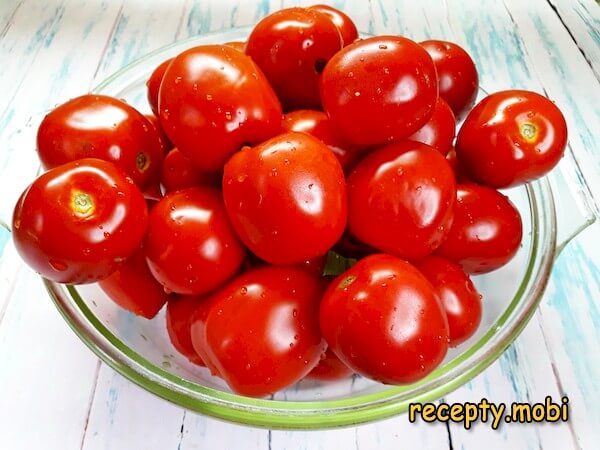
I wash the tomatoes and pat them dry with a towel so they dry off faster.
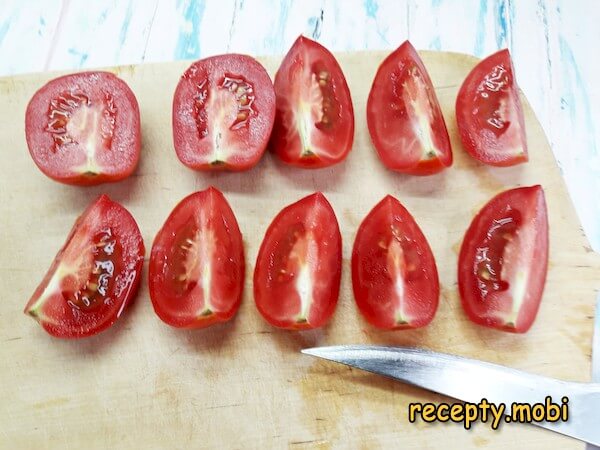
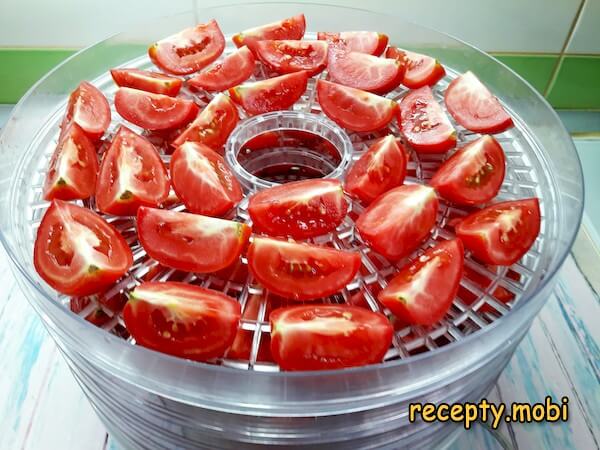
I don't cut out the stem; I cut each tomato into 4 parts right through it. There's no need to remove the seeds, since they create that special taste just as the pulp does.
I fill each tier of the dehydrator with tomato quarters so they don't touch each other.
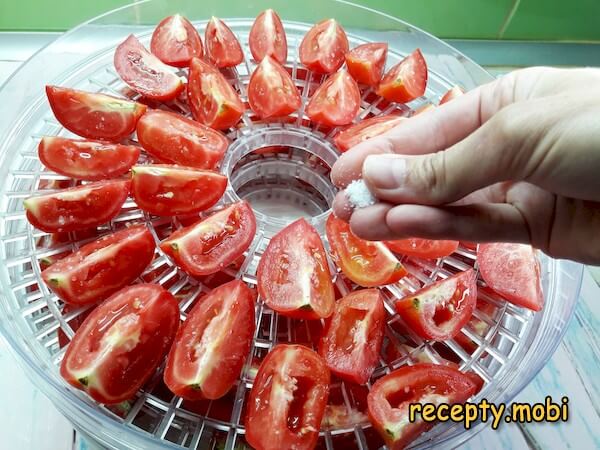
I sprinkle every single piece with coarse salt – it not only improves the taste but also stops a dried-out film forming on the surface, which would slow the process down a lot. And tomatoes give up their moisture more readily with salt.
I dry the tomatoes at 70 degrees, occasionally swapping the tiers around. After 10 hours the pieces are about halfway dried.
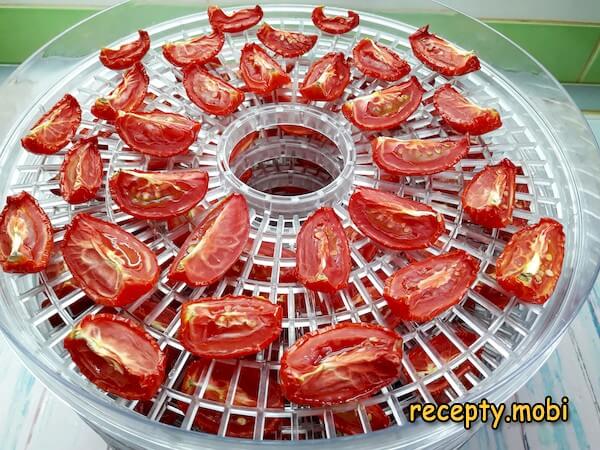
As the drying goes on, some pieces will be ready sooner – take them out so they don't turn into dry little coals while the rest catch up. You check the tomatoes for doneness like this: press a slice lightly with your finger, and if your finger stays clean and not damp, our product is ready. But don't over-dry the pieces; they shouldn't be brittle, they should stay elastic. The last pieces are done 19 hours after the drying began.
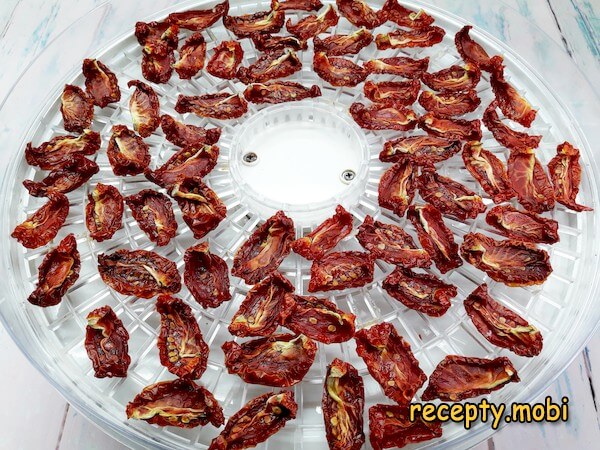
The tomatoes have shrunk many times over, and now they weigh 200 g.
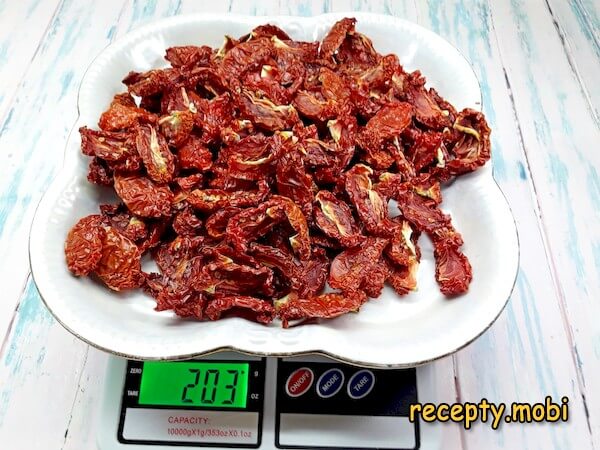
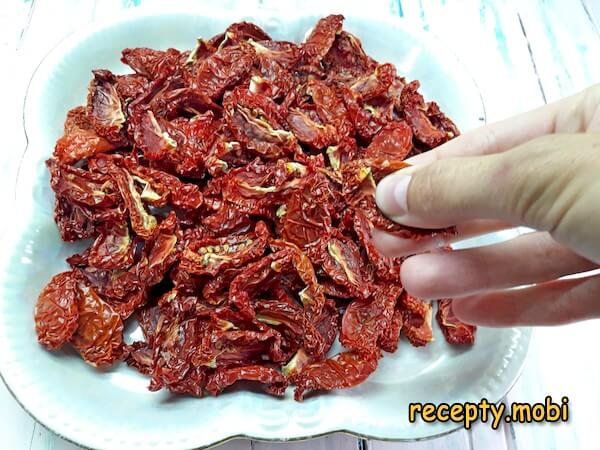
Every piece has become elastic; they bend without breaking. And there's no moisture left in them – that's exactly what we need.
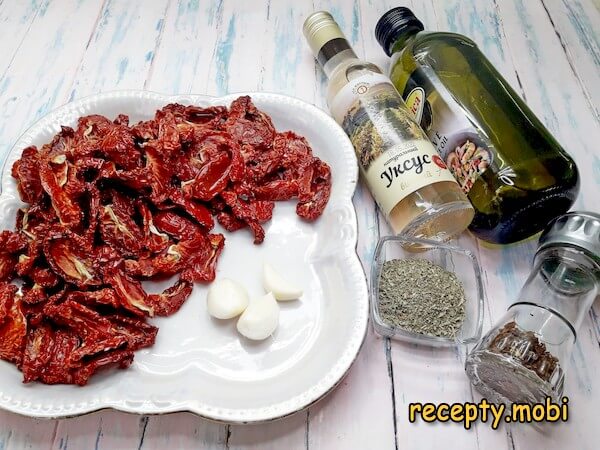
I prepare the ingredients for the next stage of processing the tomatoes. I take the 200 grams of dried tomatoes and the rest of the ingredients from the list.
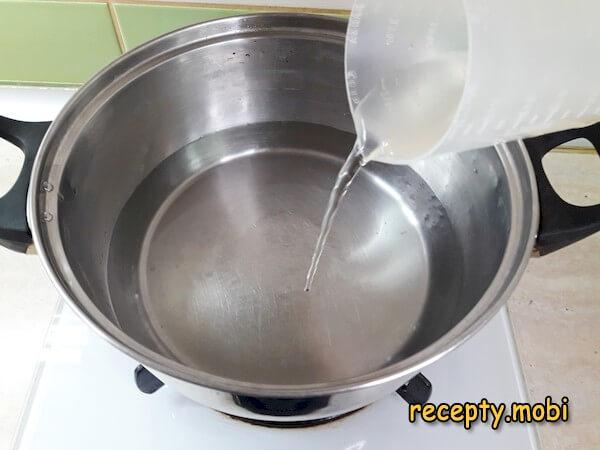
I bring the water and vinegar to a boil.
I boil the tomatoes in it for 2 minutes. After this the dry edges of the tomatoes become softer, the pulp itself absorbs olive oil more readily, and overall the pieces get an extra heat treatment, which is exactly what protects the tomatoes from going sour.
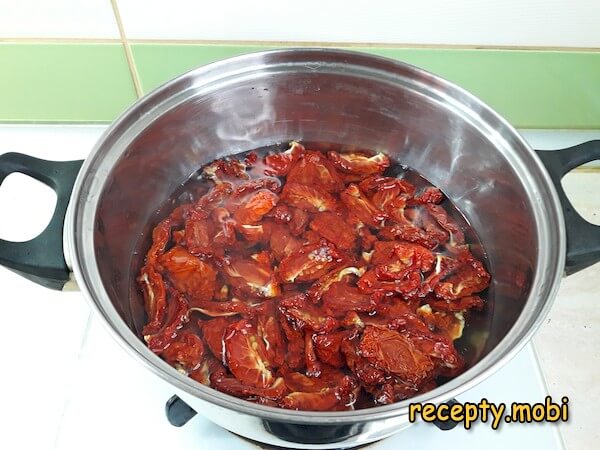
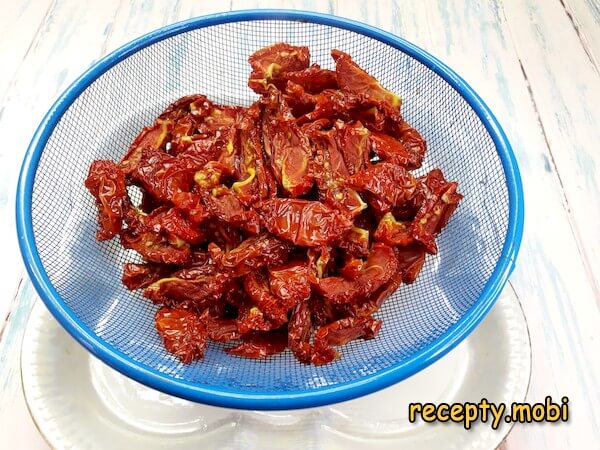
I lift the pieces out onto a sieve – let all the liquid drain off.
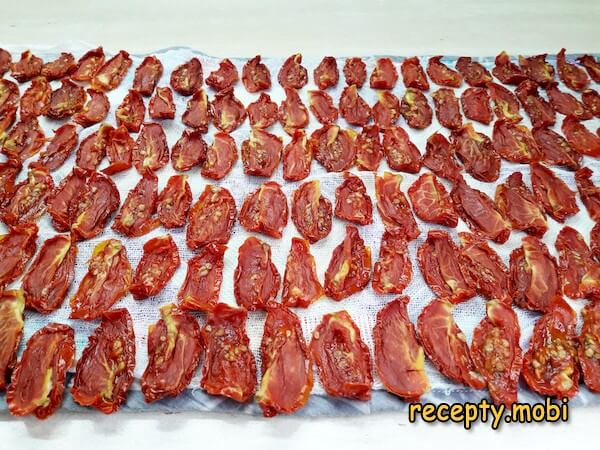
Then I move them onto a towel and let them dry for about 4 hours.
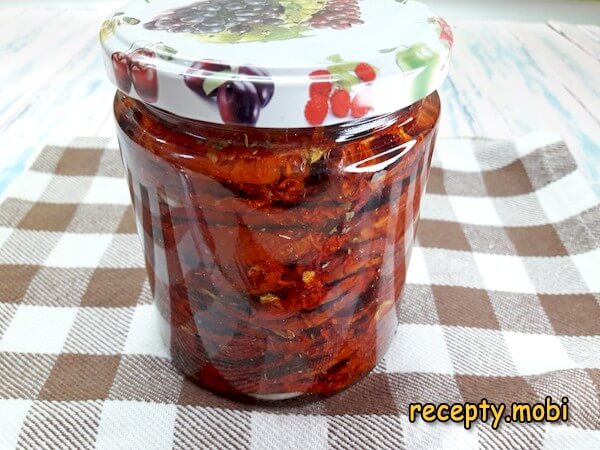
Into a sterile jar I pour a spoonful of oil and start laying out the dried tomatoes in layers, alternating them with garlic slices and aromatic herbs and pouring olive oil over them.
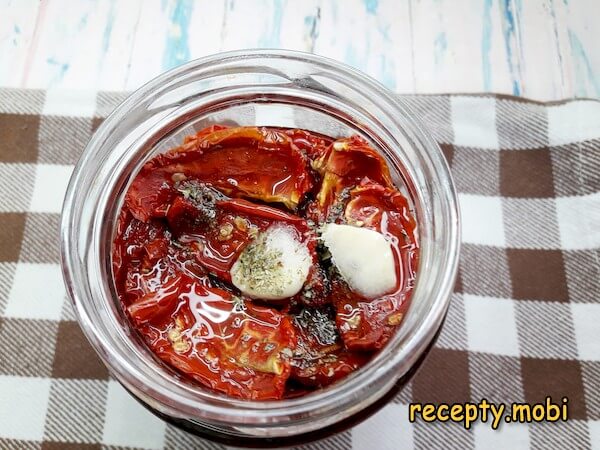
I press the layers down with a spoon and add more oil on top, right to the very top of the jar.

I seal it with a boiled lid.A batch like this can be stored even without a fridge, but if it is going to sit in one, then a fifth of the olive oil is worth replacing with sunflower oil, since olive oil turns solid at low temperatures.After a couple of days the tomatoes will have soaked up a fair amount of oil, so you'll need to top it up again right to the very top. Using this recipe, you can put up dried tomatoes in a dehydrator in any quantity. Add this tasty treat to salads and pizza, or serve it with meat, pasta and bruschetta.Bon appétit!


Tips
- 1
THE VINEGAR BOIL is the "secret" against fermentation. Without this stage the batch will last two weeks at most and then ferment. The vinegar gives an extra heat treatment.
- 2
SALT ON THE PIECES is the "secret" of drying. It stops a dried-out film forming and speeds up the release of moisture. Without salt the process drags on past 30 hours.
- 3
ELASTICITY means proper doneness. Your finger stays dry, but the pieces don't break. Over-dried "coals" can no longer be brought back to life.
- 4
TOP UP THE OIL AFTER 2 DAYS – this is a must. The tomatoes absorb a lot of oil, and the top must always stay covered. The same principle works in other kinds of dried preserves.
FAQ
Which tomatoes should I choose? +
Ideally, firm meaty varieties such as Slivka, Damsky Palchik or San Marzano (on the author's advice). Not suitable: watery varieties (such as Bull's Heart – they take a long time to dry) and cherry tomatoes (small, with little pulp). A size of 5–7 cm is best for quartering. Ripe, bright-red tomatoes are the "premium" choice. Fresh ones – without dents or green patches. From 2.1 kg of raw tomatoes you get 200 g of finished dried ones – a "concentration effect" of ten times. Don't use any that have started to rot – they will spoil the whole batch.
Can I do it without a dehydrator? +
Alternatives: the oven (at 70–90 °C with the door slightly open, 6–8 hours), in the sun (in southern regions, 3–5 days), or in an air fryer (4–5 hours). In an ordinary oven without a fan it takes longer. The advantage of a dehydrator is temperature control, multiple tiers and no scorching. The advantage of the oven is that it's more accessible. Drying in the sun is the most authentic Italian method, but it needs hot, dry weather. A microwave is not suitable – it will over-dry the tomatoes into little coals.
How long do dried tomatoes keep? +
Sealed with oil right to the very top – up to 1 year in a cool place. In the fridge – up to 1.5 years. After opening, in the fridge – 2–3 months (it's important that the tomatoes stay completely covered with oil). Without oil – a week at most. Freezing – I don't recommend it (the olive oil "sets" and the texture changes). Top up the oil level after opening – if you've eaten some, add more on top. Mark the sealing date on the jars. Signs of spoilage: cloudy oil, mould, a smell of fermentation. Freshly made ones are at their "star" best about 2 weeks after sealing – by then they've soaked up the oil and herbs.
What do you serve dried tomatoes with? +
The Italian classic: on bruschetta with mozzarella and basil. With Arrabbiata or Carbonara pasta. On pizza instead of fresh tomatoes. With a Caprese salad with mozzarella. As an extra topping on a Margherita pizza. With a cheese plate (camembert, brie, parmesan) – "premium". In soups (minestrone, tomato) to boost the flavour. With mushroom risotto. On a sandwich with cream cheese. With dry white or red wine – a "wine" serving. With roast meat as a sauce. A versatile Italian preserve.
- Comment
or post as a guest
Be the first to comment.