avg —
Bean Hummus

Instructions
Prepare the ingredients for the bean hummus.
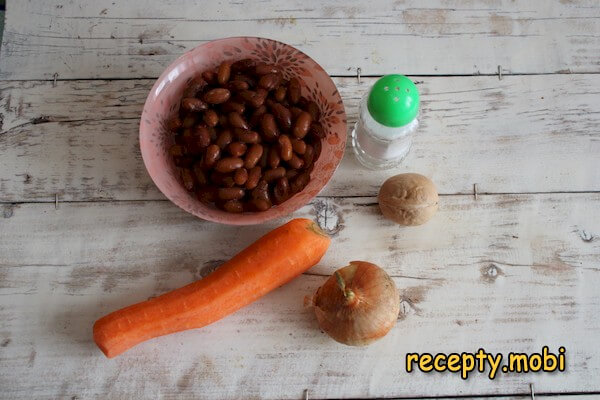
You can use either white or red beans. Rinse the beans, cover them with hot water and leave them overnight.
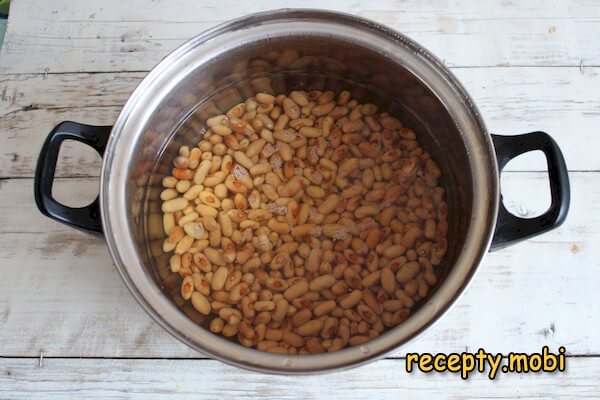
In the morning, change the water, put the pot on the heat and boil the beans for 40 minutes, adding salt. Drain the liquid, leaving a little of the cooking broth in the pot.

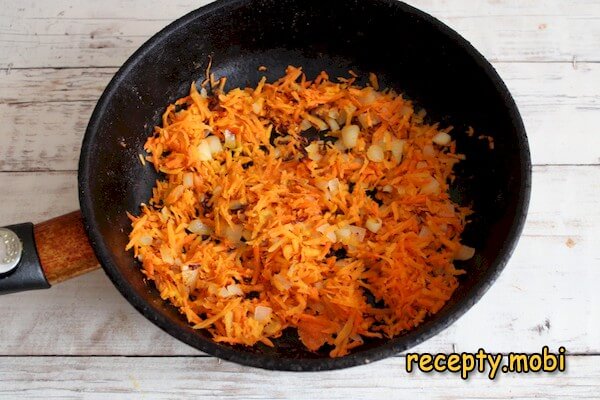
Peel the carrot and onion. Grate the carrot and finely chop the onion, then sauté the vegetables in oil until golden.
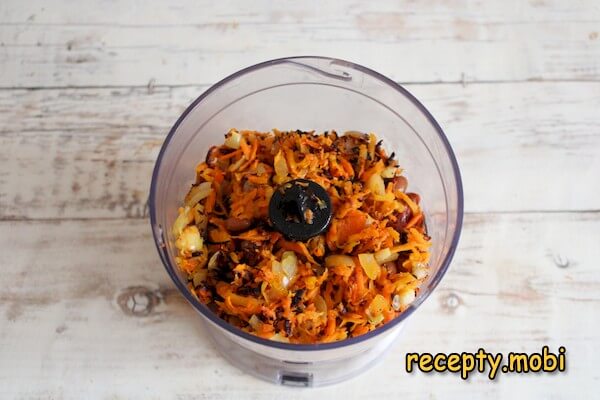
Put the beans in a blender bowl and pour in the reserved broth. The liquid is needed so the mixture becomes paste-like and the appliance copes with the task more quickly. Add the sautéed vegetables and blend.
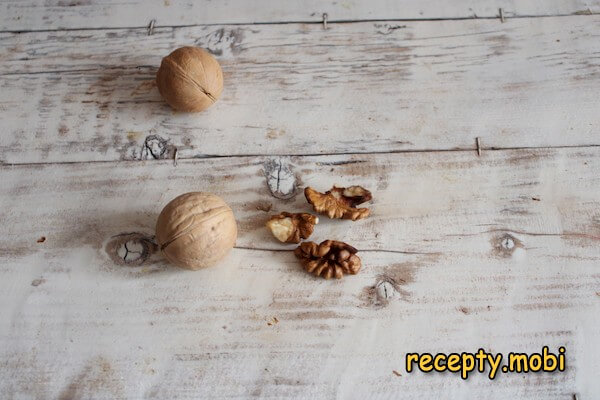
Add the spices to taste and the walnuts, then blend once more.
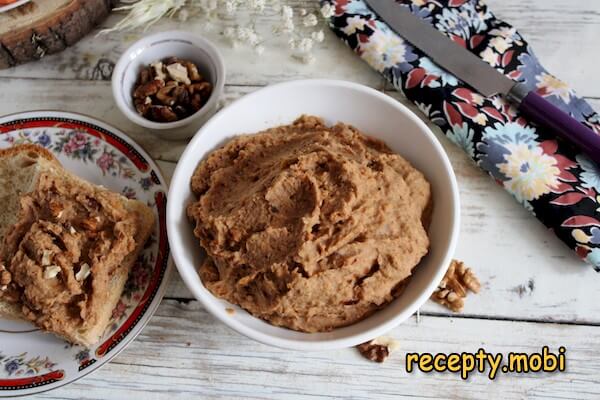
The homemade bean hummus is ready.Bon appétit!


Tips
- 1
Soaking overnight is the secret to quick cooking. Without soaking, the beans take 2–3 hours to cook. After soaking, just 40 minutes.
- 2
Reserve the broth – it is needed for the blender. Without the broth, the mixture turns out too thick and the appliance cannot cope.
- 3
Sautéed vegetables are the secret to aroma. Raw, they give a particular taste; sautéed, the flavour is deep and Eastern.
- 4
Add the nuts right at the end to keep their texture. You can crush them or leave them whole, as you prefer. The same principle works for other kinds of pastes and spreads.
FAQ
Which beans should I choose? +
White beans are ideal – the classic choice for this paste, tender in texture. Alternatives: red beans (heartier, brighter in colour), speckled beans (for a rustic taste), or large lima beans (premium). The brands Mistral, Zhmenka and Bonduelle are reliable. Fresh dried beans are shiny, with no darkening or cracks. Do not use old beans (more than a year old), as they will not soften. Soaking is essential: overnight in hot water, or 4–6 hours in cold. Canned beans (ready in jars) are the economy option (200 g of dry beans equals 400 g canned). For a premium result, use farm beans from southern regions. If the beans crack a little, that is normal – the grain has split, but the taste is not affected.
What can I use instead of walnuts? +
Alternatives: hazelnuts (more neutral), almonds (more delicate), pine nuts (premium, pricier), cashews (for a sweet note), or 1 tbsp of sesame (a hummus classic). Tahini (sesame paste) is used for classic hummus. The brands Garnets, Beanitos and Nutritio are good quality. Fresh nuts have no rancid smell. Toasted nuts are more aromatic (5 minutes in a dry pan). Do not use salted or sweetened nuts, as they spoil the taste. For a diet version, leave the nuts out altogether (just vegetables and beans). For a premium version, use a mix of 2–3 kinds of nuts. For the classic Lebanese style, tahini and olive oil are a must.
How long does hummus keep? +
In the fridge, in a jar with a lid, it keeps for 5–7 days. Any longer and it forms a film and loses flavour. You can pour a thin layer of olive oil over the top as protection against drying out. In the freezer it keeps for up to 1 month. Defrost it in the fridge for 8–12 hours. Before serving, stir it and, if needed, add a drop of oil. For a packed lunch, a small jar is handy. Do not leave it at room temperature for more than 4 hours, as the beans and vegetables spoil. Label the jars with the date so it is easy to keep track. It is ideal as a family batch – a double portion for the week. For a picnic, use a tightly sealed jar.
What do I serve hummus with? +
The Eastern classic: with lavash or pita (fresh or toasted). With crispbreads or wholegrain crackers. With sliced fresh vegetables (carrot, cucumber, bell pepper) for a lighter option. On sandwiches with bread, as an office snack. With boiled potatoes (unusual, but tasty). With meat dishes, in place of a sauce. With fish or seafood, for a Mediterranean serving. With light beer or dry white wine. For a vegetarian dinner, with steamed vegetables. With chicken or turkey salads, for extra heartiness. A versatile spread for healthy eating.
- Comment
or post as a guest
Be the first to comment.