avg —
Omurice (Japanese omelet)

Instructions
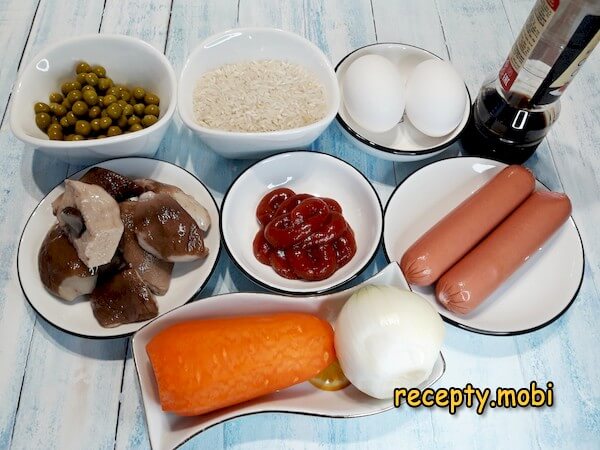
I prepare the ingredients. The sausages can be replaced with ham or chicken fillet. The cooking process stays the same; the meat just needs a little longer in the pan to cook through. Raw champignons can stand in for the boiled white mushrooms.
I rinse the rice several times until the drained water runs clear. To cook it, I add enough water to sit twice as high as the rice.
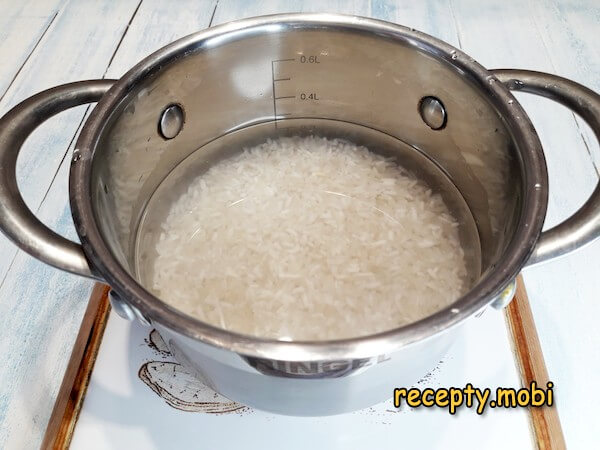
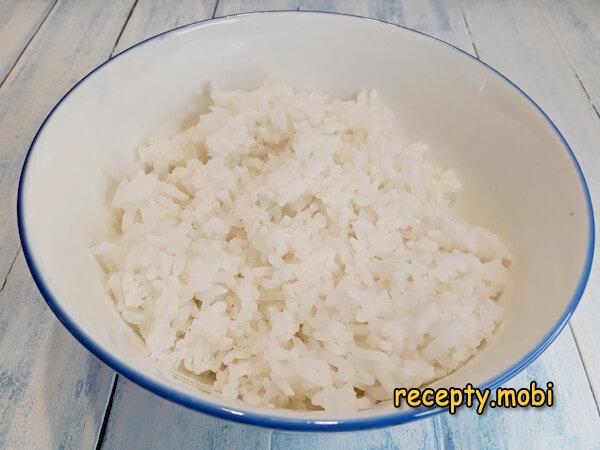
I cook the rice over medium heat without salt until all the liquid has evaporated. Then I cover the pan with a lid and leave it for 3–5 minutes so the rice finishes cooking, and transfer it to a bowl.
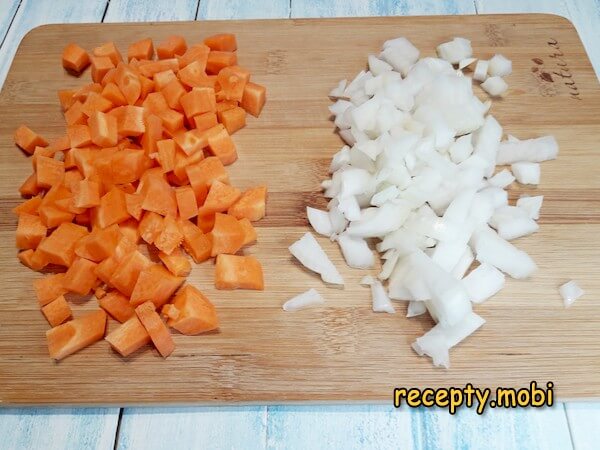
I cut the onion, like the carrot, into a small dice.
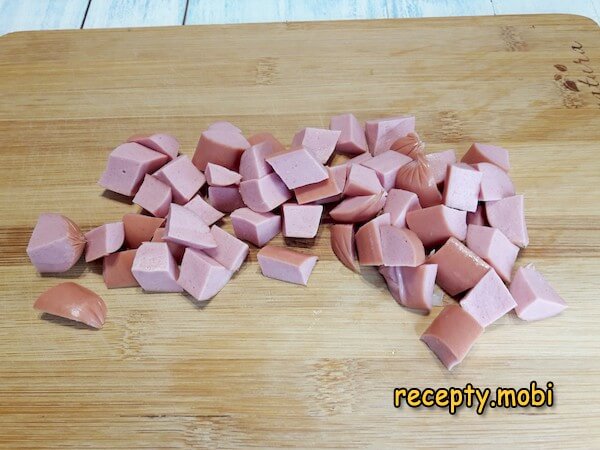
I cut the sausages a little larger.
I prepare the mushrooms to the same size.
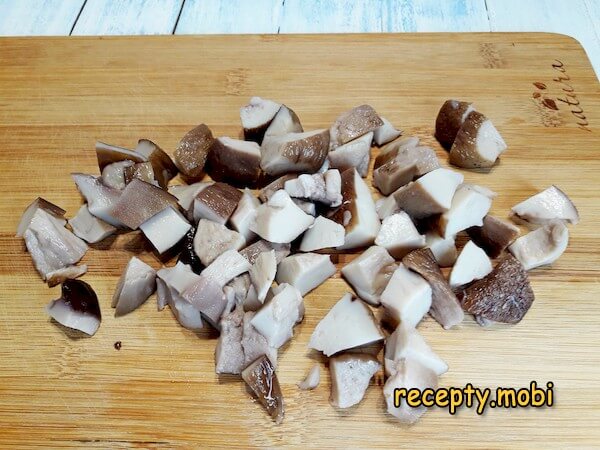
In the heated oil, I lightly fry the onion first.
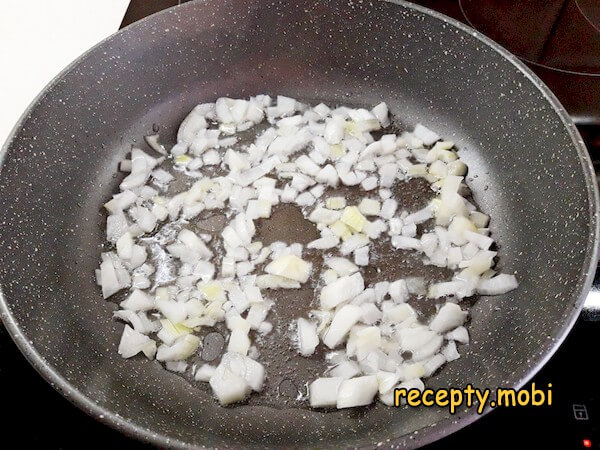
I add the carrot to it and cook it until soft.
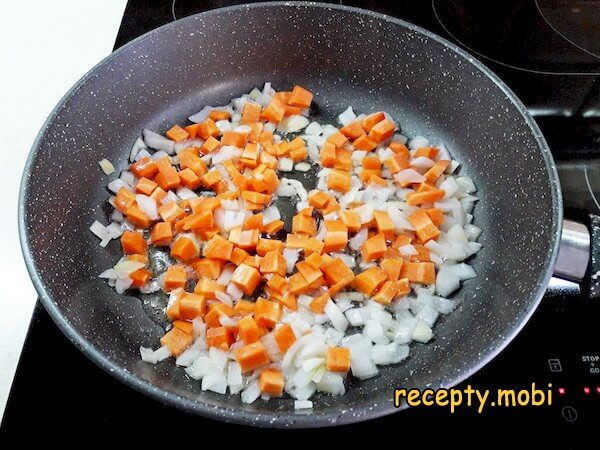
Now it is the mushrooms' turn. Raw champignons I cook through in the pan, while boiled white mushrooms are already done and just need to be lightly browned.
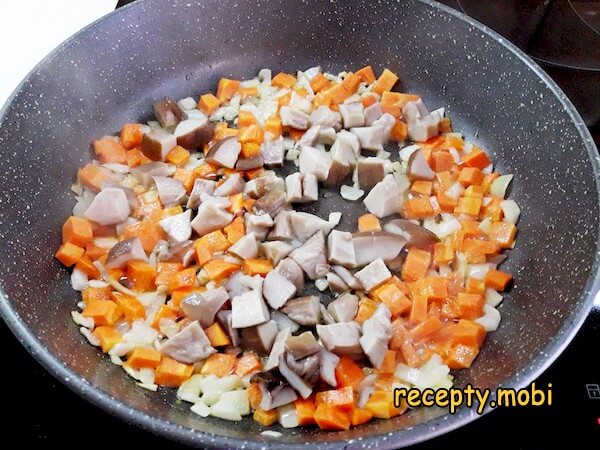
Next I add the sausages. I fry them for 1 minute, just to heat them through.
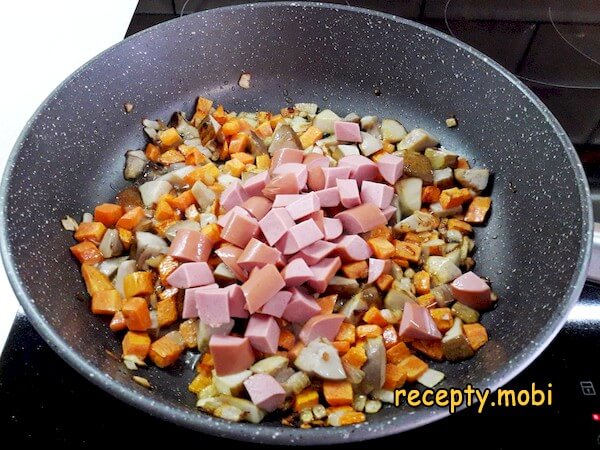
I add the green peas.
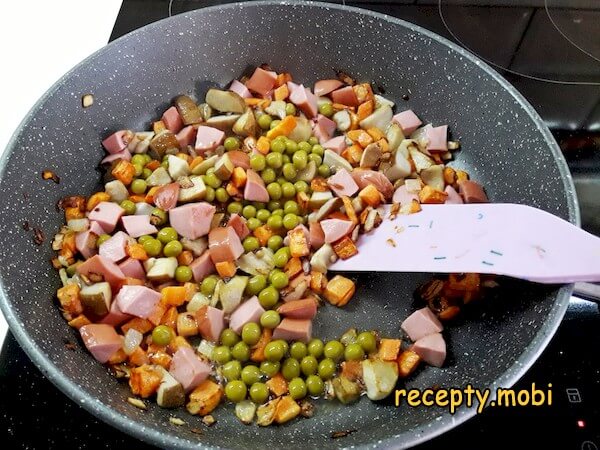
And straight away I tip in all the rice. I mash it with the spatula so there are no clumps and fry it for a couple of minutes.
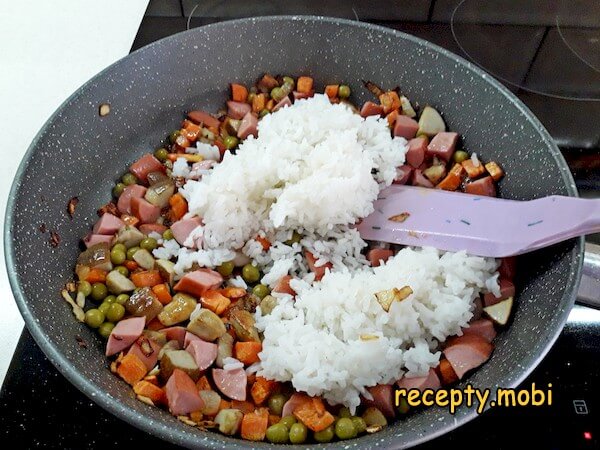
Then I pour in the soy sauce.
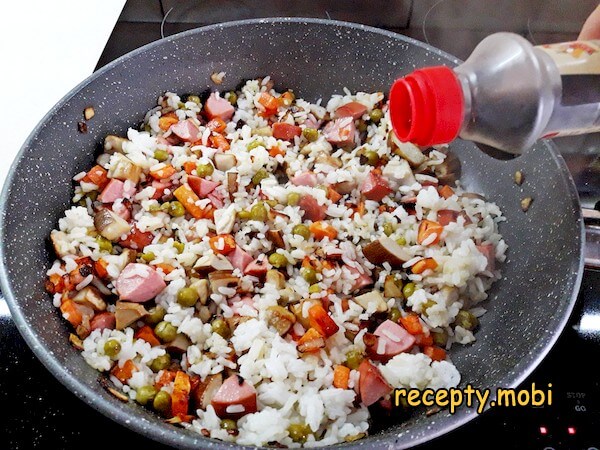
And the ketchup. After stirring, I taste the mixture and add salt if needed.
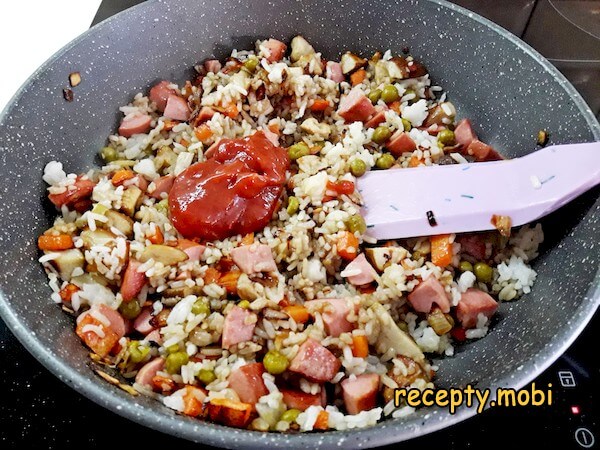
I keep the filling on the heat for one more minute and transfer it to a plate. I wash the skillet and wipe it dry, ready for making the omelette.

I whisk the eggs with a fork together with a pinch of salt.

I pour the beaten eggs into the heated oil. Tilting the skillet from side to side, I spread the egg across the whole diameter of the pan. With a fork I stir the spots where the liquid egg collects the most.
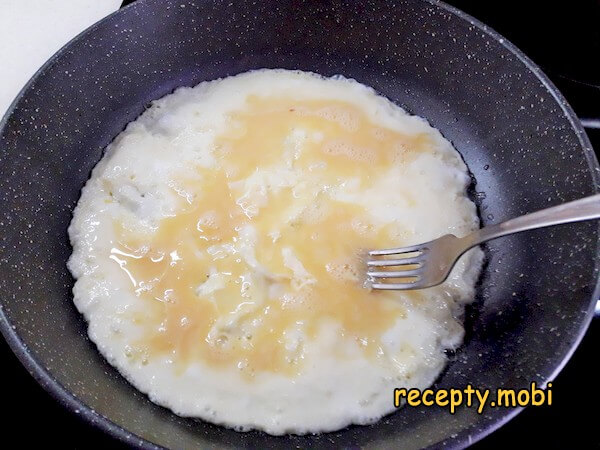
When the omelette is 80% done, I place the filling in the middle.
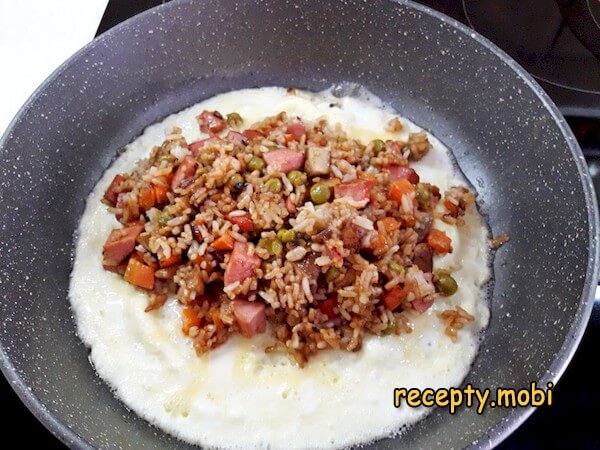
I fold the edges of the egg pancake up from both sides.
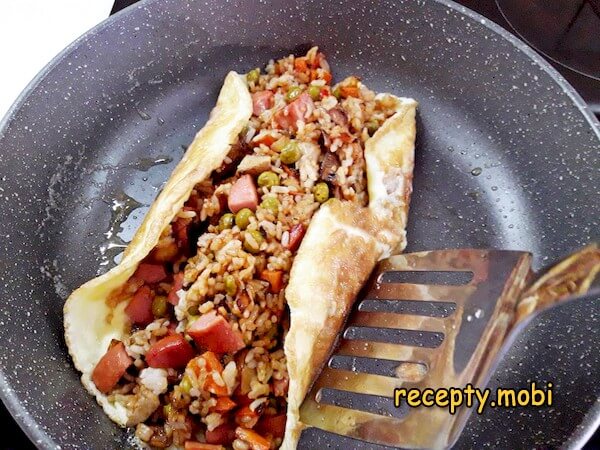
I cover the dish with a plate and flip the skillet over so the seam of the omelette ends up on the bottom.

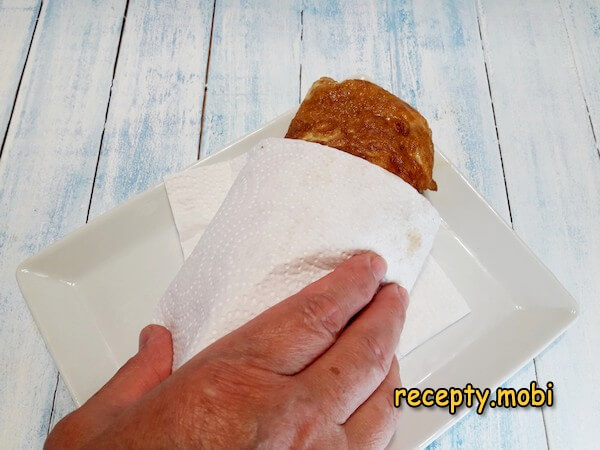
If needed, I tidy up the outline of the "parcel" with a paper towel.
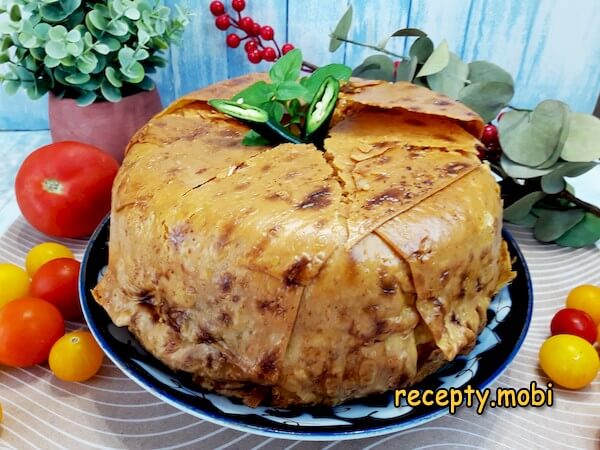
I serve the hot omurice straight away, drizzled with ketchup on top. The juicy filling of fried rice and a rich mix of add-ins under its omelette wrapper makes a very filling and nourishing dish that can satisfy hunger for a long time. As for the taste – once you have tried this food, you will want to make it again.



Tips
- 1
RINSING THE RICE is the "secret" to fluffiness. Unrinsed rice clumps into a mush. Several rinses until the water runs clear give you fluffy rice that fries evenly.
- 2
VEGETABLES OF THE SAME SIZE are the "secret" to texture. Uneven cutting means some pieces fry through while others stay raw. Cut everything into a small dice and all the ingredients cook evenly.
- 3
AN 80%-DONE OMELETTE is the "secret" to the shape. A fully cooked omelette breaks when you fold it. At 80% done it is elastic and easily takes on the "parcel" shape.
- 4
A CLEAN, DRY SKILLET is the "secret" to a tender omelette. Leftover oil from the filling makes the omelette tough. Wash and wipe the skillet dry and the omelette comes out silky. The same principle works in other kinds of stuffed omelettes.
FAQ
Which rice should I choose? +
Ideally, Japanese "Nishiki" or "Koshihikari" rice (80 g – "premium"). Alternatives: long-grain "Jasmine" rice (80 g – "budget"), round-grain "Krasnodar" rice (80 g – "classic"), basmati (80 g – "premium, fluffy"), brown rice (80 g – "diet"), a mix of basmati and wild rice (80 g – "premium"), Egyptian "Camolino" rice (80 g – "premium"), "Arborio" rice (80 g – "Italian, creamy"). Brands like "Mistral", "Natsional" and "Agro-Alliance" are reliable. Japanese rice from specialist shops is the "premium" option. Do not use: parboiled rice (not sticky) or boil-in-the-bag rice. For the "classic" result you definitely need round-grain rice such as "Nishiki" or "Koshihikari".
What can replace white mushrooms? +
Alternatives: fresh champignons (120 g – "classic, budget"), oyster mushrooms (120 g – "economy"), a mix of champignons and oyster mushrooms (60 g each – "premium mix"), wild chanterelles (120 g – "premium"), pickled honey mushrooms (60 g – "accent"), dried white mushrooms, rehydrated (40 g – "premium"), shiitake mushrooms (120 g – "premium, Japanese"), enoki mushrooms (120 g – "premium, Japanese"). Brands like "Griby Leto" and "Foodland" are reliable. Fresh wild mushrooms are the "premium" option. Do not use: heavily salted mushrooms (they upset the balance) or ones canned in vinegar. For the "classic" result you definitely need fresh champignons or white mushrooms.
How long does omurice keep? +
In the fridge in a tightly sealed container – 1 day. Any longer and the omelette turns rubbery and the rice dries out. Before serving, reheat it in the microwave for 1–2 minutes under a lid, or in the oven for 7 minutes at 150°C under foil. I do not recommend the freezer – the egg breaks down when it thaws. Fresh and hot from the pan is the "star" version (maximum juiciness and flavour). On the second day the flavour holds up, but the texture is worse. Do not leave it at room temperature for longer than 3 hours. It is ideal to cook it "for 1 serving".
What to serve omurice with? +
The Japanese classic: with extra ketchup (drawing a heart or a message on the omelette). With teriyaki sauce. With Japanese "Kewpie" mayonnaise. With tonkatsu sauce. With soy sauce. With wasabi and ginger. With miso soup. With a green salad. With pickled ginger. With a thin strip of nori on top. Sprinkled with black sesame. With spring onion. Alongside a cup of "Sencha" green tea. With Japanese "Asahi" beer. With sake (for adults). With chopsticks. For a "Japanese dinner" it is a versatile choice. A hearty omurice for a home lunch, a Japanese party or a quick lunch.
- Comment
or post as a guest
Be the first to comment.