avg —
Marinated Eggs in Soy Sauce

Instructions
I prepare the ingredients for the marinated eggs in soy sauce. Freshly boiled eggs peel badly, so it's better if they've sat in the fridge for at least a week. This doesn't affect the taste at all; very fresh ones will simply have a slightly less smooth egg-white surface. Alongside the parsley you can add, if you like, a few sprigs of cilantro, dill, or green onion.
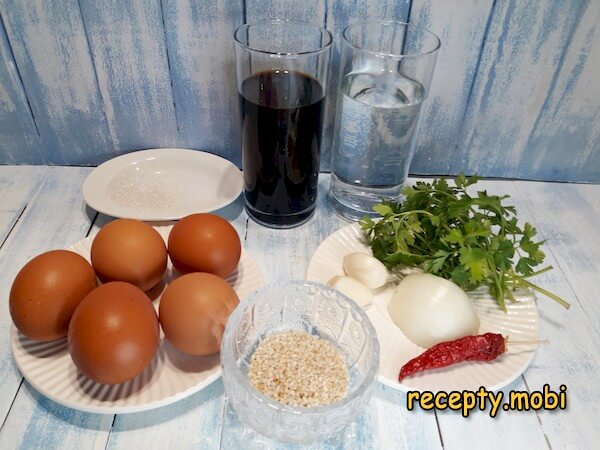
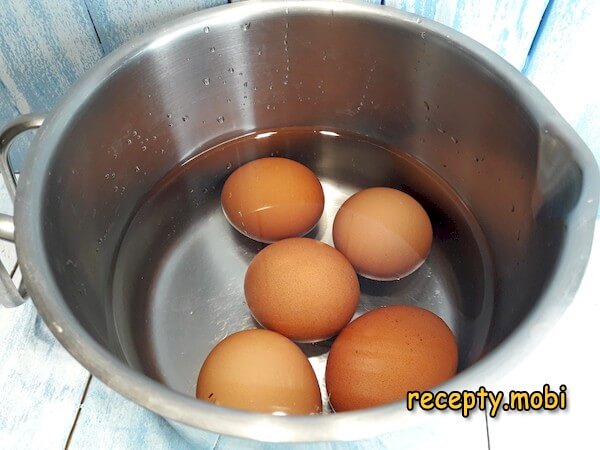
I put the eggs in a saucepan and fill it with water right to the top. So they don't crack while cooking, I don't put them straight on the stove but leave them to stand in the water for 5 minutes, so the temperatures of the surroundings and of the eggs (which were in the fridge) even out. As a safeguard I add a teaspoon of salt to the water and boil them for 10 minutes after the water comes to a boil.
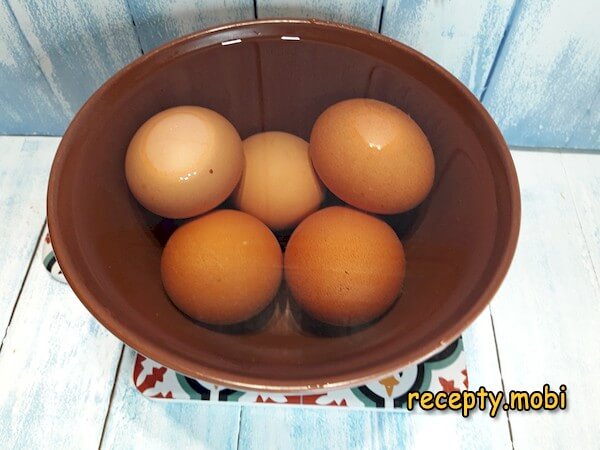
Next I transfer the eggs into cold water and change it a couple of times as it warms up – rapid cooling gives a clean separation of the shell from the white and makes peeling easier.
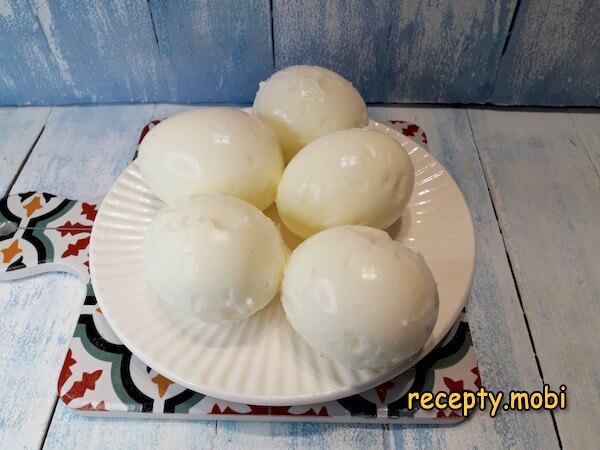
I peel off the shells – marinating needs perfectly smooth eggs, so I work carefully, ideally under running water.
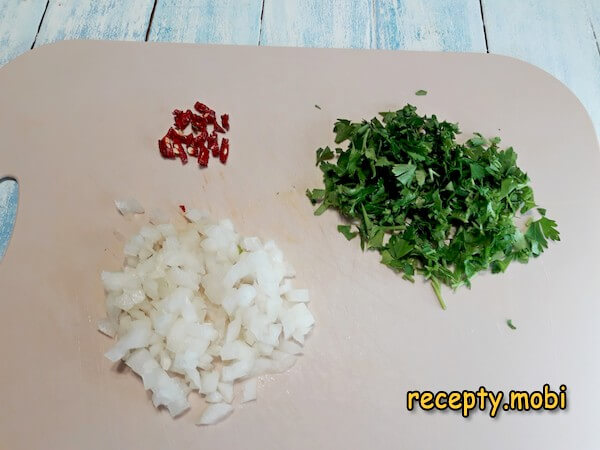
I chop the onion, parsley, and hot pepper (together with its seeds) very finely – a fine chop is needed so that all the components release their aroma into the marinade evenly and don't stick out as large pieces on the finished eggs.
I also press the garlic through a press or chop it finely – the press is preferable, so it turns into a uniform paste that distributes deeply through the marinade.
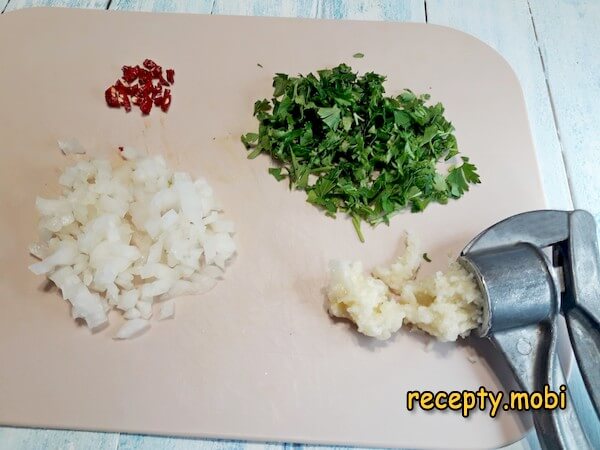
Into a narrow container – a 1-litre jar is very handy for this – I put all the chopped ingredients. A narrow jar means the least amount of marinade for 5 eggs, saving soy sauce.
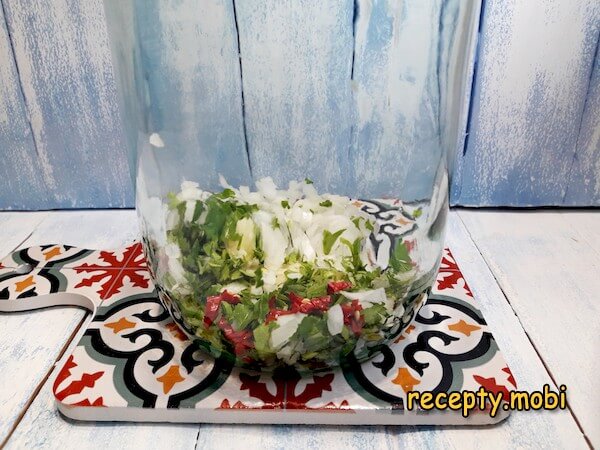
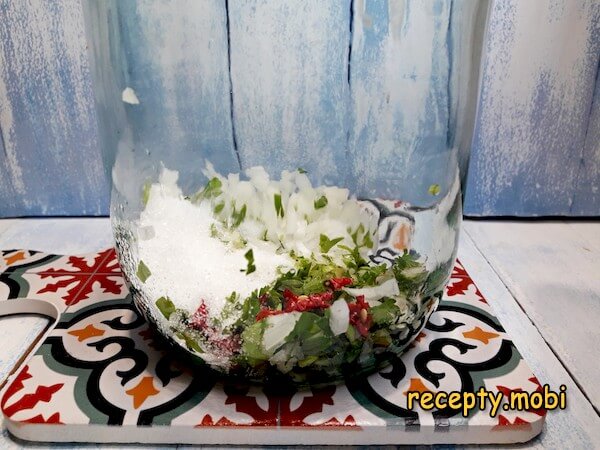
I add the sugar there too – it balances the saltiness of the soy sauce and gives the Asian-style marinade a characteristic caramel note.
I bring the water and soy sauce to a boil and pour it into the jar – the hot marinade penetrates the white faster and more effectively "dyes" the egg its characteristic golden-beige colour.
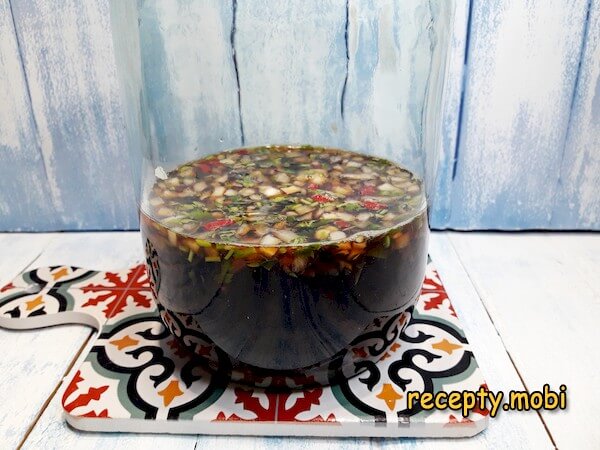
I place the eggs in this marinade – ideally they should be completely submerged in the liquid. I close the jar with a plastic lid and put it in the fridge.
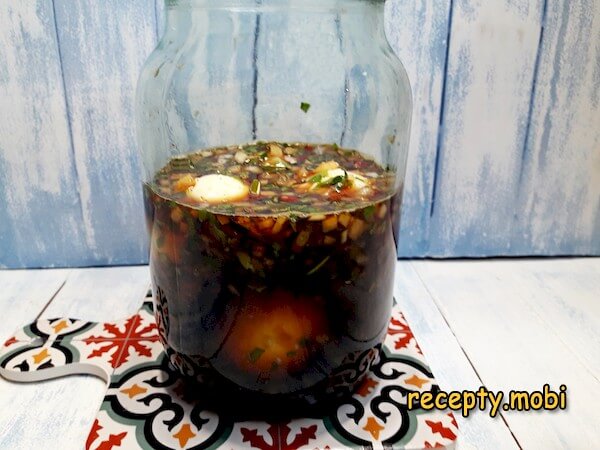
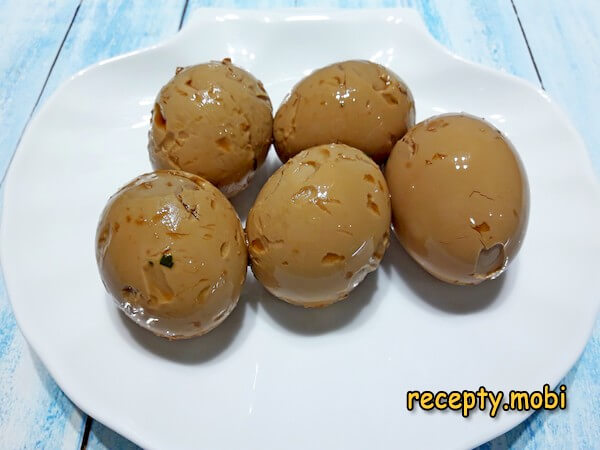
After exactly one day I take the eggs out of the marinade. They've taken on an unusual colour and absorbed the flavour and aroma of all the components of the soy-sauce mixture – the signature "secret" of Asian cuisine.To serve, I cut the marinated eggs in soy sauce in half, drizzle them with the same marinade, and sprinkle them with parsley leaves and sesame seeds. This snack can be used not only as a dish in its own right but also added to salads that use marinated eggs. The unusual flavour will bring variety to your everyday menu, filling it with new sensations.


Tips
- 1
EGGS THAT AREN'T THE FRESHEST – the "secret" to easy peeling. Fresh eggs have a tight membrane under the shell that won't come away from the white – peeling turns into a nightmare and the egg surface ends up "torn". Eggs that have sat in the fridge for 7-10 days peel easily – the membrane comes away on its own and the white stays perfectly smooth. This is the "secret" for every dish that uses peeled boiled eggs.
- 2
COOKING TIME – the "secret" to the right texture. 10 minutes from the moment the water boils gives hard-boiled eggs with a fully cooked yolk that won't "muddy" the marinade. Less than 10 minutes and the yolk stays runny and makes the marinade cloudy. More than 12 minutes and a greenish-grey ring appears around the yolk. There's more on boiling eggs in the article "How to Boil Soft Eggs – the Simplest Methods".
- 3
HOT MARINADE – the "secret" to the colour. Cold soy sauce only dyes the eggs on the surface over 24 hours. A boiling marinade pushes deeper into the white and gives an even golden-beige colour throughout. After a day the cut surface shows a beautiful "gradient" from rich brown on the outside to light cream inside.
- 4
THE ASIAN VARIATION – the "secret" to a complete table. Marinated eggs go wonderfully with other Asian dishes made with soy sauce. Just like chicken legs in soy sauce in the oven – the same basic sauce is used for the glaze, and dishes on one table create a cohesive "Asian dinner".
FAQ
Which soy sauce is best for marinating? +
A classic soy sauce of medium saltiness is ideal – Kikkoman, Sen Soy, Heinz. I don't recommend "light" reduced-salt soy sauce – it won't give the characteristic colour and aroma. "Dark soy sauce" with molasses isn't suitable either – it's too thick and sweet and will dye the eggs an almost black colour. For an authentic Korean variation you can add a tablespoon of rice wine (mirin) or dry sherry – it gives a characteristic "Korean" note. For a Vietnamese variation – a teaspoon of fish sauce.
How long do marinated eggs keep? +
In the jar with the marinade in the fridge – up to 7 days without loss of quality. The longer they're kept, the more intense the colour and the richer the flavour – by day 3-4 they become "premium-ripe". Out of the marinade, in an airtight container – up to 3 days. Signs of spoilage: a greyish-green film on the white, an off smell, a slimy surface – I throw such eggs out. Marinated eggs shouldn't be frozen – after thawing the structure of the white becomes rubbery and watery.
Can chilli be replaced with black pepper? +
You can, but the character of the dish will change. Chilli gives a true "fiery" heat and authentic Asian pungency. Black pepper is milder and more "European" in character, without the sharp heat. Alternative options: jalapeño (a Mexican accent), ground cayenne pepper (1/4 tsp – an equivalent to chilli), a chilli paste like "Sriracha" (1 tsp for an authentic Asian note). For something with no heat at all: fresh grated ginger (5 g) – it adds piquancy without the burn. For a child-friendly version – no hot pepper at all.
What goes well with marinated eggs in soy sauce? +
A versatile Asian snack. The classic – on boiled rice with a pinch of sesame and green onion as a "Korean breakfast". In bowls: with Korean-style carrots, pickled radish, quinoa, edamame. With ramen: the halves are placed right on the hot broth. For a festive table: on a plate with herbs and a wedge of lemon as part of an Asian assortment. In salads: "Shopska" with the regular egg swapped for a marinated one, "Caesar" with an Asian accent. With rice vodka (sake) or a light beer with lime.
- Comment
or post as a guest
Be the first to comment.