avg —
How to Dye Eggs with Red Wine

Instructions
I prepare the ingredients. The cheapest wine will do, and it doesn't matter whether it is fortified, sweet, semi-sweet or dry – the main thing is that the colour is red. The eggs can be any colour, and you can take as many as you like, but every one must be fully submerged in the wine.
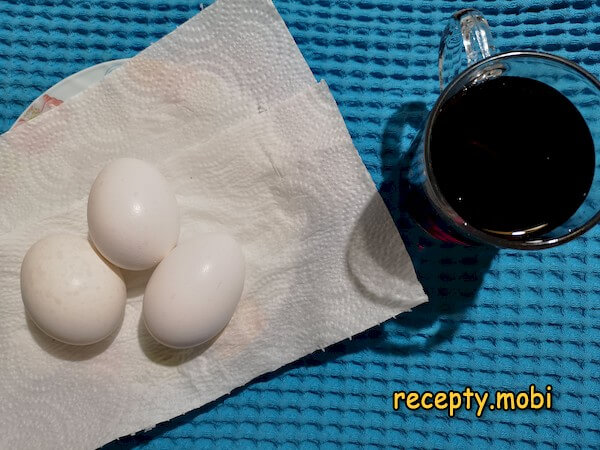
I wash the eggs with baking soda to remove any dirt and stamps. They should be at room temperature. I place them in a pot – it is better if it is made of stainless steel, as it will then be easier to clean off the wine scale.
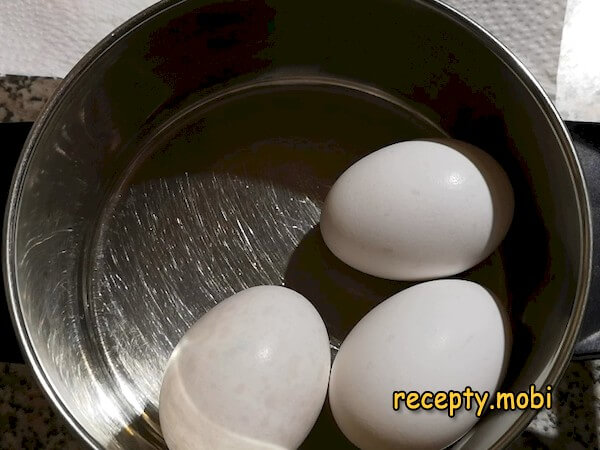
I pour in enough red wine for the eggs to be completely submerged.
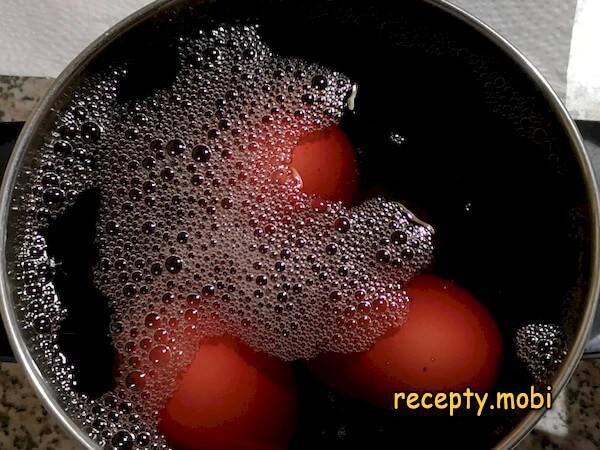
I move the pot onto medium heat.
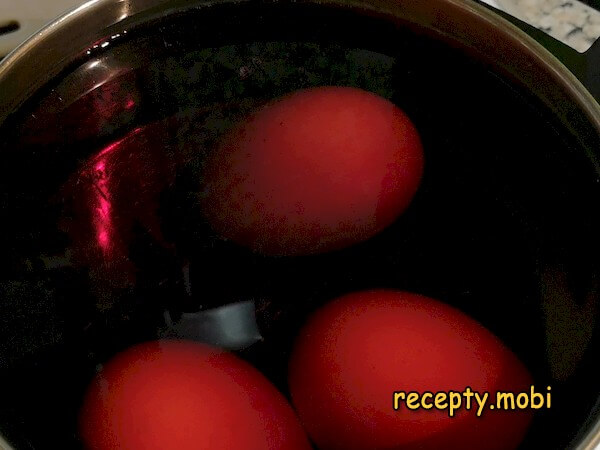
I bring the wine to a boil, then set the heat to its lowest and cook the eggs for another 10 minutes.
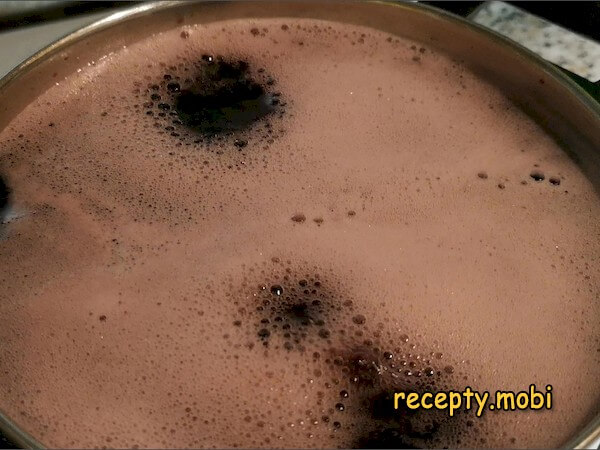
Then I take the pot off the stove, but I do not remove the eggs.
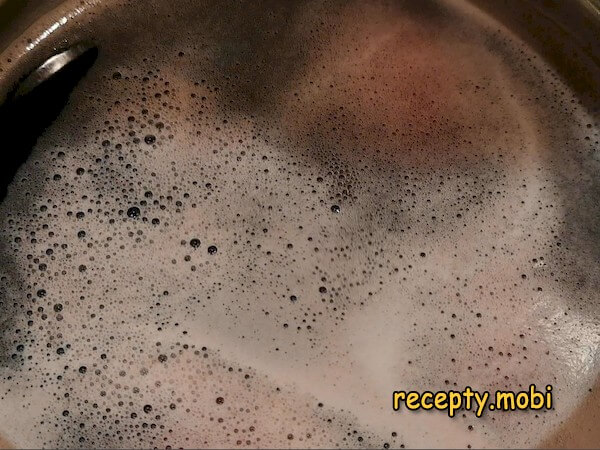
I cover the pot with a lid and leave it like this for 8–10 hours. The longer the eggs stand in the wine, the deeper the colour they take on, becoming covered as well in crystals of tartar.
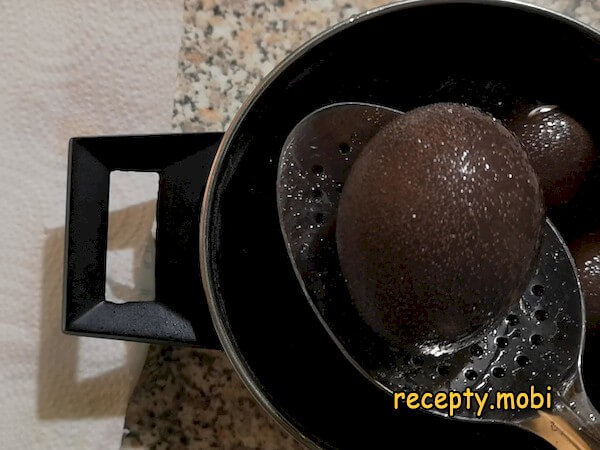
After 8–10 hours, I take the eggs out of the wine onto a paper napkin and leave them to dry. Whatever you do, don't rub them with vegetable oil for shine – this will wipe off the sparkling crystals. The eggs simply need to dry on a paper napkin.Now you know how to dye eggs with red wine for Easter – it is very simple.


Tips
- 1
8–10 hours in the wine is the "secret" to intensity. Any less and the shade is pale. The full cycle (overnight) gives a deep purple-blue colour with tartar.
- 2
Tartar is the "secret" to the sparkle. Crystals form on the shell that glitter in the sun. This is a unique effect of the wine method only.
- 3
Don't rub with oil – the "secret" to keeping the crystals. Oil will wipe off the sparkling crystals. Just dry the eggs on a napkin and the shine will stay.
- 4
Stainless steel or glass – the "secret" to avoiding stains. Enamelled cookware will absorb the wine dye. Stainless steel or glass wash off easily. The same principle works in other methods of natural dyeing for Easter eggs.
Video
FAQ
Which wine should I choose? +
The ideal choice is the cheapest red wine of any type: dry, semi-sweet, sweet or fortified (one bottle of 0.7–1 l for a pot of eggs). Alternatives: homemade red wine (1 l – "premium"), Cahors (0.5 l – "church-style", rich colour), Massandra "Black Doctor" (0.7 l – "premium"), dry "Isabella" (1 l – brighter colour), semi-sweet "Merlot" (0.7 l – "budget"), wine from homegrown grapes (1 l – "premium"). The brands "Kuban-Vino" and "Fanagoria" are reliable inexpensive options. Do not use: ready-made flavoured "mulled wine", white wine (it lacks the needed pigment) or port (different notes). For the "classic wine dye" you definitely need a red wine with a rich colour.
Are wine-dyed eggs safe? +
Yes, completely safe. The wine dye comes from natural anthocyanins in the skins of red grapes – the same pigments found in beetroot and hibiscus. During boiling, almost all of the alcohol evaporates. Tartar (potassium bitartrate, the little crystals on the shell) is a food-safe additive. The eggs can be eaten by everyone, including children and pregnant women. However, if the shell cracks during boiling, the white may take on a slight pink tinge – this is safe too. For an absolutely clean taste of the white, it is better to choose intact eggs without cracks.
How long do wine-dyed eggs keep? +
In the fridge in open packaging – up to 1 week. At room temperature – no more than a day. The tartar does not wash off and the colour holds firmly. I do not recommend the freezer – the yolk will turn rubbery. Freshly dyed eggs are at their "best" right after drying on a napkin (once the wine crystals start to sparkle). Don't rub them with oil – the shine will disappear. Don't leave them at room temperature for more than 4 hours on Easter day. Ideally, dye them 1–2 days before the holiday. Wine-dyed eggs look especially striking under bright light.
What to serve with wine-dyed eggs? +
A classic at Easter: with Easter kulich and curd paskha. With a cup of black tea and lemon. With a glass of Cahors (continuing the "wine" theme). With a glass of homemade fruit liqueur. With salt on the plate (an Orthodox tradition). With fresh herbs. With mayonnaise or sour cream for an egg salad. With garlic sauce or a cold meat platter. With eggs of other colours – a rainbow Easter palette. With wholegrain bread and butter. With a glass of dry white wine (for contrast). For an "Easter picnic" – a versatile way to serve them. Wine-dyed eggs look especially effective as the centrepiece of an Easter basket.
- Comment
or post as a guest
Be the first to comment.