avg —
How to dye eggs with beetroot

Instructions
Prepare the ingredients. The eggs must definitely be clean and white, otherwise the pink shade will not come out. Take them out of the fridge in advance (about 10 minutes ahead) and simply leave them on the worktop at room temperature.
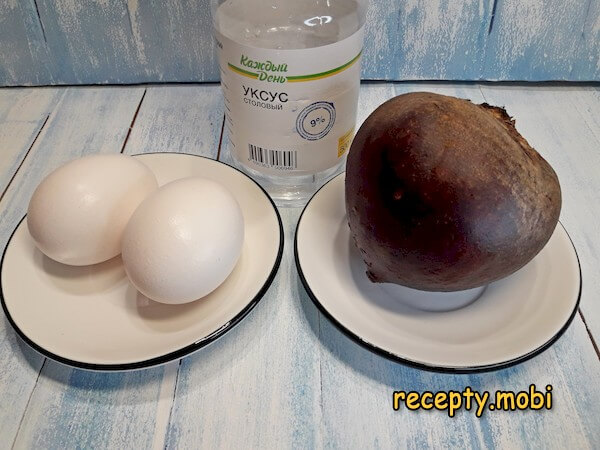
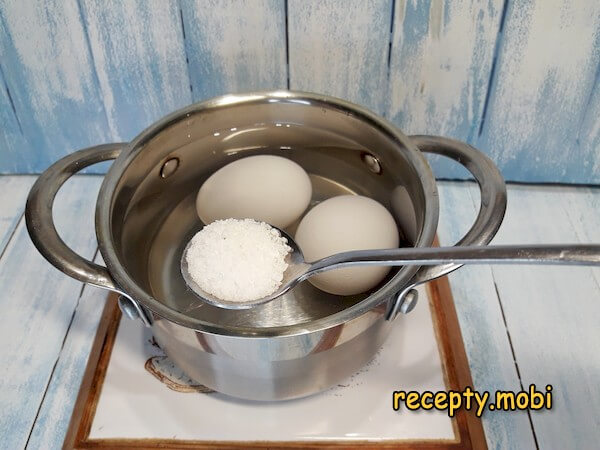
Next, place the eggs in a small pot and cover them with water. Put it on the heat, and once it comes to the boil add the salt and reduce the heat to the lowest setting at which the water keeps simmering. After 8–10 minutes, turn off the hob.
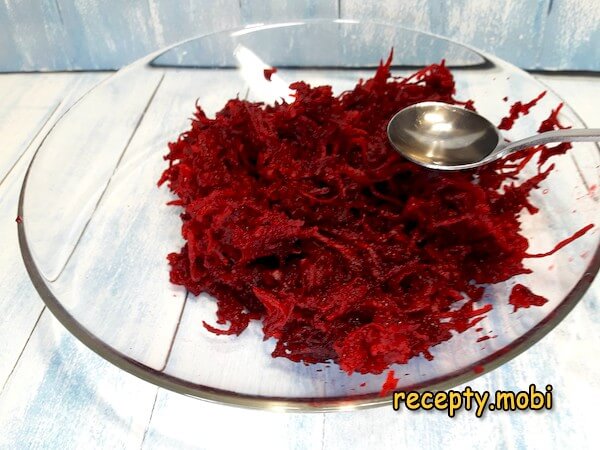
While the eggs are cooking, prepare the natural dye. For this, peel the raw beetroot and grate it on a fine grater.

Add the vinegar to the pulpy shavings and stir.
When the eggs are ready, take them out of the boiling water and do not cool them down; instead, transfer them straight onto a bed of grated vegetable and pack the beetroot around them on all sides.
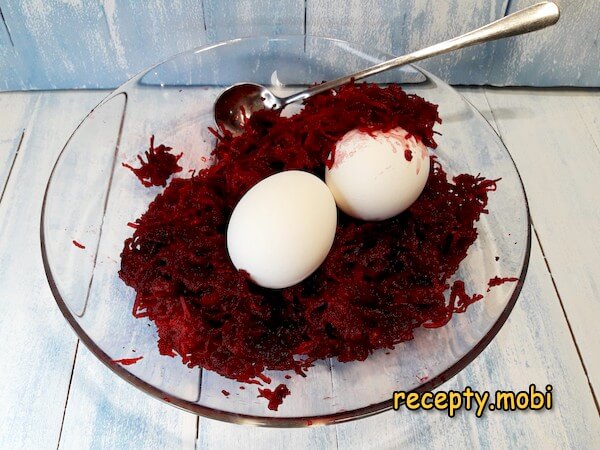
So that the dye takes better, press the shavings firmly against each egg with your palm. Move the whole arrangement to the refrigerator and leave it there for 8 hours (it is best to do this overnight).
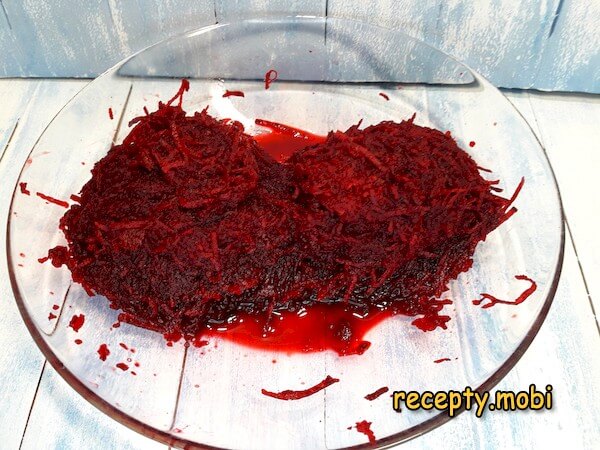
In the morning, or once the stated time has passed, take the eggs out of the beetroot shreds and check that the natural juice has dyed the shell well. If the shade is not deep enough, you can leave the eggs in the refrigerator for another couple of hours.

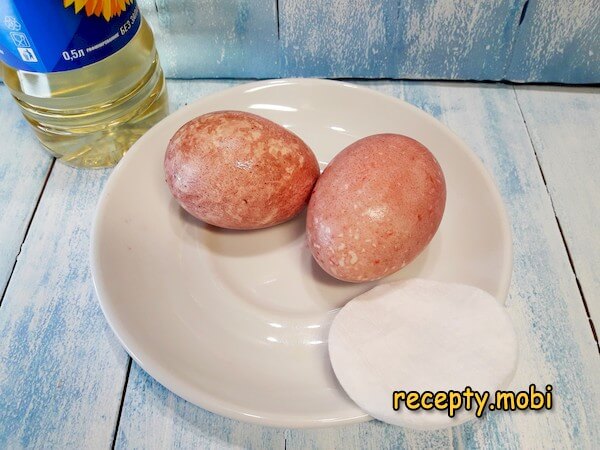
Wipe the eggs clean with a napkin.

To make the surface of the shell glossy, rub it with a cotton cloth soaked in any vegetable oil.Once you understand the principle of how to dye eggs with beetroot, you can create a lovely Easter arrangement and be sure that the products used are completely harmless, and that your hands will not be stained with dye when you peel the eggs.


Tips
- 1
HOT EGGS INTO THE DYE – the "secret" of the soak. A warm shell "absorbs" the beetroot juice better. Cold eggs do not give such a bright shade.
- 2
8 HOURS IN THE REFRIGERATOR – the "secret" of intensity. Less than that and the shade is pale. The full cycle (overnight) gives a bright pink colour that will not wash off.
- 3
VINEGAR INTO THE BEETROOT – the "secret" of fixing the colour. The acidic environment sets the anthocyanin pigment. Without vinegar the colour washes off within a day.
- 4
PRESS FIRMLY – the "secret" of an even result. If the beetroot skin does not make contact with the shell, the colour will come out in streaks. Firm contact gives an even shade. The same principle works in other methods of naturally dyeing Easter eggs.
FAQ
Which beetroot should I choose? +
Ideal is dark-burgundy table beetroot (1 medium one – 200–300 g). Alternatives: "Bordo" (1 pc – the classic choice), "Cylindra" (1 pc – a handy shape), "Egyptian Flat" (1 pc – the budget option), red-leaved chard (200 g – the premium variation), boiled beetroot from a vacuum pack (200 g – budget, but the colour is less intense), a 50/50 mix of beetroot and red cabbage (100 g of each – premium, brighter). The seed brands "Aelita", "Gavrish" and "Poisk" are tried and tested. Fresh beetroot from the garden is the premium option. Do not use pale, overripe or fodder beetroot. For the "classic" dye result, dark-burgundy table beetroot is a must.
What can replace 9% vinegar? +
Alternatives: apple cider vinegar (25 ml – milder, more aromatic), white wine vinegar (20 ml – premium), lemon juice (40 ml – natural), 70% essence diluted (3 ml + 17 ml of water), white balsamic vinegar (20 ml – premium), rice vinegar (25 ml – an Asian option), apple marinade sauce (3 tbsp – budget). The brands "Heinz", "Pripravych" and "Krasnodarsky" are tried and tested. Fresh vinegar in glass is the premium option. Do not use: dark balsamic (it will turn the colour dirty) or salty marinades. For the "classic" result, table or apple cider vinegar is a must.
How long do pink eggs keep? +
In the refrigerator in open packaging – up to 1 week. At room temperature – no more than a day. Beetroot dye is not as durable as turmeric or brilliant green, so the shade may fade slightly over time. I do not recommend the freezer – the yolk will turn rubbery. Freshly dyed eggs are at their best right after they are cleaned of the beetroot (once the pink colour has fully developed). Do not leave them at room temperature for longer than 4 hours on Easter Day. Ideally, dye them 1 day before the holiday. By the second or third day the shade may fade a little.
What to serve pink eggs with? +
The Easter classic: with Easter kulich and tvorog paskha. With eggs of other colours (yellow from turmeric, green from brilliant green) for a rainbow palette. With a cup of black tea with lemon. With a glass of Cahors (church wine). With salt on the plate (an Orthodox tradition). With fresh herbs. With mayonnaise or sour cream (for an egg salad). With garlic sauce or a meat platter. With wholegrain bread and butter. Alongside Olivier egg salad. With a glass of homemade fruit liqueur. For an "Easter picnic" – a versatile way to serve them. The main symbol of Bright Easter – eggs are exchanged with loved ones.
- Comment
or post as a guest
Be the first to comment.