avg —
Pork Knuckle Roll in a Multicooker-Pressure Cooker

Instructions
Choose a meaty pork hock with well-cleaned skin and no bristles. The hock is the pig’s shank, with skin and bone. A rear hock weighing 1.2–1.5 kg is ideal for a roll – it is meatier. The skin should be clean, with no leftover bristles, and pink rather than grey or yellowed.
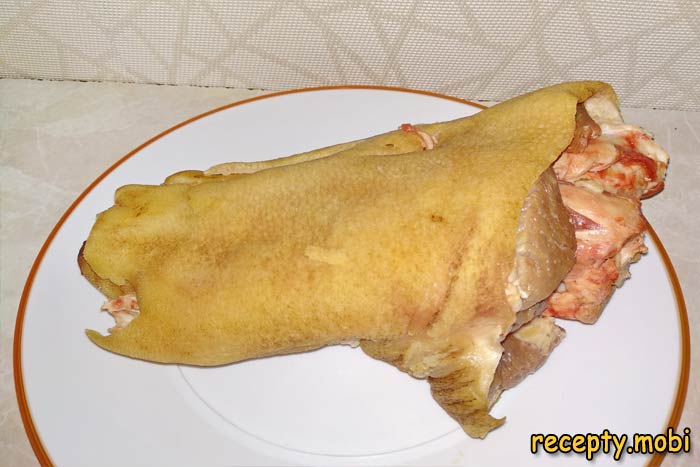
With a sharp, long knife, cut the skin along the bone and carefully cut the bone out, taking care not to damage the layer of meat. The bone comes away together with the cartilage and tendons. Don’t throw it out – it makes an excellent broth for soup or aspic. Spread out the remaining muscle.
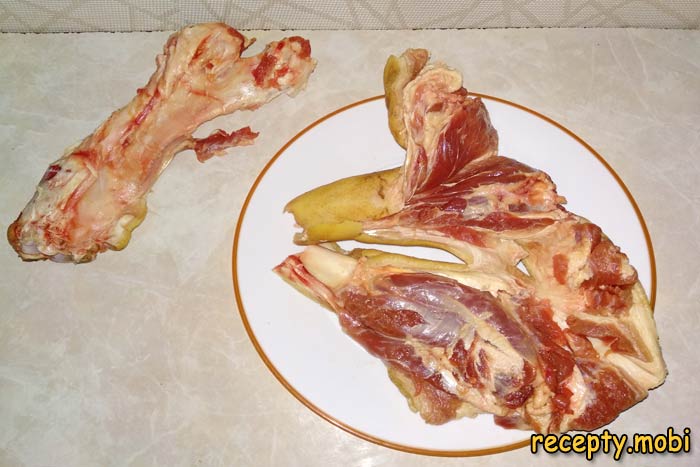
Unroll the hock and even out the layer of meat, moving pieces from the thicker spots to the thinner ones. The aim is an even «sheet» of meat of the same thickness, 1.5–2 cm across the whole area. This ensures even cooking and a neat cross-section in the finished roll. The thicker areas can be lightly flattened with a mallet.
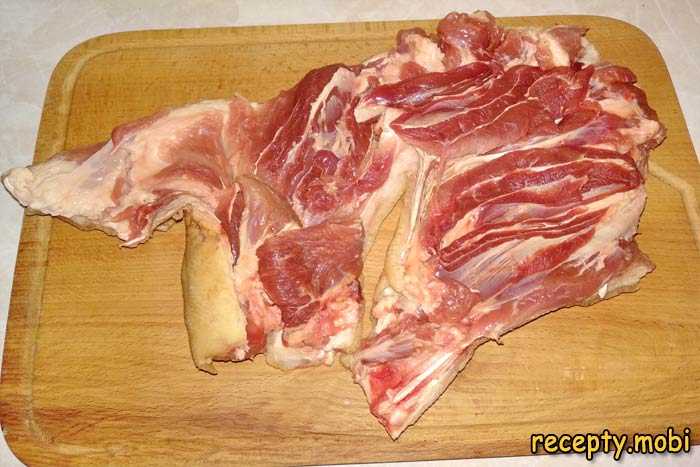
To make the roll tasty, it needs to be rubbed with a mix of salt, garlic and spices. Prepare the seasonings.
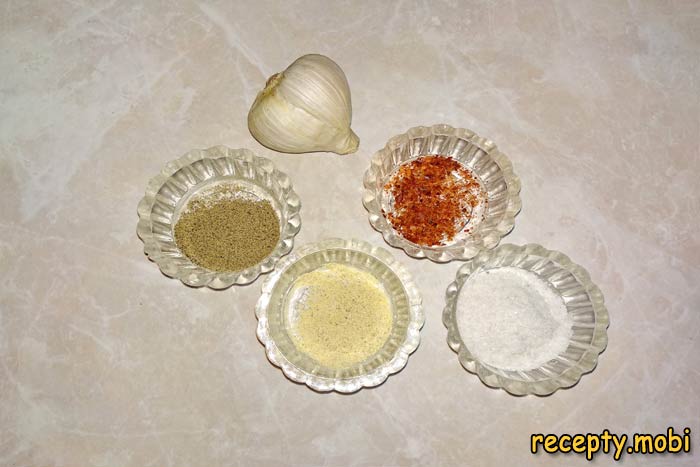
Mince the fresh garlic through a press or on a fine grater to a paste. Fresh garlic gives a bright aroma, while dried garlic is more of an even background note. Using two kinds of garlic creates a layered garlic flavour that comes through both deep in the meat and on the surface.
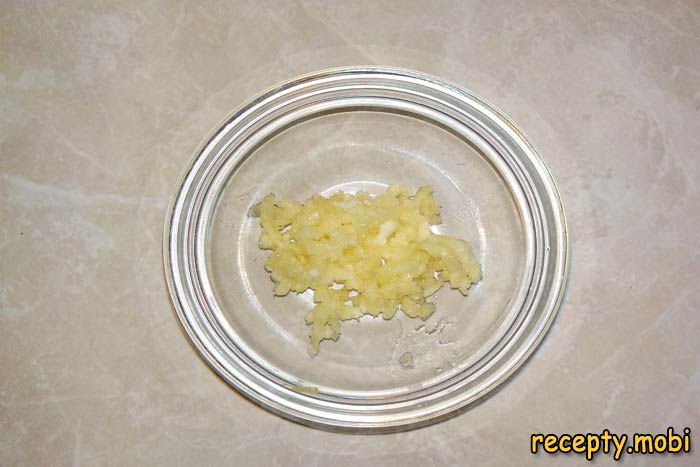
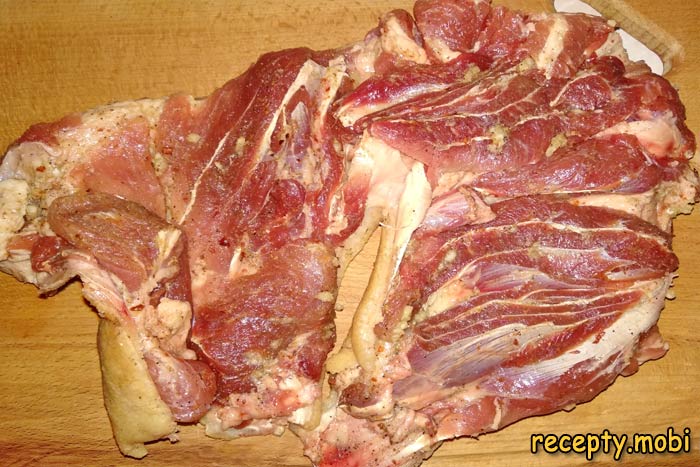
Rub the spread-out meat with the mixture of salt, garlic (fresh and dried), hot red pepper and meat spices on all sides. Work the mixture into the fibres with your hands for deep penetration, rather than just scattering it on. Treat every area thoroughly – the evenness of the flavour depends on it.
Roll it up tightly with the skin facing out and wrap it in 2–3 layers of cling film. Wrapping it tightly is essential: without the film the roll will fall apart during cooking. Put it in the refrigerator for a full day to marinate – during this time the spices penetrate deep into the meat.
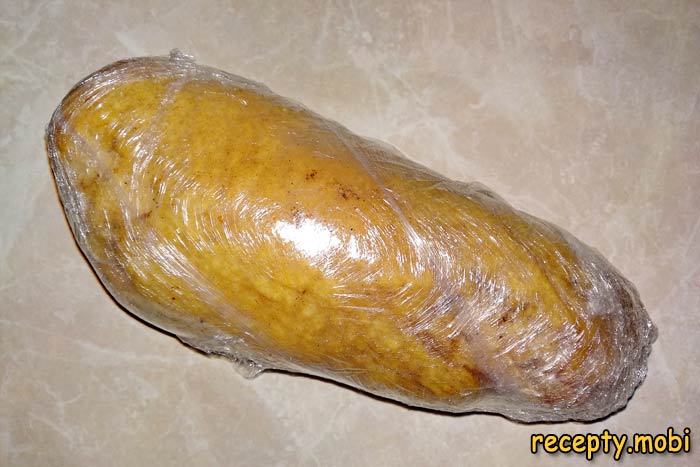
After a day, set the rack into the multicooker-pressure cooker and place the marinated roll on it. Pour in water up to the level of the rack – the water must not touch the meat, only the steam. Cook for 1.5 hours with the valve closed (the «Aspic», «Jelly» or «Multicook» mode at 100 °C).
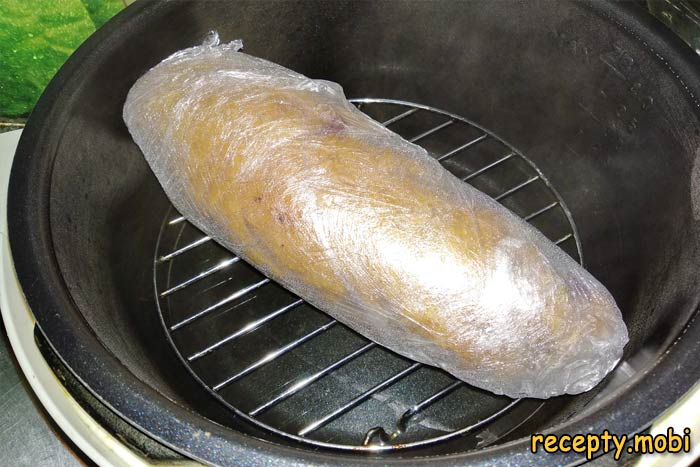
When cooking is done, leave the roll in the multicooker until it cools completely, 2–3 hours. This is an important stage: as it cools slowly the meat finishes «coming together» and the juices spread evenly. Put it in the refrigerator overnight for the final set and to firm up the structure – then it will slice beautifully.
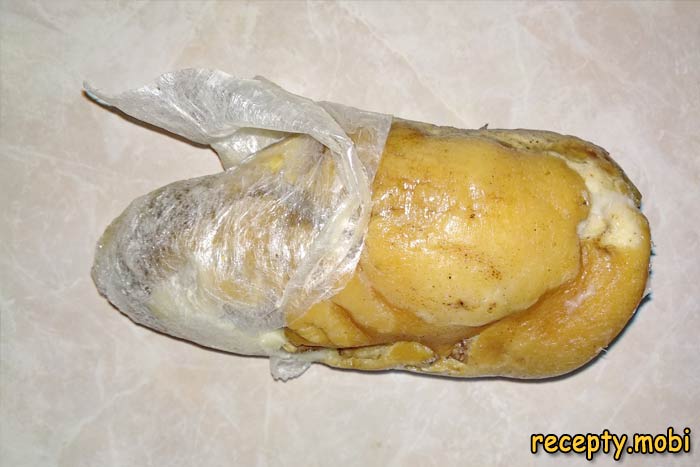
Remove the cling film from the fully cooled roll and slice it with a sharp, thin knife into pieces 3–5 mm thick. Thin slices are the right way to serve it: you can see the lovely cross-section of meat flecked with garlic. The pork hock roll is ready!
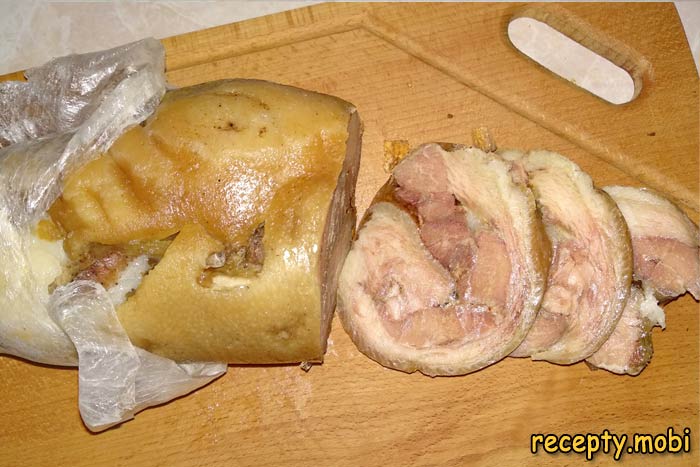
Serve it for sandwiches at breakfast – layer the slices on bread with mustard or horseradish for a satisfying snack.
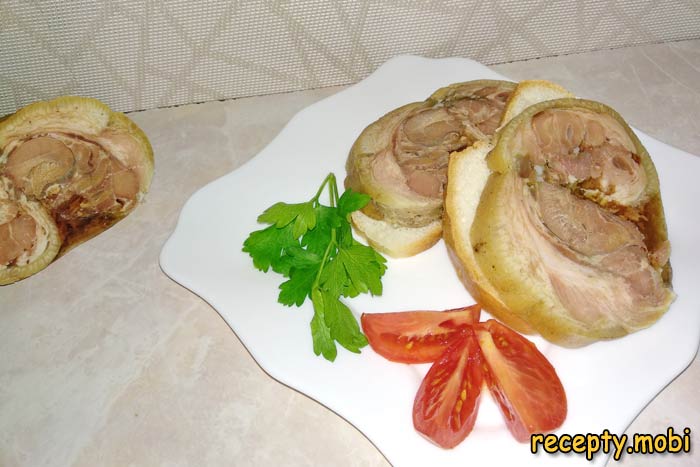
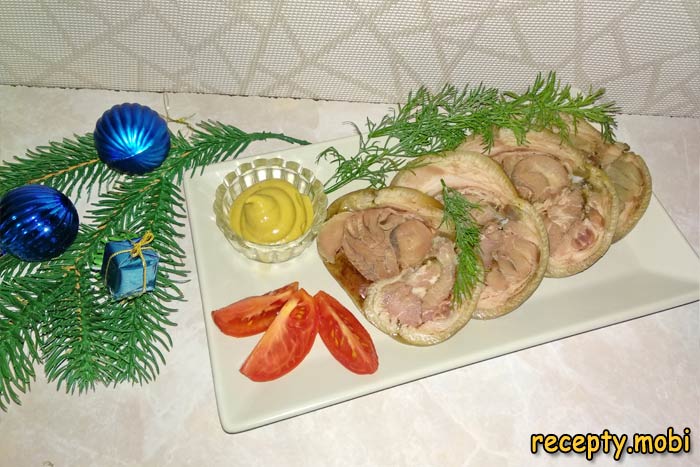
Or serve it as part of a meat platter for the festive table, as a cold appetiser with strong drinks. Garnish the platter with a sprig of fresh herbs and mustard or horseradish in a separate little bowl – the classic Russian presentation.


Tips
- 1
Make the roll 2–3 days before the holiday – it only steeps and gets tastier with each day. On the first day the flavour is a little «raw»; on the second it opens up fully.
- 2
Don’t remove the cling film until the moment you slice it – the roll keeps its shape and won’t «unwrap» once it has cooled completely.
- 3
You can cook it in an ordinary multicooker on the «Stew» mode for 2–2.5 hours. I use a similar principle for my homemade buzhenina.
- 4
The water must not touch the meat – only the steam. Otherwise the roll will «boil» rather than «steam», and the flavour and texture will be worse.
FAQ
Can I make the roll in the oven without a multicooker? +
Yes – wrap the marinated roll tightly in 2–3 layers of foil and bake for 2–2.5 hours at 180 °C. Set the dish with the roll on a baking tray with a little water (1 cm) – this creates steam and prevents it drying out. Fifteen minutes before the end, open the foil on top for a browned crust. To check it is done, pierce the centre – the juices should run clear. The flavour will be more «baked» than with steam cooking in a multicooker.
How long does the finished roll keep? +
In the refrigerator, in the cling film it was cooked in, it keeps for up to 7 days without loss of quality. Once sliced, store the roll in a tightly sealed container for up to 3–4 days, and slice it just before serving. The film acts as a barrier against drying out and against other smells in the fridge. A whole roll in foil keeps in the freezer for up to 2 months – but after thawing the texture suffers slightly. Make it 1–3 days before serving.
What can I use instead of hock in this recipe? +
Pork ham with skin works (a more tender, less fatty option), as does pork belly with layers of fat (a fattier option) or pork neck (the most tender, but without skin – the roll will turn out different). Each cut gives the finished roll its own character: the hock gives the classic «aspic-style» gelatinous texture thanks to the bone, ham gives a more «sausage-like» result, and belly gives alternating fat and meat. Beef or turkey is not suitable for this recipe – you specifically need pork with skin.
What is best to serve with pork hock roll? +
The classic Russian presentation: with Dijon or hot Russian mustard, grated horseradish, homemade horseradish-and-tomato relish, or pickled gherkins. From fresh vegetables – cherry tomatoes, cucumbers, spring onions. On sandwiches with dark Borodinsky bread and butter, it makes a classic snack. The roll goes well with strong drinks (cold vodka, brandy) or a dark craft beer. It pairs perfectly with homemade rye bread, sauerkraut and salted mushrooms.
- Comment
or post as a guest
Be the first to comment.