avg —
Lard in Onion Peel

Instructions
I prepare the ingredients. Any lard works for salting by this recipe – from the back, from the belly, with ribs, with a strip of meat or without it, and of any thickness. The "onion peel" method suits even tough lard that ordinary dry salting will not soften.
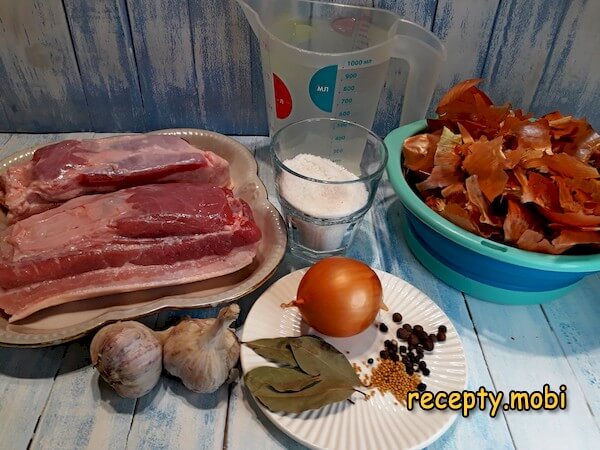
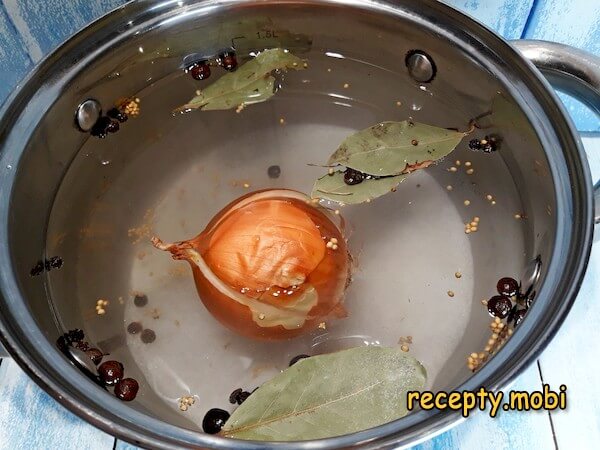
I make slits in the whole onion so that it gives off its aroma and flavour better during cooking – without slits the onion releases only a surface aroma into the brine, while with slits it gives the maximum of its essential oils.
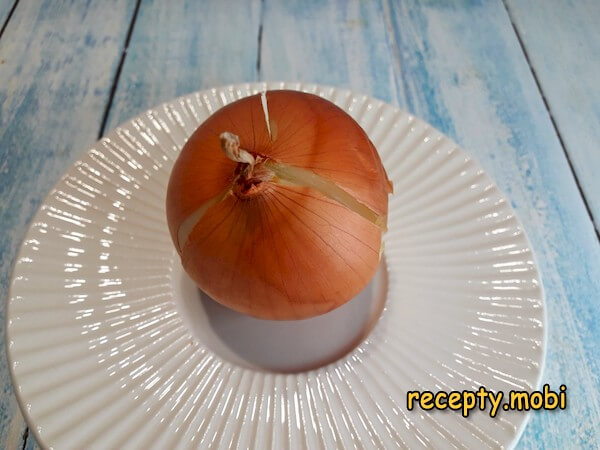
I pour the water into a pot and add the salt and all the spices. I set the brine to boil (about 3 minutes after it comes to a boil) – boiling the spices releases their essential oils and enriches the brine with aroma.
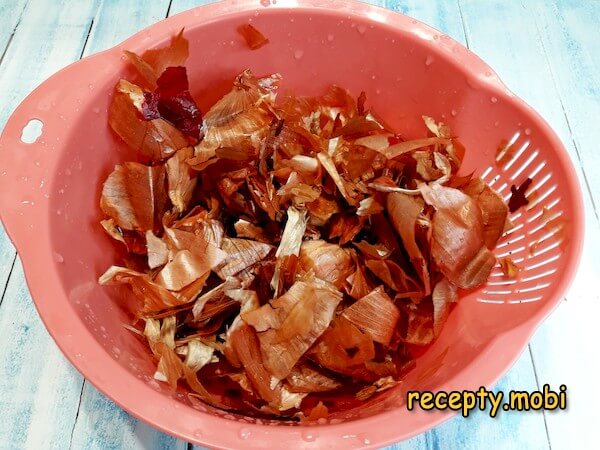
Meanwhile, I rinse the onion peel free of dust and small debris – this is important, otherwise the dust will get into the finished product. Rinse under running water for 1–2 minutes.
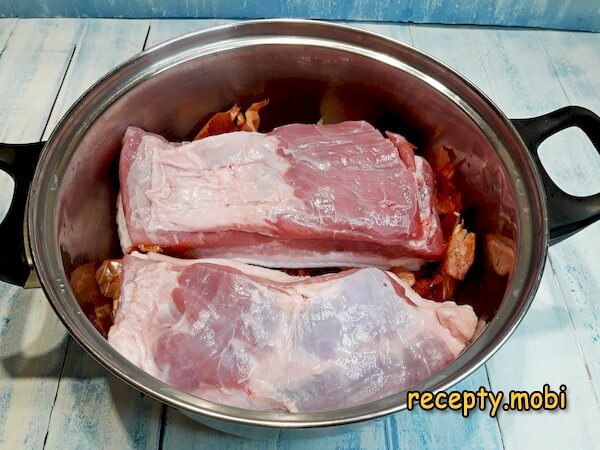
On the bottom of another pot I lay part of the peel, and on top of it the lard. It can be cut into 4 large pieces, or left as two big halves. The layer of peel under the lard is needed for even colouring from below.
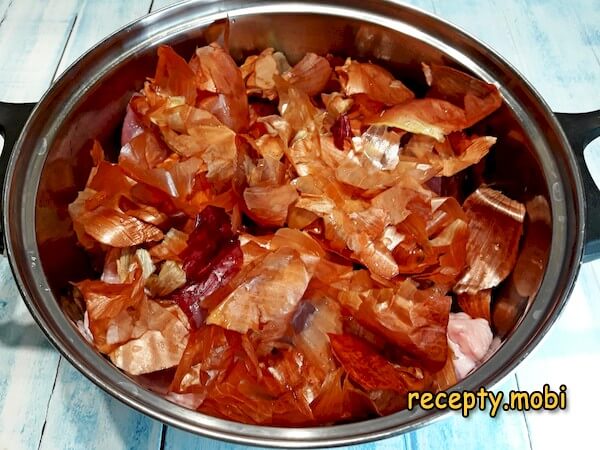
On top I cover the lard with the remaining onion peel – the upper layer ensures even colouring from above and prevents the loss of aroma during boiling.
When the brine has boiled for the required time, I pour it into the pot with the pork belly – the hot brine will immediately start to soften the lard and soak into it.
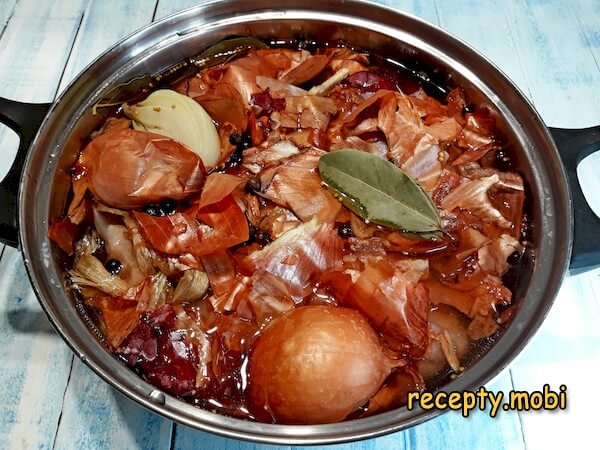
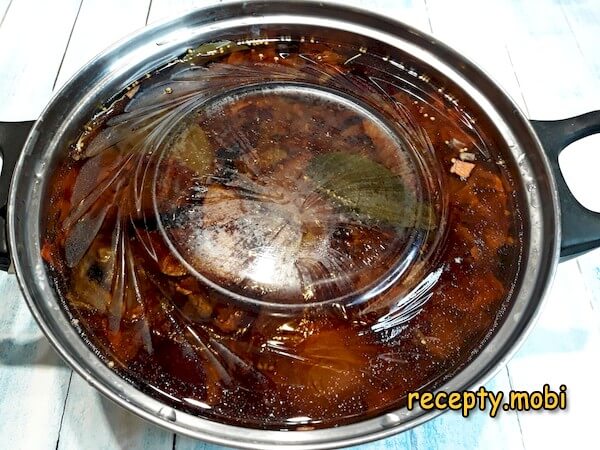
I press the peel down with a plate of suitable diameter, cover the pot with a lid and set it on the heat. I cook everything over medium heat for exactly half an hour. When this time is up, I turn off the heat and do nothing more – the lard should stand in the cooling brine for 6–8 hours. This is the "secret" of the method: after cooking, it is precisely the slow steeping that gives the maximum soaking and tenderness.
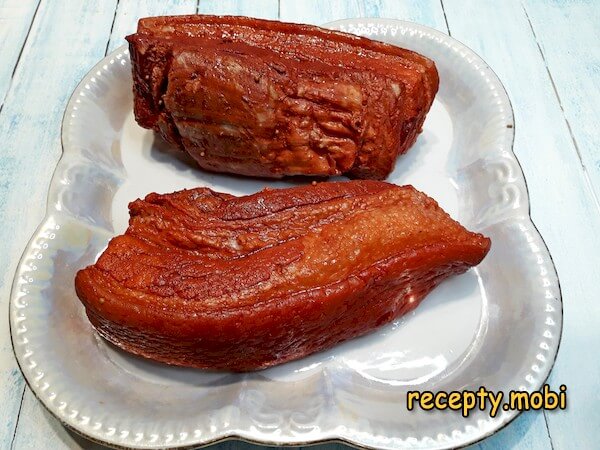
Next I take the pork belly out of the pot – it has taken on a very beautiful golden-orange colour and absorbed the aromas of the spices. The colour comes out almost the same as that of smoked lard.
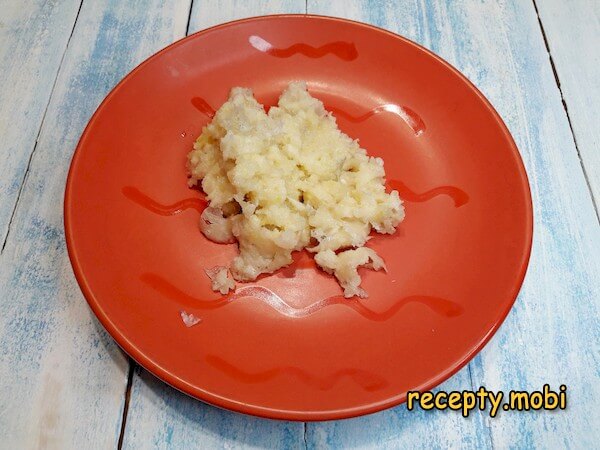
I peel the garlic and pass it through a press – through a press specifically, so that it forms a smooth paste for even application onto the surface of the lard.
I rub the pieces of lard all over with the garlic paste – I do not skimp on the garlic, a thick layer gives the maximum aroma. A similar rubbing technique is used in lard in the oven in foil.
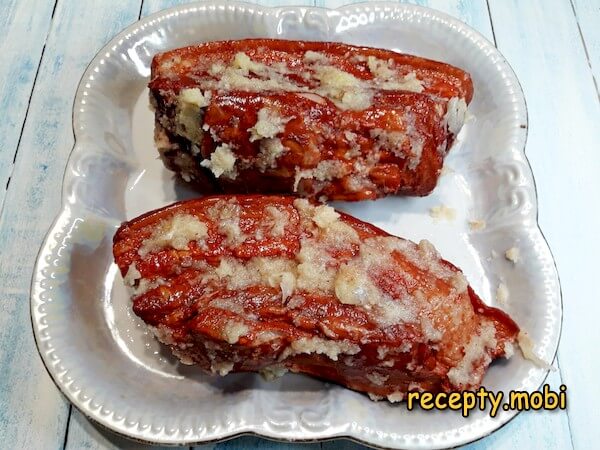
I place the piece on foil – on foil specifically, not on parchment. Foil is more airtight and does not let moisture through during freezing.
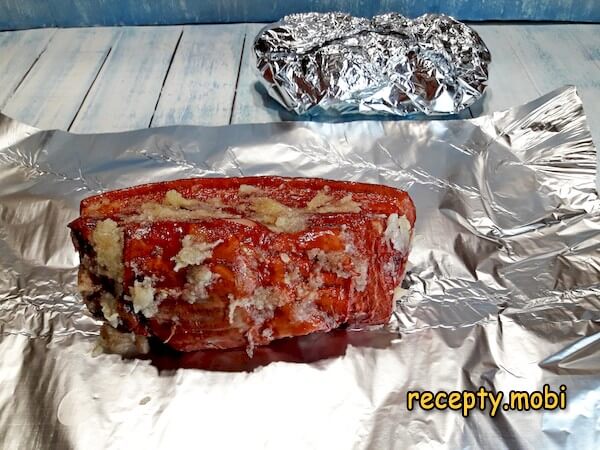
I wrap each piece separately – this way it is more convenient to take out portioned pieces without defrosting the whole batch at once.
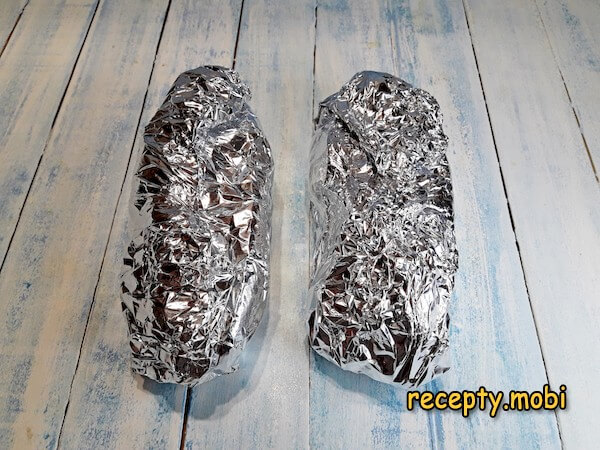
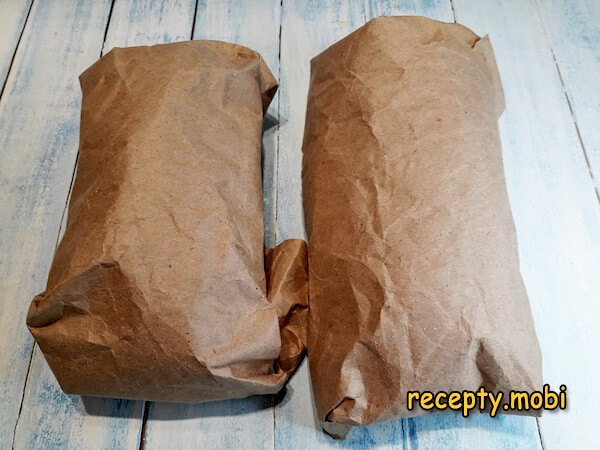
On top, the thin foil can be wrapped in paper. I put the prepared bars into the freezer for 2 hours. There the droplets of moisture present in the pork belly will turn into tiny ice crystals and loosen its structure. Because of this, any lard, even the toughest and chewiest, will become soft and tender. After that the pieces can be moved to the refrigerator.And there it is – the most tender and delicious lard in onion peel is ready and you can try it. After the freezer it slices easily into thin pieces and looks very appetising and inviting. Such a platter can be put on a festive table, or simply eaten with black bread and a little mustard. The main thing is not to get too carried away and to stop in time.Try it, enjoy your meal!


Tips
- 1
SLOW COOLING is the "secret" of tenderness. After 30 minutes of active cooking, the lard must steep in the hot brine for 6–8 hours under the lid – it is precisely this stage that gives the maximum soaking with spices and the softening of even the toughest pieces. Without steeping the result will be mediocre: the colour is the same, but the texture is tough.
- 2
THE 2-HOUR FREEZE is the "secret" against chewiness. Freezing crystallises the droplets of moisture in the lard, breaking up the tough fibres. Defrosted lard melts in the mouth – even from the firmest country pork. Without freezing the finished product stays "rubbery", especially if the lard came from an old animal. This is a specific Ukrainian "secret" of tenderness.
- 3
SALTING VARIANTS are the "secret" of seasonality. Besides "onion peel", the classic home variants are: dry salting with coarse salt, and brine salting in a jar. Following the principle of salo in brine in a jar you can make a long-keeping version – without onion peel, without the characteristic colour, but with a longer shelf life.
- 4
PEEL FROM 5–7 ONIONS is the "secret" of colour intensity. A meagre handful of peel will give a pale-yellow tint – not the one the recipe is worth making for. A full bowl of peel (from 5–7 medium onions) gives a rich golden-orange, almost "smoked" colour. You can collect the peel in advance and keep it in a dry jar for several months – it does not spoil.
FAQ
Which lard is best for salting in peel? +
Pork belly with a strip of meat is ideal – the meat layers colour beautifully to a pink-crimson shade, while the lard itself turns golden. Pure lard without meat is also suitable, but visually less striking. A thickness of 3–5 cm is optimal: thinner pieces will become over-salted during the 8 hours of steeping, thicker ones will not have time to soak through fully. Lard with poorly scraped skin is not suitable – bristles will remain in the finished product. Fresh lard is preferable to frozen – it has a denser and juicier structure.
How long does lard in onion peel keep? +
In the freezer in airtight foil – up to 6 months without loss of quality. In the refrigerator under cling film or in a container – up to 3 weeks. After defrosting it should be eaten within 5–7 days. Signs of spoilage: a grey-green coating, an unpleasant smell, a slimy surface – such a product I throw away. The finished lard tolerates repeated freezing and defrosting well – the structure does not suffer. For long-term storage, portioned bars are ideal – take them out as needed.
Can the pork belly be replaced with another cut? +
Yes, but the result will be a little different. Alternatives: the underbelly (fattier, but without a meat layer), the ham (lean, without fat), the side cut (a universal option). For the "onion peel" method, fatty pieces with a strip of meat are preferable – they give a more beautiful visual effect and a richer flavour. Pure lard with a lot of fat is also suitable, but the colour in it will be less vivid, without the crimson veins of meat. The neck and the shank are not suitable – too many sinews, which will not soften even in the brine.
What to serve lard in onion peel with? +
The classic Ukrainian serving is with black rye bread, mustard, pickled onion, and salted cucumbers. With drinks: vodka, homemade liqueur ("kazachka", "horilka with pepper"), dark beer, dark bread kvass. For a festive table: thin translucent slices of lard on a dish with a sprig of dill or parsley. With boiled potatoes "in their jackets": also a classic, especially for a winter lunch. With borscht: a thick piece of lard with a strip of meat is a folk Ukrainian addition to red borscht.
- Comment
or post as a guest
Be the first to comment.