avg —
Jerky at Home

Instructions
Wash the pork tenderloin (1 kg) thoroughly under cold running water and trim away the outer fat, membranes and tendons with a sharp knife. Pat the meat dry with a paper towel – damp meat absorbs salt less well. The ideal piece has as little fat as possible (cured fat turns rancid), no visible sinews, and is a single whole piece.
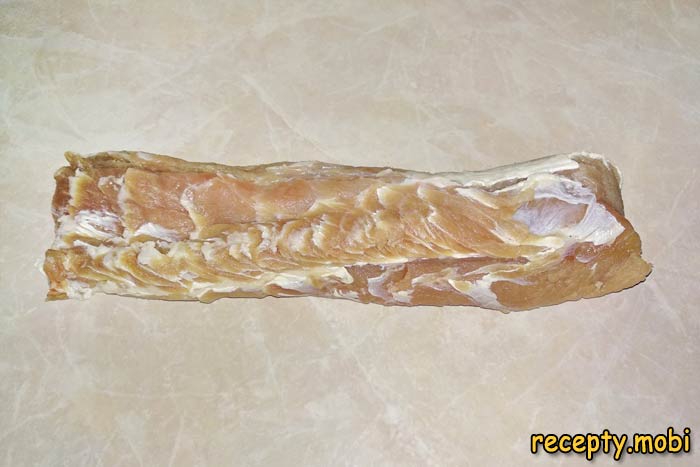
Roll the piece of meat generously in coarse sea salt (1 cup) on all sides – the meat should be completely covered with a layer of salt. Do not be afraid of over-salting; the excess is soaked out at the next stage. Coarse sea salt works better than iodised salt – it does not give a bitter taste and draws out moisture more slowly. Leave in the refrigerator for 24 hours in an enamelled or glass dish.
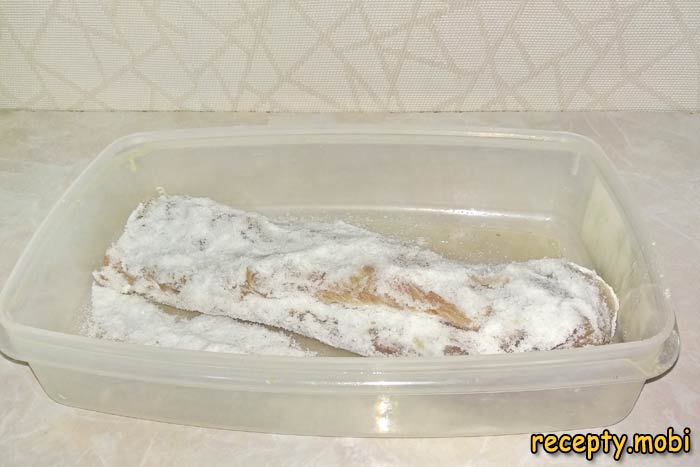
After 24 hours, take the meat out of the refrigerator – it should have released its juices and become firmer. Rinse it thoroughly under cold running water to remove the salt. Cover with clean cold water and soak for 2 hours, changing the water every 30 minutes. Every hour, taste a small piece for saltiness – it should be "normally salty", not over-salted. Prepare the spice mix: Provencal herbs, paprika, fenugreek, pepper, garlic and coriander.
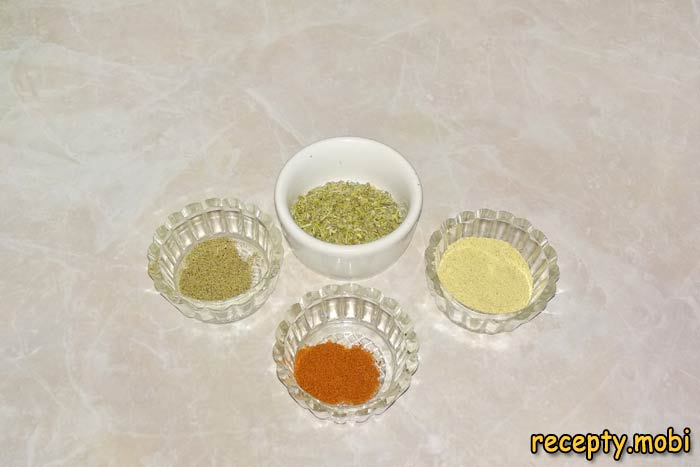
Mix all the spices thoroughly on a flat plate. Take the soaked meat out of the water and pat it lightly with a paper towel (not until completely dry – the spices need to stick). Roll the damp tenderloin in the spice mixture on all sides, rubbing the spices firmly into the meat. There should be no bare spots on the surface without spices – they protect the meat from mould and give it aroma.
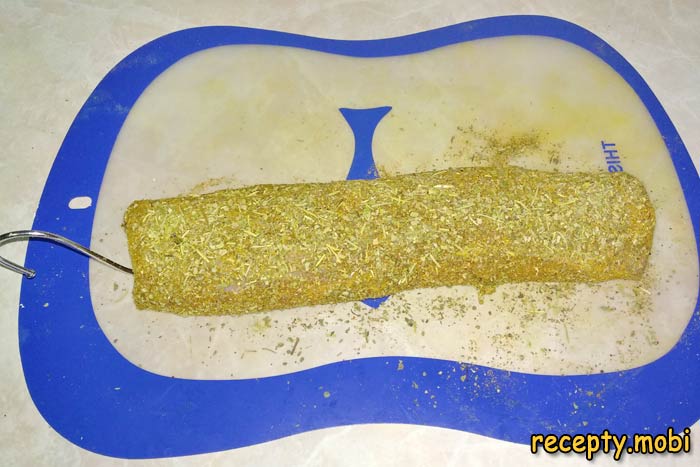
Using a knife, make a hole right through one end of the piece and thread a strong piece of twine through it for hanging. Hang the meat in a ventilated, cool place out of direct sunlight: on a balcony at 10–15 °C, under the kitchen range hood, or in a pantry with ventilation. The ideal conditions are a temperature of +10 °C, humidity of 70–75%, and constant airflow.
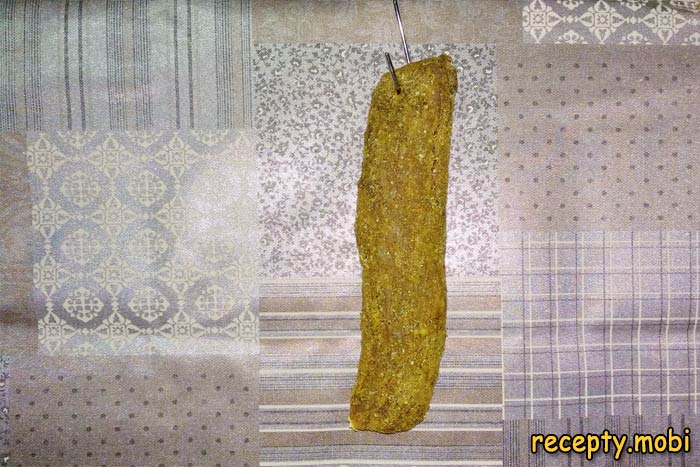
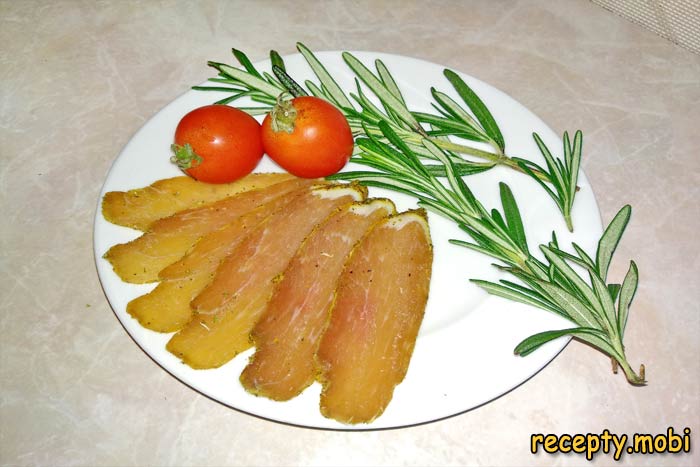
After 4–5 days the dry-cured meat is ready – it should have shrunk by 30–40%, become firm and springy but not rock-hard. The finished meat has a characteristic "cured" dark-red colour inside and a dry crust of spices outside. Slice it thinly with a sharp knife into translucent slices of 1–2 mm for an attractive presentation. The spiced dry-cured meat is ready!


Tips
- 1
Beef, pork, turkey or chicken all work – the curing principles are the same, only the time may vary (chicken 3 days, pork 5 days).
- 2
Do NOT dry the meat in the sun – the top will dry into a "crust" while the middle stays raw and spoils. Use only a shady, ventilated spot.
- 3
Store the finished meat in a paper bag or cheese paper in the refrigerator – that way it "breathes" and does not go mouldy. I use a similar principle to make balyk from pork neck.
- 4
Experiment with the spices – you get a new flavour every time: classic (paprika, pepper), Asian (curry, coriander), Georgian (khmeli-suneli), or aromatic (juniper, cloves).
FAQ
How long does dry-cured meat keep? +
Finished dry-cured meat keeps wrapped in paper in the refrigerator for up to 1 month, in vacuum packaging for up to 3 months, and in the freezer for up to 6 months. Do not store it in a plastic bag – the meat will "suffocate" and become mouldy within 1–2 days. The ideal wrapping is parchment, cheese paper or waxed paper. Before eating, inspect it for mould: a white bloom is safe (you can wipe it off with vodka or wine vinegar), while green or black mould is a reason to throw it away. Fresh dry-cured meat has a pleasant spicy aroma; spoiled meat has a sharp, "rotten" smell.
How do I know when the meat is ready? +
The finished meat should have shrunk by 30–40% from its original size and become firm and springy (like a well-cooked beef steak), but not "wooden" and rock-hard. The colour on the cut should be dark red or burgundy with an even structure, with no raw "pink" zones in the centre. If there is still raw meat in the centre, hang it for another 1–2 days. The spice crust should be dry and the meat should not be sticky to the touch. A thin slice should be translucent against the light – a sign of perfect readiness. The smell is spicy and characteristic of each spice used.
Can the curing process be sped up? +
Yes, in the oven at 50–60 °C with convection you can cut the time down to 12–24 hours. But "real" dry-cured meat is better made slowly – the flavour and texture are richer. In an electric food dehydrator on the "Meat" setting (35–40 °C) it takes 24–48 hours. In a multicooker on the "Yoghurt" setting with the lid open it takes 24–36 hours. The main rule is to keep the temperature no higher than 60 °C, otherwise the meat will "bake" rather than cure. For an authentic flavour, use the traditional method – hanging in a ventilated place for 4–5 days. Patience is the key to a perfect result.
What do you serve dry-cured meat with? +
It is perfect with strong drinks: beer (any type), dry red wine (Merlot, Cabernet), brandy, whisky or vodka – a classic snack. As a salad ingredient: with rocket, cherry tomatoes, olives and Parmesan. On sandwiches with butter and cheese it makes a premium breakfast. As part of a meat platter on the festive table, alongside prosciutto, salami and smoked sausages. With pasta carbonara it is a "Russian" alternative to bacon. For a picnic it keeps for a long time, needs no refrigeration, and is easy to slice and eat. It is a versatile product for meat lovers.
- Comment
or post as a guest
Be the first to comment.