avg —
Homemade Pork Basturma

Instructions
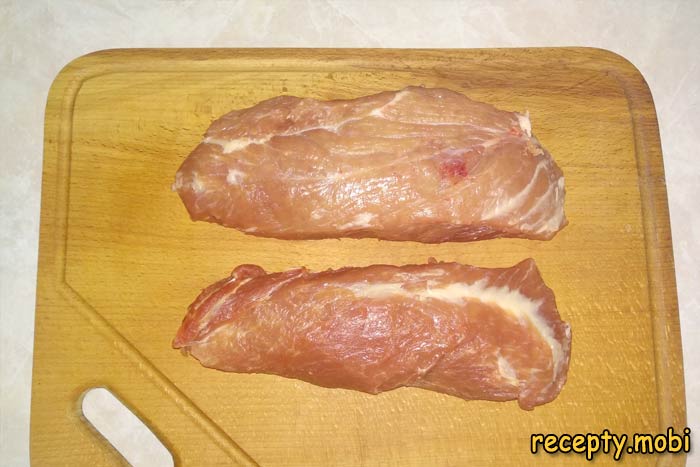
With a sharp knife I carefully trim the pork fillet (800 g) of any gristle, membranes and outer fat – dried fat turns rancid and spoils the flavour of the finished basturma. I use only good-quality lean meat without cartilage. I wash it thoroughly under cold running water and pat it dry with a paper towel – wet meat absorbs salt less well.
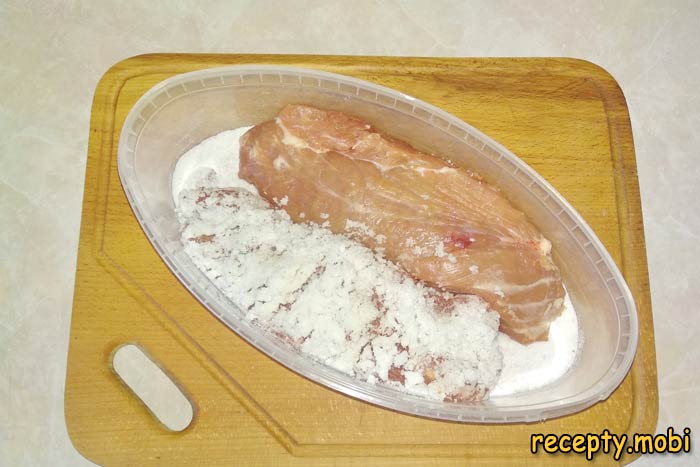
Into the bottom of a suitably sized enamel or glass container I pour half of the coarse sea salt (1 cup) in an even layer. I lay the meat on top and roll it in the salt on all sides, pressing it firmly. Then I cover it completely with the remaining salt (1 cup) so that the meat is buried under a layer of salt at least 0.5 cm thick. I put it in the fridge or a cool place (8–10 °C) for 2 days.
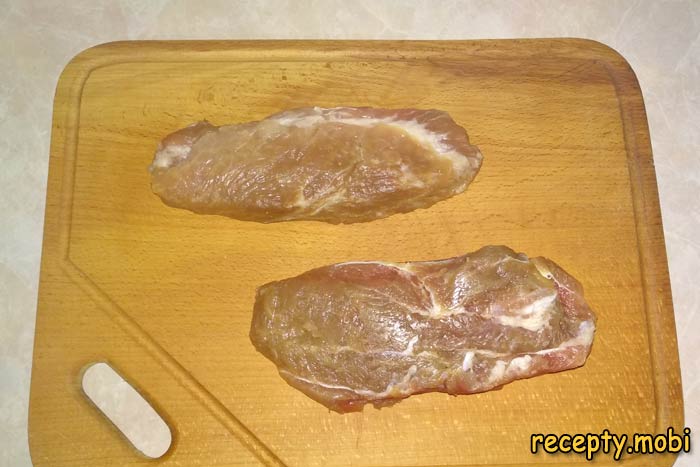
After 2 days I take the meat out of the salt – it should have become firm, darker in colour and noticeably smaller in volume (by 20–30%). This is a sign that the salt has “drawn out” the excess water. I rinse it thoroughly under cold water to wash off the salt. Then I cover it with clean cold water and soak it for 2 hours, changing the water every 30 minutes. Every hour I taste a small piece for saltiness – it should be “normally salted”, not over-salted.
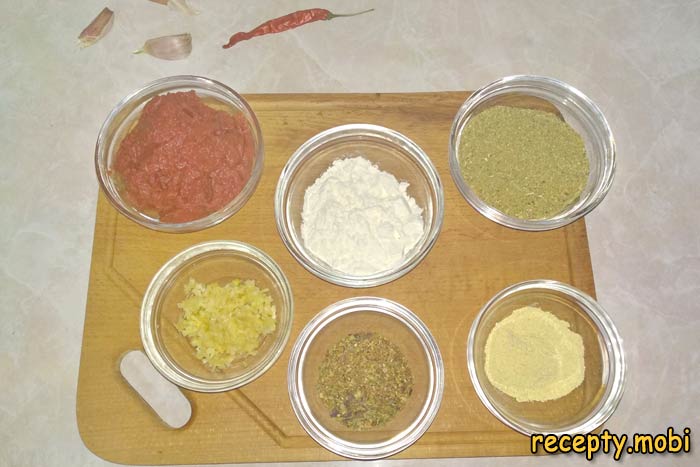
I prepare the “secret” coating – the “dough” for the basturma: in a large bowl I thoroughly mix the tomato paste (400 g), garlic crushed through a press (1 head – 8–10 cloves), ground chaman (1 tbsp), hot red pepper (1 tsp), dried thyme (1⁄2 tsp) and wheat flour (2 tbsp) for thickness and viscosity.
I mix the whole mass thoroughly until it has a smooth, thick consistency, like the “dough” for dumplings or soft modelling clay. If the mass is too runny, add another 1–2 tbsp of flour; if it is too thick, add 1–2 tbsp of water. The “dough” should stick to the meat but not run off it.
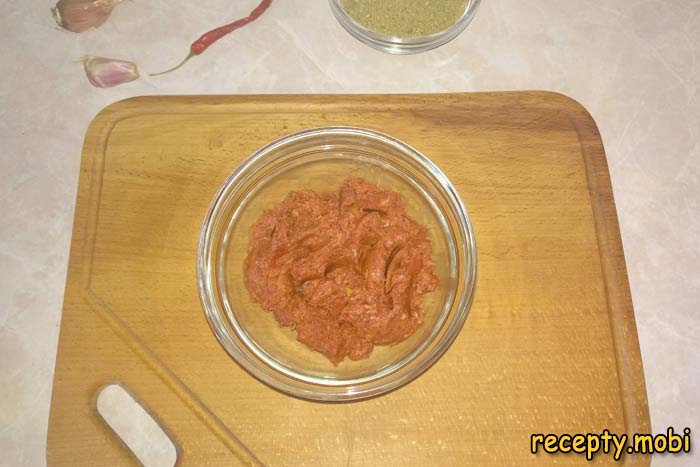
I cover the soaked meat with the prepared tomato “dough” on three sides, carefully “spreading” it on by hand. I transfer it onto a plate sprinkled with khmeli suneli (1⁄2 cup) – this is the “bottom dusting”. I coat the fourth side with “dough” and dust it generously on top and on the sides with khmeli suneli. The thickness of the “armour” coating is 2–3 mm on all sides.
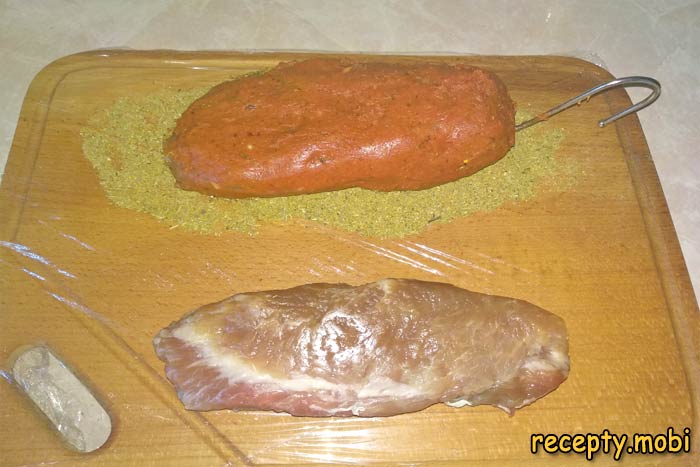
With a sharp knife or an awl I make a hole right through one end of the piece of meat (not at the very edge – it could tear). I thread a strong piece of twine or a special meat hook through the hole – needed to hang the meat while it dries. I tie a firm knot.
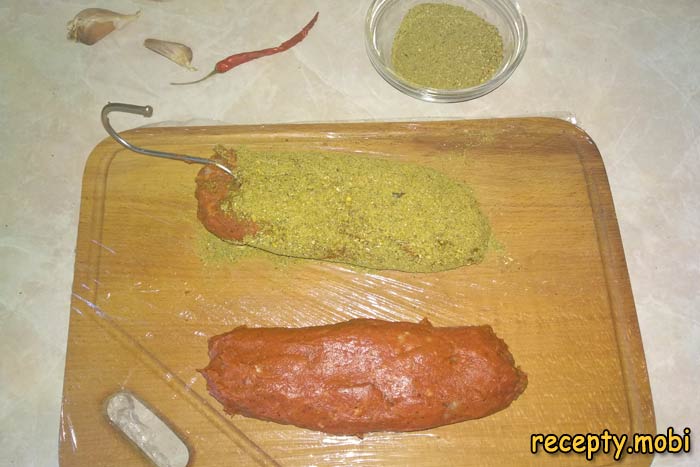
I hang the meat in a ventilated, cool place out of direct sunlight: on a glazed balcony at 10–15 °C, under the kitchen extractor hood, or in a ventilated pantry. The ideal conditions are a temperature of +10 °C, humidity of 70–75% and a constant flow of air. I dry it for 5–7 days. After 3–4 days I check whether it is ready by pressing it with a finger – it should be springy but not rock-hard.
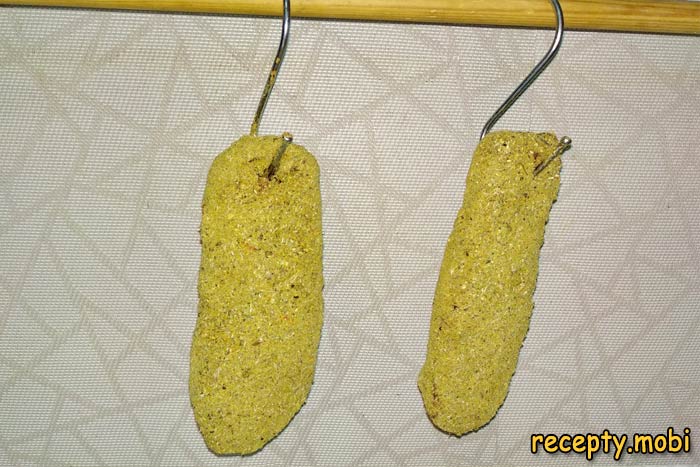
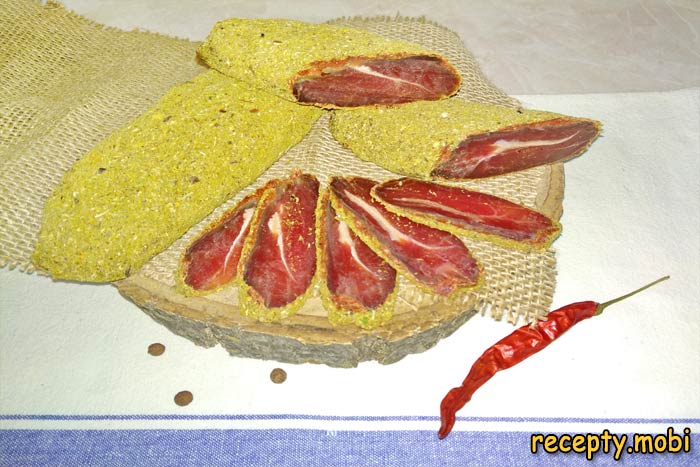
After 5–7 days I cut a piece in the middle to check it is ready – inside, the meat should be an even dark-red or burgundy colour with no raw “pink” zones. If the centre is still a bit raw, I hang it for another day. The finished meat is firm, springy and aromatic, with a spicy “armour” crust of chaman dough.
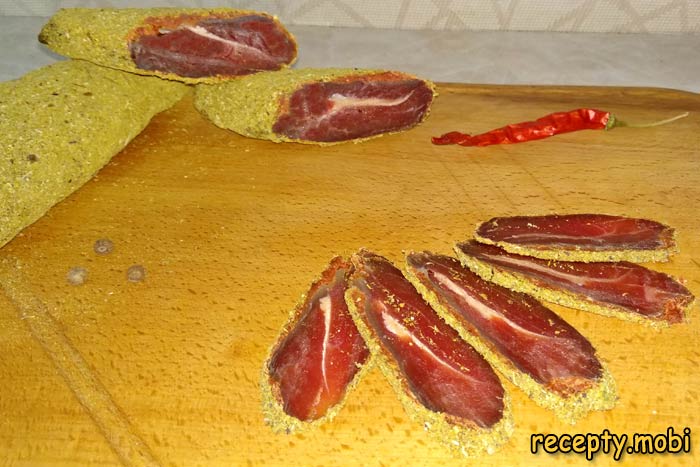
I store the finished basturma in the fridge, wrapped in parchment or cheese paper (NOT in a plastic bag – it would “suffocate” and become covered in mould within 1–2 days). Before serving I cut it with a sharp knife into thin, almost translucent slices of 1–2 mm – this is how its full aromatic flavour is revealed. The spiced pork basturma is ready!


Tips
- 1
The meat must be WITHOUT sinews, membranes or large streaks of fat – dried fat turns rancid and ruins both the flavour and the shelf life.
- 2
Soak the meat for long enough (2 hours with changes of water) – otherwise the basturma will turn out over-salted and unpleasant. Taste it every hour.
- 3
Store the finished basturma in parchment or cheese paper – the coating will not crumble off, the meat “breathes” and does not go mouldy. I use a similar principle to make dried meat with spices.
- 4
Slice the basturma as thinly as possible (1–2 mm) – that way it “melts” in the mouth and reveals the full aromatic flavour of the spices and meat.
FAQ
Can I make basturma from beef? +
Yes – authentic classic basturma is traditionally made specifically from beef (tenderloin, thick rib) – this is the “original” Armenian and Turkish recipe. The preparation time will increase: beef is salted for 3–4 days (instead of 2 for pork) and dried for 7–10 days (instead of 5–7). Beef basturma has a more “meaty”, rich flavour and a dense texture. You can also use turkey (breast) or lamb (lean leg) – these are “regional” variations. Pork is the most “tender” and quickest option for home preparation.
Why is chaman needed in the coating? +
Chaman (ground fenugreek seeds) is the “secret” spice of basturma from Armenian cuisine. Chaman gives that characteristic spicy “basturma” flavour that no other meat delicacy has. Chaman also makes the coating dense, stretchy and elastic – it sticks well to the meat and does not “fall off” during drying. Without chaman you get ordinary dried meat with spices, not real basturma. You can substitute fenugreek (grind the whole seeds in a coffee grinder), but the effect will be less pronounced. Chaman is sold in shops selling Eastern spices or online.
How long does finished basturma keep? +
Finished basturma keeps in parchment paper in the fridge for up to 2 months without losing flavour or texture. Vacuum-packed it keeps for up to 4 months, and in the freezer for up to 6 months. Do NOT store it in a plastic bag – the meat will “suffocate” and become covered in mould within 1–2 days. The ideal wrapping is parchment, cheese paper or waxed paper. Before eating, inspect it – a white bloom is safe (you can wipe it off with vodka), while green or black is a reason to throw it away. Fresh basturma has a pleasant spicy aroma; spoiled meat has a sharp “putrid” smell.
What should I serve basturma with? +
It is the ideal snack to go with dry red wine (saperavi, mukuzani, cabernet), brandy, whisky, vodka or light beer – a hearty appetiser for gatherings. It works as part of a meat platter for a festive table alongside prosciutto, salami, smoked sausage, olives and pickled cucumbers. On sandwiches with butter, cheese and rye bread it makes a premium breakfast. In salads with rocket, cherry tomatoes and parmesan it gives an Italian-style serving. For a picnic it keeps for a long time without refrigeration and is easy to slice. A versatile product for lovers of cured-meat delicacies.
- Comment
or post as a guest
Be the first to comment.