avg —
Chicken Breast Rolls in Milk Sauce

Instructions
Rinse the chicken fillet (400 g) under cold water and pat it dry with paper towels – spices will not cling to wet meat and no crust will form during frying. With a sharp knife, cut the breast diagonally (at a 45° angle) into flat slices 0.7–1 cm thick – cutting this way gives wider pieces that are easy to roll. One 400 g breast yields 8–10 slices about 8×10 cm in size. If the fillet is thick, you can additionally cut each piece lengthwise, like a book.
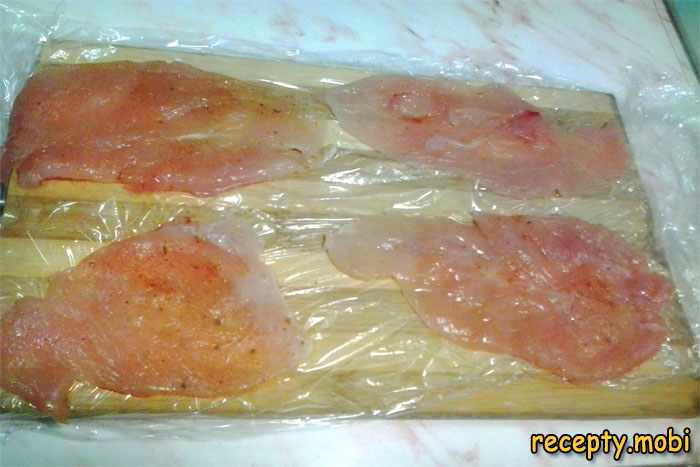
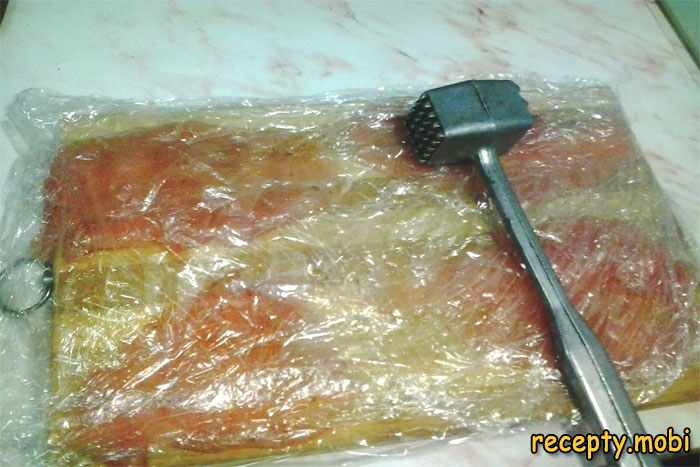
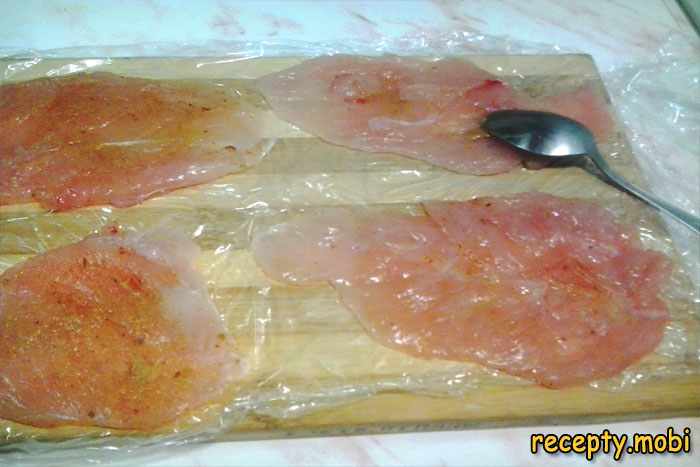
Rub each piece of fillet with the chicken spice mix (about ¼ teaspoon per piece) and salt both sides – spices are absorbed better into pounded meat, so don't be sparing with them. Cover the slice with cling film and beat it with a kitchen mallet or rolling pin to a thickness of 4–5 mm, shaping it into a rectangle. Pounding makes the meat more tender by breaking down the tough fibres and allows the roll to cook evenly in a short time. Don't overdo it – fillet that is too thin will tear when rolled or stick to the pan.
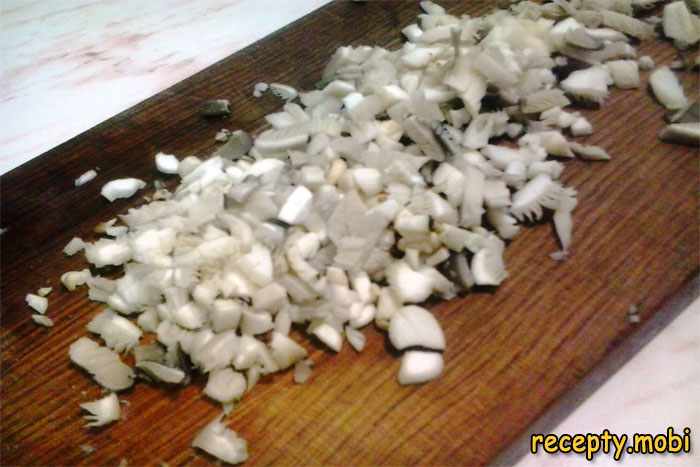
Prepare the filling: rinse the oyster mushrooms (150 g), pat them dry and cut into small 5–7 mm cubes – larger pieces will fall out of the rolls. Melt 50 g of butter in a pan over medium heat, add the mushrooms and fry for 5–7 minutes, stirring, until all the moisture has evaporated. Add half an onion, finely chopped (about 40 g), and continue frying for another 3–4 minutes until the onion is soft and lightly golden. Season the filling with salt and pepper to taste, remove from the heat and let it cool for 10 minutes – hot filling would start to cook the meat from the inside too early.
Spread each pounded piece of fillet with a thin layer of table mustard (about ½ teaspoon per piece) – mustard contains acids that soften the meat and add piquancy. Place a heaped teaspoon of the cooled mushroom filling along the edge of the slice, spreading it in a strip along the short side. Roll the fillet away from you, pressing the filling firmly so no air pockets remain inside. Secure the edges with wooden toothpicks crosswise – metal skewers can heat up and burn your hands when turning the rolls.
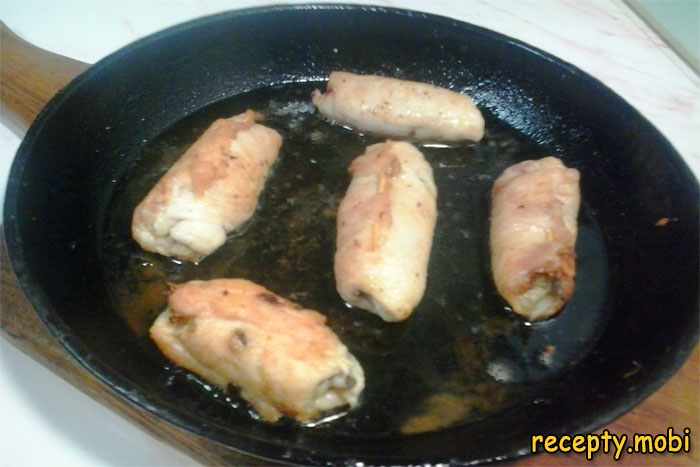
Tip 3–4 tablespoons of flour onto a flat plate and roll each roll on all sides, shaking off the excess – the flour coating creates a golden crust and stops the juices from leaking out. Heat 50 ml of vegetable oil in a thick-bottomed pan over high heat until it starts to smoke (about 2 minutes). Place the rolls seam-side down, not touching one another, and fry for 2–3 minutes until golden brown. Turn them with tongs and fry the remaining sides for 1.5–2 minutes each – the roll should be crusted on all sides within 7–8 minutes.
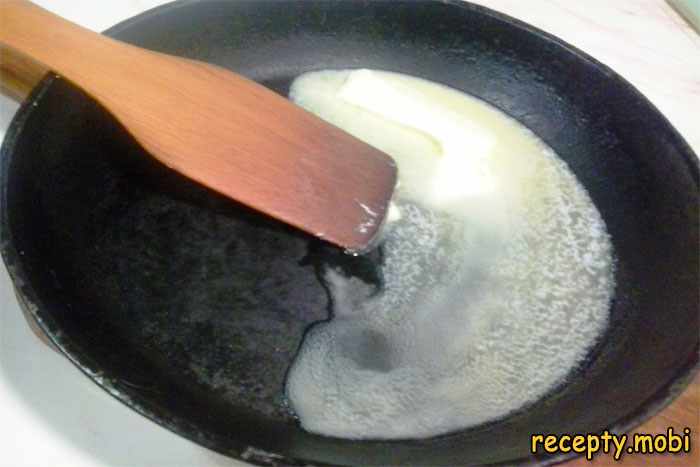
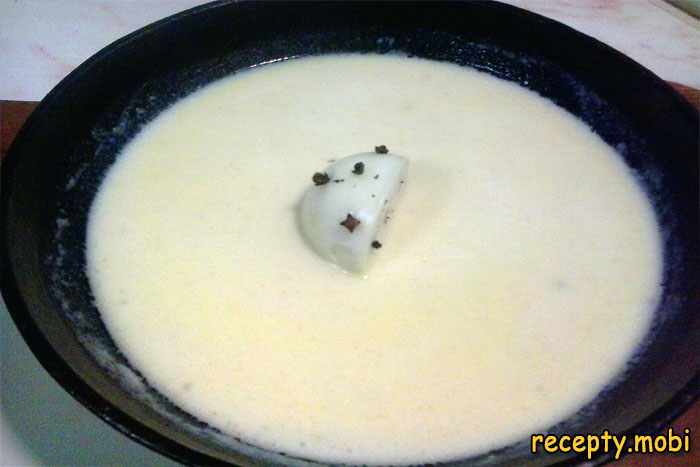
Make a classic béchamel sauce with the aroma of cloves: in a clean saucepan, melt 50 g of butter over medium heat and add 1 heaped tablespoon of flour. Fry the flour, stirring constantly with a wooden spatula, for 2–3 minutes until it gives off a nutty aroma and turns a creamy colour – this removes the raw flour taste. Pour in 200–220 ml of room-temperature milk in a thin stream, whisking vigorously so that no lumps form. Stud the peeled half onion with 3–5 clove buds (this technique is called an "onion piqué") and lower it into the sauce – the cloves will release their aroma and the onion will be easy to remove.
Simmer the sauce over low heat for 8–10 minutes, stirring occasionally, until it thickens to the consistency of runny sour cream – the sauce should coat a spoon but still flow off it. Remove the onion with the cloves using a slotted spoon, salt the sauce to taste (about ½ teaspoon) and add a pinch of white pepper or nutmeg for depth of flavour. If the sauce has turned out too thick, pour in 2–3 tablespoons of milk and stir until smooth. Taste and adjust the salt – the sauce should be slightly saltier than you'd like, as it will be diluted by the juices from the rolls.
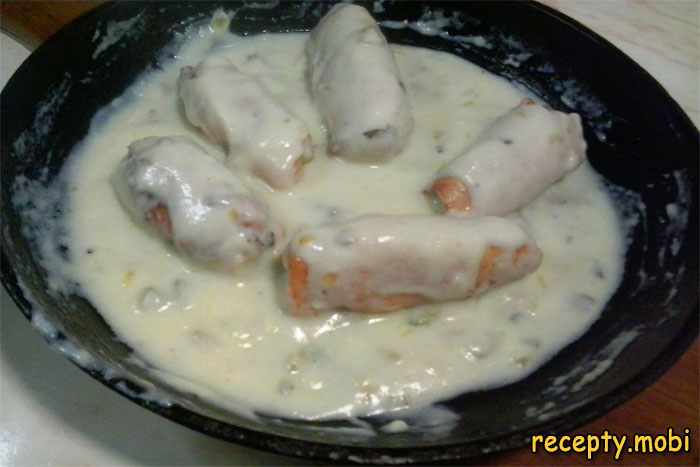
Lower the fried rolls into the hot sauce, arranging them in a single layer, and cover with a lid – the lid creates steam that brings the meat to readiness without drying it out. Stew over low heat for 12–15 minutes, turning the rolls over once carefully halfway through for even soaking. Check that they are done by piercing the thickest roll with a knife – the juices should run clear, with no pink traces. Before serving, be sure to remove all the toothpicks – they are easy to forget, and a guest could get hurt.


FAQ
What can replace oyster mushrooms in the filling? +
Champignons work well (cooked the same way), as do wild mushrooms (porcini, birch boletes), or even bacon with cheese for a more filling option. The main thing is that the filling should be juicy and not dry, so fry the mushrooms in enough butter.
Can the rolls be made in advance? +
Yes, the fried rolls (without sauce) can be kept in the refrigerator for up to 24 hours. Before serving, make a fresh sauce and warm the rolls in it over low heat for 10–12 minutes until fully cooked.
Why do the rolls fall apart while frying? +
Three possible reasons: they are poorly secured with toothpicks (use 2 crosswise), the fillet is pounded unevenly (thin spots tear), or the pan is not hot enough (the meat sticks). Make sure the edges of the roll fit tightly together and place them seam-side down first.
Can the rolls be baked in the oven? +
Yes, after frying transfer the rolls to a dish, pour the sauce over them and bake at 180 °C for 20–25 minutes under foil. Remove the foil 5 minutes before the end for a light crust.
- Comment
or post as a guest
Be the first to comment.