avg —
Burger at Home

Instructions
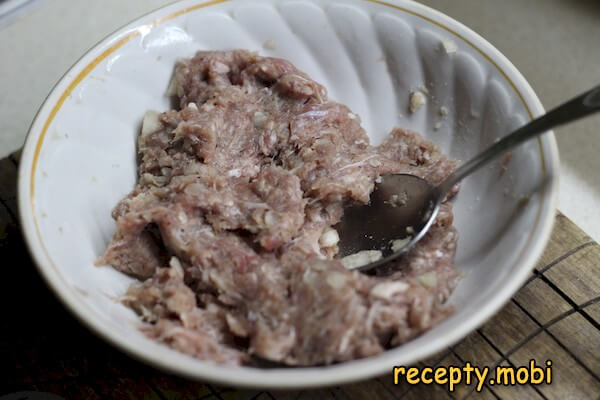
First I prepare the mince for the burger patties. I make the mince from pork, half an onion and beef, passing it through a cutter, a meat grinder or a blender. A cutter-type chopper helps make the mince uniform. I add salt and my favourite spices to the meat.
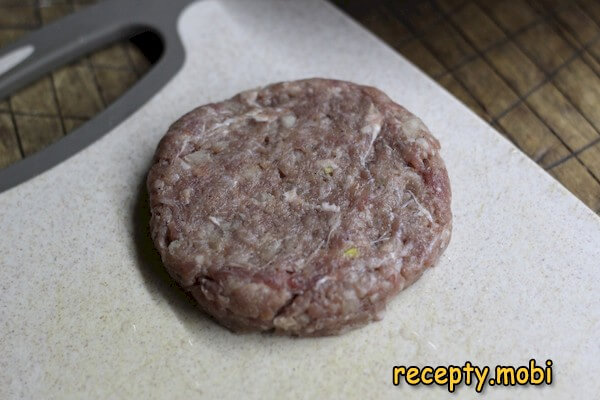
I shape flat patties to match the size of the buns. I put the formed patties in the fridge before frying.
I slice the pickled cucumber, and cut the tomato and onion into slices.

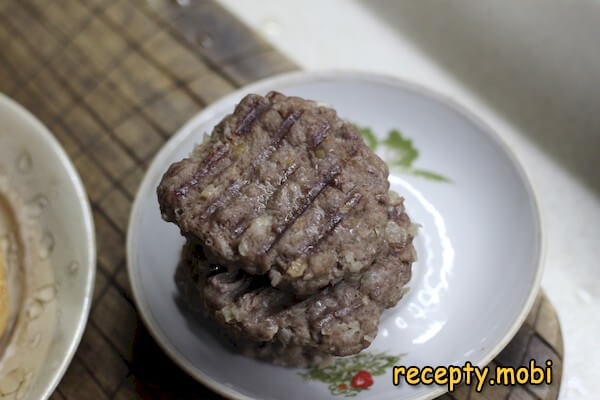
I cook the patties on a grill or in a pan. These patties need no more than two minutes on a grill. In a pan it takes two minutes on each side.
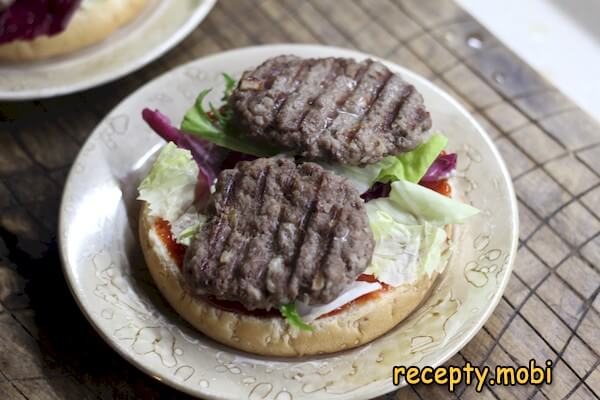
I cut the buns in half. I spread them with a mixture of mayonnaise and ketchup. I place lettuce leaves on the bottom half of the bun.

I add the patties. This can be one or two per burger.
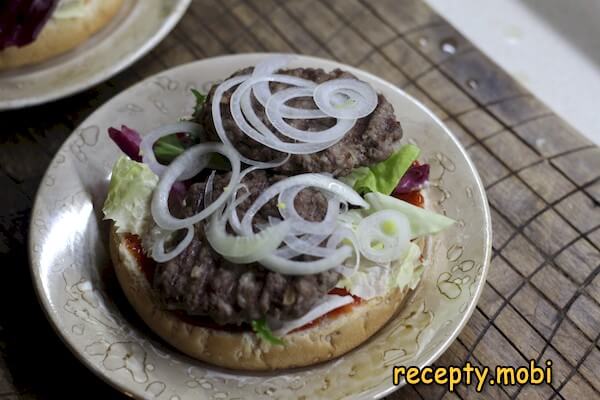
I lay on the onion rings.
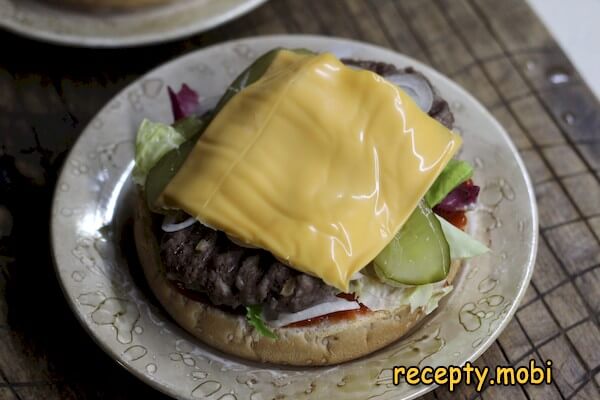
I add the cucumber slices and the cheese.
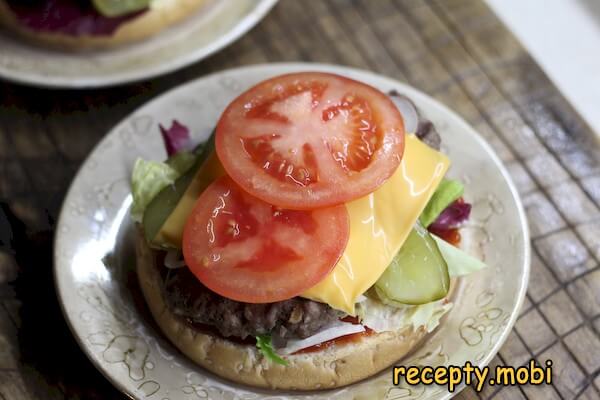
I lay on the tomatoes. I cover the filling with the second half of the bun.
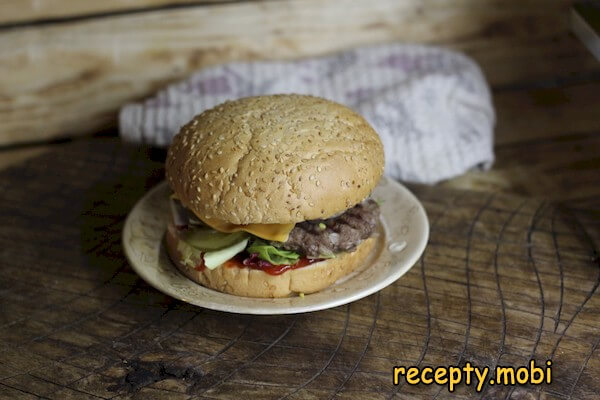
The tasty, hearty homemade burger is ready!This juicy burger with a meat patty and vegetables makes a great alternative to shop-bought fast food or the famous hamburger. It is very filling, tasty and appetising. Children and adults alike are sure to love this snack!


Tips
- 1
COLD MINCE is the secret to juiciness. Warm mince spreads apart while frying. After 20 minutes in the fridge the patties hold their shape and keep their juices.
- 2
FLAT PATTIES are the secret to even cooking. Thick ones will not cook through in 2 minutes per side. Flat patties of 1–1.5 cm are done in 4 minutes.
- 3
CHEESE ON A HOT PATTY is the secret to melting. Cold cheese on a cold patty will not melt. Placed on a hot patty straight from the pan, it melts into a perfect cheesy puddle.
- 4
MAYONNAISE + KETCHUP is the secret to the sauce. On their own they are ordinary. Mix them 50/50 and you get a "burger sauce" like the one in the well-known chains. The same principle works in other kinds of homemade burgers.
FAQ
Which mince should I choose? +
The ideal choice is a mixed pork and beef mince at 50/50 (200 g – juicy and aromatic). Alternatives: pure beef with a 15–20% fat content (200 g – a burger classic), a beef and lamb blend at 80/20 (200 g – premium), chicken mince (200 g – a lighter option) or turkey mince (200 g – a lighter premium option). Avoid frozen shop-bought mince with preservatives and very lean mince, as the burger will turn out dry. For a true classic, use fatty pork and beef.
What can I use instead of Cheddar cheese? +
Alternatives: red or white Cheddar (2 slices – the classic), American processed sandwich cheese (2 slices – budget), Gouda (2 slices – milder), Edam (2 slices – premium), firm mozzarella (2 slices – stretchy) or sliced suluguni (2 slices). Avoid heavily salted cheeses, which throw off the balance, and blue cheeses, which do not suit a burger. For an American classic, use Cheddar or processed American cheese.
How long does a burger keep? +
A fresh burger is at its best straight from the pan, with a hot patty and melted cheese. At room temperature it lasts no more than 30 minutes, as the bun goes soggy from the juices and the vegetables release moisture. I do not recommend storing an assembled burger in the fridge, as the bun turns rubbery. Patties on their own keep in the fridge for 1 day, and vegetables can be sliced 2 days ahead. Raw patties keep in the freezer for up to 2 months. Do not assemble a burger more than 30 minutes before serving, or the taste and texture suffer.
What should I serve with a burger? +
The American classic is with French fries. It also goes well with crisp potato chips, battered onion rings, a milkshake (vanilla, chocolate or strawberry), an assortment of sauces (barbecue, garlic, mustard), a separate Caesar salad, a glass of freshly squeezed orange juice, a couple of slices of pickled cucumber, or a fresh coleslaw. For a homemade fast-food night, serve it with fries and a cold drink. It is hearty food for a lively gathering.
- Comment
or post as a guest
Be the first to comment.