avg —
Vinaigrette with Beans and Sauerkraut

Instructions
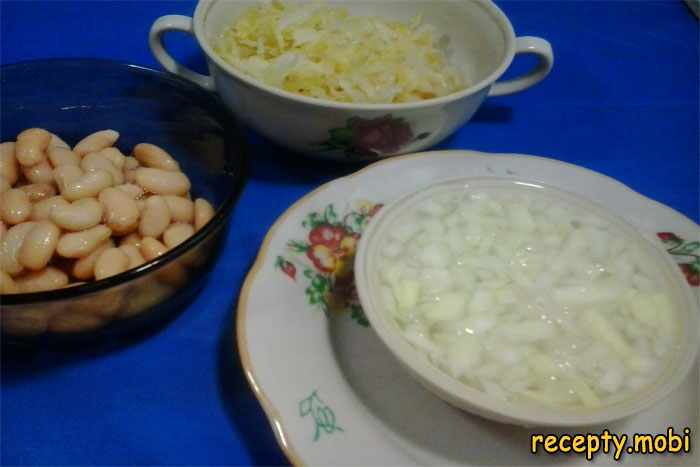
Peel the onion (about 70 g) and cut it into small 3–4 mm cubes – large pieces of onion will taste bitter and stand out from the texture of the salad. Pour boiling water (200 ml) over the chopped onion and leave it for 15 minutes – this completely removes the bitterness and sharp smell while keeping the crunch. Drain the liquid from the canned beans (150 g) through a sieve and rinse the beans in cold water – this washes off the starch that can make the salad slimy. Lightly squeeze the excess juice from the sauerkraut (100 g) so it does not dilute the dressing; if the cabbage is very sour, rinse and squeeze it.
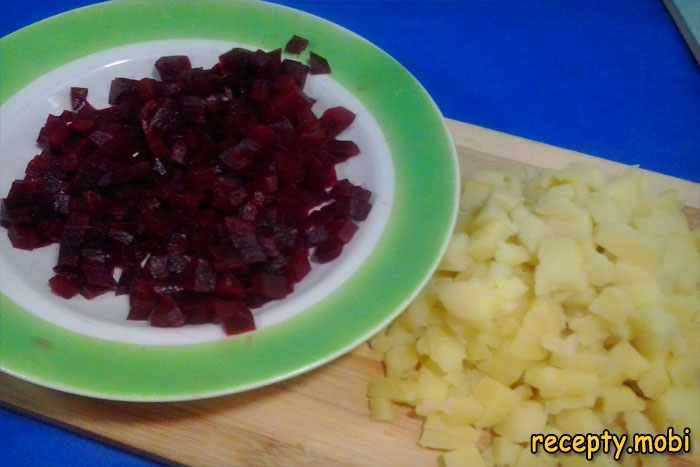
Peel the potatoes that were boiled in their skins the day before (2 medium, about 200 g) – cold potatoes peel more easily and do not crumble when cut. Cut the potatoes into 7–8 mm cubes – this is the ideal size for a vinaigrette, so all the vegetables are the same. Cut the beetroot (150 g) into cubes of the same size and immediately transfer it to a separate bowl, sprinkle lightly with 1 tablespoon of vegetable oil and stir. This creates an oily film on the beetroot that stops it from staining the other vegetables burgundy – the vinaigrette stays colourful and appetising.
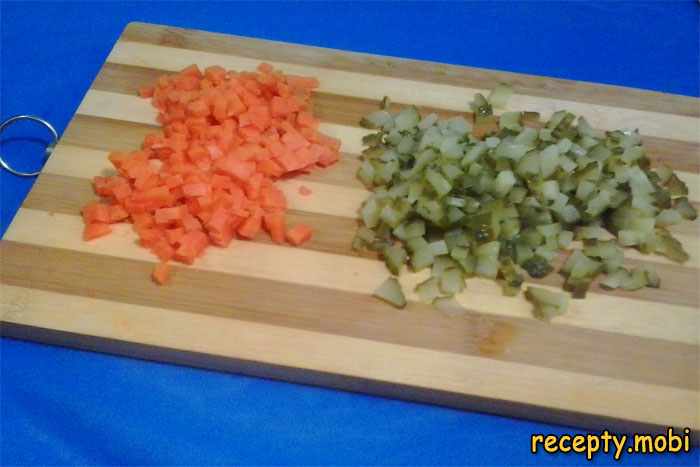
Peel the boiled carrot (1, about 80 g) and cut it into cubes of the same 7–8 mm size – it is important that all the firm vegetables are the same size for a harmonious flavour in every spoonful. Check the pickled cucumbers (2–3, about 100 g) for tough skin: if it is thick and coarse, pare it off with a vegetable peeler before cutting. Cut the cucumbers first lengthwise into 4 pieces, then crosswise into cubes – this way they do not fall apart and keep their shape. If the cucumbers are very watery, let the excess liquid drain in a sieve for 5 minutes.
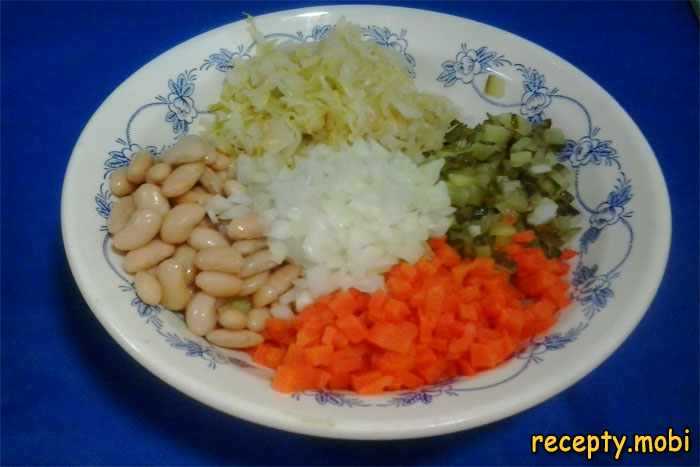
Put all the prepared ingredients except the beetroot into a deep bowl of 2–3 litres: potatoes, carrot, cucumbers, beans and the squeezed sauerkraut. Drain the water from the onion through a sieve, let it drip for 1–2 minutes and add it to the vegetables – the scalded onion has become soft and slightly sweet, without bitterness. Gently stir the vegetables with a wooden spatula from the bottom up, so as not to crush the tender potatoes and beans. At this stage you can taste the salad and judge whether there is enough acidity from the cabbage and cucumbers.
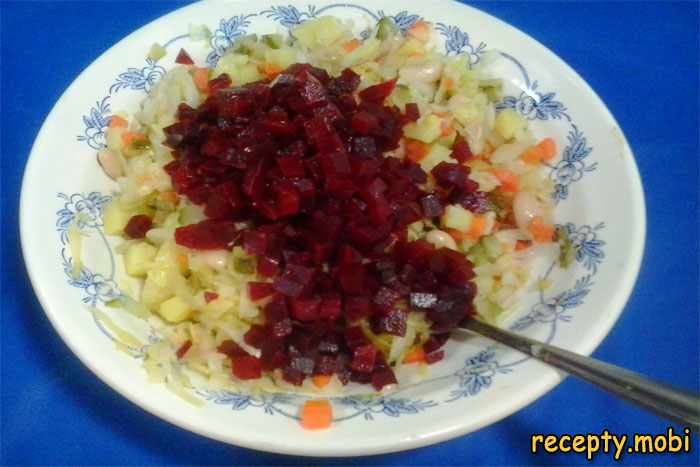
Make the dressing: in a small jar with a lid combine 50 ml of olive oil, 25 ml of wine vinegar (or freshly squeezed lemon juice), a pinch each of salt and sugar (about ¼ teaspoon each). Add 0.5 teaspoon of khmeli-suneli – this Georgian spice blend gives the vinaigrette an unexpected fragrant aroma with notes of basil, coriander and fenugreek. Close the jar and shake vigorously for 30 seconds – this emulsifies the dressing so it does not separate. Add the beetroot to the rest of the vegetables, pour over the dressing and gently mix from the bottom up in 3–4 stages.
Taste the finished vinaigrette and adjust the flavour: if it lacks acidity, add another 1 tablespoon of vinegar; if it is bland, add a pinch of salt. Put the salad in the fridge for at least 30 minutes – in this time the vegetables soak up the dressing and the flavour becomes more rounded and rich. Take the vinaigrette out 10 minutes before serving so it is not ice-cold – a cold salad is less aromatic. Pile it up on a large dish, shaping a neat dome with the help of a deep bowl.
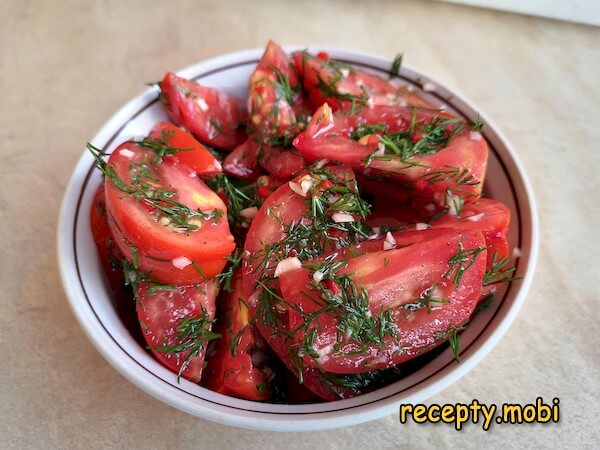
Decorate the finished vinaigrette with slices of pickled green tomatoes (2–3), arranging them in a circle around the base of the mound – they add a bright accent and an interesting tang. You can also decorate it with sprigs of fresh herbs (dill or parsley) and a few whole beans. Serve the vinaigrette as a dish on its own or as a side to boiled meat, fish or cutlets. For a festive presentation it can be served in individual dishes or on lettuce leaves.



FAQ
Can canned beans be replaced with boiled beans? +
Yes, boiled beans are even tastier and have a denser texture. Soak 80 g of dried white beans overnight (8–10 hours) in cold water, then cook them in fresh water for 1–1.5 hours until soft, without salt – salt is added at the end, otherwise the beans stay tough.
What can replace sauerkraut? +
Use a larger amount of salted or pickled cucumbers (add another 2–3) or pickled mushrooms (honey fungus, button mushrooms). A tang is essential for a balanced flavour – without it the vinaigrette will be bland.
How long does the finished vinaigrette keep? +
In the fridge in a closed container for up to 2 days. On the second day the flavour is even better – the vegetables are fully soaked in the dressing and spices. On the third day the salad is still edible, but the vegetables start to lose their texture.
Why does the vinaigrette turn out watery? +
The vegetables have released too much juice. The reasons: the sauerkraut was not squeezed, the cucumbers were too watery, or the salad was dressed long before serving. Before mixing, let the liquid drain from all the ingredients, and dress the salad 30–60 minutes before serving, no earlier.
- Comment
or post as a guest
Be the first to comment.