avg —
Quick Pickled Cabbage Provencal

Instructions
I prepare the ingredients – the taste of the finished dish depends directly on the quality of the vegetables. I take a firm, juicy cabbage with fresh green leaves; a wilted one will give a watery marinade. I wash all the vegetables thoroughly and pat them dry with a paper towel. I remove the stalk and seeds from the bell pepper, peel the carrot with a vegetable peeler, and remove the dry husk from the garlic.
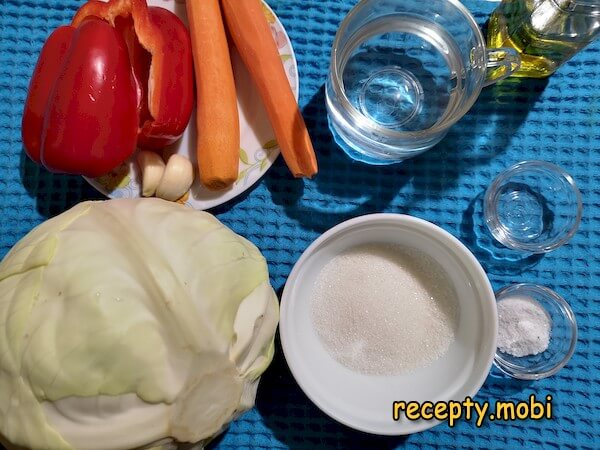
I cut the bell pepper (200 g) into small strips about 3–4 mm wide – this shape looks attractive in the pickled cabbage and soaks up the marinade evenly. Brightly coloured peppers (red, yellow, orange) make the dish look more appealing. I do not recommend cutting it into cubes, as they get lost in the mixture.

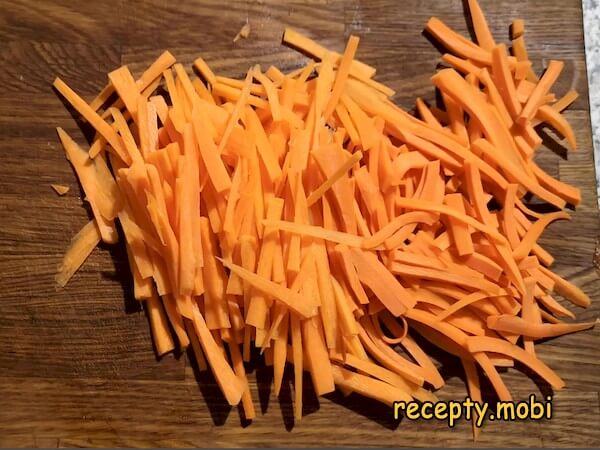
I cut the carrot (200 g) into strips or grate it on a Korean-carrot grater – the long shreds give a pretty orange layer in the finished dish. Grating it on an ordinary coarse grater also works, but the shape will be less striking. Put through a Korean grater, the carrot soaks up the marinade better.
I shred the cabbage (1000 g) thinly on a special slicer, or chop it finely with a sharp knife, removing the coarse veins of the leaves – they are tough and do not soften well in the marinade. A thickness of 2–3 mm is ideal: thinner, and it turns to mush; thicker, and it stays tough. I transfer it to a deep bowl of at least 3 litres.

I grate the garlic (2 cloves) on a fine grater or put it through a press – the fine texture spreads evenly through the cabbage. If the garlic is cut into pieces, it gives sharp local spots and the flavour is uneven. Grated finely, the garlic gives up its aroma to the marinade better.

I add the sugar (50 g) and salt (2 teaspoons) to the cabbage and mix thoroughly – the sugar and salt draw out the juice and make the cabbage tender. Proportions of 5% salt and 2.5% sugar by the weight of the cabbage give the classic sweet-and-sour Provencal taste. Less salt and the cabbage will not release its juice; more, and it will be too salty.

I knead the cabbage with my hands for 3–5 minutes, squeezing and massaging it vigorously – it should release its juice and shrink by about half. This stage is critically important: without kneading, the cabbage stays tough and will not soak up the marinade in 3 hours. You can protect your hands with gloves if your skin is sensitive.

I add the carrot, bell pepper and grated garlic to the kneaded cabbage and stir gently with a spoon so the vegetables are evenly distributed. Do not overdo it, or the pepper will break up. The vegetable mixture should look bright and colourful: white cabbage, orange carrot, red pepper.

I pour the 9% vinegar (2 tablespoons) over the whole surface of the cabbage – it starts to work as a preservative and gives the characteristic pickled tang. Apple cider vinegar gives a milder taste, wine vinegar a more refined one. Ordinary table vinegar is the classic choice for Provencal cabbage.

I add the vegetable oil (2 tablespoons) – it coats the vegetables and prevents oxidation, and also makes the taste more velvety. Refined sunflower oil works best; olive oil gives its own flavour that not everyone likes in pickled cabbage.

I pour in cold boiled water (200 ml) and mix everything thoroughly – there should be just enough liquid for the cabbage to be lightly covered. I taste it and add salt or sugar if needed. The marinade should be sweet-and-sour with a noticeable salty note.

I press the cabbage down with a flat plate of a suitable diameter and place a weight on top – a jar of water or a 1.5–2 kg weight. Under the press the vegetables release their juice faster and soak up the marinade evenly. I put it in the refrigerator for at least 3 hours, and preferably overnight – over 8–10 hours the flavour develops most fully.

The homemade Provencal cabbage is ready! I transfer it to a serving plate, sprinkle it with fresh herbs and serve it chilled – a cold appetiser shows off its flavour best. It goes wonderfully with meat dishes, potatoes and warm bread.



Tips
- 1
The thinner the cabbage is shredded, the faster and more evenly it pickles. The ideal thickness is 2–3 mm – at that cut, 3 hours of marinating is enough for the flavour to develop fully.
- 2
For brightness and authenticity, add a handful of cranberries, seedless grapes or thin slices of a tart apple – this is the classic version of French Provencal cabbage that sets it apart from ordinary pickled cabbage.
- 3
Use 6% apple cider vinegar instead of 9% table vinegar for a milder, more delicate taste – it adds a light fruity note and does not overpower the natural flavour of the vegetables.
- 4
Store the finished cabbage in a glass jar with an airtight lid in the refrigerator for up to 2 weeks – the marinade keeps it crunchy and fresh. The longer it stands, the richer the flavour.
Video
FAQ
Why did my Provencal cabbage turn out bitter? +
The main reason is poorly kneaded cabbage that did not release its juice and stayed tough. Bitterness can also come from old, over-wintered cabbage with green veins, or from frost-damaged leaves. The solution: knead it by hand for 5–7 minutes until it actively releases juice, and choose fresh, firm cabbage with white leaves. Another cause is too much garlic – 2 cloves per 1 kg of cabbage is optimal.
Can I use red cabbage for Provencal cabbage? +
Yes, red cabbage works well and gives the dish a bright purple colour. It will take longer to marinate – about 6–8 hours, as its leaves are denser than those of white cabbage. Red cabbage will also tint the marinade and the carrot a beetroot shade – this is normal. The flavour is richer and slightly sweeter, and the appetiser looks unusual and festive.
What can I use instead of vinegar in the Provencal cabbage recipe? +
Lemon juice or apple cider vinegar in a ratio of 1:1.5 – for 2 tablespoons of ordinary vinegar, use 3 tablespoons of lemon juice or 3 tablespoons of 6% apple cider vinegar. Wine vinegar gives a more refined taste while keeping the classic acidity. Acidity matters not only for flavour but also for preservation – without vinegar or a substitute the cabbage will quickly turn sour.
How long does quick Provencal cabbage keep? +
In the refrigerator, in a glass jar with a tight lid, the cabbage keeps for up to 2 weeks without losing its flavour. For the first 3–5 days it stays crunchy and fresh; in the second week it becomes softer and more sour, which many people like even more. It must not be kept at room temperature – the cabbage will quickly over-sour and lose its texture. Freezing is not recommended either.
- Comment
or post as a guest
Be the first to comment.