avg —
Korean-style Eggplant He

Instructions
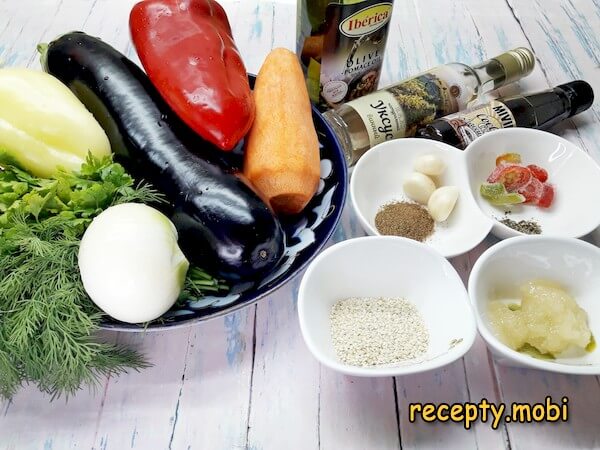
I get the ingredients ready for the Korean-style Eggplant He.
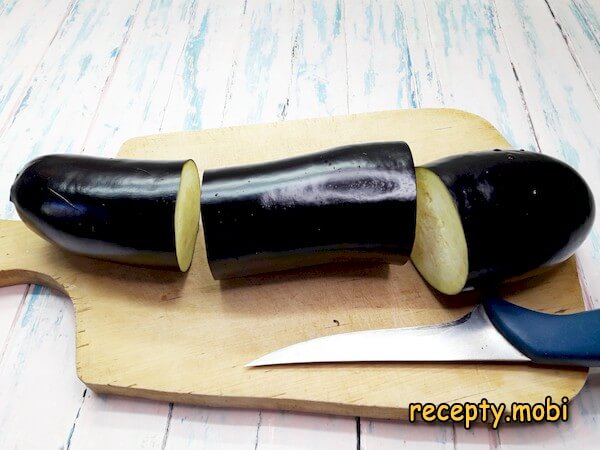
If an eggplant is long, I cut it into 3 parts; shorter ones I cut into two.
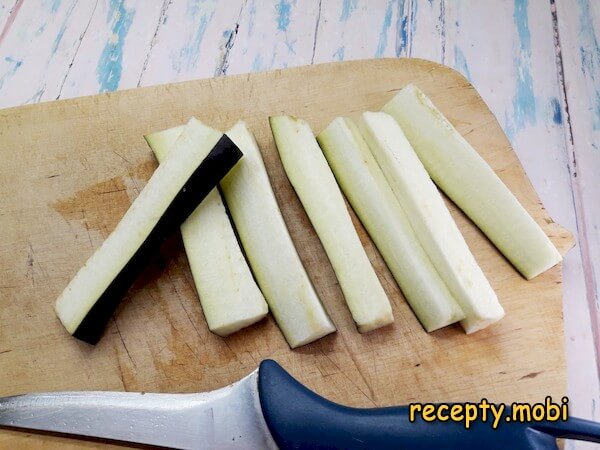
Next I cut each part into sticks about 1 cm thick (ideally so that each piece has skin on one side). If the middle of the fruit is soft and full of seeds, I cut it out – it won't be needed.
I put the sticks in a colander and sprinkle them with salt.
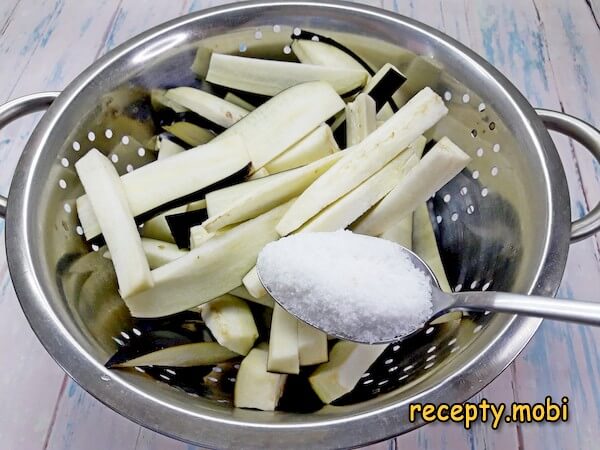
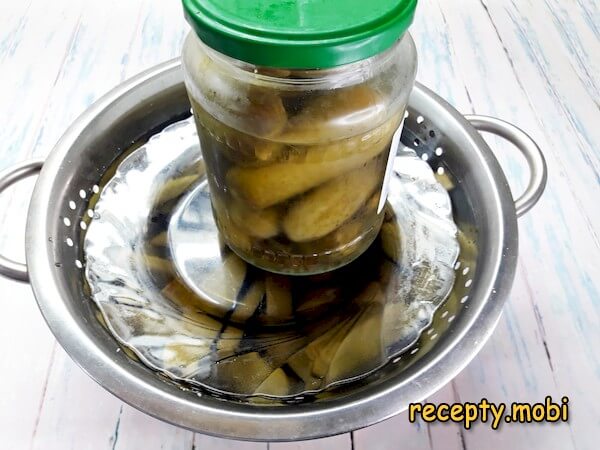
After mixing, I cover the eggplants with a plate and press them down with a light weight. They should stand like this for at least an hour. This draws out the excess moisture and any bitterness, and the eggplants also absorb less oil during frying.
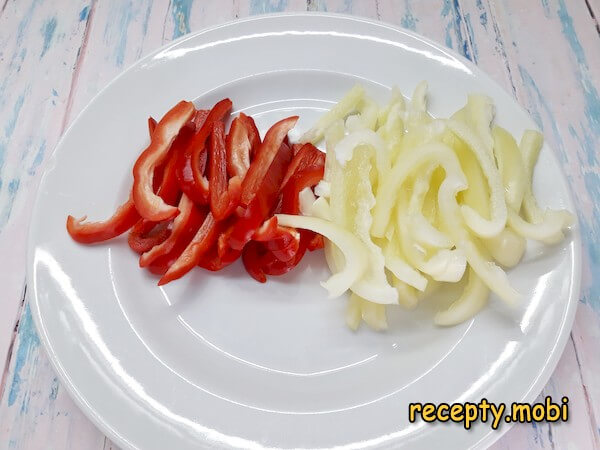
Meanwhile, I cut the bell pepper into long strips.
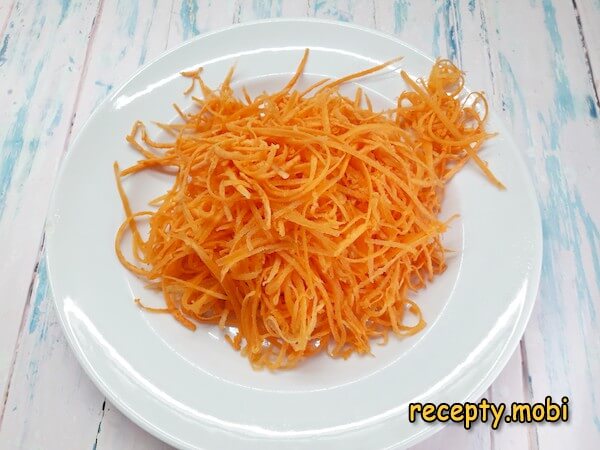
I grate the carrot into long strips using a Korean-style grater.
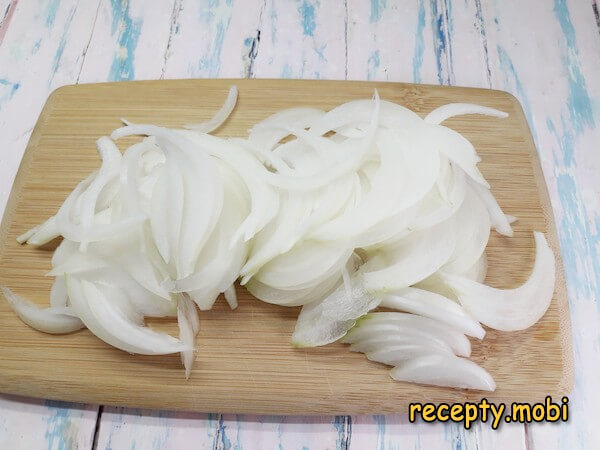
I shred the onion into thin slivers.
I finely chop the frozen/fresh chili pepper and the garlic.
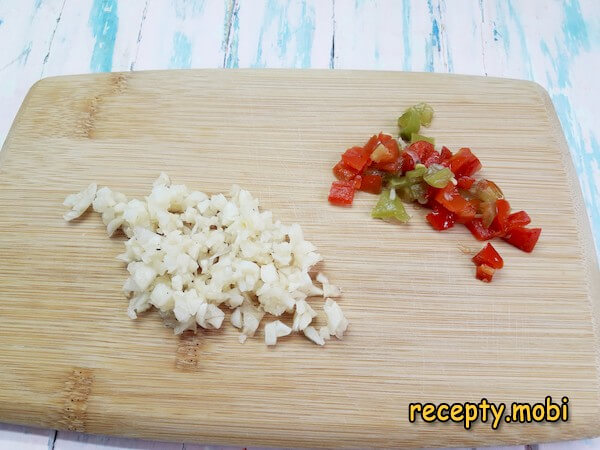
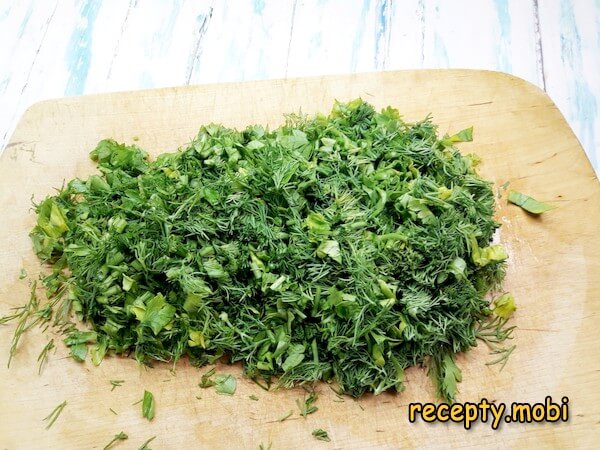
I chop the herb mix (parsley and dill).
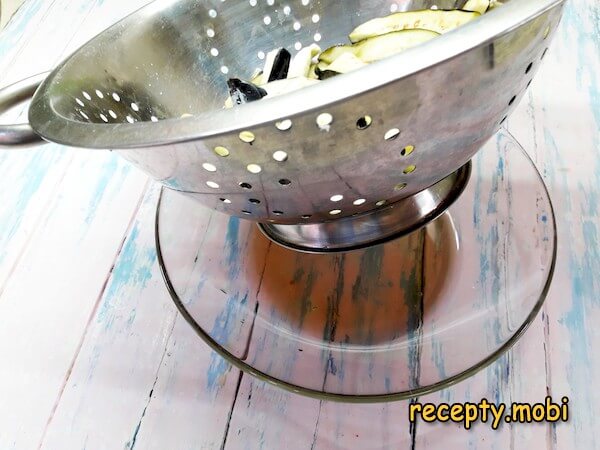
By now the eggplants will have released their juice. I squeeze them out.
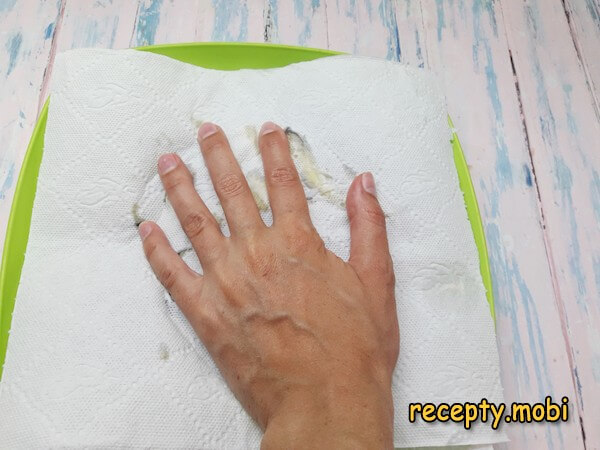
I transfer them to a paper towel.
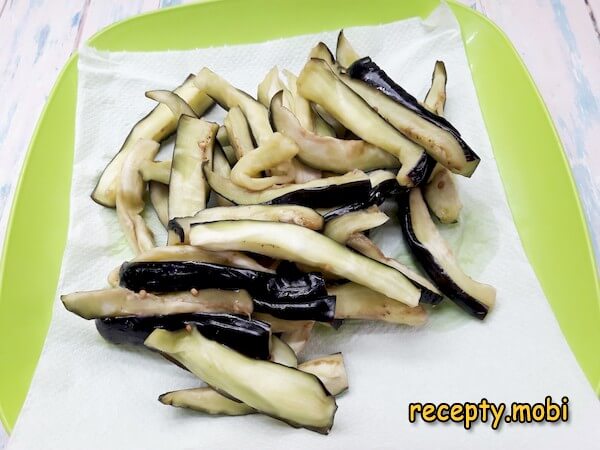
I blot them with another sheet on top.
I heat the oil well in a pan. I lay down a single layer of eggplant and fry it over high heat until half-cooked, turning a couple of times.
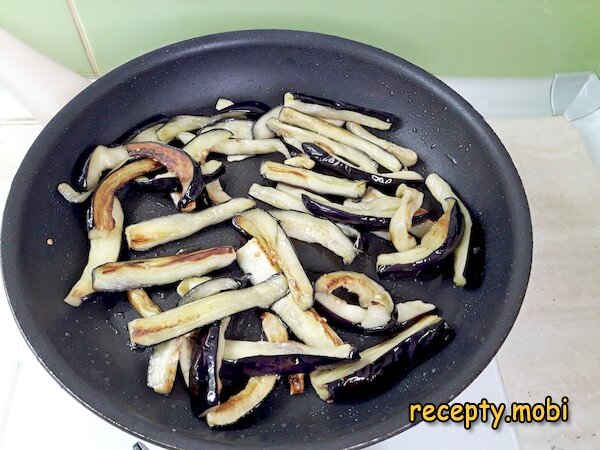
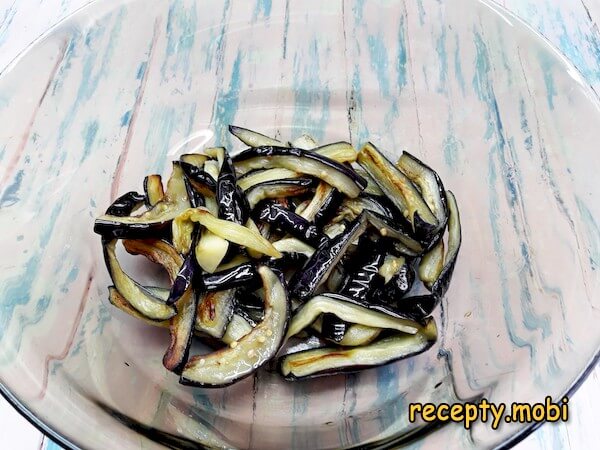
I transfer the browned sticks to a deep salad bowl.
In the same pan, I fry the coriander and black pepper.
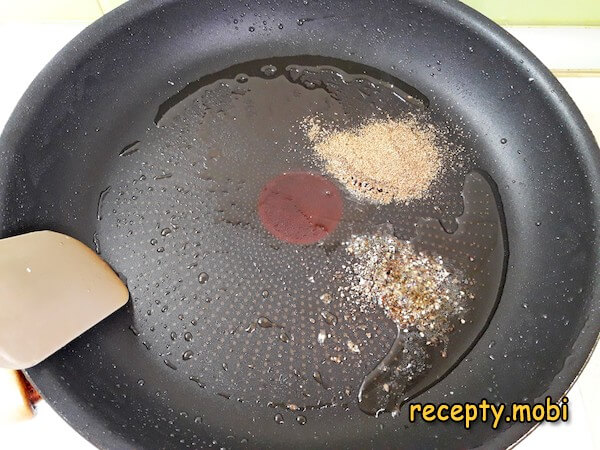
After a minute I add the onion and chili pepper. I fry everything until the onion is slightly soft (about 1 minute).
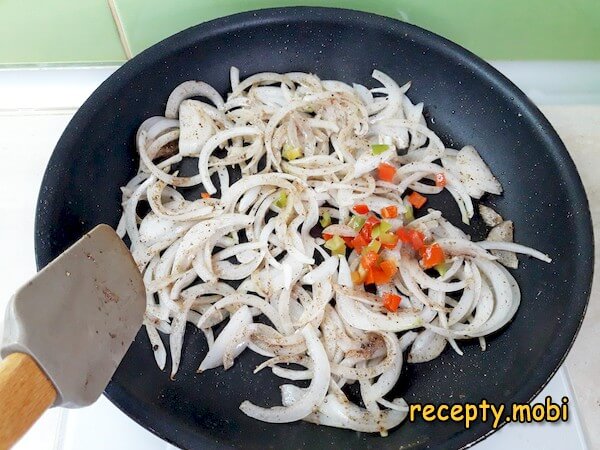
I add the contents of the pan to the salad bowl.
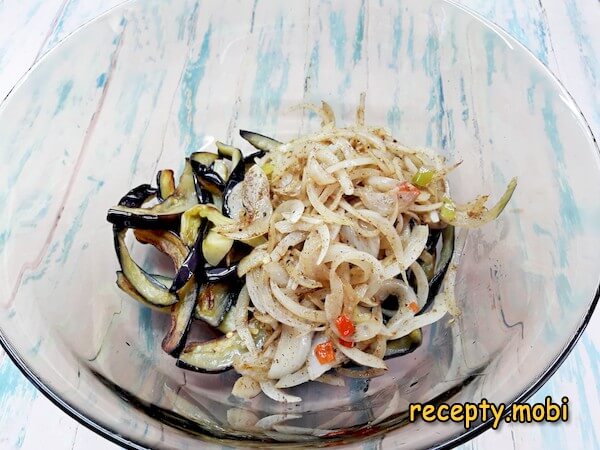
Then I add the bell pepper and garlic.
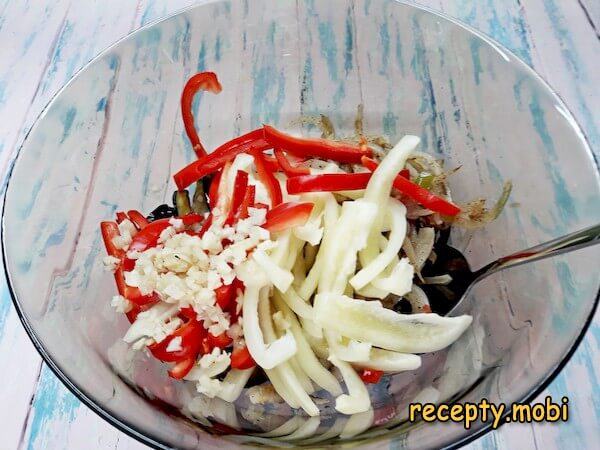
Next, the carrot and the green herb mix.
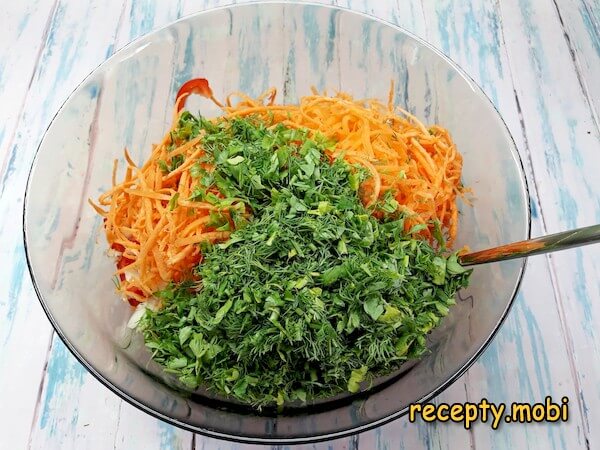
Be sure to toast the sesame (about a minute and a half) – this gives the He a nutty taste.
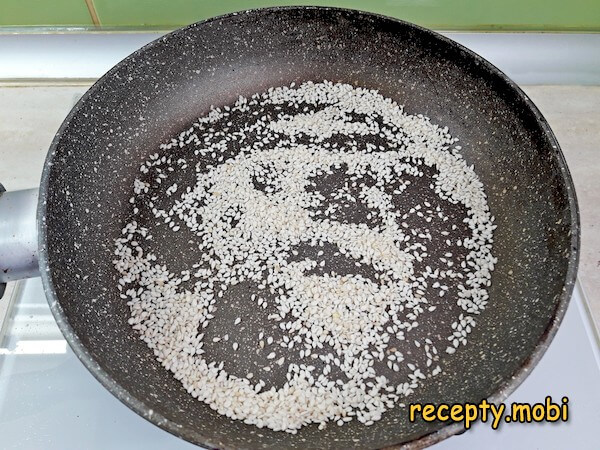
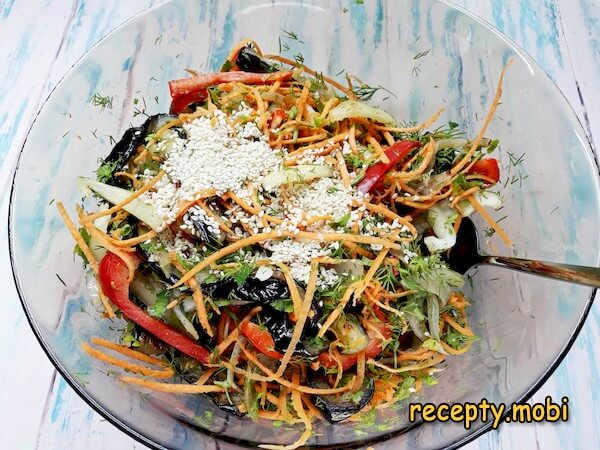
I add it to the whole mixture.
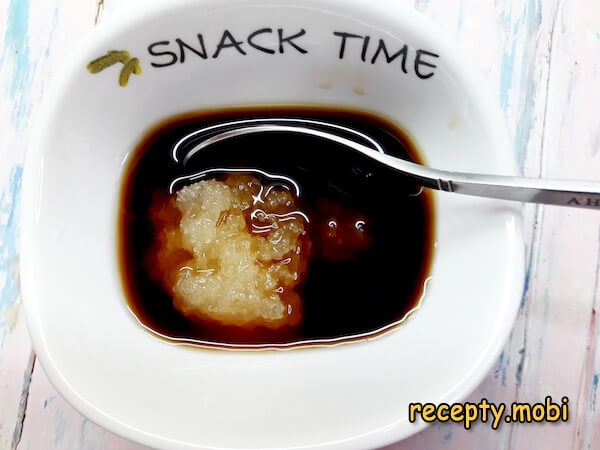
Separately, I stir together the honey, soy sauce and vinegar so that the liquid becomes smooth.
I add the marinade to the salad, then a little more vegetable oil.
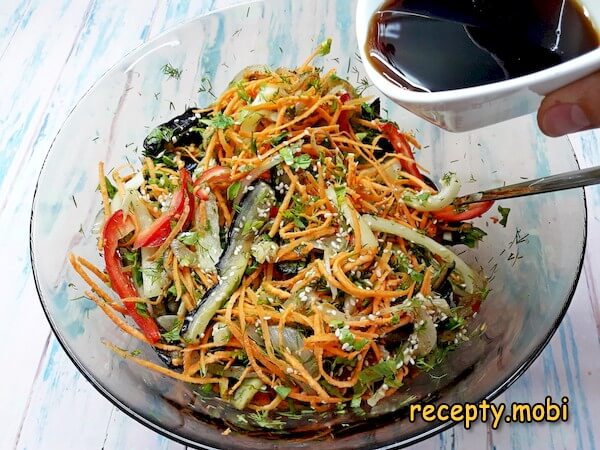
I mix all the ingredients together well. I press them down with a spoon, cover with a plate and put it in the refrigerator to soak.
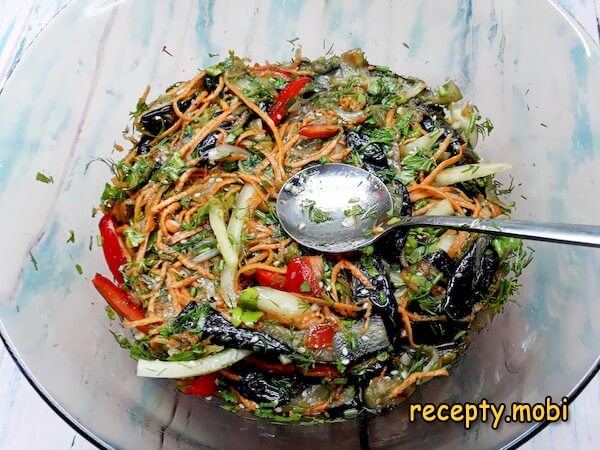
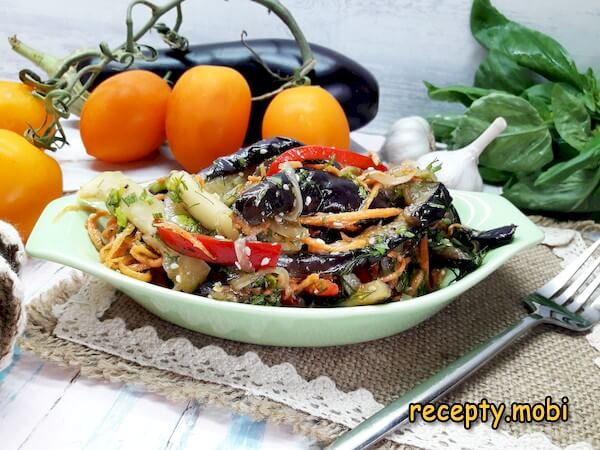
After at least an hour the Korean-style Eggplant He will be ready. And the longer the salad stands in the marinade, the tastier it becomes. The perfect combination of vegetables and spices makes this dish welcome with both meat and potatoes. Give it a try, and enjoy your meal!


Tips
- 1
Salting to draw out bitterness – the "secret" against any bitter taste. An hour under a weight lets the eggplants give up their juice, lose any bitterness and absorb less oil.
- 2
Toasting the sesame – the "secret" of the nutty flavour. About a minute and a half in a dry pan lets the seeds release their aroma.
- 3
Mix the marinade separately – the "secret" of a smooth dressing. Stir the honey, vinegar and soy sauce together in advance so that the honey dissolves completely.
- 4
Let it stand in the fridge – the "secret" of the flavour. At least 1 hour, ideally overnight, makes the taste deeper. The same principle works in other Korean-style salads.
FAQ
Which eggplants should I choose? +
Ideal ones are young, dark purple eggplants with glossy skin (varieties such as "Almaz", "Chyorny Krasavets" and "Epic F1"). Alternatives: white eggplants (more tender, without bitterness) and striped ones (Melovidny, Graffiti – with a bright look). Fresh ones are firm and heavy, with a green (not dry) stem. A size of 15–20 cm is best (fewer seeds). Not suitable: overgrown eggplants with large seeds (they taste bitter) and ones with brown spots (spoilage). For a "premium" version, choose farm-grown, field eggplants. Seed brands such as "Gavrish", "Poisk" and "Aelita" are reliable. If an eggplant tastes bitter, soak it for 1–2 hours in salted water. Don't peel the skin off – it gives colour and texture.
What can I use instead of honey? +
Alternatives: brown sugar (40 g – a caramel note), maple syrup (40 ml – milder), agave syrup (40 ml – a "healthy eating" option) or white sugar (35 g – simpler). Honey brands such as "Altaisky" and "Bashkirsky" are reliable. Fresh runny honey is the "premium" choice. If the honey has crystallised, warm it in a water bath. Do not use: artificial sweetener (it turns bitter when heated) or jam (it changes the flavour). For a "spicy" version, add 1 tsp of mustard. For a "sweet" version, use 50 g of honey. For the "classic", use natural flower or linden honey.
How long does the He keep? +
In the refrigerator, in a container with a lid – 5–7 days. Any longer and the vegetables release juice and lose their firmness. Before serving, take it out 15–20 minutes ahead (when too cold it dulls the flavours). Don't leave it at room temperature for more than 4 hours – the vinegar and oil will oxidise. For a "packed lunch" a small jar is handy. For a buffet, garnish it with herbs 10 minutes before serving. Freshly made, it becomes a "star" after 2–3 hours of marinating. On the second day the flavour deepens and becomes richer. It is ideal to make it 1 day before serving.
What should I serve the He with? +
It works as an appetiser in its own right, with a hot meat dish. With fried or boiled potatoes. With steak, shashlik or lamb ribs – a "hearty" serving. With pelmeni and vareniki – a "winter" serving. With a shot of cold vodka – a "Russian" serving. With a rice side dish – an "Asian" serving. With light beer – a "bar" serving. With Uzbek or Kazakh pilaf. With boiled chicken or turkey. With fried fish. On a "Korean table" – together with other Korean salads. With a cup of green tea – a "light" lunch. It is a versatile spicy appetiser for everyday meals and celebrations alike.
- Comment
or post as a guest
Be the first to comment.