avg —
Korean-Style Carrots at Home

Instructions
Prepare the carrots and the equipment. Choose juicy, fresh, medium carrots (1 kg) — a "stocky" carrot grates better than a "long" one. Old, withered carrots will not give the characteristic crunch. Get out a special Korean-carrot grater (with long narrow slots) — it produces even, thin strips. An alternative is a vegetable slicer with a julienne attachment.
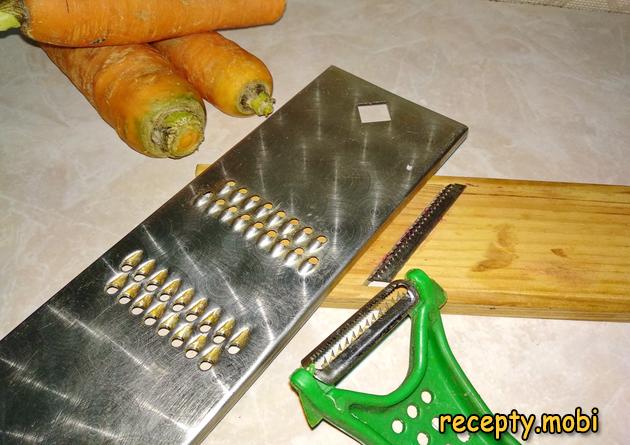
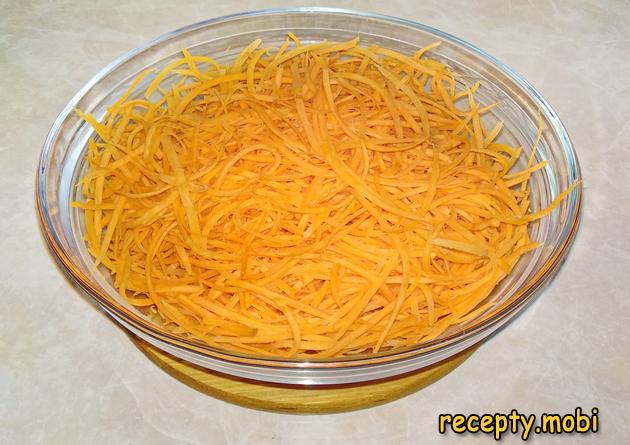
Wash the carrots thoroughly with a brush and peel them. Grate them on the Korean-carrot grater into a large bowl in even, thin, long strips. The thinner and longer the strips, the more impressive the snack looks. If you do not have a Korean grater, use an ordinary coarse grater, but the appearance will be plainer.
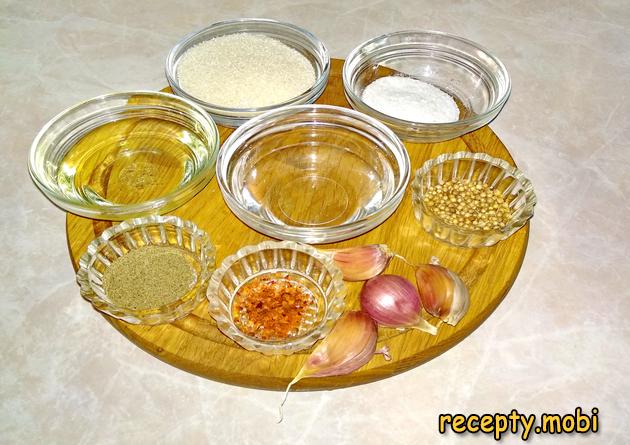
Prepare the spices and the other ingredients from the list. Use only proven, fresh spices that are no more than a year old — old spices have gone flat and will not give the snack its characteristic "Korean" aroma. Choose fresh garlic with firm, dense cloves and no signs of sprouting — old garlic turns bitter.
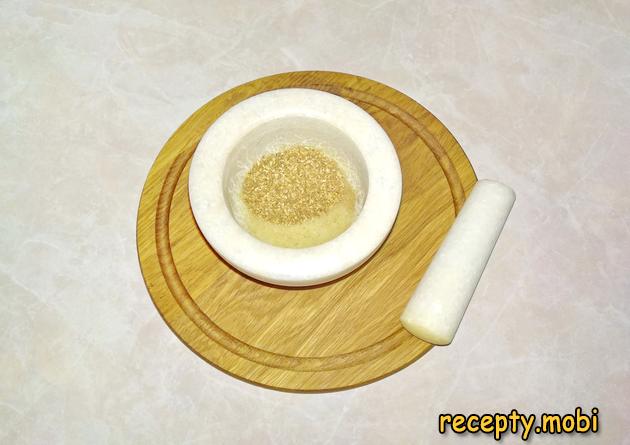
CRUCIAL STEP: grind the coriander in a mortar. For maximum aroma, take whole coriander seeds (2 tsp) and crush them in a coffee grinder or in a mortar with a pestle. Grind only HALF the seeds (1 tsp) finely and leave the other ½ whole — this gives a "textured" effect in the finished snack.
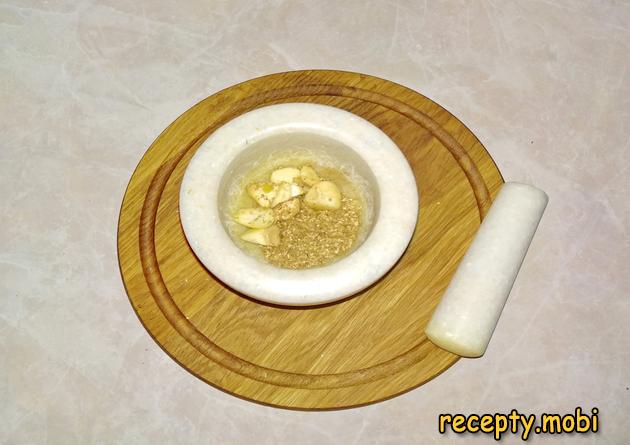
Crush the garlic cloves (4 large) on a cutting board with the broad side of a knife — this makes it easier to peel off the papery skin. Chop the peeled garlic roughly and add it to the same mortar with the coriander. Grind with the pestle into a smooth, fragrant mass. The aroma of garlic and coriander in the mortar is the inimitable "Korean" effect.
Add salt (1 tsp), ground black pepper (1 tsp) and red chilli flakes (¼ tsp — adjust to the heat you like) to the mortar with the garlic and coriander. Mix everything thoroughly with the pestle into a fragrant "paste".
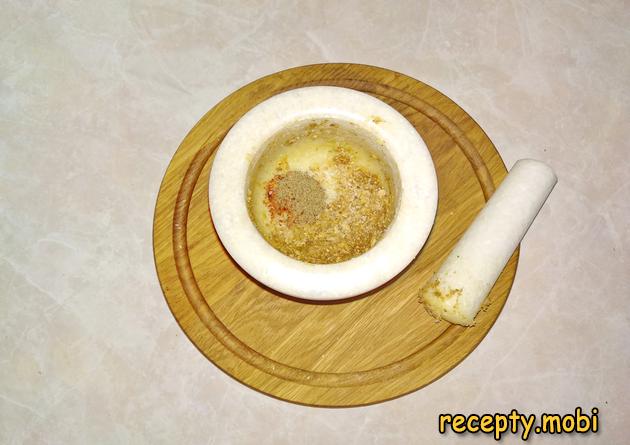
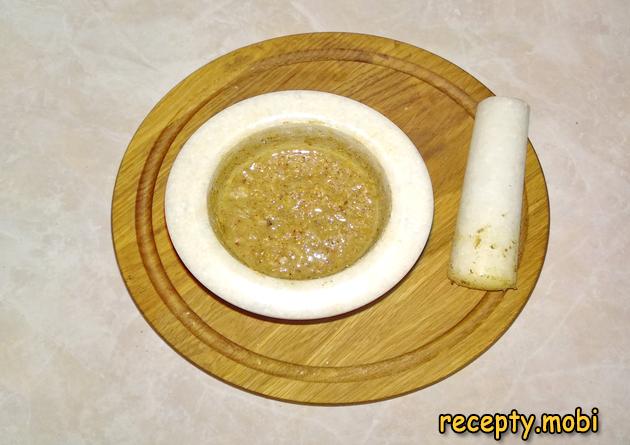
Add vinegar 6% or 9% (6 tbsp) to the mortar with the paste and mix. Wine or apple cider vinegar gives a gentler flavour, while plain 9% vinegar gives a sharper one — choose to your taste. The finished "vinegar-and-garlic" paste is the base of the marinade for the carrots.
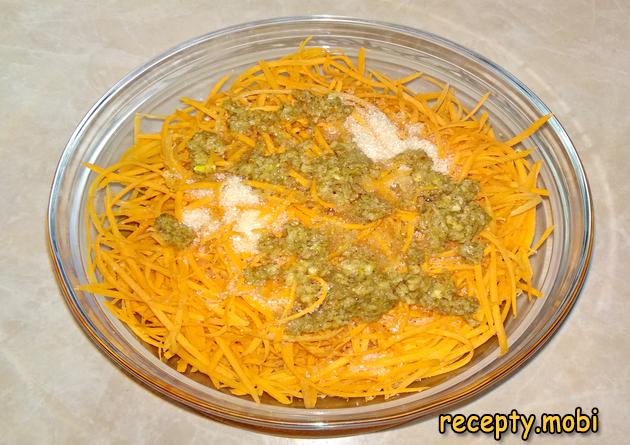
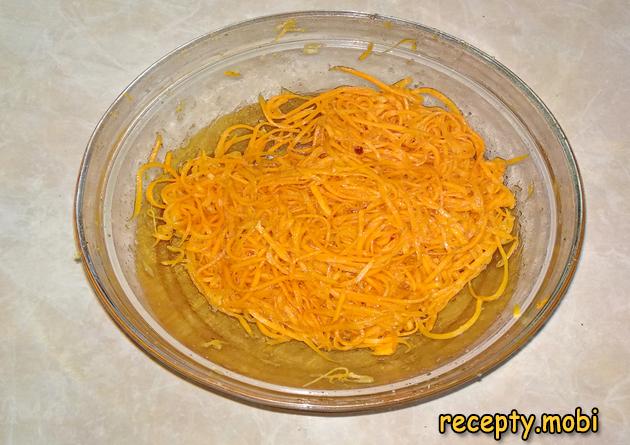
Sprinkle sugar (3 tbsp) over the grated carrots — it balances the acidity of the vinegar and gives the characteristic "sweet" note of Korean carrots. Pour the ready vinegar-and-garlic paste from the mortar straight over the top. DO NOT MIX YET — wait for the hot oil.
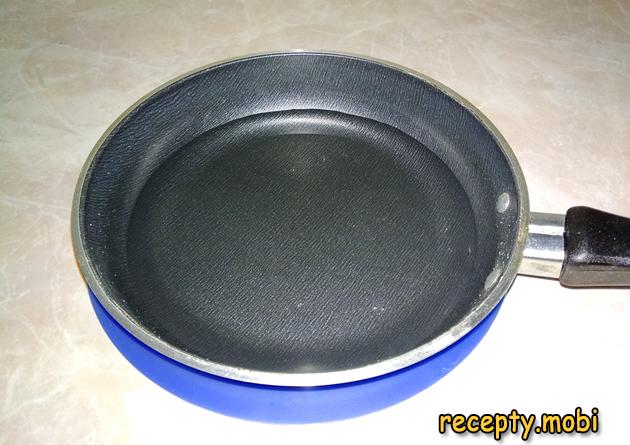
Heat the vegetable oil (½ cup = 100 ml) in a frying pan until BOILING — it should lightly "smoke". Boiling oil is the "secret" of Korean carrots: it "fries" the spices and garlic right in the bowl and releases the maximum aroma. CRUCIAL STEP: carefully pour the BOILING oil over the carrots, straight ONTO THE SPICES AND SUGAR. It will hiss and give off an intense "Korean" aroma.
Immediately start mixing with a spoon — be careful not to burn yourself on the hot oil. The carrots are cold and quickly lower the oil's temperature, so after just 1–2 minutes you can mix with your hands in disposable kitchen gloves for better distribution of the spices. "Massage" the carrots thoroughly with your hands for 2–3 minutes so that every strip is coated with the marinade. After 30 minutes the carrots can be eaten like a "fresh" salad, but for "proper" Korean carrots you MUST let them stand for 24 HOURS in the fridge under cling film — during this time they fully absorb the spices and become more tender and brighter in flavour.
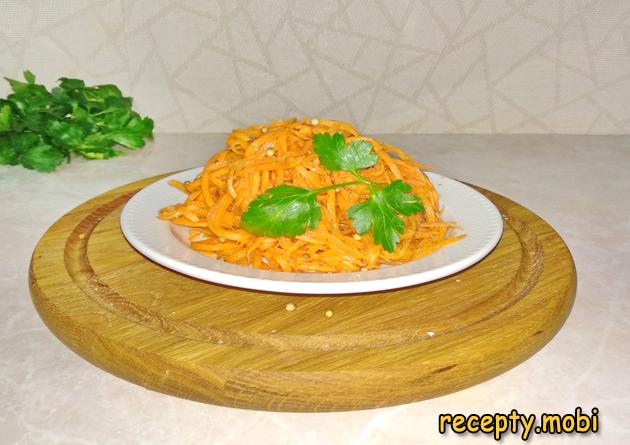
After a day, add fresh chopped cilantro (½ bunch) to the finished snack — it gives a "fresh" note and makes the presentation attractive. You can also sprinkle it with sesame seeds for a "Korean" garnish. The Korean-style carrots at home are ready! Serve them as a snack on their own or as a side dish with meat.Now you know how to make Korean-style carrots at home, the classic way. Serve this snack as a stand-alone appetiser or as a side dish with meat — it is sure to become a favourite.


Tips
- 1
Use whole coriander seeds and grind them in a mortar right before adding them — that is the "secret" of the Korean aroma.
- 2
The oil must be BOILING when you pour it over the spices — it "fries" them and releases the maximum aroma.
- 3
Marinate for 24 hours in the fridge — without this the carrots are a "fresh salad" rather than a real Korean snack. I use a similar method for Korean-style cabbage.
- 4
Mix the carrots wearing disposable gloves — your hands distribute the marinade better than a spoon.
FAQ
Which vinegar is best to use? +
Good options are: apple cider vinegar 6% (a mild "fruity" flavour, the classic for homemade Korean carrots), white wine vinegar 6% (a more "European" note), rice vinegar 6% (the most "Asian" flavour, bringing the snack closer to the real Korean version), plain vinegar 9% (budget-friendly and sharper — reduce the amount to 4 tbsp) and white balsamic (for a "gourmet" version). For vegans and people allergic to vinegar, fresh lemon juice (4–5 tbsp) gives a similar effect. Not recommended: cheap "synthetic" 70% vinegar — it gives a "chemical" aftertaste. Apple cider vinegar 6% is the "golden mean" for flavour and availability.
Can I replace the carrots with other vegetables? +
Yes, the "Korean-style" method is universal for many vegetables. Suitable options are: white or Chinese cabbage (for "Korean-style cabbage"), aubergines (salt them first and drain off the bitter juice for 30 minutes), courgettes (grate them on the Korean grater), boiled beetroot (an unusual pink colour), daikon or Margelan radish, green beans, bell pepper in strips, button mushrooms (fry them first) and boiled squid. You can make an "assortment" — carrot plus cabbage, or carrot plus beetroot. Each vegetable brings its own character. Carrot is the "classic" because of its bright colour, availability and versatility.
How long do the finished Korean-style carrots keep? +
The finished snack keeps in the fridge for up to 14 days in a tightly closed glass jar or container. On the 2nd–3rd day the flavour is even better, as the carrots become maximally infused with the spices. Do not leave them at room temperature for more than 2 hours in hot weather — they spoil quickly. Do not freeze them — the carrots will go mushy when thawed and lose their crunch. It is best to make them in portions of 500–1000 g of carrots. For longer storage, add an extra 1 tbsp of vinegar — the "preserving" effect extends freshness to 3 weeks. Signs of spoilage: "slime" on the surface, a sour "yeasty" smell — throw such a snack away.
What do you serve Korean-style carrots with? +
It is a versatile snack for many ways of serving. As a stand-alone snack — with strong spirits (vodka, brandy, whisky). As a side dish — with barbecue, fried chicken, meat patties, pork and beef. In salads — as an ingredient in "herring under a fur coat" (an unusual variation) or in "Olivier" salad (instead of pickled cucumber), and in kimbap (a Korean roll). As an addition to sandwiches with ham and cheese. Among other snacks — with pickled cucumbers, cherry tomatoes and olives. To drink alongside — light beer, dry white wine or mineral water with lemon. For a picnic or a meal at the dacha — with barbecue and grilled vegetables.
- Comment
or post as a guest
Be the first to comment.