avg —
French Salad with Apple, Carrot and Cheese

Instructions
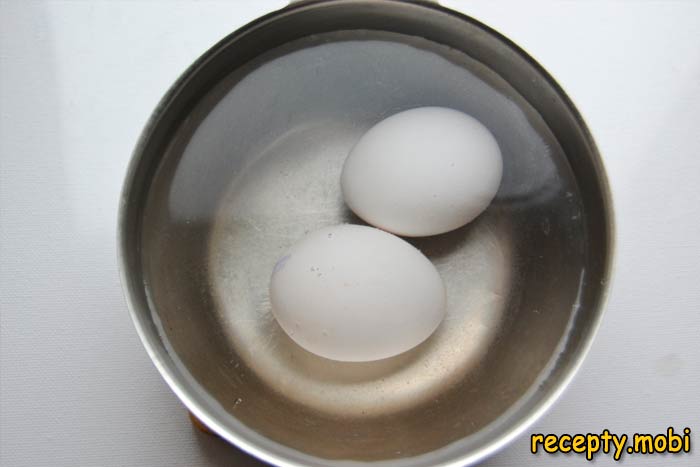
I boil the eggs hard for 10 minutes after the water comes to the boil, then cool them straight away in iced water for easy peeling. Cold eggs peel instantly and, just as importantly, grate cleanly without crumbling. Warm eggs “stick” to the grater and lose their shape.
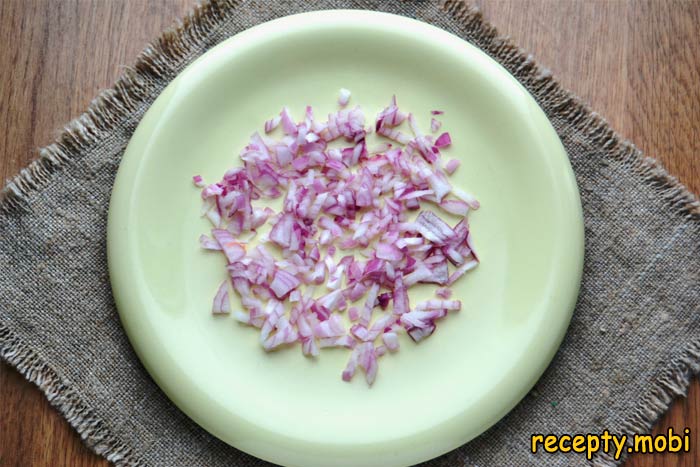
I finely dice the red (purple) onion into 3–4 mm cubes and lay it down as the first layer on the serving dish. Red onion is juicier and sweeter than ordinary golden onion and is not noticeably bitter when raw. If you are using ordinary onion, marinate it for 10 minutes in a tablespoon of vinegar with a pinch of sugar.
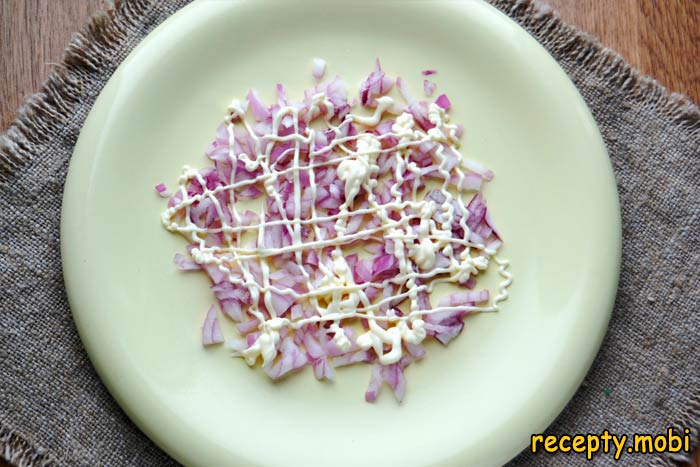
I pipe a mayonnaise net over the onion using a piping bag or a zip bag with the corner snipped off. The net is a key technique for layered salads: it lets the salad soak lightly without pressing down on the lower layers. Solid mayonnaise would flatten the onion layer.
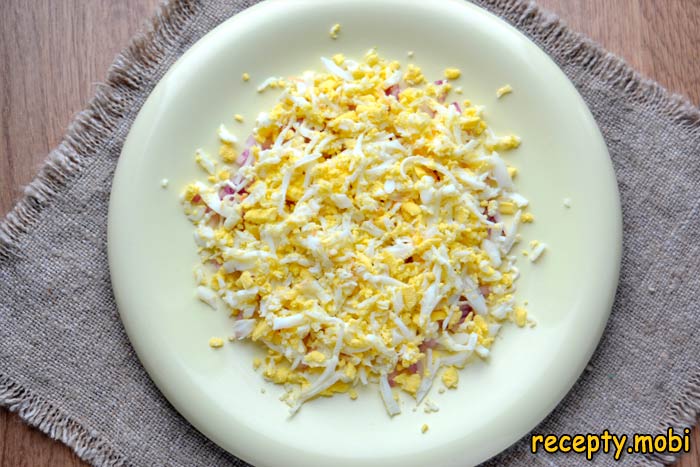
I grate the eggs on a medium grater directly over the salad so the shreds fall as a fluffy layer. This is the “trick” of the airy salad – do not spread on pre-grated ingredients. I salt only this egg layer with a pinch of salt, since the eggs are the blandest of all the ingredients.
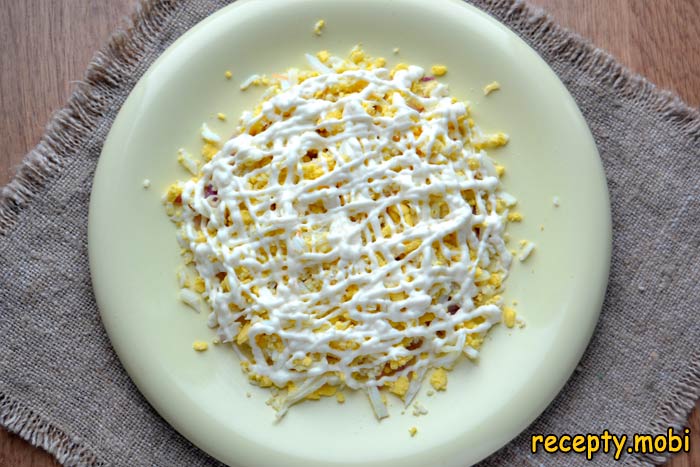
I pipe the next mayonnaise net over the egg layer. Keep to the “net” principle on every layer – this gives the finished salad its classic “French” look with visible layers.
I grate the hard cheese on a medium grater directly over the salad as the next airy layer. Hard cheese (Russian, Gouda, Edam) adds a salty, savoury accent. Do not use processed or soft cheese – you need a firm, hard one for nice shreds.
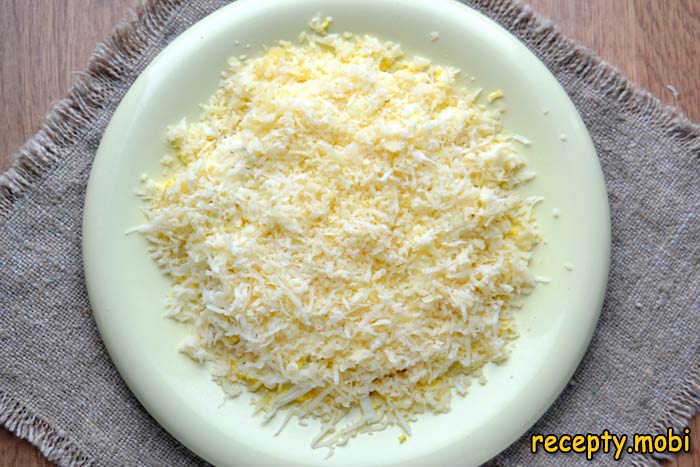
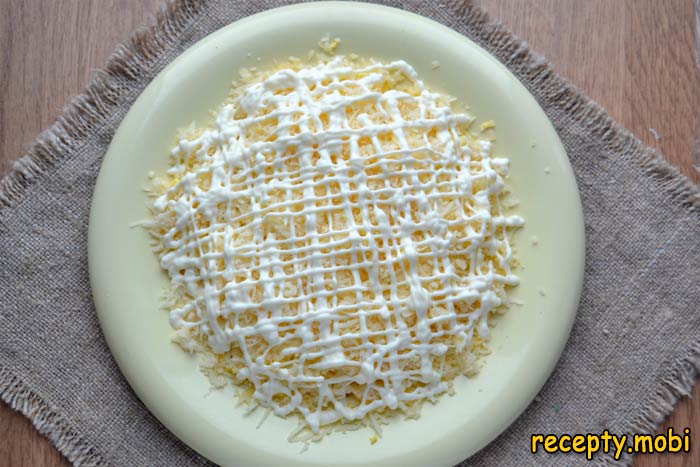
I cover the cheese layer with the next mayonnaise net. Every layer needs soaking, otherwise the salad turns out “dry” and lacks the right texture when eaten.
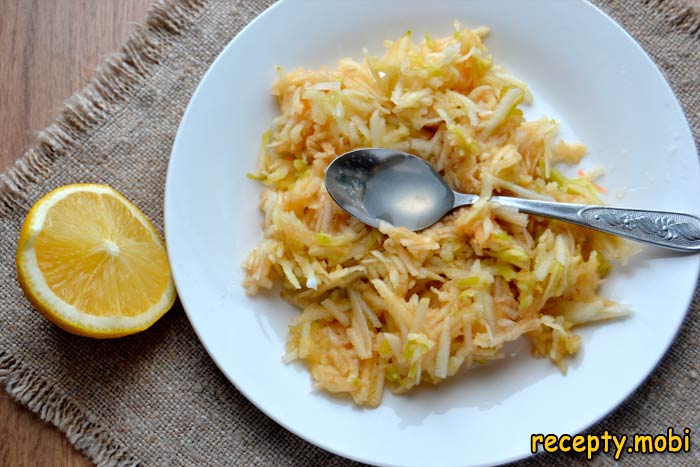
I grate a sweet-and-sour apple on a coarse grater and immediately sprinkle it with lemon juice so it does not darken. Lemon juice is a natural protection against oxidation; without it the apple turns brown within 10 minutes and spoils the look of the salad. Use a tart variety such as Antonovka or Granny Smith – they give the right tang.
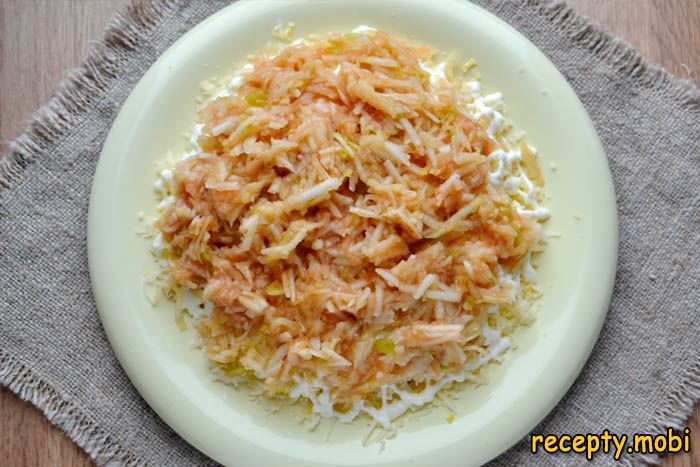
I lay the apple as a layer over the cheese, shaping a small mound in the centre of the dish. The apple layer brings a distinct fruity accent to the finish of the flavour – unexpected, but wonderfully harmonious.
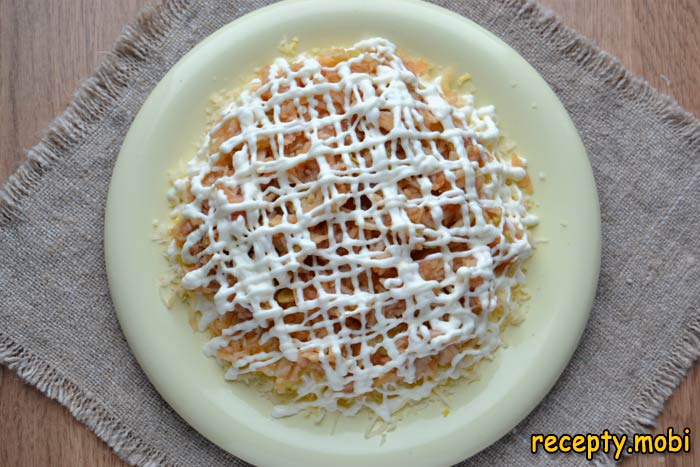
I pipe another mayonnaise net over the apple layer. Without this net the carrot on top will not “stick” to the mound and will slide off when served – a crucial detail.
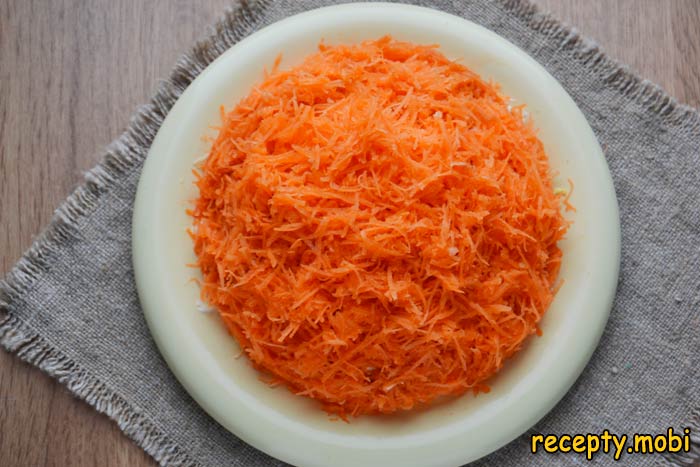
I cover the whole mound on all sides with carrot grated on a coarse grater, shaping an even dome. The carrot gives a pretty orange “house” with an airy texture and a sweet taste that sets off all the other layers.
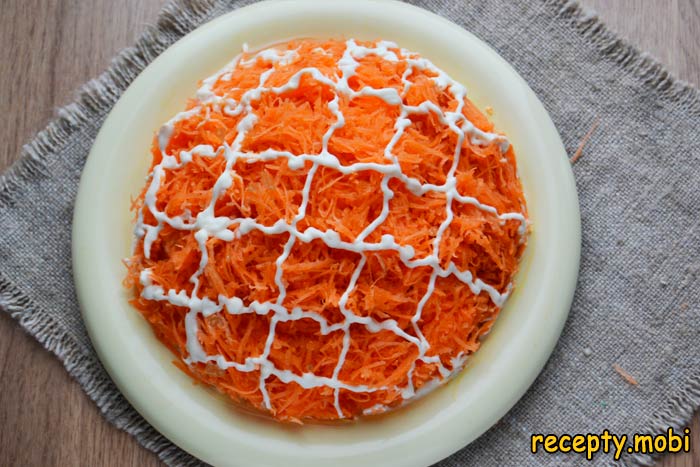
I decorate the top with a thin mayonnaise net – the final decorative touch that ties the colours together and emphasises the “French” character of the salad.
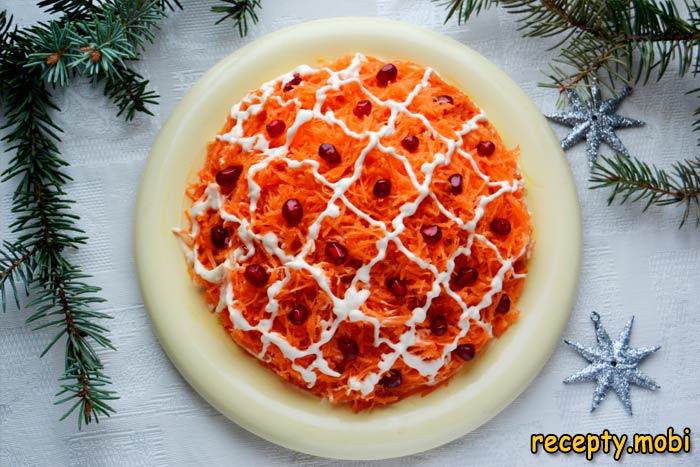
In each window of the net I place a single pomegranate seed – the result is a restaurant-style presentation with bright red accents on the orange dome. The French Salad is ready!


Tips
- 1
Grate every layer directly over the salad – this is exactly how the layers turn out fluffy and “airy,” which is how the salad earned its second name.
- 2
Red (purple) onion is juicier and milder than golden onion and is not bitter when raw. It is ideal for salads without marinating.
- 3
Lemon juice keeps the apple from darkening for 30–40 minutes. I use a similar principle for Mimosa salad.
- 4
Choose a sweet-and-sour apple (such as Antonovka or Granny Smith) for a contrast of flavours with the carrot and cheese – it gives a rich, multi-layered taste.
FAQ
Can I make the salad without pomegranate seeds? +
Yes, the salad looks great without pomegranate too. Replace the garnish with fresh herbs (finely chopped parsley, dill or spring onion), cubes of red bell pepper, marinated cranberries (they give a similar berry accent) or pieces of pickled ginger. You can also simply leave the mayonnaise net without decoration – that is attractive too. In winter, when fresh pomegranate is not available, pomegranate syrup applied in drops works well – a modern restaurant touch. The main thing is a bright accent of colour.
What can I use instead of red onion? +
Ordinary golden onion, but be sure to marinate it for 10–15 minutes in a tablespoon of vinegar with a pinch of salt and sugar – this removes the bitterness and sharpness. Shallot (milder in taste), sweet white onion, or finely chopped spring onion (a lighter version) also work. Without any onion the salad will be too “gentle” – you need a sharp note for contrast. Marinated onion is a universal substitute and always works in layered salads.
How long does the finished salad keep? +
In the fridge, in a tightly sealed container or under cling film – up to 24 hours without losing quality. I do not recommend keeping it longer: the apple will inevitably darken even with lemon juice, the carrot will release juice and the salad will “spread.” For a festive table, make it at most 4–6 hours before serving – the flavour has time to come together while the look stays fresh. It is best to add the pomegranate seeds right before serving – they give the brightest accent when fresh.
What to serve French Salad with at a festive table? +
It is ideal as part of a starter spread for a New Year or Christmas table, alongside herring under a fur coat, Olivier and Mimosa. Light dry white wines (Riesling, Sauvignon Blanc) or an off-dry rosé go well with it. Among hot dishes it harmonises with roast chicken, turkey or fish – delicate meat dishes. For a buffet table, serve it in individual glasses – a modern restaurant format for a beautiful presentation.
- Comment
or post as a guest
Be the first to comment.