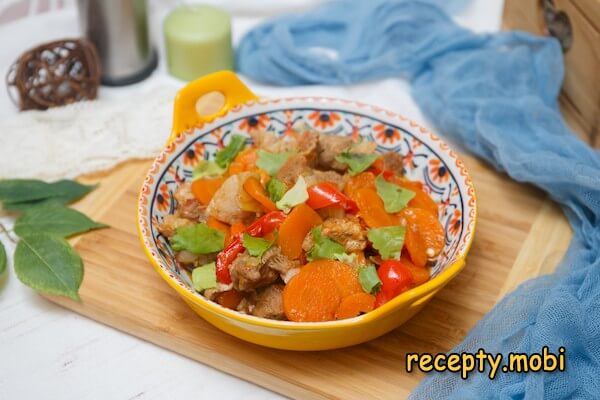
avg —
Warm vegetable and ham salad in a skillet

Instructions
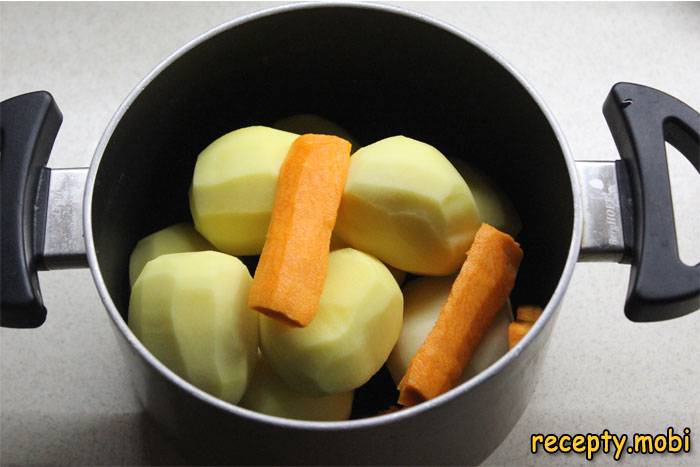
I thoroughly peel the vegetables – 7 young potatoes and 2 carrots. I wash the root vegetables under cold running water. I cover the peeled vegetables with water in a deep saucepan and add salt to taste (1 tsp per 2 litres of water). I boil the root vegetables to an "al dente" state for 12–15 minutes after the water comes to a boil – this is the critical stage: the vegetables should be almost done but still firm. Fully cooked potatoes and carrots will fall apart during the later frying.
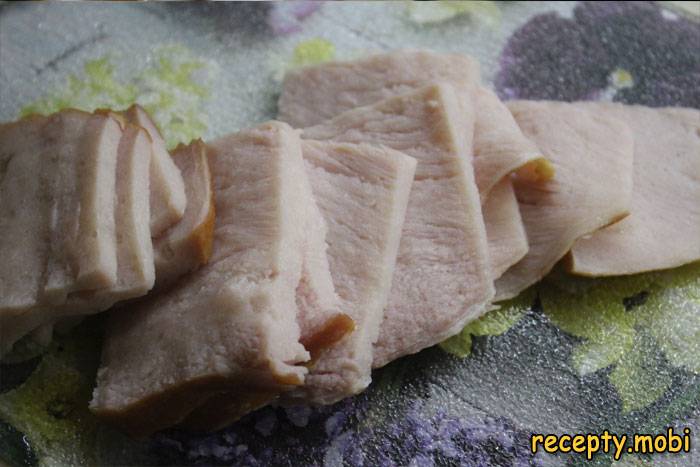
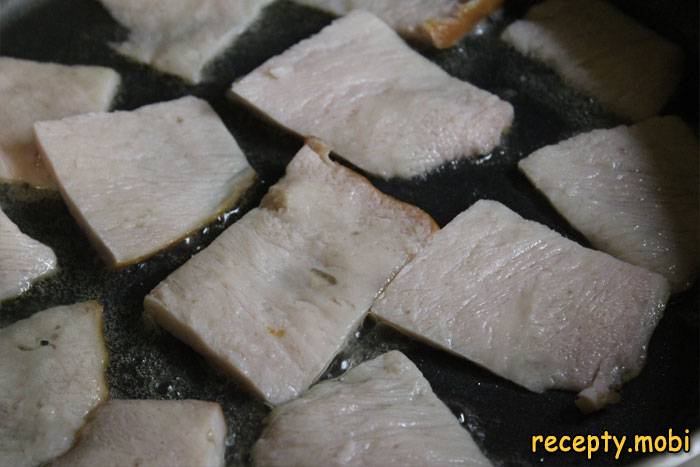
While the vegetables boil until half-cooked, I prepare the meat. I cut 100 g of ham into large slices 5 mm thick – pieces like this look attractive in the finished salad and hold their shape during frying. Cutting them too small would give meaty crumbs without that dense texture.
I heat a deep, heavy-bottomed skillet over medium heat for 2 minutes. I fry the ham slices on both sides for 1–2 minutes per side until they have a bright golden crust – as it fries, the ham releases its fat and aromas. There is no need to add extra oil – the ham's own fat is enough. This creates an aromatic base for the salad to come.
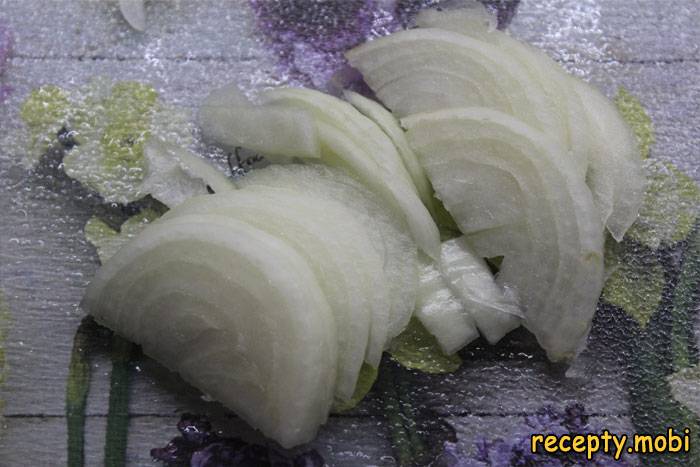
I peel 2 onions and slice them into half-rings 3 mm thick – the classic cut for fried vegetable dishes. I add the sliced onion straight to the ham in the hot skillet.
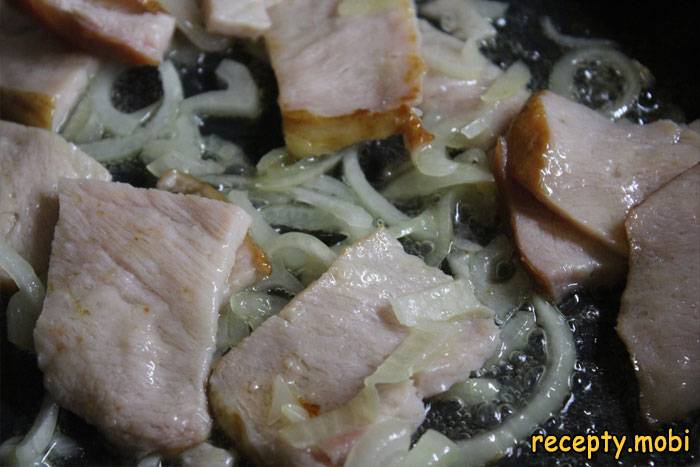
I saute the onion together with the fried ham until the onion is translucent, 3–4 minutes over medium heat – the onion should turn soft and glassy, soaking up the meaty fat and the aromas of the ham. It should not brown completely – otherwise the onion will taste bitter.
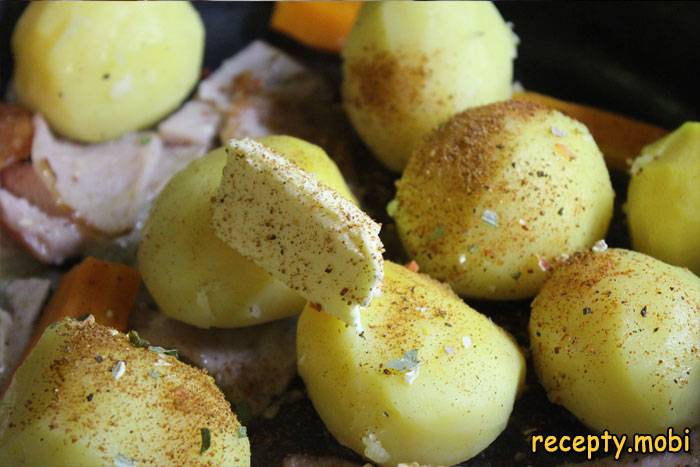
I lift the half-cooked vegetables out of the water with a slotted spoon and pat them dry with paper towels first to remove excess moisture – this is necessary to get a nice golden crust when frying. Wet vegetables will steam rather than fry. I cut them into large cubes or wedges and add them to the ham and onion. I fry all the ingredients over medium heat for 5–7 minutes until golden, stirring now and then with a silicone spatula. I bring the salad to a balanced flavour with dried basil and thyme (½ tsp of each), a pinch of paprika, a mix of freshly ground peppers and salt to taste.
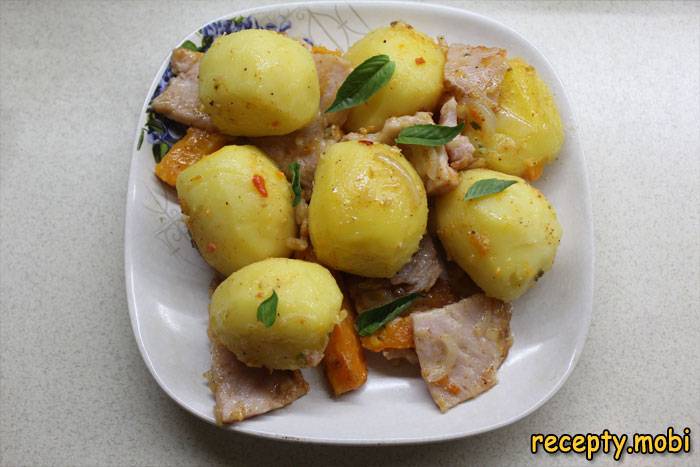
I arrange the finished warm salad in a mound on a large flat serving dish or on individual plates for an attractive presentation. I garnish it with fresh basil or parsley leaves for a pretty splash of green and a fresh aroma. I serve it straight away – a warm home-style salad is especially tasty hot.


Tips
- 1
Boil the vegetables strictly to an "al dente" state for 12–15 minutes – they should be almost done but still firm. Fully cooked vegetables will fall apart during the later frying in the skillet.
- 2
Be sure to pat the boiled root vegetables dry with a paper towel before frying – only dry vegetables will give a nice golden crust. Wet ones will steam in their own moisture.
- 3
The ham can be replaced with smoked bacon (100 g, for a smokier aroma), smoked brisket (100 g, the classic option), boiled chicken breast (150 g, a lighter option) or even smoked sausage (80 g).
- 4
Serve the warm home-style salad right after cooking – it is at its tastiest hot, when the aromas of the spices come through fully. A cooled salad loses some of its character.
FAQ
Which potatoes are best for a warm salad? +
Choose low-starch varieties – they hold their shape much better during frying and do not fall apart. Excellent options are Red Scarlett, Zhukovsky, Kevin, Vega and Queen Anne – they stay firm after boiling and frying. Starchy varieties (Sineglazka, Picasso) will fall apart into mush and are not suitable for this dish. Young potatoes are especially good; you can even leave them unpeeled – just scrub them thoroughly with a brush. As for size, go for medium tubers (5–7 cm) of an even size so they cook uniformly. Home-grown potatoes from the garden always give a better result than shop-bought ones.
Can the warm salad be made without meat? +
Yes, you will get an excellent vegetarian or lean vegetable garnish with herbs and spices. Simply skip the ham step, but add 2 tbsp of olive or vegetable oil for frying the vegetables. To boost the flavour you can add fried mushrooms (200 g of button or wild mushrooms), cubes of fried hard cheese, or 1 tbsp of capers or pickled gherkins. Fresh garlic (2 cloves through a press) added 1 minute before the end gives a distinctive aroma. For a home-style vegan version, use baked tofu (100 g) and sesame seeds for texture. The step-by-step recipe adapts to any preference.
What is best to serve with the warm vegetable and ham salad? +
The warm home-style salad is a self-sufficient dish, but it goes very well with fresh vegetables (tomatoes, cucumbers, radishes, bell peppers), pickles (lightly salted cucumbers, sauerkraut) and a sour-cream sauce with garlic and dill. For bread, choose dark rye or a garlic baguette. For a festive presentation you can add some smoked balyk or dry-cured sausage. It pairs well with a glass of dry red wine or a cold beer. For a family supper it is enough as a main course – filling and balanced in proteins, fats and carbohydrates.
Can the salad be made ahead and reheated before serving? +
It is best to eat the salad straight after cooking – it is at its tastiest warm. But if you need to prepare ahead, you can: boil the vegetables until al dente and pat them dry, slice the ham and onion – and keep the components separately in the fridge for up to 12 hours. Do the frying just before serving – it takes only 10 minutes. The finished warm salad keeps in the fridge for up to 2 days, but on reheating it loses some of its crisp texture. Reheat it in a skillet with 1 tbsp of oil, covered, for 3–5 minutes – this will bring back its warm serving quality. The step-by-step recipe is great for a festive menu.
- Comment
or post as a guest
Be the first to comment.