avg —
Salad "Goat in the Garden"

Instructions
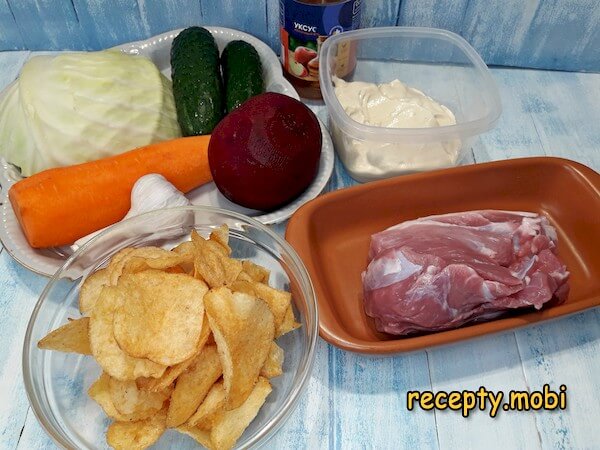
I prepare the ingredients for the "Goat in the Garden" salad. I wash all the vegetables well and peel the root vegetables. White cabbage can be replaced with napa (Peking) cabbage – in that case it won't need pickling. Any meat will do: beef, chicken or turkey – pork was chosen as the juiciest option for this presentation.
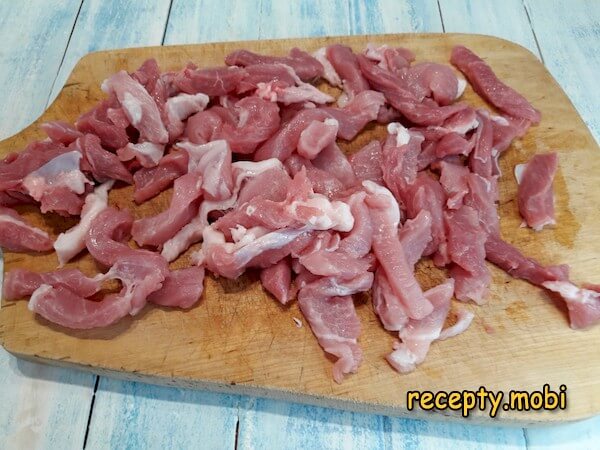
I cut the meat into thin, not too long strips – this cut fries faster and sits more neatly in the centre of the dish. Long strips won't form a compact mound and will fall apart.
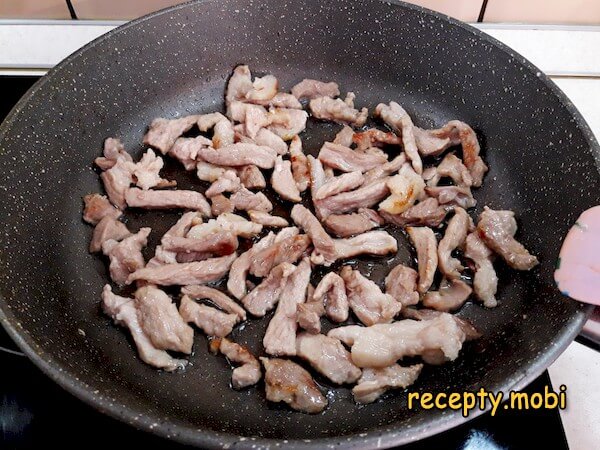
I fry them in heated oil until cooked through – this takes about 4 minutes. The thinner the cut, the less time the frying needs. Keep the heat medium so the meat browns on the outside and stays juicy inside.
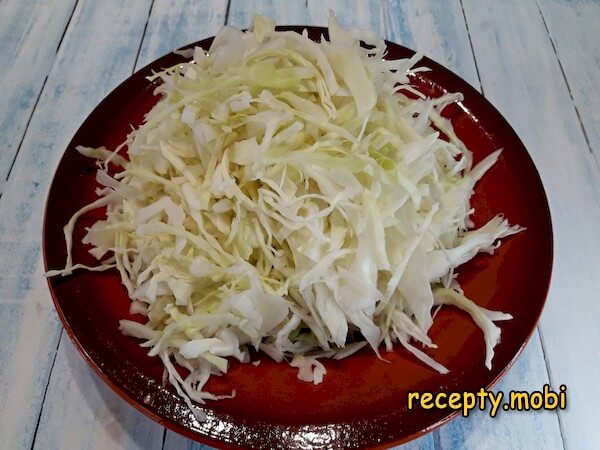
I shred the cabbage into very thin strips – the thinner it is, the more tender it pickles and the nicer it tastes. A sharp shredding knife or a shredding food processor speeds this stage up a lot.
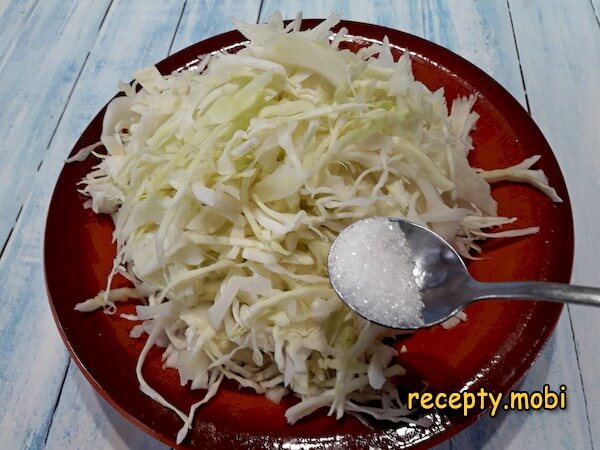
Now it needs to be lightly pickled – for this I add sugar and salt. Pickling softens the cabbage fibres and gives a slight piquant flavour; without it the white cabbage would be too tough for the salad.
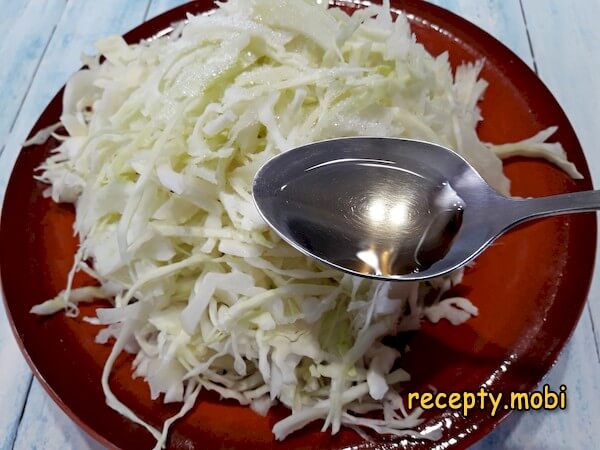
Then I pour in the vinegar – apple vinegar 6% gives a mild sourness that doesn't overpower the natural taste of the cabbage. You can replace it with white wine vinegar 6% or table vinegar 9% (1/3 tbsp).
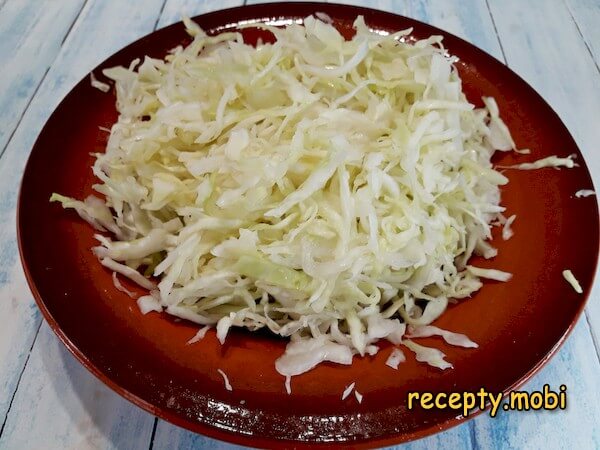
I thoroughly knead the cabbage with my hands while mixing it, so the marinade is spread evenly through the whole volume, which will noticeably shrink after this. The cabbage releases its juice and becomes soft and pliable.
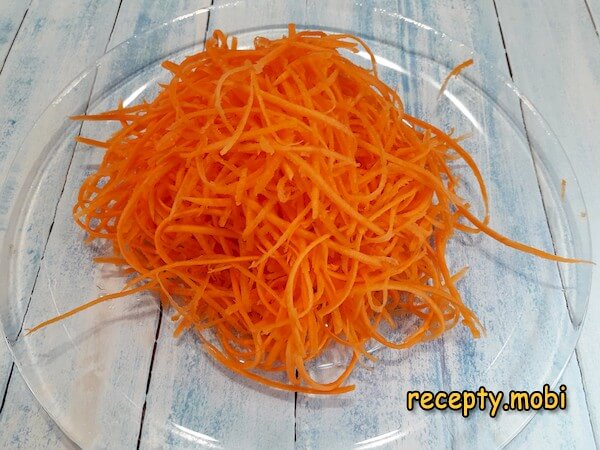
I grate the carrot into long strips using a Korean-carrot grater. If the root vegetable is very juicy, there is no need to marinate it – it looks natural in the overall composition even raw.
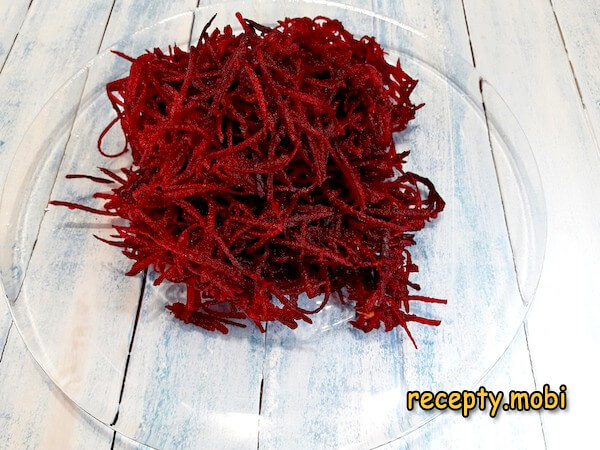
I grate the beetroot in a similar way – it is also juicy enough and doesn't need pickling. It's best to keep the grated beetroot separate from the other vegetables until serving, so it doesn't stain its neighbours.
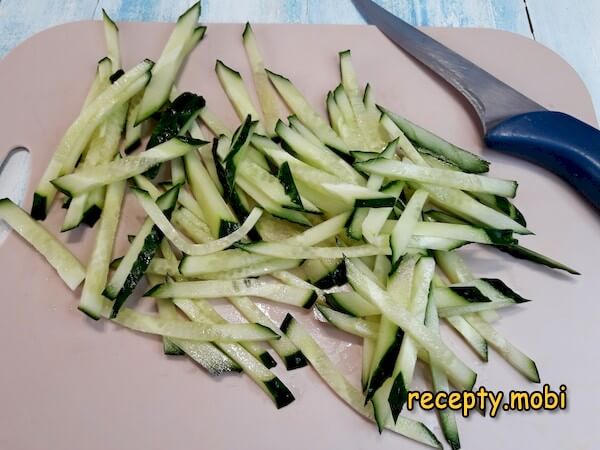
I cut the cucumbers first into elongated rounds, and then into thin strips. Such "matchsticks" complement the matchsticks of the other vegetables in the overall composition and give the sectors a uniform look.
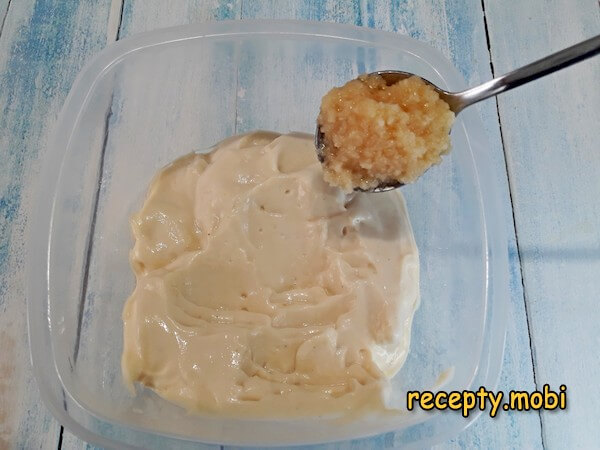
I prepare the dressing – I combine the mayonnaise (preferably homemade) with garlic pressed through a press. A small amount of garlic won't be too noticeable in the salad, but the garlic addition will highlight and enhance the flavour of all the vegetables and the meat.
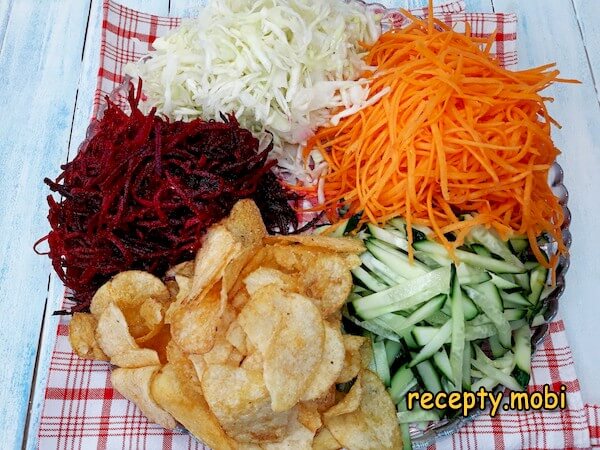
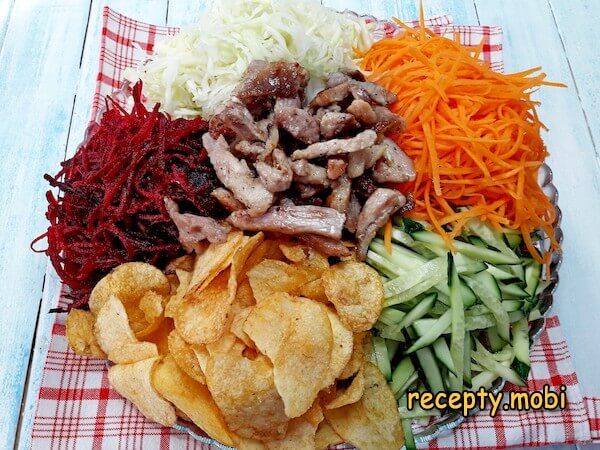
Now the salad needs to be assembled. For this I take a dish with low sides and arrange all the prepared vegetables and the chips in a circle, leaving room in the very centre for the meat. Each sector is a separate vegetable, so that a real "garden bed" is formed.
I fill the middle with the fried pieces of meat – this is the "goat" that has, as the idea goes, wandered into the garden. I mound the meat up so it rises above the vegetable sectors.
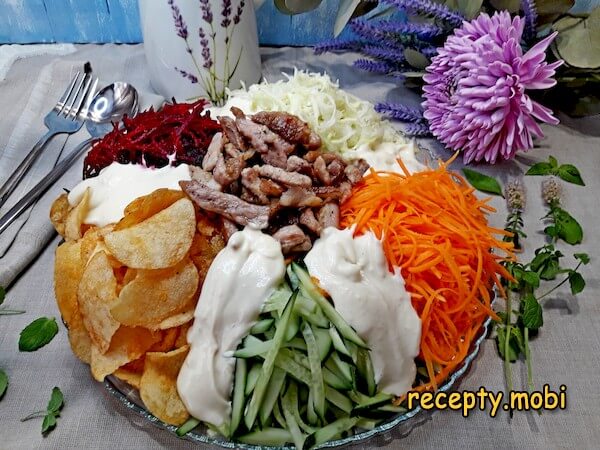
I lay two tablespoons of the garlic-mayonnaise dressing in dividing lines between the vegetable sectors – the dressing acts both as a "fence" between the sectors and is served with each part as a sauce.Before serving, I don't mix the "Goat in the Garden" salad. While dividing it onto individual plates you can mix everything, but there is another, more interesting option – leave it all as it is, and the guests will help themselves to the part of the salad they like best. This way the dish keeps its structure, doesn't go soggy and stays bright to the very end.


Tips
- 1
CHIPS LAST – the "secret" of the crunch. I add the potato chips to the dish right before serving – after 30 minutes under a layer of vegetables and dressing they go completely soggy and lose their main asset: the crunch. If the salad is being assembled in advance, it's better to put the chips out in a separate little bowl and stand it nearby, so everyone can add their own.
- 2
FRY THE MEAT IN ADVANCE – the "secret" against wateriness. Warm meat in the centre of the salad releases juice and melts the mayonnaise dressing – it spreads over the vegetables and spoils the composition. I always let the fried meat cool to room temperature before assembling – hot meat doesn't go into the salad. The same approach works in the classic Obzhorka salad with beef.
- 3
BEETROOT SEPARATELY – the "secret" against staining. Grated beetroot instantly stains everything it touches – in a common bowl the carrot and cabbage sector quickly turns burgundy and the "garden palette" is lost. I lay the beetroot out as the very last sector, just before serving, and don't let it touch its neighbours ahead of time.
- 4
VARYING THE PALETTE – the "secret" of seasonality. In summer you can add a sector of sweet bell pepper in different colours to the classic set, in autumn – cubed roasted pumpkin, in winter – pickled cucumbers or Korean-style carrot. The more colourful the palette, the more striking the "garden". A similar trick with colourful presentation is used in the Rainbow salad.
FAQ
Where does the name "Goat in the Garden" come from? +
The name of the salad is folk and light-hearted in nature. The fried meat in the centre of the dish symbolises a goat that has wandered into the garden, and the circular arrangement of colourful vegetables around it represents the beds of that garden. The name appeared around the 1990s in Soviet and post-Soviet cookery collections. Similar "garden" salads with a comparable composition are found in the cuisines of different peoples under other names: "Garden on the Table", "Rainbow", "Flower Bed" – the principle of the circular layout is the same.
What can replace the potato chips in the salad? +
If you don't have chips to hand, crispy "French-fry" potato matchsticks work great – thin, dry sticks added at the very last moment so they don't go soggy. You can use "straw" fried potatoes – finely shredded potato deep-fried to a golden crust. Alternative options: deep-fried onion, fried croutons of white bread, lentil crunches. The main rule is that the component must be dry and crunchy, to create a contrast of textures.
Can the pork be replaced with another meat? +
Yes, any meat will do – only the cooking time changes. Chicken fillet fries for 5–6 minutes, turkey fillet – 6–7 minutes. Beef requires longer frying (8–10 minutes) and beating beforehand, otherwise it will be tough. You can use ready-made meat products: ham, boiled tongue, smoked brisket, fried sausage, baked pork. Meat-free versions also work – fried mushrooms (champignons, ceps), fried suluguni cheese, tofu with soy sauce.
How long does the "Goat in the Garden" salad keep? +
Assembled, with dressing and chips – no more than 2 hours in the fridge, after which the chips and cabbage go soggy and the beetroot stains its neighbours. If you need to prepare it in advance: I cut and prepare all the components and store them in separate containers in the fridge for up to 12 hours. Assembly happens right before serving – it takes 5–7 minutes. I also store the dressing separately. The finished "Goat in the Garden" salad is best eaten on the day it's made – the next day the taste and the look lose a lot.
- Comment
or post as a guest
Be the first to comment.