avg —
Olivier Salad Cake – Original Presentation of the Salad

Instructions
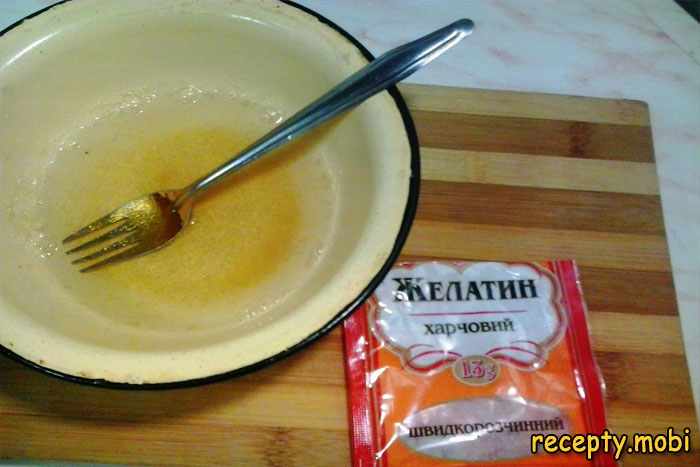
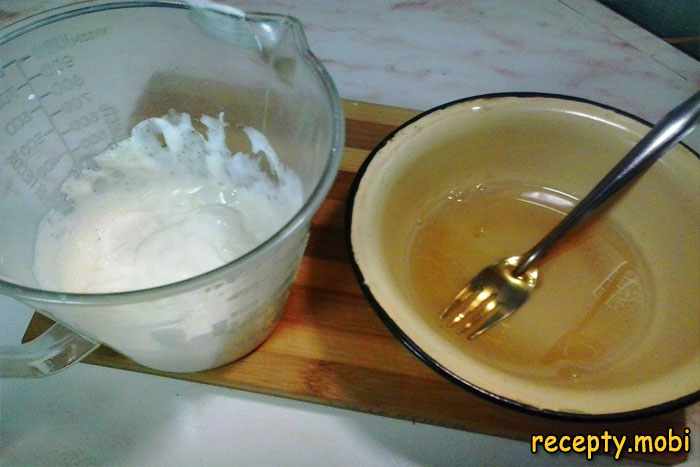
First, I prepare the gelatine solution. I pour 100 ml of warm (not hot!) water over the instant gelatine powder (15–25 g) and stir well for 30 seconds until it is completely dissolved. Hot water destroys the setting properties – this is crucial. I leave the solution to swell for 5 minutes.
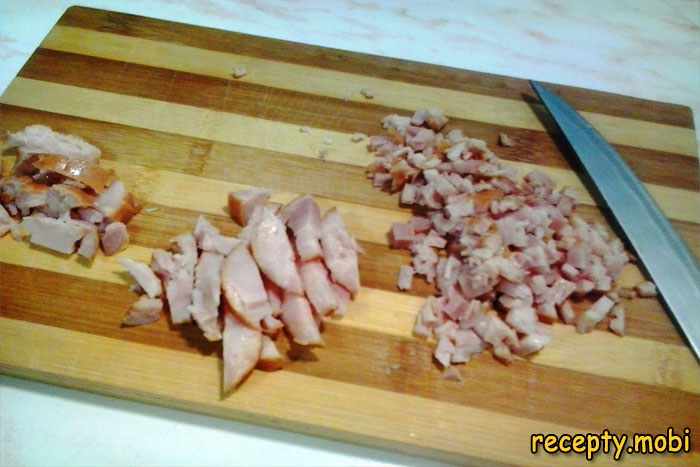
I cut the lightly smoked ham (200 g) into small 5 mm cubes – this size is ideal for even distribution through the salad and a neat cross-section. I transfer it to a deep bowl. The lightly smoked ham gives more aroma than boiled ham.
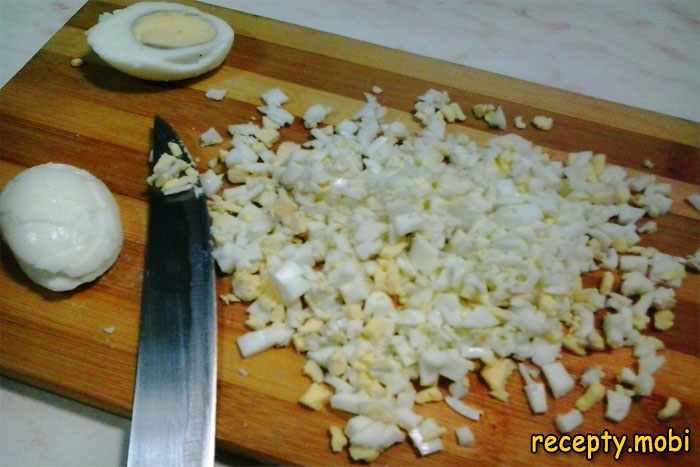
I chop 4 hard-boiled eggs (boiled for 10 minutes in boiling water) into small cubes or grate them on a coarse grater. Grated eggs give a softer, creamier texture, while cubes give a more defined structure in the slice.
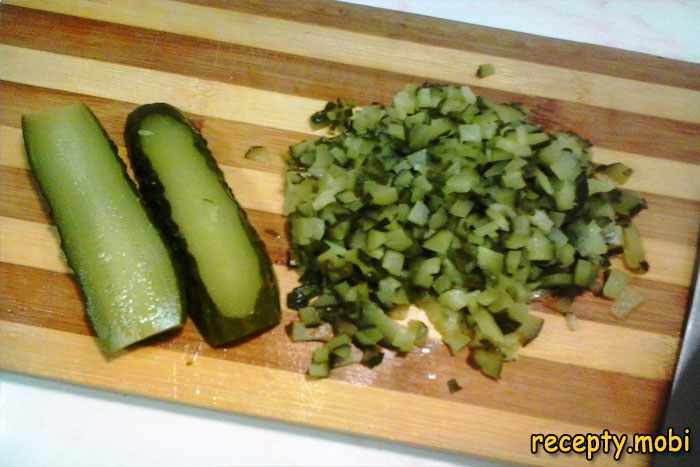
I also cut 4 salted or pickled cucumbers into small 5 mm cubes. If the cucumbers release juice while cutting, I make sure to squeeze them out by hand or through a sieve – excess liquid would make the salad watery and stop the gelatine from setting properly.
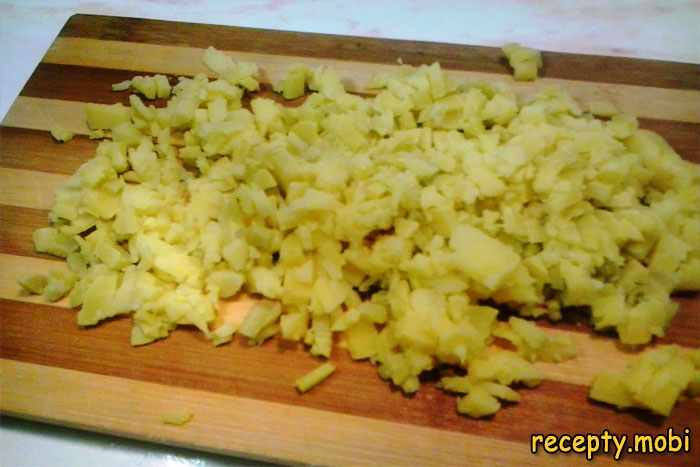
I peel 4 potatoes boiled in their skins and cut them as finely as possible – into 5 mm cubes. For the potatoes to cut neatly, they must be completely cold (it is best to boil them the evening before and chill them in the fridge). Hot potatoes stick to the knife and fall apart.
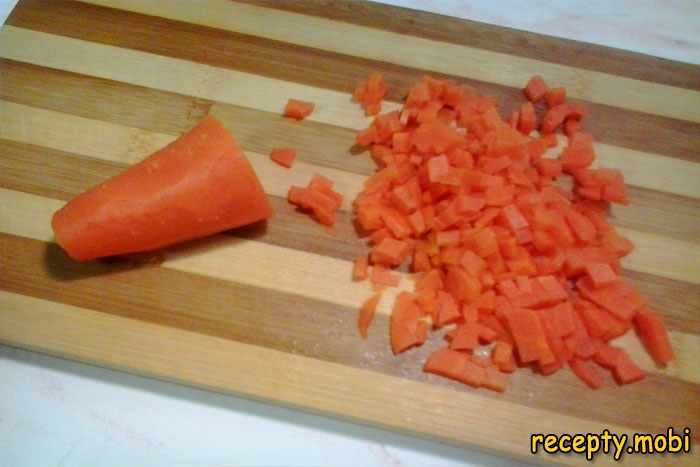
I cut half of the boiled carrot into small cubes and add it to the salad, and keep the other half whole for the final decoration of the cake – I will cut shaped flowers or rounds from it.
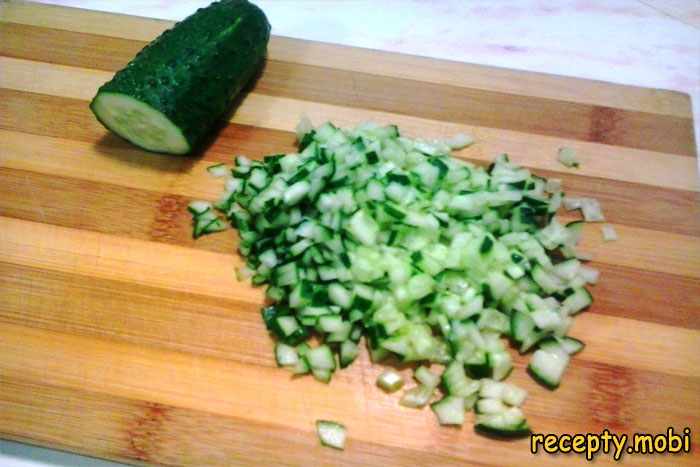
I finely chop one fresh cucumber and add it to the salad, and leave the second one whole to decorate the top – I will cut it into thin rounds. Fresh cucumber adds a characteristic crunch and a fresh aroma to the slightly sweet dressing.
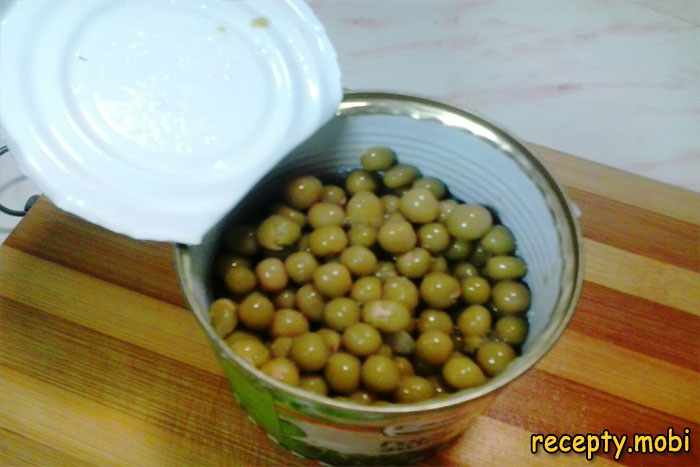
I drain off all the liquid from the canned green peas through a sieve and add the peas to the other salad ingredients. I always set aside 2–3 tablespoons of peas to decorate the top of the cake – this is the traditional Olivier garnish.
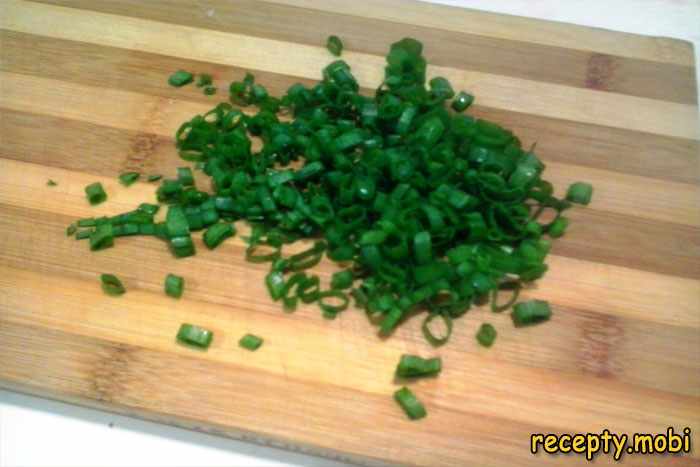
I finely chop the green onions (1 bunch) with a sharp knife and add them to the mixture. I mix all the salad ingredients thoroughly with a large spoon so they are evenly distributed – otherwise the slice of the cake will show untidy lumps of individual ingredients.
I warm the gelatine solution slightly in a water bath or in the microwave for 15 seconds until it is warm (but not hot) – at 50 °C the gelatine melts completely without losing its setting properties. I mix the warm gelatine solution thoroughly with 200–250 ml of mayonnaise until completely smooth – a restaurant trick for a stable dressing.
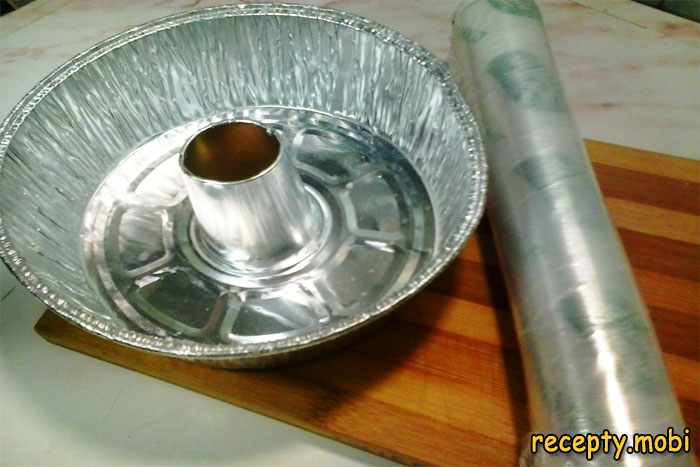
I line a 20–22 cm springform cake tin or a deep bowl with 2–3 layers of cling film, leaving the edges hanging over freely – they make it easy to lift the cake out later. The film stops the salad from sticking to the sides of the tin.
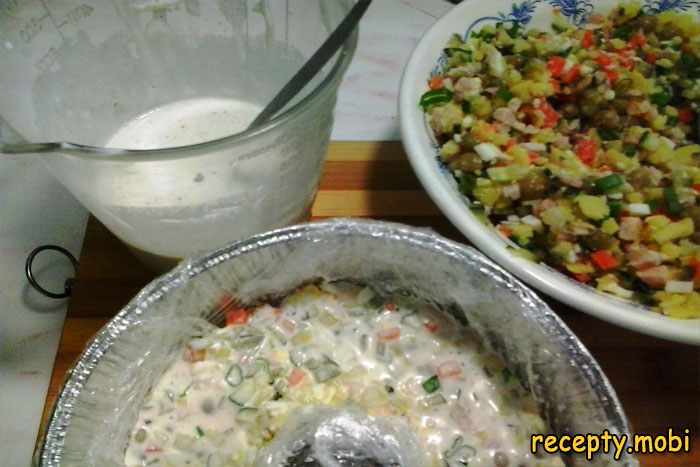
I pour 3–4 tablespoons of the gelatine and mayonnaise mixture over the bottom of the prepared tin for a base layer. I spread a third of the salad mixture evenly, pressing it down lightly with a spoon, and drizzle it with the mayonnaise dressing. I layer in the remaining mixture the same way, coating each layer with the gelatine dressing. I cover the tin with the loose ends of the cling film and put it in the fridge for 2–4 hours to set completely. You can leave it overnight – the cake will become firmer.
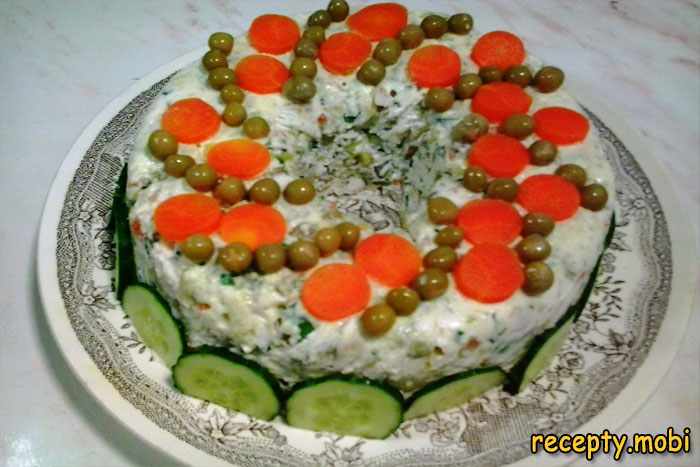
Once the home Olivier salad cake has set completely, I lift it out of the tin using the film – it works like a handle. I carefully turn it out onto a serving plate and remove the film. I decorate the top of the cake with a border of green peas around the edge, rounds of fresh cucumber and shaped pieces of carrot (stars, flowers, strips). For a festive presentation you can add green onion tops and a sprig of parsley. I cut it into 8 portions with a sharp knife, like an ordinary cake.


Tips
- 1
If the cucumbers (salted, pickled and fresh) release juice after cutting, be sure to squeeze them out through a sieve or by hand. Excess liquid will stop the gelatine from setting properly and make the salad watery.
- 2
Use instant gelatine – it is much easier to work with than ordinary leaf gelatine. Use 15 g (for a soft cake) or 25 g (for a firm cake) per 600–700 g of salad mixture.
- 3
Homemade mayonnaise (easy to make from egg, mustard and oil in 5 minutes) makes the Olivier salad cake much tastier than shop-bought. Use fresh, rich mayonnaise of 67–72% fat.
- 4
Instead of boiled ham you can use any cooked meat: boiled chicken (breast or thigh), boiled Doktorskaya sausage, smoked sausage or roasted meat. Each substitution changes the character of the dish.
FAQ
Why do you need gelatine in an Olivier salad cake? +
Gelatine is the main feature that sets the salad cake apart from an ordinary salad. It helps the salad mixture hold the shape of a cake after it is turned out of the tin, lets you cut neat portions without the salad falling apart, and gives that "aspic" look of a festive dish. Without gelatine, Olivier crumbles when sliced – it can only be served in a mould or a deep salad bowl. The amount of gelatine depends on the firmness you want: 15 g for a soft cake (like a pudding), 20 g for a medium-firm cake, 25 g for a firm cake (like jellied meat). Instant gelatine works better than ordinary gelatine.
How many hours does a homemade salad cake take to set? +
At least 2 to 4 hours in the fridge, but it is ideal to leave it overnight (8–12 hours) – this makes the cake firmer and helps it hold its shape better. At +4 °C the gelatine crystallises fully after 4 hours, but the extra time gives a more stable result when turning it out of the tin and slicing it. To speed up setting (to about 1 hour) you can put the cake in the freezer for 30 minutes, then move it to the fridge for another 30 minutes – this home trick works for an express version.
Can you make an Olivier salad cake without gelatine? +
Technically yes, but then it will be an ordinary salad rather than a cake. Without gelatine the salad has to be layered straight into a salad bowl or serving dish and served from it – you will not be able to turn it out and cut it into portions. As an alternative to gelatine, you can use agar-agar (4 g per 600 g of mixture) – it gives an even firmer structure but needs to be boiled first. Another option is to thicken the mayonnaise dressing with Philadelphia cream cheese (150 g) – the salad will hold its shape without gelatine, but the texture differs from a classic cake.
How do you decorate an Olivier salad cake for a celebration? +
The classic decoration is a border of green peas around the edge of the top, grated egg yolk in the centre, shaped pieces of carrot (stars, flowers, strips) around it, and overlapping rounds of fresh cucumber. For a New Year presentation – little fir trees from parsley and snowflakes from carrot. For a summer presentation – a layer of fresh cherry tomatoes and sprigs of greens. You can coat the sides of the cake with finely chopped dill or grated cheese. A festive version is to cover the whole cake with roses made from boiled carrot and sprinkle it with grated yolks. Creative homemade decoration always impresses guests more than anything shop-bought.
- Comment
or post as a guest
Be the first to comment.