avg —
Sushi Salad

Instructions
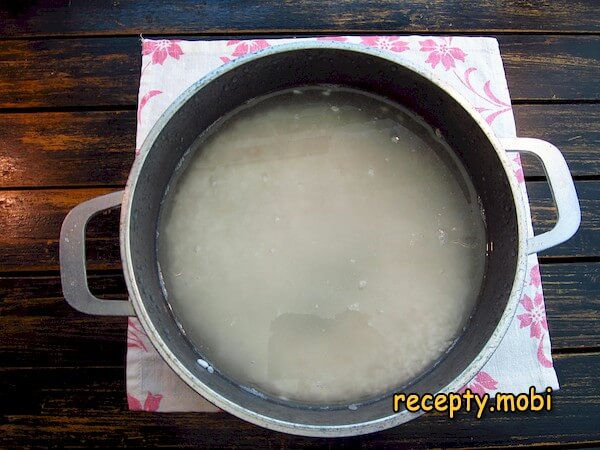
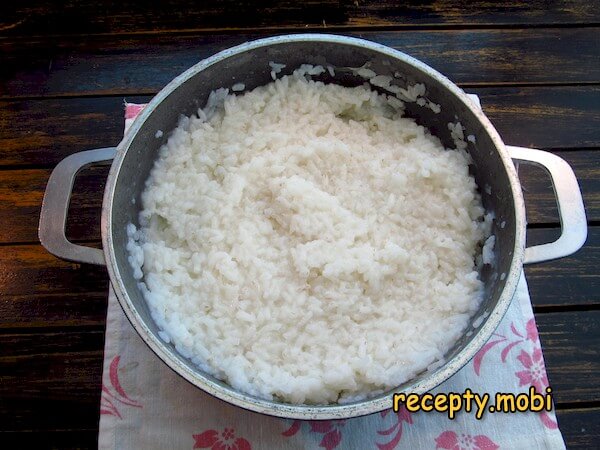
Rinse the rice until the water runs clear, then cover it with water and cook it until done and the liquid has been fully absorbed.
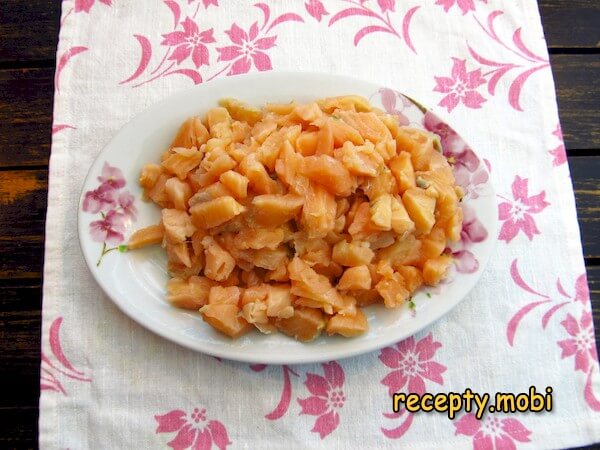
Cut the fish into medium-sized pieces. As the salmon is used raw, choose sushi-grade fish.
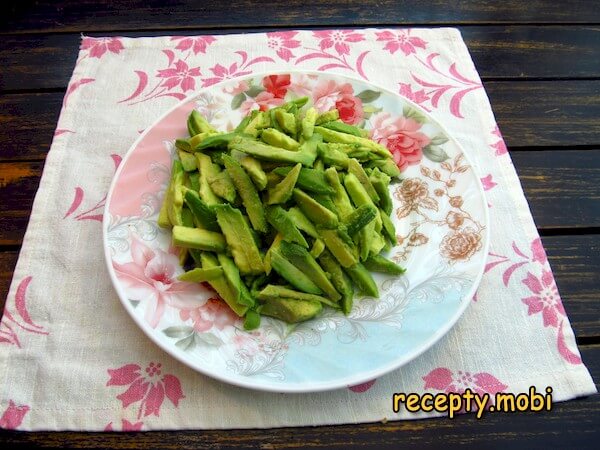
Peel the avocado and cut it into sticks.
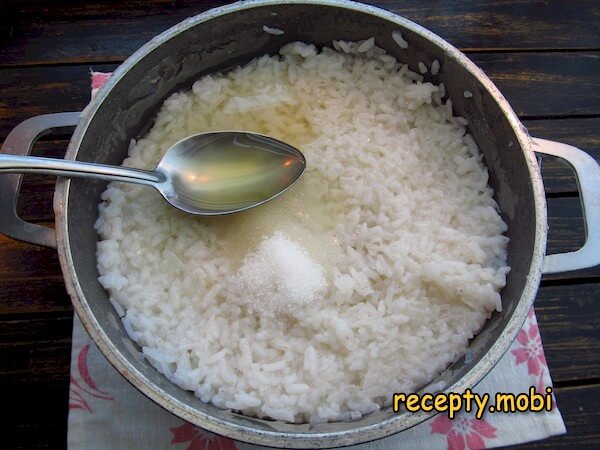
Add the vinegar and sugar to the hot cooked rice.
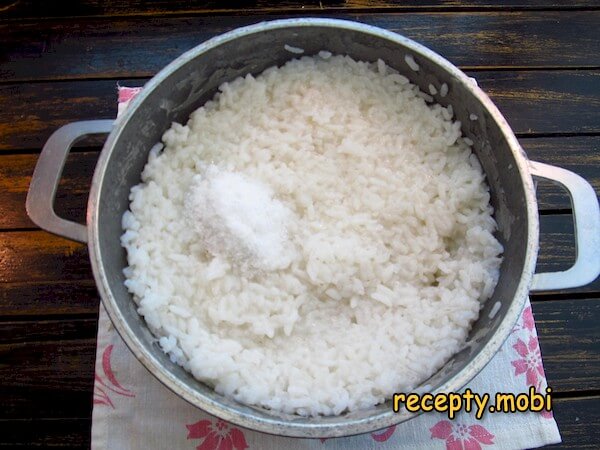
Then add the salt to the rice.
Mix the rice thoroughly and leave it to cool under a lid.
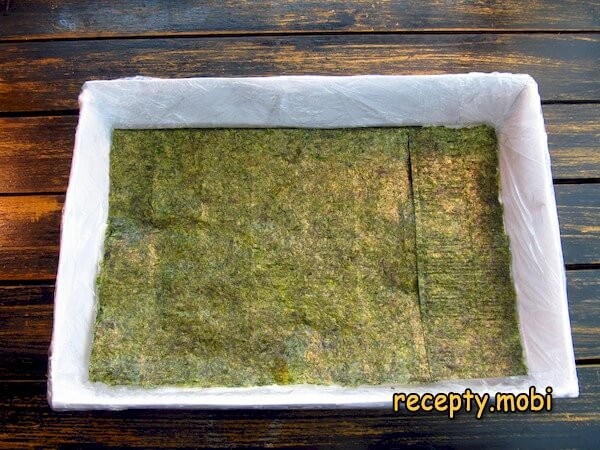
Lay a sheet of nori in a rectangular mould (18 by 28 cm).
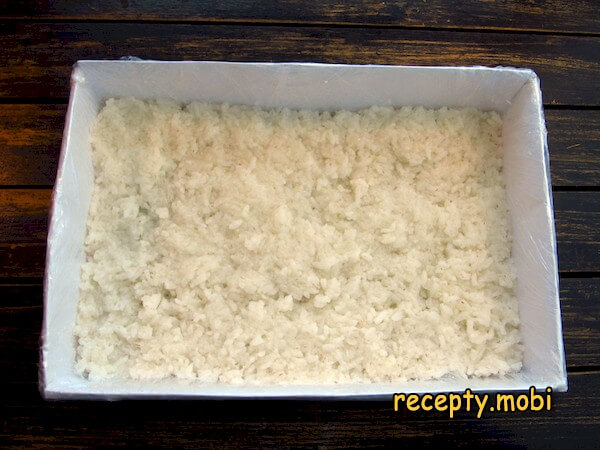
For the first layer, spread half of the rice evenly.
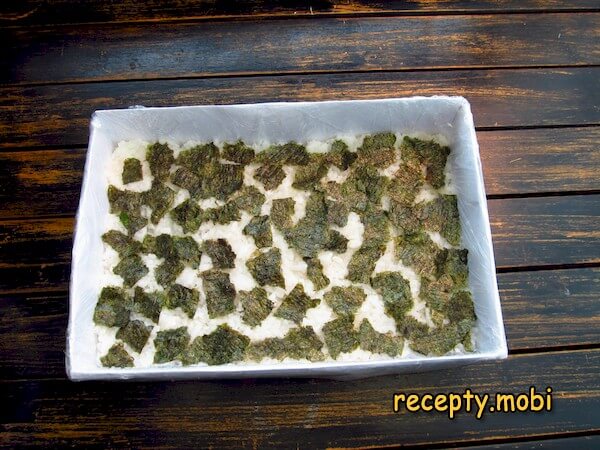
Cut one sheet of nori into pieces and lay them over the rice.
For the next layer, spread the cream cheese evenly.
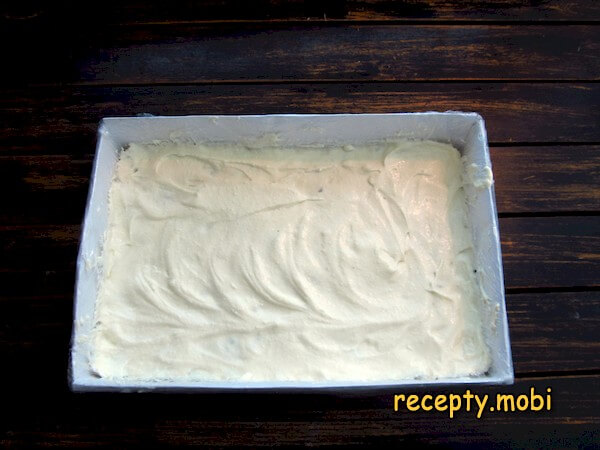
Then add a layer of salmon pieces.
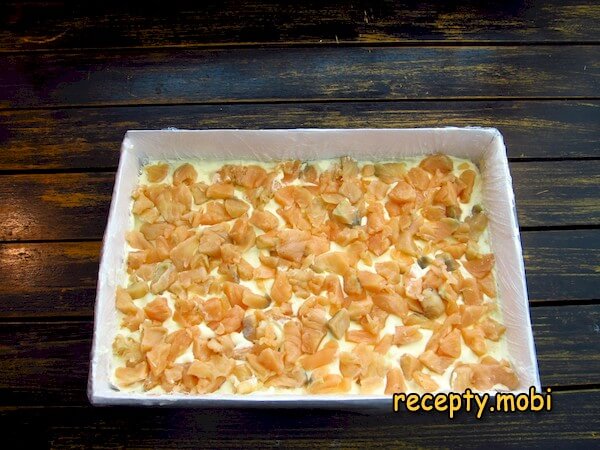
The next layer is the avocado.
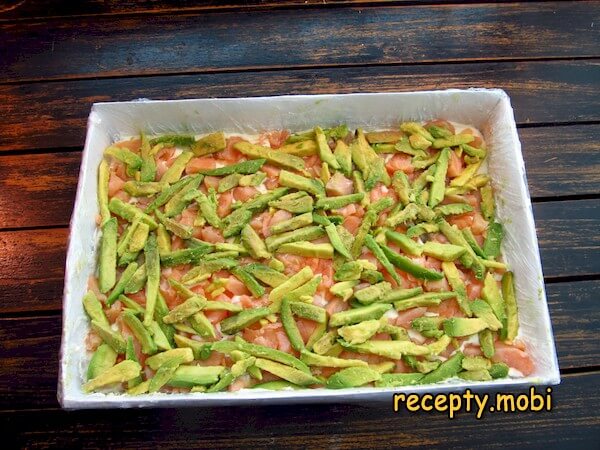
Then add a layer of the remaining rice.
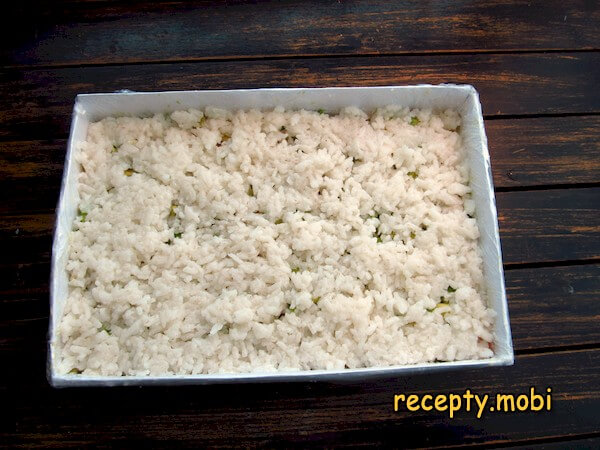
For the final layer, lay a sheet of nori on top. Place the sushi salad in the refrigerator for 1 hour.
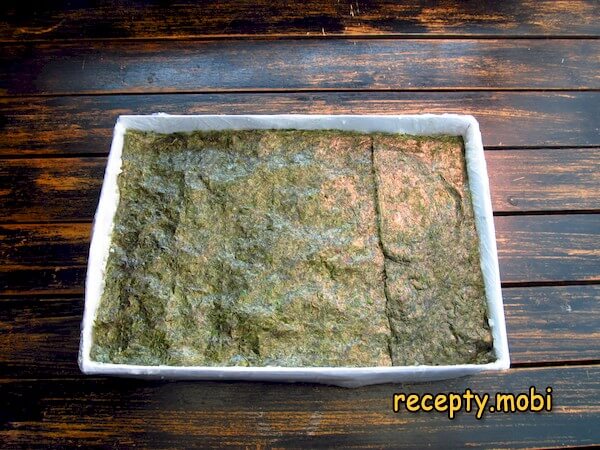
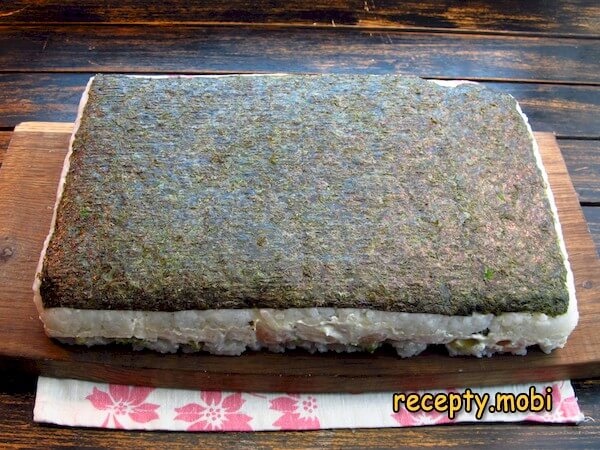
After an hour, remove the mould.
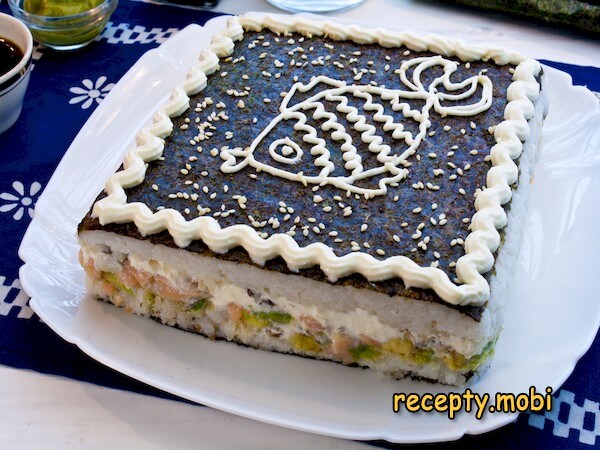
Decorate the sushi salad with cream cheese (a pastry syringe or a piping bag works well for this). The sushi salad is ready.


Tips
- 1
RINSE THE RICE UNTIL THE WATER RUNS CLEAR – the secret to stickiness. Without rinsing, the rice turns to mush. With clear water, the grains hold their shape yet still stick together.
- 2
VINEGAR INTO HOT RICE – the secret to aroma. Warm rice soaks up the seasoning. With cold rice, the vinegar just sits on the surface and the flavour does not develop.
- 3
ONE HOUR IN THE REFRIGERATOR – the secret to the shape. Without the resting time, the layers fall apart when you cut into it. After an hour, it holds its shape like a brick.
- 4
A PIPING BAG FOR THE CHEESE – the secret to presentation. With a spoon it looks messy. With a syringe or a piping bag you get neat little rosettes on top, just like in a restaurant. The same principle works for other kinds of layered salads set in a mould.
FAQ
Which rice should you choose? +
The ideal choice is special sushi rice such as Nishiki or Sen Soy (380 g – sticky, Japanese). Alternatives: round Krasnodar rice (380 g – the economy option, also sticky), jasmine rice (380 g – more delicate), Arborio risotto rice (380 g – also sticky, the premium option), round Kuban rice (380 g – economy), basmati rice (380 g – not suitable, too crumbly). The brands Mistral, Sen Soy, Nishiki and Shebekinsky are reliable. Fresh rice in an airtight pack is the premium choice. Do not use: parboiled rice (it will not stick) or instant rice (it turns to mush). For classic sushi you must use round, sticky rice.
What can you use instead of salmon? +
Alternatives: lightly salted salmon (300 g – the classic), lightly salted trout (300 g – economy, with a brighter colour), raw sushi-grade tuna (300 g – premium), boiled prawns (300 g – budget), smoked salmon (300 g – a brighter flavour), smoked eel (300 g – premium), red caviar (50 g as an accent). The brands Vici, Meridian and Baltic Coast are reliable. Fresh farmed salmon is the premium choice. Do not use: fried fish or tinned fish (the wrong texture), or salted herring (it will throw off the flavour). For classic sushi you must use sashimi-quality red fish.
How long does sushi salad keep? +
In the refrigerator, in the mould and covered with film, it keeps for 1 day. Any longer and the avocado will darken, the rice will dry out and the fish will lose its freshness. Before serving, let it stand for 10 minutes at room temperature so the cream cheese softens. I do not recommend freezing it, as the structure will break down completely. The salad is at its best 1-2 hours after assembly, once it has rested in the cold and the layers have set. On the second day the flavour is acceptable, but the texture is noticeably worse. Do not leave it at room temperature for longer than 2 hours, as raw fish spoils quickly.
What do you serve sushi salad with? +
The Japanese classics: soy sauce such as Kikkoman in small dishes; with wasabi and pickled gari ginger; alongside a glass of green tea such as Sencha or Genmaicha; with a bowl of miso soup on the side; with a light Japanese beer such as Asahi or Sapporo; with a glass of sake (hot or cold); with a glass of dry white wine (Sauvignon Blanc) for a European-style serving; with chuka salad (wakame seaweed with sesame); with a glass of freshly squeezed apple juice; with sliced cucumber and sesame; with prawn tempura. For a Japanese dinner, serve it with miso soup and sake. It is a versatile appetiser for guests and for a buffet.
- Comment
or post as a guest
Be the first to comment.