avg —
Mimosa Salad with Canned Fish and Cheese

Instructions
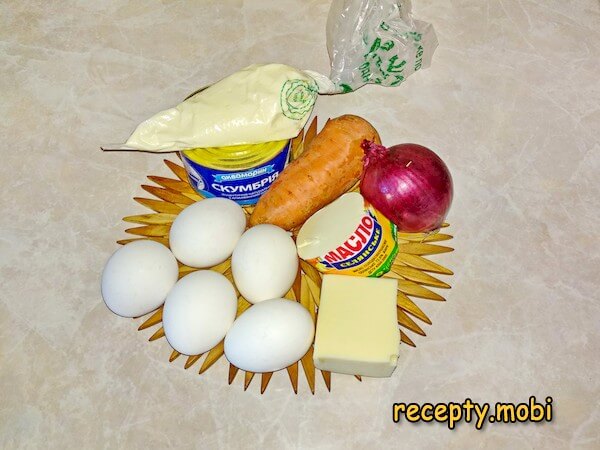
I prepare the ingredients in advance: I chill the cheese in the fridge and freeze the butter for at least 1 hour. I hard-boil the eggs (10 minutes after the water comes to the boil) and boil the carrots in their skins (30 minutes). I cool them completely and peel them – hot ingredients crumble when grated and lose their shape.
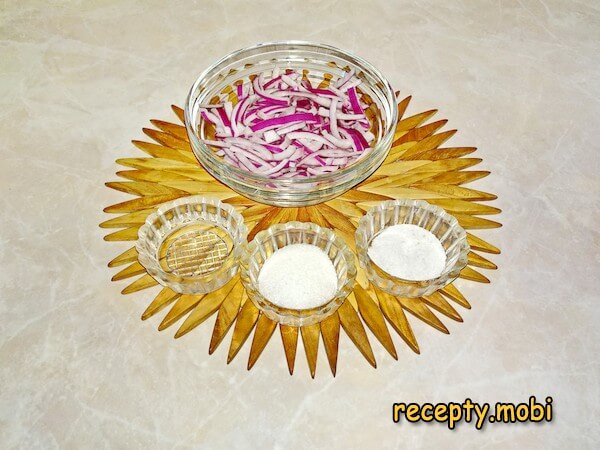
I slice the red onion into thin half rings, 2–3 mm, and pour over a marinade of 1 tsp salt, 1 tsp sugar, 2 tbsp vinegar and 100 ml of boiling water. I leave it for 15 minutes – the marinade removes the bitterness and adds a pleasant piquancy. Pickled onion is far better than raw onion in Mimosa – softer and sweeter, it does not stand out in the salad.
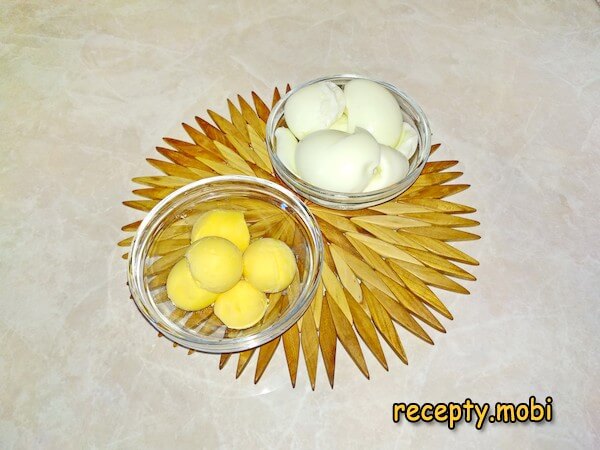
I peel the boiled eggs and carefully separate the whites and yolks. I use 5 eggs so that all the layers are generous – fewer would not be enough. I set the yolks aside for the top "yellow" layer and the whites for the bottom one. This separation is the key to the two-colour composition of Mimosa.
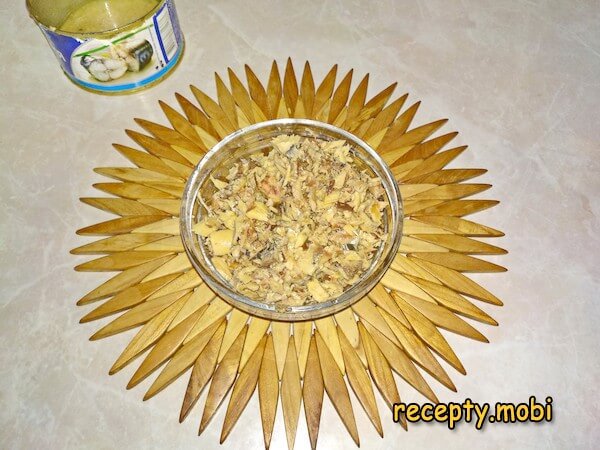
I open the can of mackerel, drain off the oil (but leave a little for juiciness) and mash the fish thoroughly with a fork on a flat plate. I remove any large bones and the backbone. Sardine, pink salmon and salmon also work – the only thing that matters is that the fish is canned in its own juice or in oil.
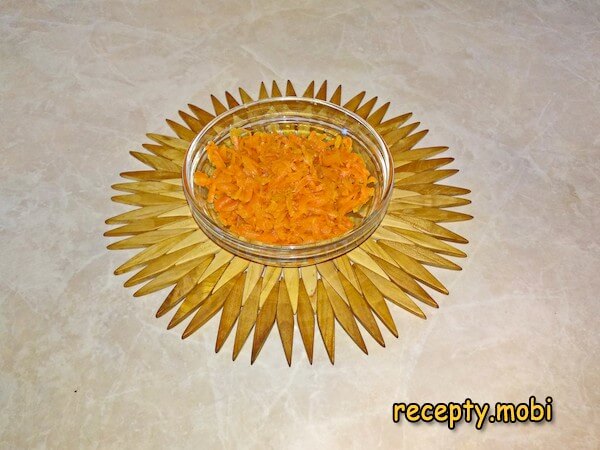
I grate the boiled carrots on a coarse grater for an airy texture. The carrot gives a warm orange layer between the whites and the fish. I use a coarse grater – a fine one turns the carrot into mush that "spreads" through the salad and ruins the clean layer boundaries.
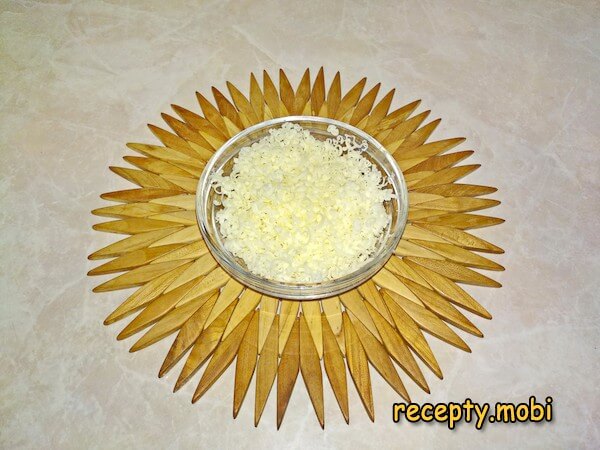
I grate the chilled hard cheese (100 g) on a fine grater for a "fluffy" cheese layer. Cold cheese is much easier to grate – warm cheese smears and clogs the grater. Any hard cheese works: Russian, Dutch, Gouda or Edam. The cheese adds creamy notes and binds the other layers together.
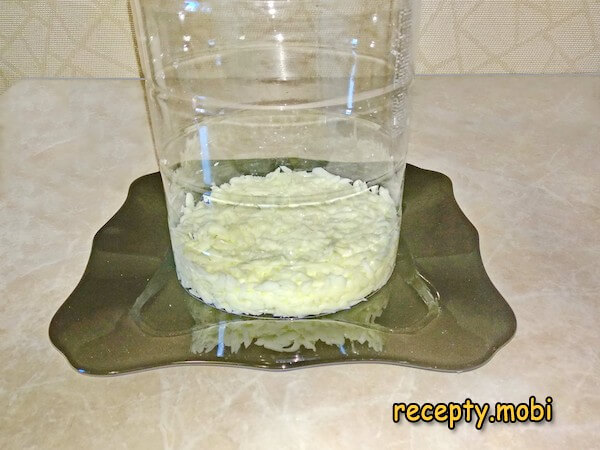
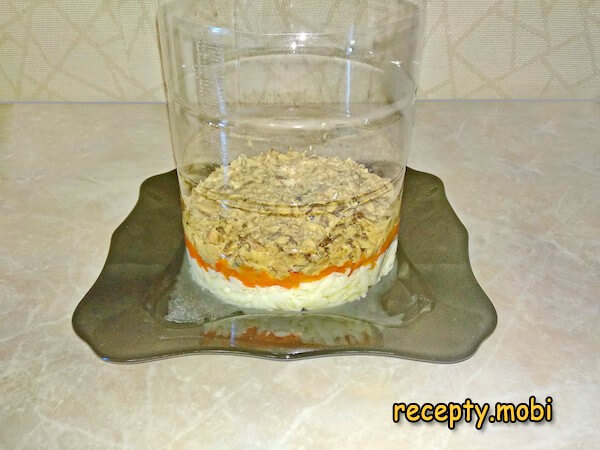
I place a cooking ring on a serving dish and begin assembling. The first layer is the coarsely grated egg whites, which I smooth into an even layer with no "bumps". I lightly salt the whites on top – without salt they taste "empty". This layer creates a neutral "snowy" base for everything that follows.
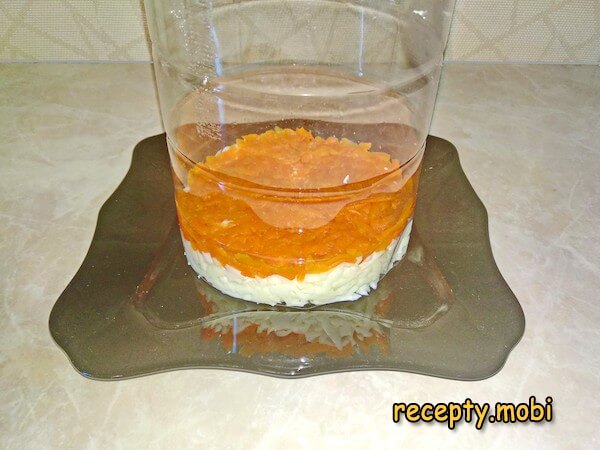
The second layer is half of the grated carrot, which I smooth out and press down lightly. The carrot gives a bright colour and a sweet flavour contrast. I use only half – the other half goes higher up for a "double" carrot effect in the salad.
The third layer is the mashed fish, spread evenly across the whole area of the ring. The fish is the "soul" of the salad, its main flavour component. Over the fish I pipe a mayonnaise lattice from a piping bag – it soaks into the fish and binds it to the other layers.
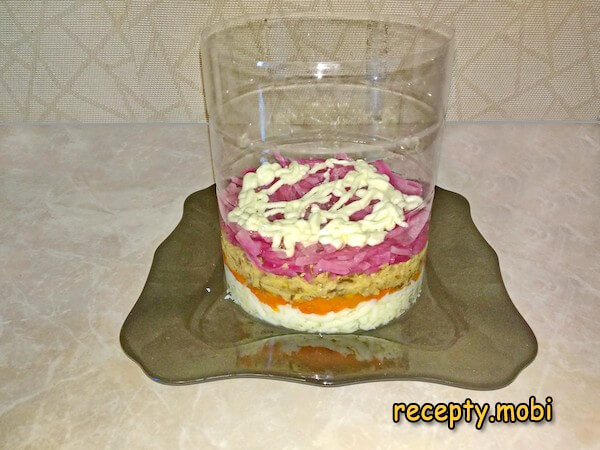
The fourth layer is the onion, squeezed free of the marinade and spread evenly. The onion must be squeezed thoroughly – excess marinade will "leak" into the salad and ruin the layering. I spread mayonnaise over the onion for extra binding and juiciness.
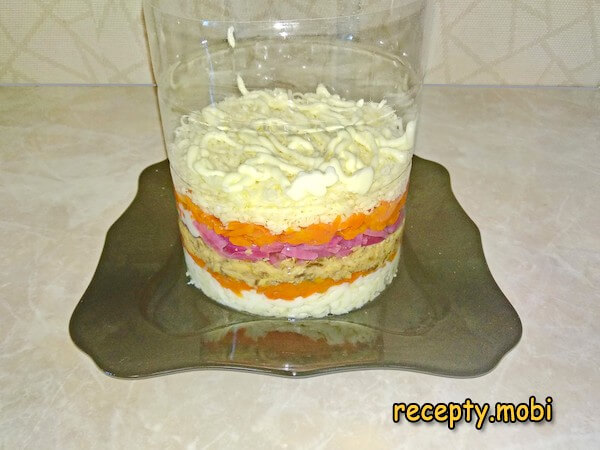
The fifth layer is the remaining carrot over the onion, and the sixth is the grated cheese on top. Between them I pipe a thin mayonnaise lattice to soak through. The double carrot layer gives the salad a special juiciness and sweetness – the signature touch of Mimosa.
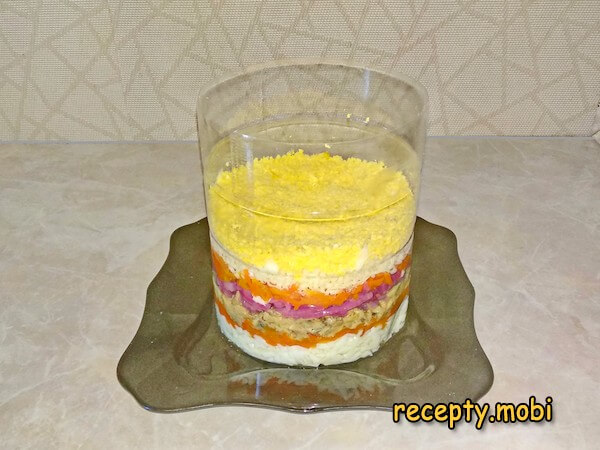
The seventh layer is the finely grated yolks, which I smooth out carefully with a spoon. I lightly salt the yolks on top – they "come alive" with a little salt. The yellow colour forms the base for the "mimosa flower" effect, the salad's main decorative feature.
The final layer is the frozen butter, grated on a fine grater directly over the salad in "snowy flakes". I do not press it down – it should stay as airy as a feather duvet. I decorate with sprigs of dill and yolk in the shape of "mimosa flowers". I put it in the fridge for at least 2–3 hours to let it soak through.
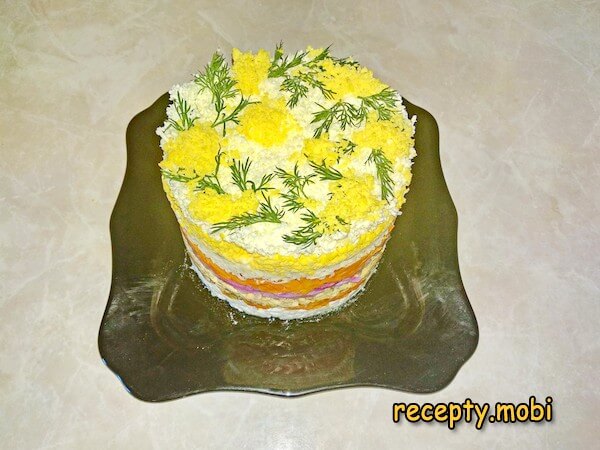
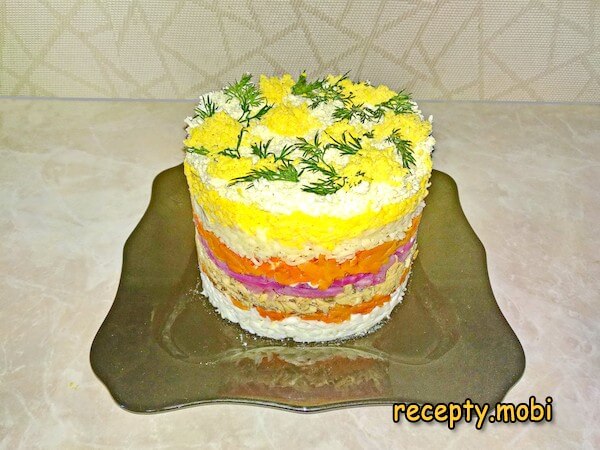
The Mimosa salad is ready! I remove the ring before serving – all the layers are clearly visible from the sides. I serve it chilled in a pretty glass bowl or in individual portions on serving plates. A festive classic for New Year and any celebration.


Tips
- 1
Always freeze the butter for at least 1 hour before grating – this gives "snowy" flakes, whereas soft butter clumps together.
- 2
Use mackerel, pink salmon, sardines, salmon or saury – the only thing that matters is that the fish is canned in oil or in its own juice.
- 3
Let the salad rest for 2–3 hours in the fridge to soak through – without resting, the layers will be "raw" and tasteless. I use a similar principle for Sunflower salad.
- 4
Serve in individual glass dishes – this way all the colourful layers are visible, which looks more impressive on a festive table.
FAQ
Can I make it without butter? +
Yes, replace the butter with an extra layer of grated cheese or simply skip this step – the salad will still be tasty. The butter adds tenderness and creaminess; without it the salad is a little "drier" and lower in calories. As an alternative, you can use mayonnaise for the top layer, or yoghurt for a lighter version. Butter is the "Soviet" classic of Mimosa, but modern home cooks often leave it out to reduce the calorie content of the finished salad.
What can replace the canned fish? +
Boiled or baked red fish (pink salmon, salmon, trout) works well – a more "gourmet" option. Smoked mackerel or smoked salmon will give a fragrant smoky note. Lightly salted salmon or trout make a delicate substitute with a hint of the sea. For a leaner option, use canned tuna in its own juice. The main condition is that the fish should be soft and mash easily with a fork, so it forms an even "fish" layer in the salad.
How long does the finished salad keep? +
The finished Mimosa salad keeps in the fridge for up to 2 days in a tightly closed container. On the second day the salad is even tastier – the layers have fully soaked into one another. After 2 days the canned fish can start to turn sour and spoil the flavour. Do not leave the salad at room temperature for more than 2 hours – mayonnaise and fish spoil quickly in the warmth.
Why is the salad called "Mimosa"? +
The salad got its name from its visual resemblance to mimosa flowers – small, fluffy yellow balls. The yellow top layer of grated yolks resembles mimosa blossoms, while the airy "snowy" flakes of butter create the effect of the flower's fluff. The salad was invented in the USSR in the 1970s, and the name quickly caught on thanks to the lovely association with this springtime festive flower, a symbol of 8 March in the Soviet tradition.
- Comment
or post as a guest
Be the first to comment.