avg —
Zucchini Caviar with Tomato Paste for Winter (No Sterilization)

Instructions
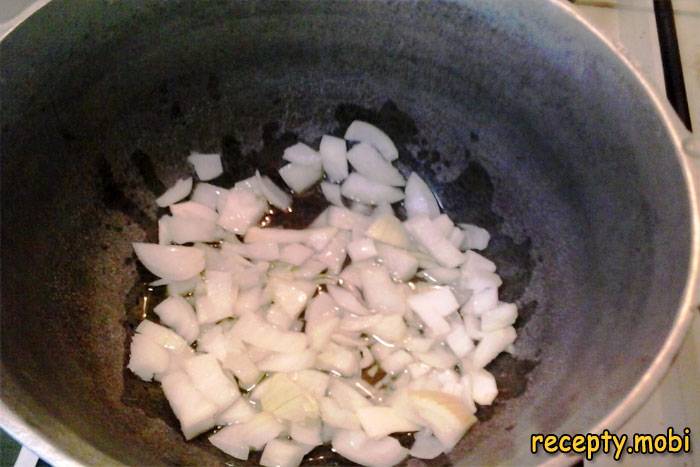
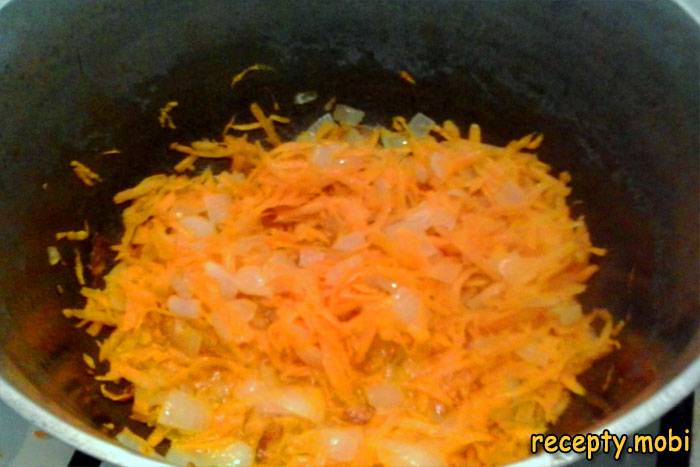
Heat the oil in a deep frying pan or a heavy-bottomed saucepan – thin cookware will cause scorching. Saute the onion, cut into small pieces, until lightly golden for 5–7 minutes over medium heat. The onion should turn translucent and a little golden – this is the flavour base of the whole caviar.
Grate the peeled carrot on a coarse grater or chop it into strips, then add it to the onion. Fry over moderate heat for 7–10 minutes, until the carrot becomes soft and slightly browned. The carrot adds a pleasant sweetness – do not skip it, or the caviar will taste sour and flat.
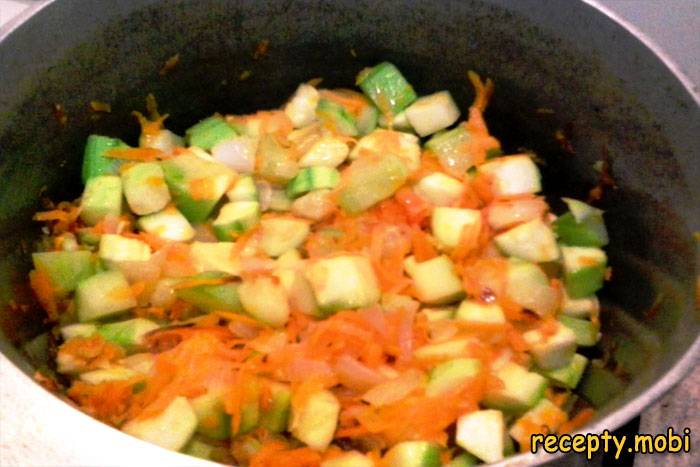
Cut the zucchini into medium cubes of 2–3 cm and sprinkle with salt. Add the prepared zucchini to the saucepan with the vegetables and fry for 15 minutes, stirring from time to time. The zucchini will release a lot of liquid – this is normal; some of it will evaporate and some will become the base of the sauce.
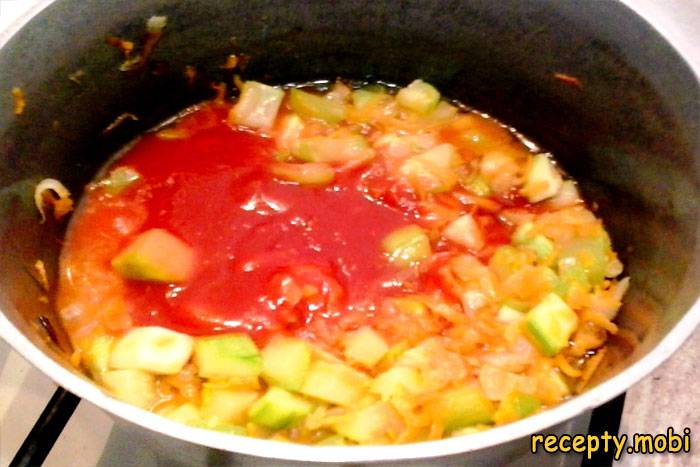
Dissolve the tomato paste in 100 ml of hot water until smooth. Pour the resulting mixture over the zucchini and vegetables and simmer over low heat with the lid closed for another quarter of an hour. Thick paste that has not been diluted with water spreads poorly and forms lumps in places.
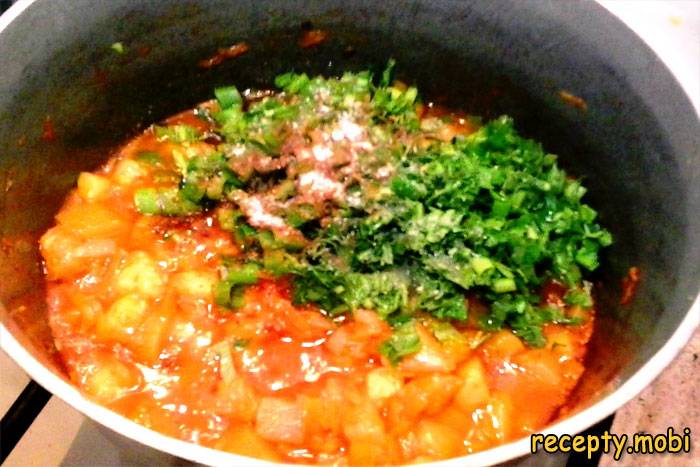
Finely chop the washed greens. At the end of cooking, add the sugar, spices, vinegar and greens to the stewed vegetables. The sugar balances the acidity of the tomato paste – without it the caviar will taste sharp. If you like, add a few cloves of garlic put through a press.
Cool the stewed vegetables to room temperature. Then blend to a purée using an immersion blender or pass them through a meat grinder. You must not purée a hot mass with a blender – the splashes will scald your hands and the steam may ruin the appliance itself. Be sure to let it cool to 40 °C.
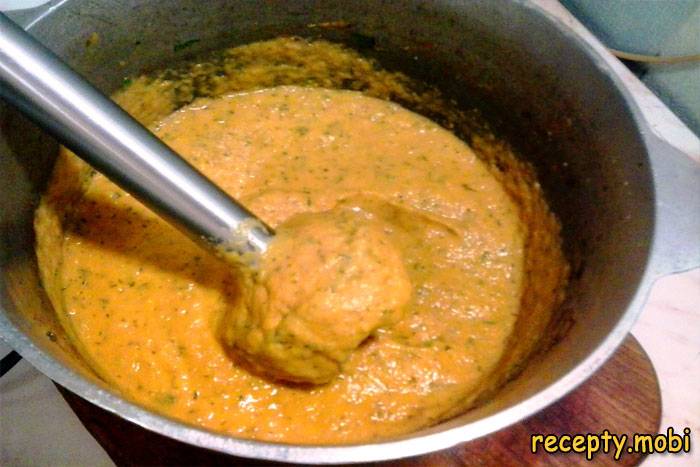
Taste the finished caviar and, if needed, add more salt and spices. Set the saucepan over low heat, bring it to a boil under the lid and cook for a couple of minutes. This is an important step for keeping quality – boiling it again kills the microflora before sealing.
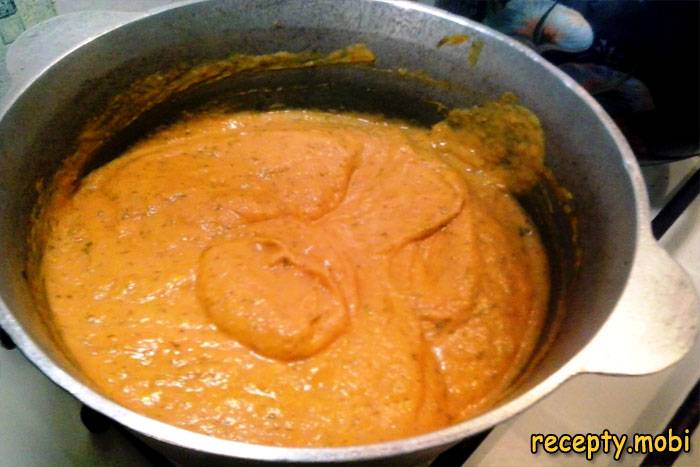
Steam clean jars and metal lids over steam or in the oven for 10–15 minutes. Pack the hot caviar into the jars straight from the saucepan, without letting it cool. Cold caviar in a hot jar can cause the lids to pop off during storage.
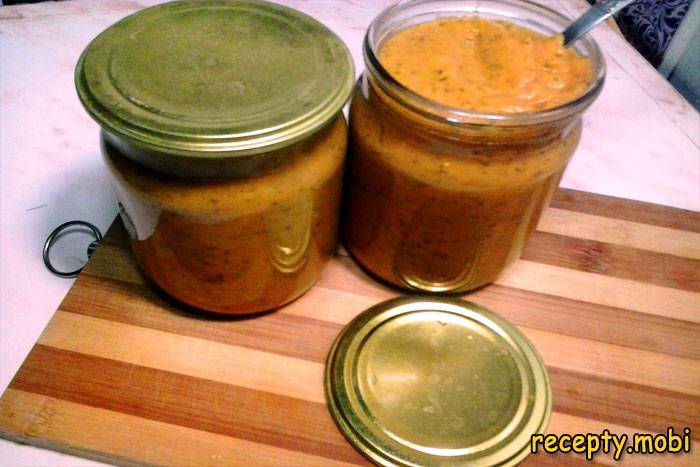
Seal the jars tightly with a canning machine. Turn the jars upside down and check that they are airtight – not a single drop should leak from a properly sealed jar.
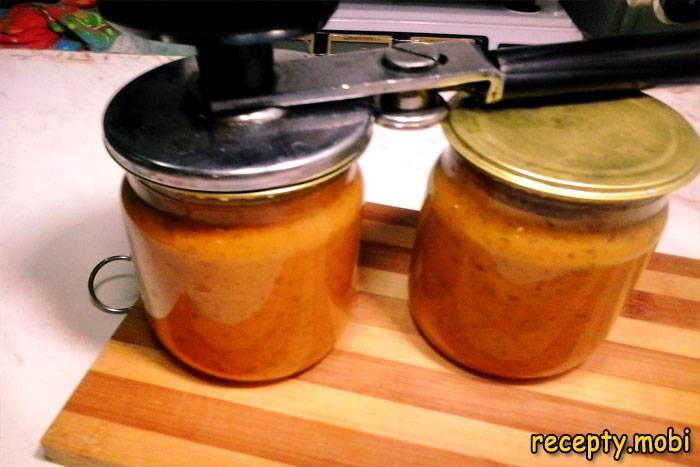
Let the sealed jars cool completely under a blanket for slow cooling – this creates an additional vacuum. Store at a temperature no higher than +15 °C and away from light – in a cellar, pantry or the bottom shelf of a cupboard.



Tips
- 1
Use young zucchini up to 25 cm long – they are more tender, contain fewer seeds and are ready to be puréed straight away, without removing the core.
- 2
Add the vinegar at the very end – it works as a natural preservative and should not be boiled away during cooking.
- 3
The longer you stew the vegetables, the thicker the caviar will be – for a thick consistency, reduce it for another 15–20 minutes after puréeing. I make aubergine caviar using a similar method.
- 4
Store it in a cool, dark place for up to a year – in the light the caviar loses its colour and vitamins.
FAQ
Can I use large, overripe zucchini? +
Yes, but be sure to remove the tough skin and the large seeds in the centre – they will give the caviar a coarse texture and an unpleasant bitterness. Young zucchini up to 25 cm long make the most tender caviar with a smooth consistency. If you use large ones, increase the stewing time by 10–15 minutes – the older the vegetable, the longer it needs to soften. The difference in flavour is minimal, but in texture it is noticeable.
Why does the caviar turn out too watery? +
The main reason is insufficient stewing. Zucchini are 95% water, and that water has to evaporate. Increase the stewing time by 15–20 minutes with the lid off – this lets the moisture escape faster. You can also add 1–2 tablespoons of semolina or breadcrumbs 10 minutes before the end of cooking – they absorb the excess liquid and make the caviar thick. Do not dissolve the tomato paste in a large amount of water.
How long does zucchini caviar keep in jars? +
In properly sealed sterile jars – up to a year in a cool, dark place at a temperature of 5–15 °C. A cellar, a pantry or a north-facing balcony are ideal spots. Once opened, store the jar in the refrigerator for up to 7–10 days. If mould appears on the surface or the caviar makes the lid bulge, throw it away immediately – such jars are dangerous to eat because of the risk of botulism.
- Comment
or post as a guest
Be the first to comment.