avg —
Zucchini Caviar with Mayonnaise and Tomato Paste for Winter

Instructions
I prepare the ingredients for the zucchini caviar with mayonnaise and tomato paste for winter.
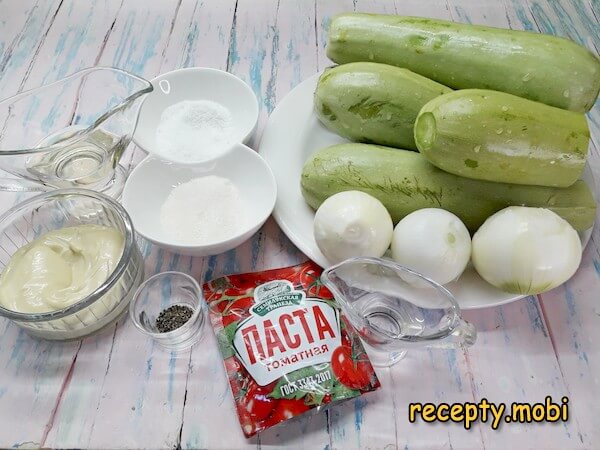
Any zucchini is suitable for the caviar, even old ones. You just need to cut out the flesh with the seeds and trim off the tough skin. With young zucchini there is no need even to peel the skin, as it is still tender and there are hardly any seeds. All that remains is to remove the stalk ends and any damaged spots and cut the fruit into pieces convenient for grinding. I put them into a food processor or meat grinder at the same time as the onion.
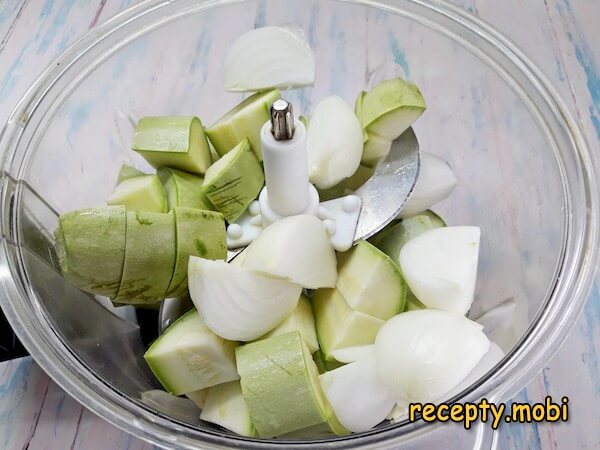
I blend the whole portion into a purée.
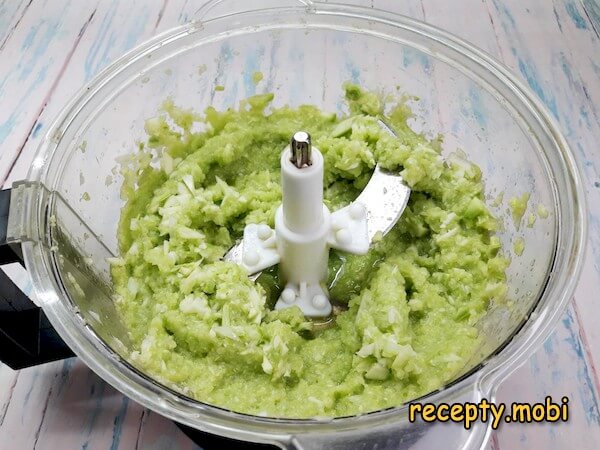
I transfer the mixture into a pot with a thick bottom for further cooking down.
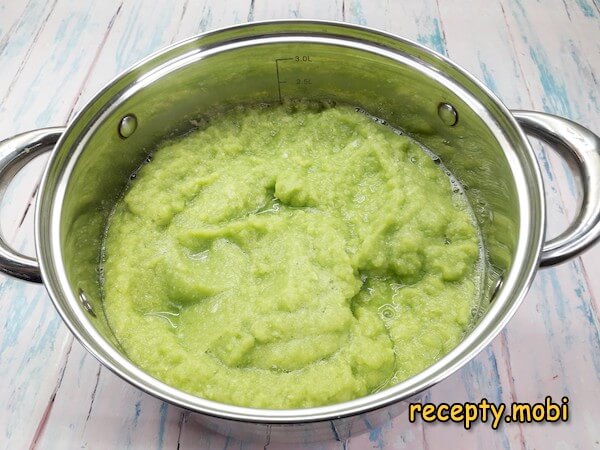
I turn on low heat. As they warm up, the zucchini will release a lot of liquid – it needs to be evaporated off as much as possible, while not leaving the stove and stirring the mixture.
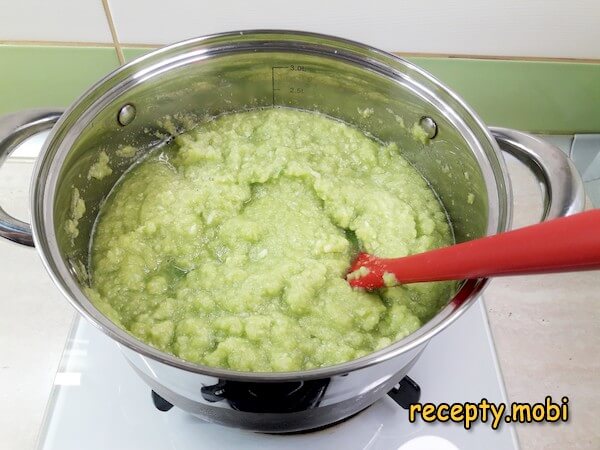
After an hour the zucchini will settle a little and almost all the moisture will have evaporated.
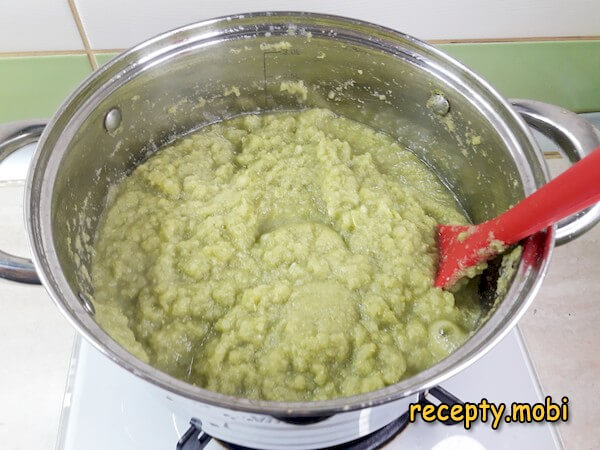
Without turning off the heat, I add the oil to the hot mixture.
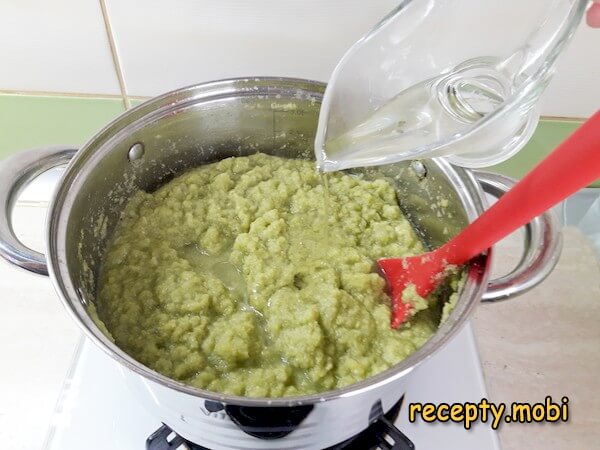
Next I add the mayonnaise (it is better if it is homemade – this significantly affects the taste of the finished product).
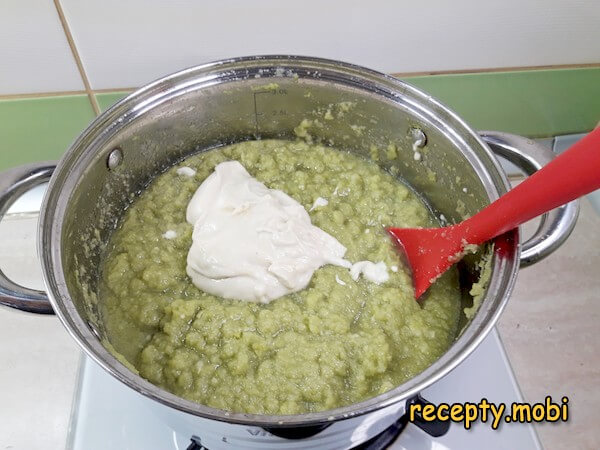
I add the natural tomato paste.
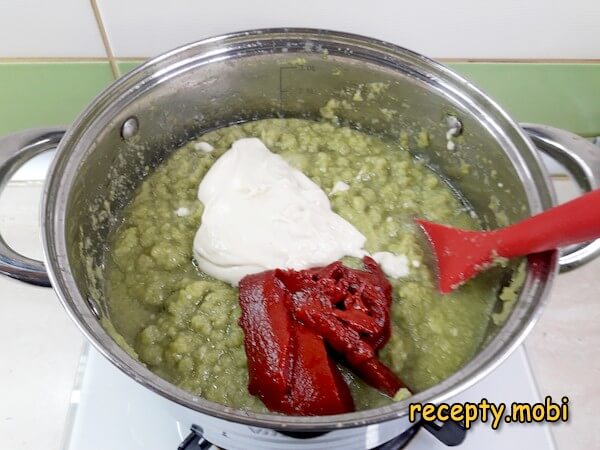
I sprinkle in the rock salt, sugar and pepper.
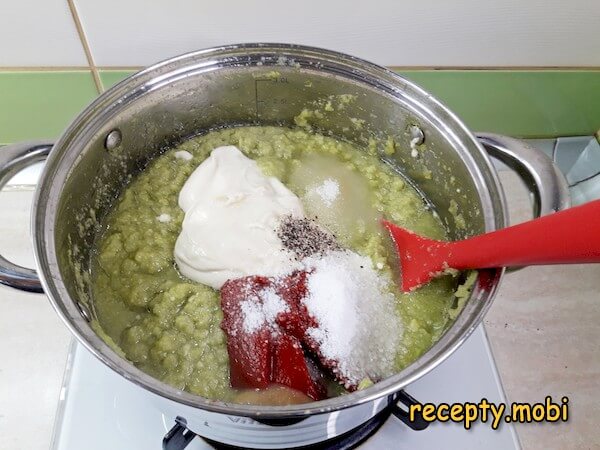
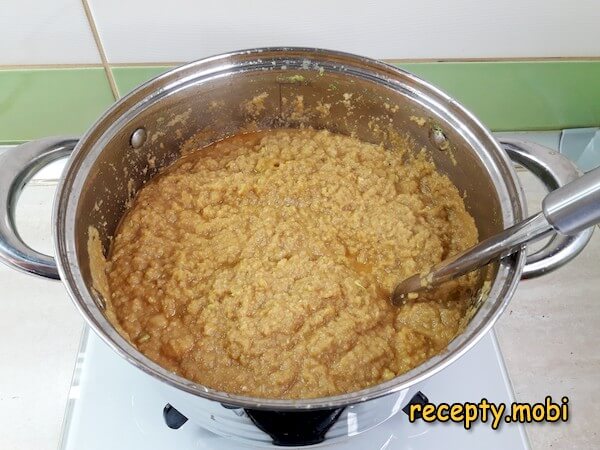
I mix everything. Keeping the heat the same, I cook the caviar for half an hour and, so that it doesn't stick to the bottom, I move the lower layers up with a spatula.
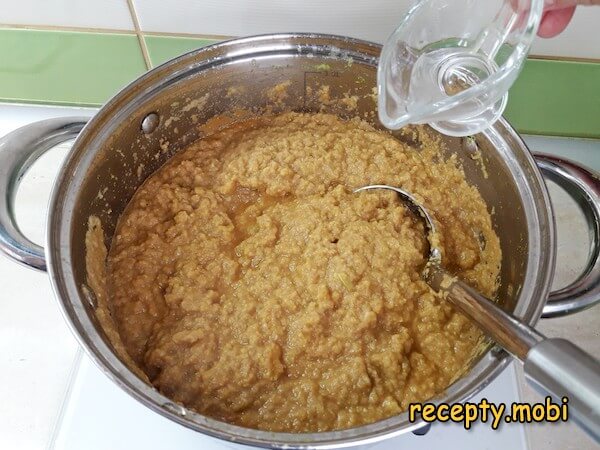
I pour in the vinegar and cook the caviar for 2 more minutes.
I stand the jars on a towel and fill them right to the top with the boiling caviar. If you use a wide funnel for convenience, scald it with boiling water beforehand.
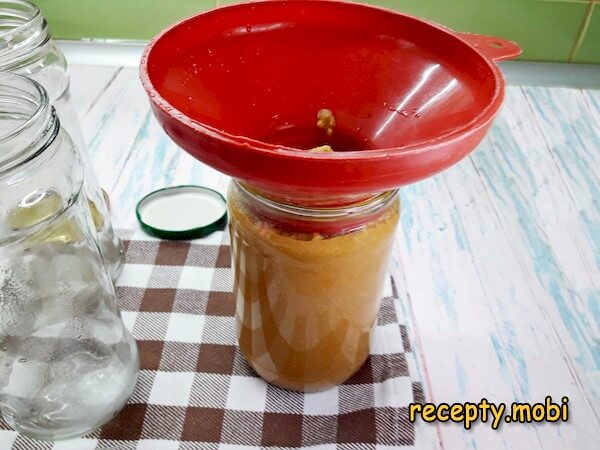
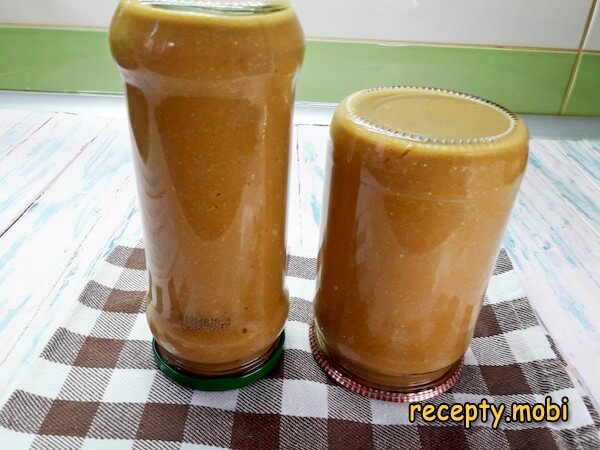
I screw on the lids, turn the jars upside down and place them under a thick towel or blanket. After 10 hours this additional sterilisation will be complete. The zucchini caviar with mayonnaise and tomato paste for winter is ready.
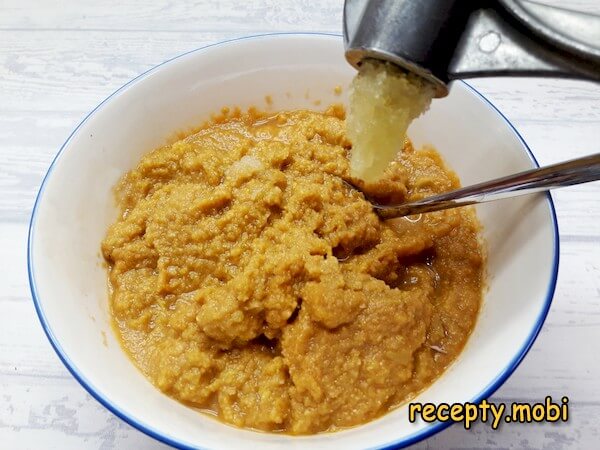
After opening a jar, you need to stir a little garlic into the caviar; then the taste will be perfect and fully developed.Zucchini caviar with mayonnaise and tomato paste keeps even in an ordinary cupboard in a city flat – room temperature is no threat to it. Served as a starter or simply spread on bread, this vegetable preserve leaves no one indifferent.


Tips
- 1
The proportions are fixed – this is the "secret" of its keeping. Mayonnaise and tomato paste plus vinegar act as preservatives, so the amounts must not be changed.
- 2
Cook it down for 1 hour – this is the "secret" of its thickness. All the excess liquid from the zucchini has to evaporate, otherwise the caviar will "run" in the jar.
- 3
Homemade mayonnaise – this is the "secret" of its taste. Shop-bought is "acceptable", but homemade makes the caviar more tender and more natural.
- 4
Garlic when serving – this is the "secret" of its aroma. A fresh clove just before eating and the flavour opens up fully. The same principle works in other kinds of zucchini caviar.
FAQ
Which zucchini should I choose? +
Ideal are young courgettes or white-skinned zucchini (Aeronaut, Gribovsky, Yakor) – tender flesh, few seeds. Alternatives: yellow zucchini (Zolotinka gives the caviar a bright colour) or pattypan squash (a more "textured" result). Old zucchini will also do (cut out the flesh with the seeds and trim off the tough skin). A size of 20–25 cm is best. Not suitable: overgrown ones with woody skin and large seeds – the caviar will turn out "fibrous". Fresh ones are firm and glossy, with no dents. The seed brands Gavrish, Poisk and Aelita are well proven. Frozen zucchini is the "budget" option – defrost it and drain off the juice. For a "premium" result, use farm-grown field zucchini.
What can replace the mayonnaise? +
Alternatives: homemade mayonnaise – the "premium" option (more tender, no E-additives); 30% sour cream (100 g – less rich, but it keeps less well); full-fat Greek yoghurt (100 g – the "healthy-eating" option); thick white béchamel sauce. The mayonnaise brands Maheev, Calve and Sloboda are well proven (thick, not "runny"). Don't use: light mayonnaise (it will spoil the keeping) or sweet mayonnaise ("Provençal" style with sugar will upset the balance). For a "diet" version, leave out the mayonnaise altogether and replace it with 50 ml of vegetable oil (but then it will keep for less time). For the "classic", use a thick 67%-fat mayonnaise.
How long does the caviar keep? +
In sterile sealed jars at room temperature – up to 12 months. In a cool cellar – up to 18 months. After opening, in the fridge – 5–7 days. Write the canning date on the jars. If a lid bulges, don't open it – throw it away. Don't store it in the sun – the colour will "fade". It is best used in the first 6–8 months. Can it in small 250–500 ml jars – they are easier to open (a big one will spoil within a week). Before serving, stir it and add fresh garlic. Without sterilisation the mayonnaise and vinegar work as preservatives, so follow the proportions exactly. Don't leave an open jar at room temperature for longer than 2 hours.
What goes with the caviar? +
A snack on its own – on bread with or without butter. With boiled or fried potatoes. With pasta and spaghetti – instead of sauce. With rice or buckwheat – a "lean lunch". With meat that is fried, stewed or baked. With grilled or boiled fish. With fried eggs or an omelette – a "breakfast". On open sandwiches with herbs and cheese. With dumplings and vareniki. With pancakes and fritters – an unusual choice. With boiled chicken. With a shot of cold vodka – the "Russian" way to serve it. For a "family dinner" – with mash and cutlets. A versatile vegetable preserve for everyday meals and celebrations alike.
- Comment
or post as a guest
Be the first to comment.